

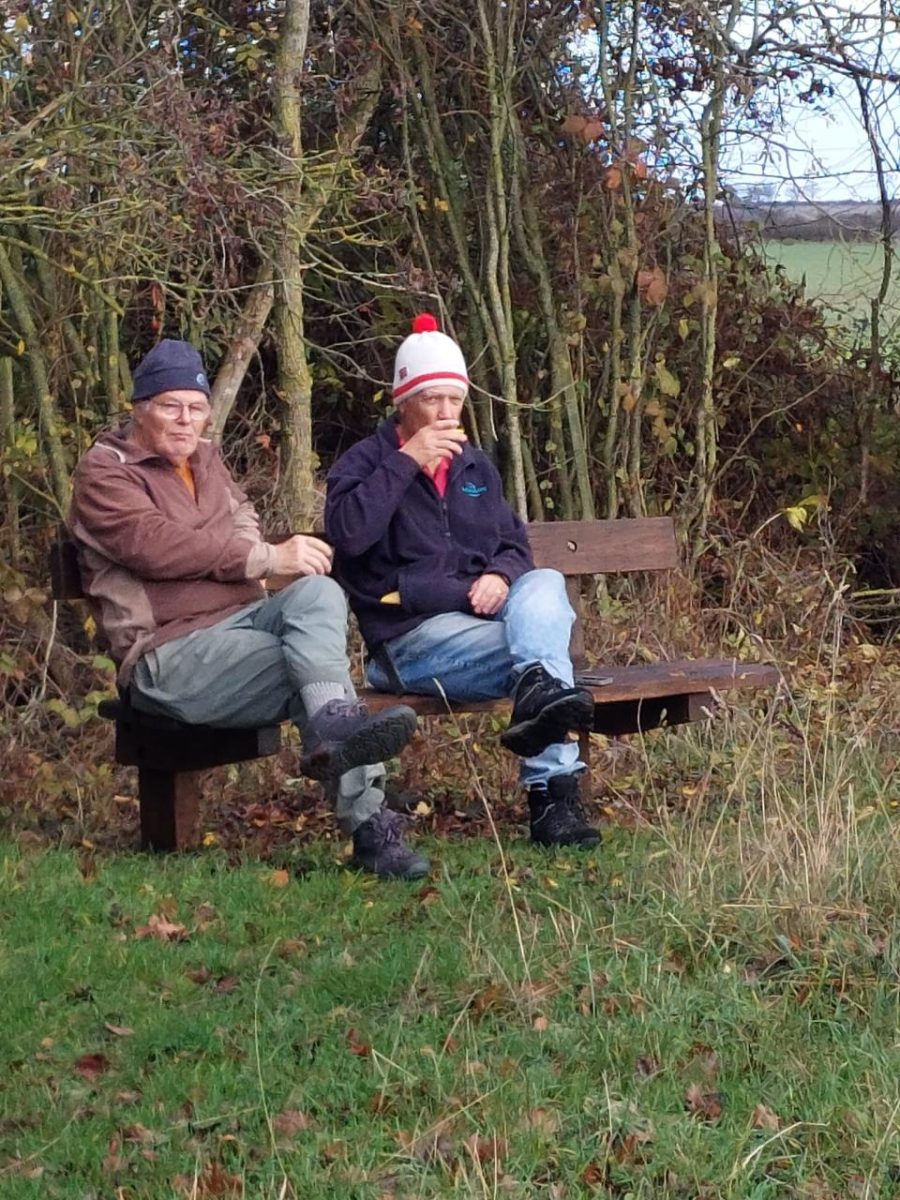
On the 8th November we assembled in the “Jub wood” for the yearly maintenance morning. Hedges to cut, dead hedges to top up, sapling relocation and crafting with willow were all tasks to be completed.
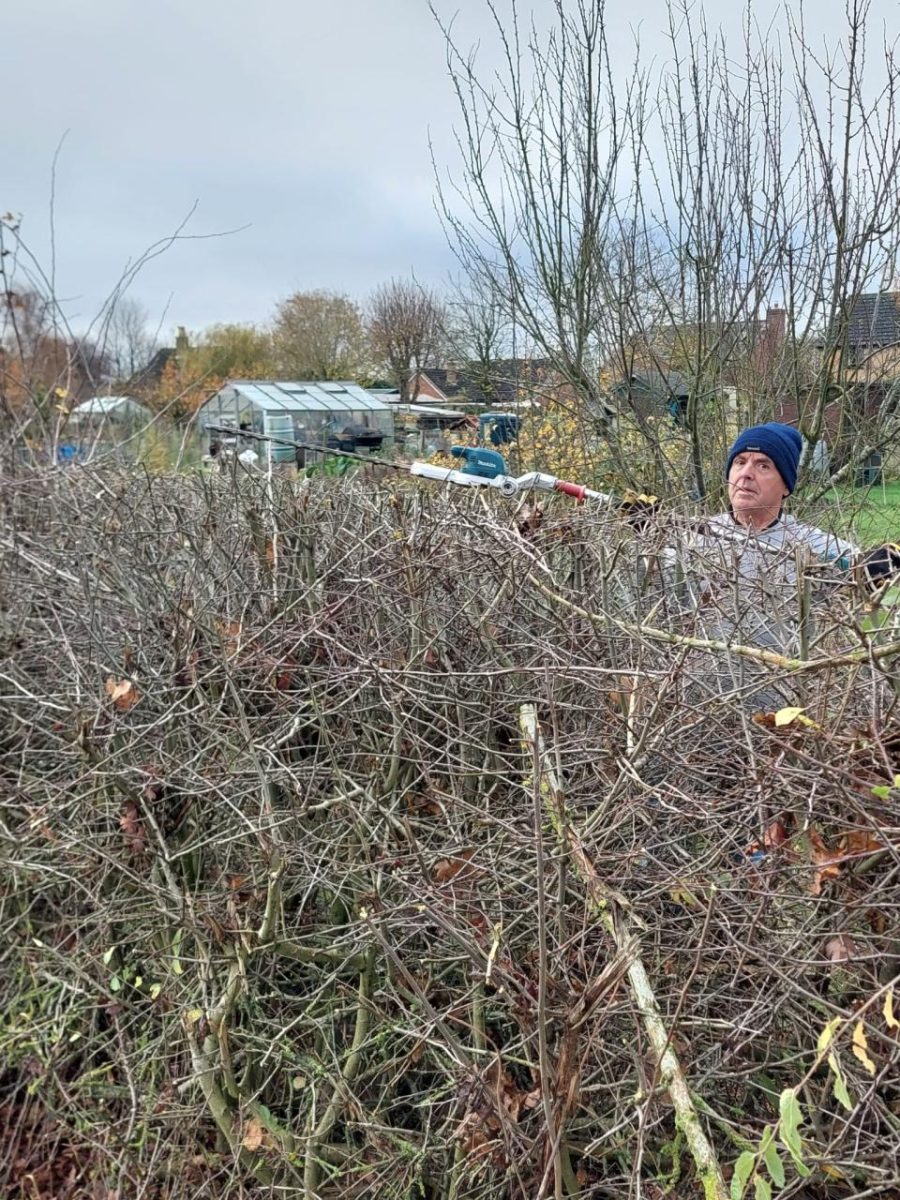
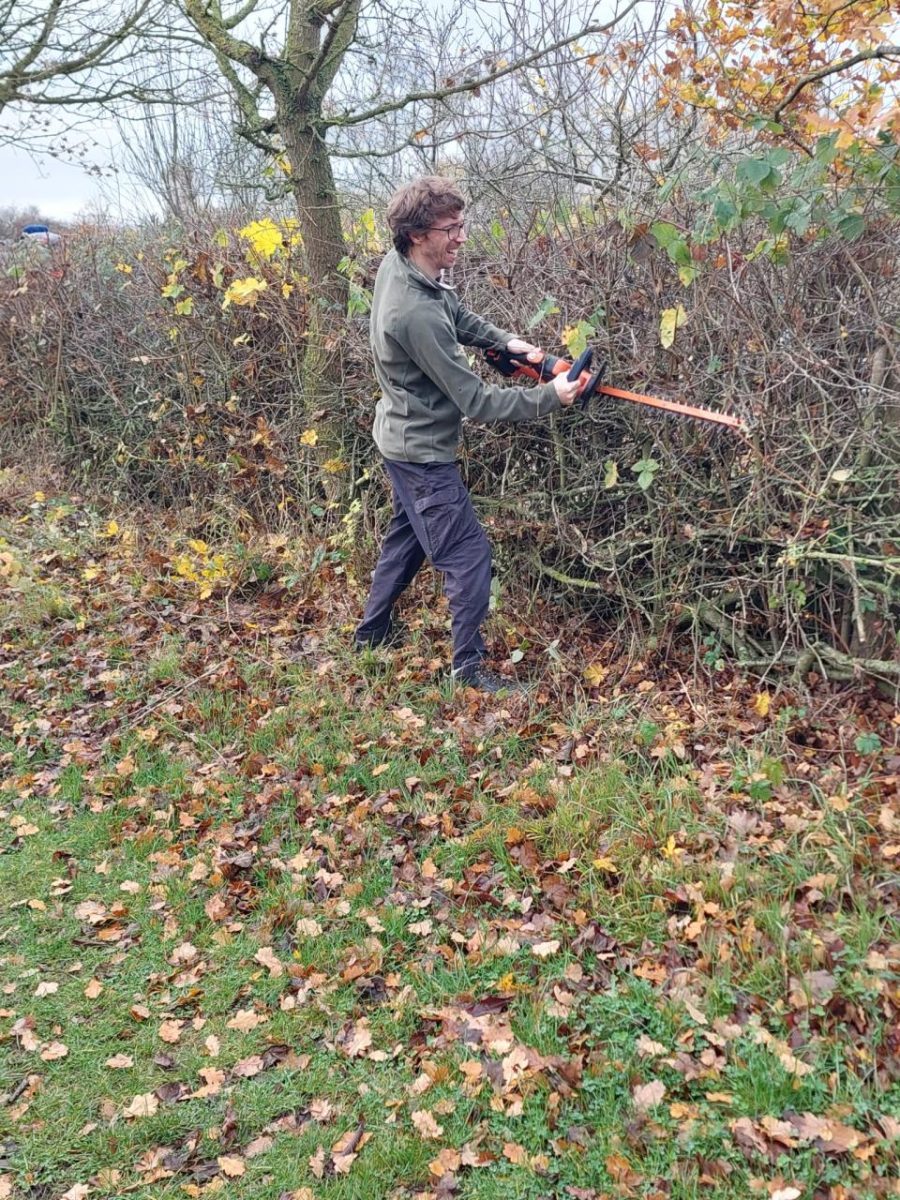
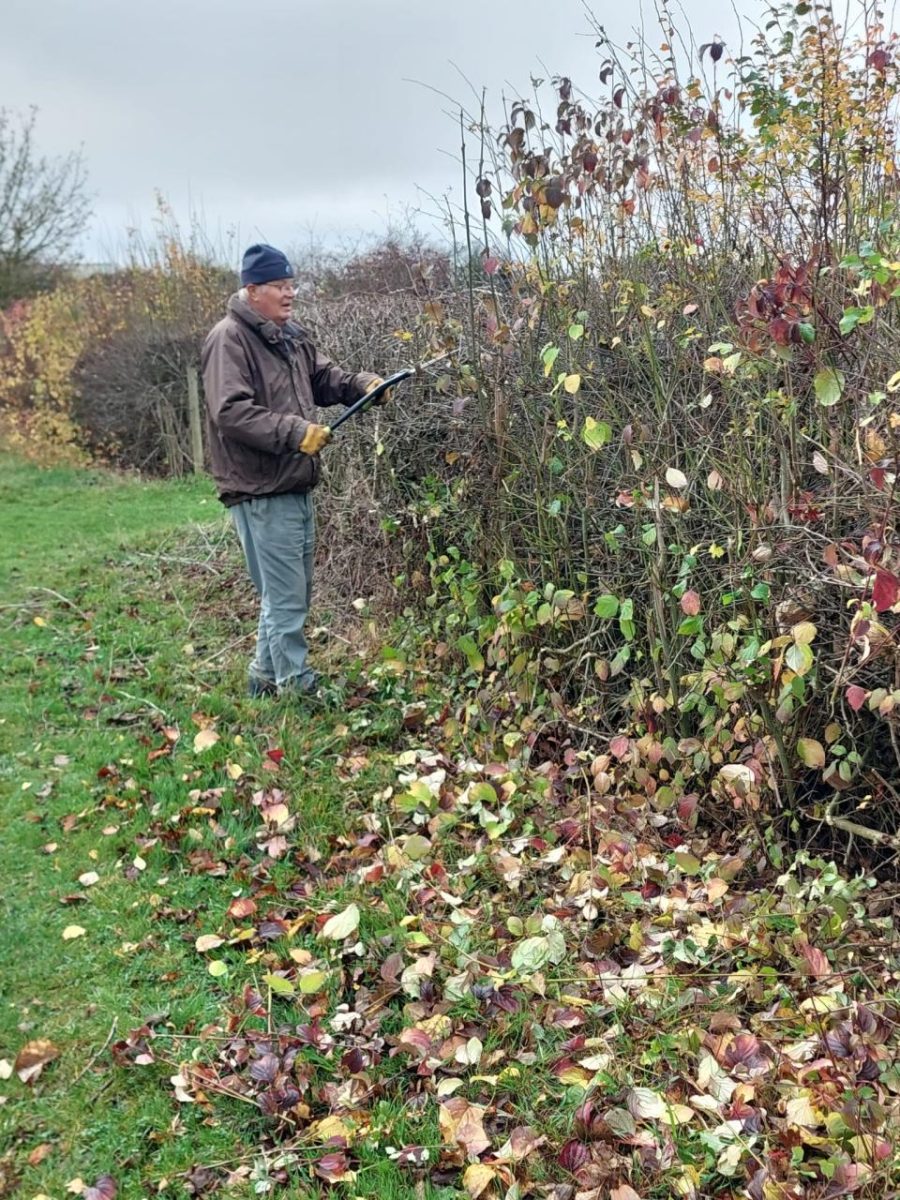
The dividing hedge between the allotments and the wood was shaped by many hands using hand tools and power beyond the mains battery powered trimmers, such a great advancement to labouring tasks! The dead hedges were topped up with brush and arisings. They have become a strong feature and help define different areas of the wood, they are also home to numerous birds and insects.
Numerous acorns have grown this year which means that Jub wood has reached a certain maturity, this also means that it was a great opportunity to relocate some saplings into open areas that need tree cover, A mature Jubilee wood will be a predominantly oak wood, The understory of hawthorn and blackthorn will gradually diminish. Its well known that oak trees are host to a huge number of insects, birds, fungi and micro organisms. A google search will give various numbers and as an example Google AI suggest 2300 species which is a bit of a bland number but you get the picture. This will include live, dying and dead oak trees. I have relocated about 40 oak saplings this autumn along with a few field maple and some root stock of the wild service tree that is throwing up suckers, A few oaks and wild service trees have gone to the King’s wood. In return some easy wrap protection tubes and bamboo canes have travelled the other way. On a point of tree tubes and environmental good practise we have nearly extracted all the original tree tubes that were used in the 2003 planting. Many are being used again and again in some places (triple use) recycling at its best I think.
There is ongoing work with the far end hedge. Its growth and spread needs checking especially as its predominantly blackthorn. Ian is setting about this and using the arisings as in the dead hedge principal. Blackthorn is unforgiving and even the stoutest boots and gloves can be punctured by a blackthorn. Having done a lot of this sort of hedge maintenance, thank you Ian for taking on this particular task.
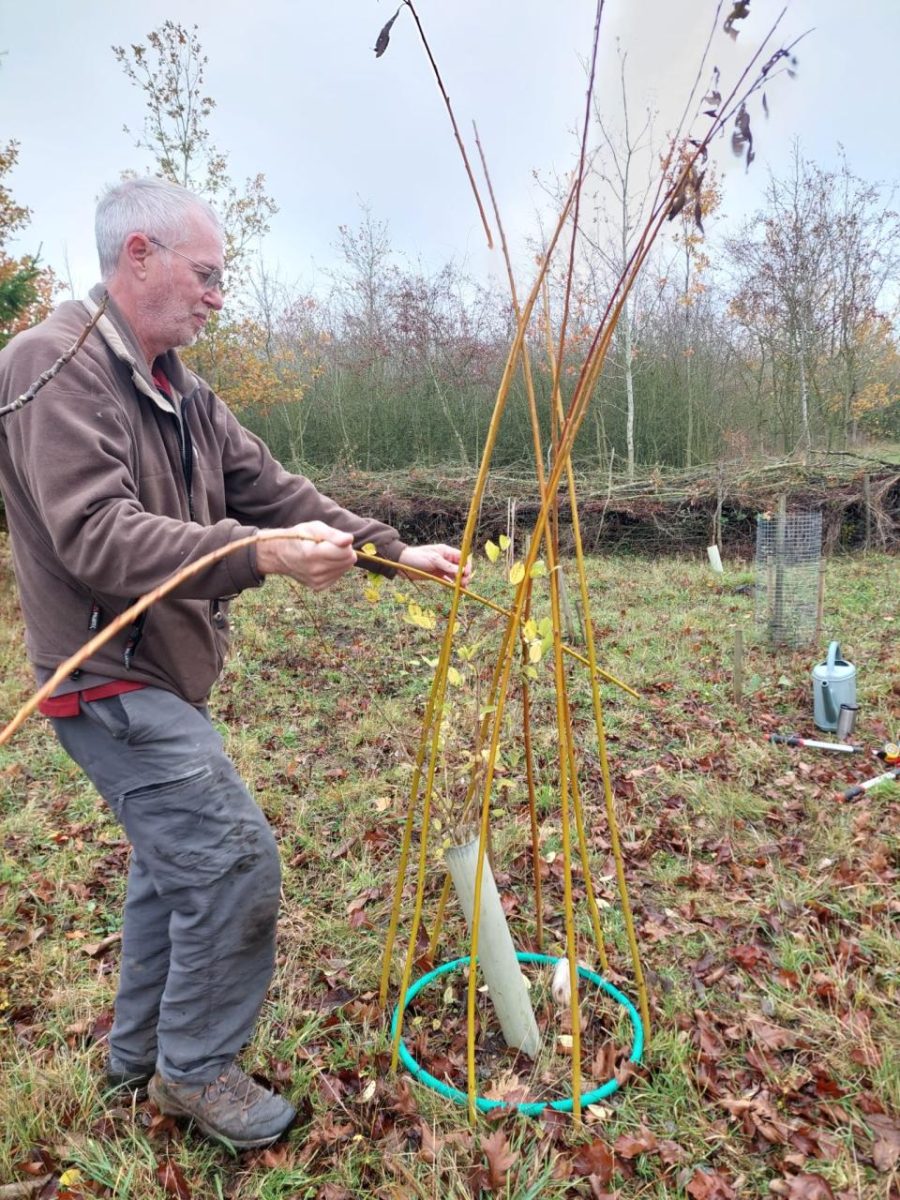
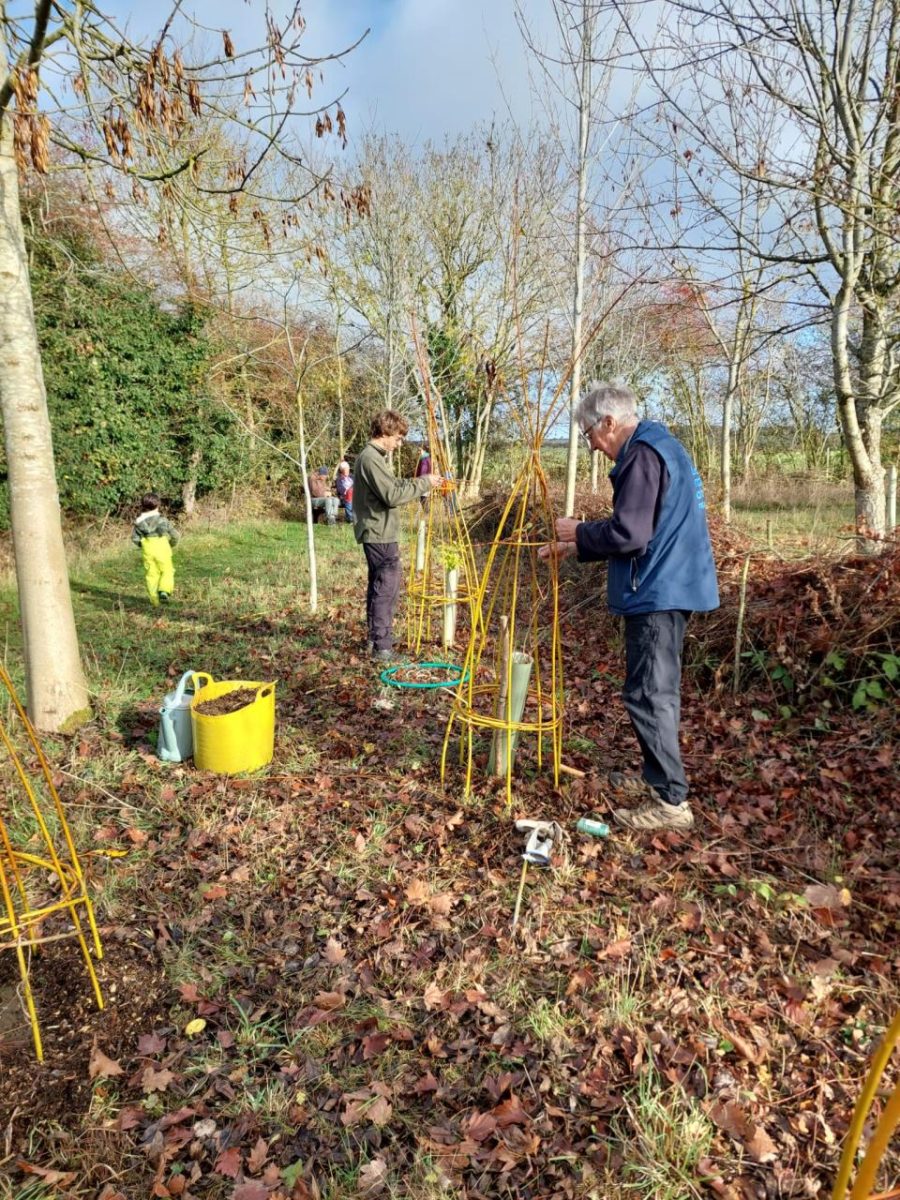
To lighten the heavy tasks we also tried live willow sculpting, we made a number of plant supports using willow harvested from the perimeter of the orchard (left hand corner of the allotments if you haven’t come across it before complete with petanque pit/strip) The wisdom is that willow needs to be pushed into the ground at least 15mm, apparently it will root in weeks. However it turns out, the honeysuckle will have something to climb through. An interesting project, most of the stems were from the most vigorous young tree, Osier willow.
Leave a Reply