Jubilee Wood April 2018

Jubilee Wood  April 2018

Jubilee Wood

April was quite a month of extremes in terms of weather, but nature has a way of forging on regardless whilst most of us humans are struggling to cope.

The great crested newts are a good example, having overwintered near to the pond under stones or vegetation, they returned to the pond in Jubilee Wood to mate and lay eggs. If you were lucky enough to see them earlier on in the month, you might have been surprised at just how many there were, but if you didn’t get to see them we’ve attached some photos taken at the pond. Apologies for the quality but you have to take the opportunity when you can and although these photos taken with a  phone may not be the best, they give an idea of their form and colour.

Spotting the newts may take a couple of minutes before you recognise them as they tend to look like dark bits of small vegetation floating under the water’s surface until you see them suddenly shoot along, splaying out their legs and waggling their tails. The males have more of a  crest during the mating season and females lay individual eggs on plant leaves and carefully wrap them up to protect them. Two to four weeks later larvae (sometimes called newt tadpoles) will hatch out with feathery gills around the head, distinguishing them from frog and toad tadpoles. A couple of months after they hatch the larvae start to grow their front legs followed by the back legs. Later on in the summer they’ll leave the pond but will stay close by to find a place to overwinter, and next Spring it will all begin again…….wonderful!

Video

The Woodland Walker.


Video

Chapel End Pond

Chapel End Pond

A photographic essay of how Chapel End pond was reclaimed back to an attractive environmental pond  from being an unloved, overgrown shallow  pit.
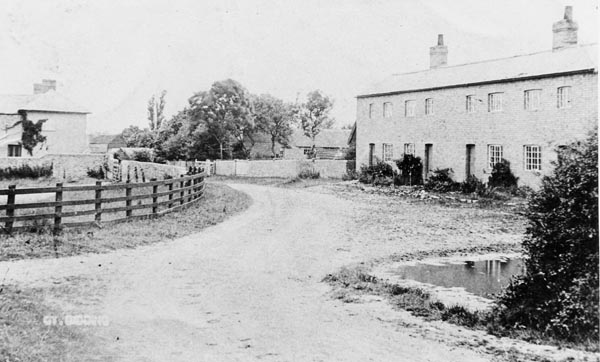
Chapel End No. 58

A pond has probably always featured in Chapel End as long as people have been around. It may have been created after clay was dug out for bricks or its just a shallow depression where water has lain.
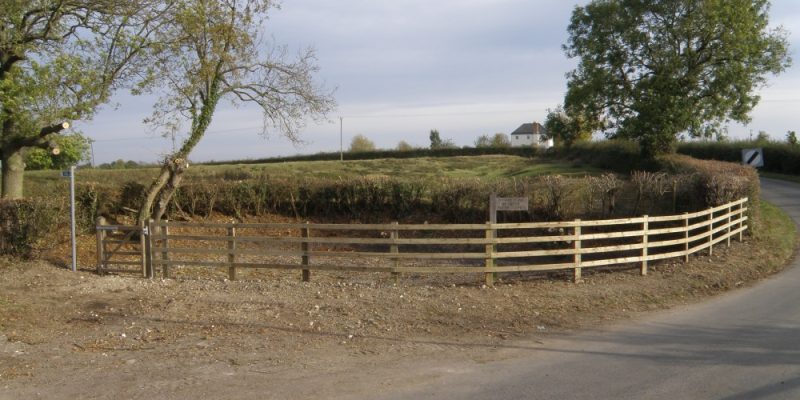
In our first photograph we see the edge of the pond without a fence this was probably to allow cattle and all other farm livestock to drink from. Its quite easy to forget that mains water was not available until the late 1940’s so water was either well drawn, harvested from roof’s or accumulated in ponds.
As an aside the photograph above shows a curved 4 rail fence, this was replaced with post and wire and then back to post and rail (evolution) The cottages adjacent to Woodway farm were demolished in the late 1960’S. Now we are crying out for small rural housing.
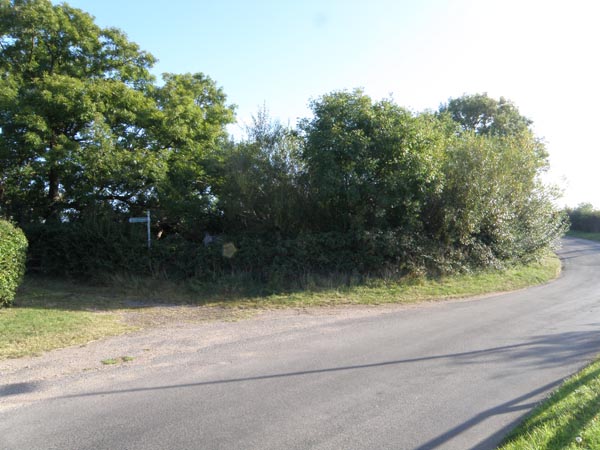
Chapel End Pond restoration 2011

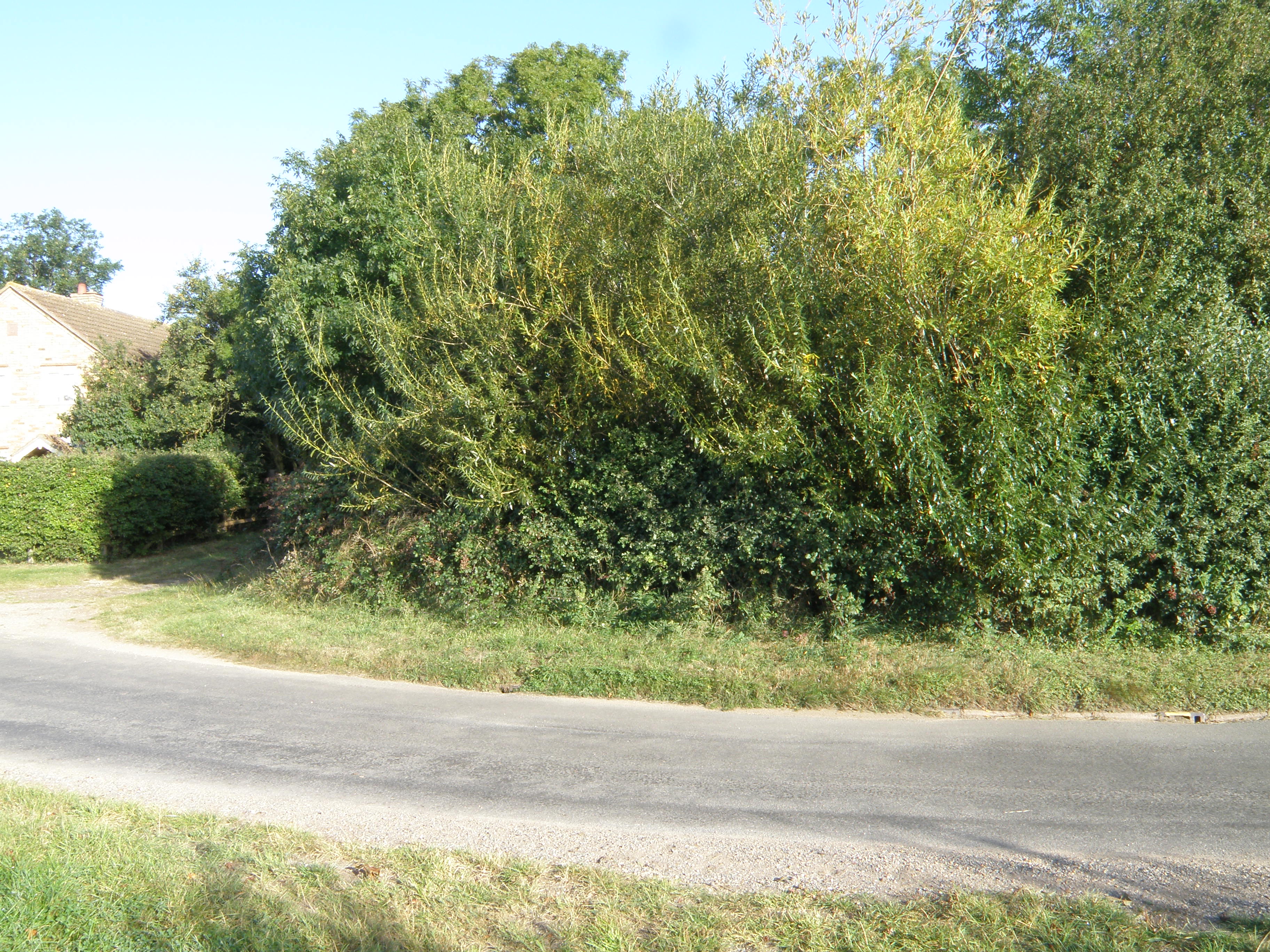
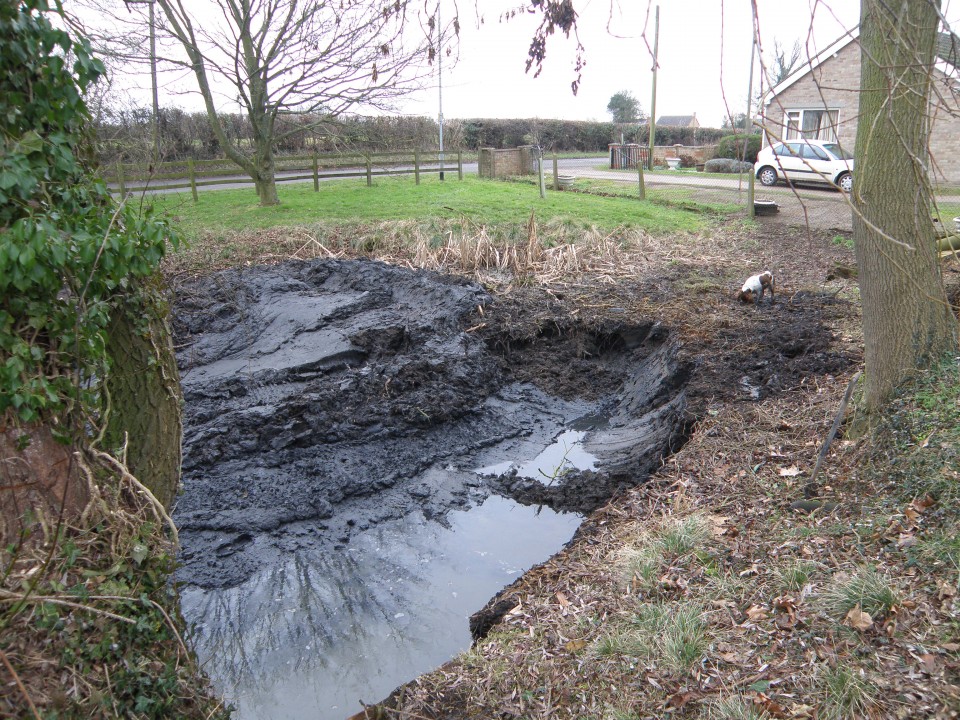
Chapel End pond as it was at 8.40am on September the 10th 2009. Anyone not familiar with the area would be hard pressed to suggest there was a pond there. Overgrown with willow and scrub and the road drains blocked even on the wettest day no water could drain into the pond, instead we had a flow of water all the way down Chapel End to the cross roads on Main Street and a lot of disgruntled villagers complaining about the drains.
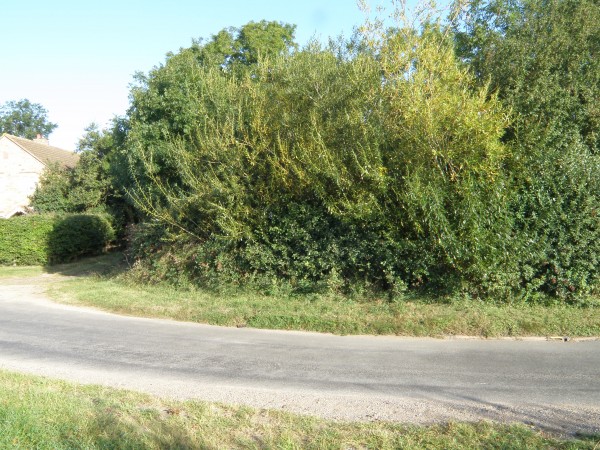
As the pond came under the auspices of the Parish Council it had been suggested a few times that some form of reclamation should be undertaken but each time budgetary constraints ruled this out.  It then came to the notice of the Parish Council that Huntingdonshire District Council were offering environmental grants for schemes on a points basis.

We made our case and were lucky enough to be awarded a grant to proceed with works. Quotes from contractors were sought andwere chosen to complete the works. Lattenbury Services were chosen and the job commenced in October 2009.
Chapel End Pond restoration 2011

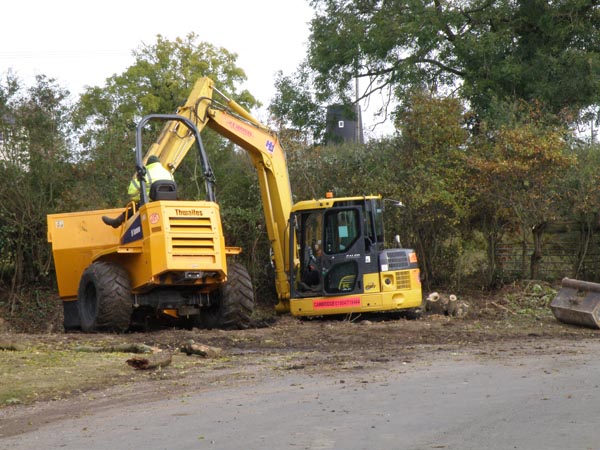
A specification for excavation and remedial work was drawn up, it was agreed that all the green material around the front of the pond would be lost and the backdrop of the hawthorn hedge and ash trees would be retained subject to some trimming back.
Chapel End Pond restoration 2011

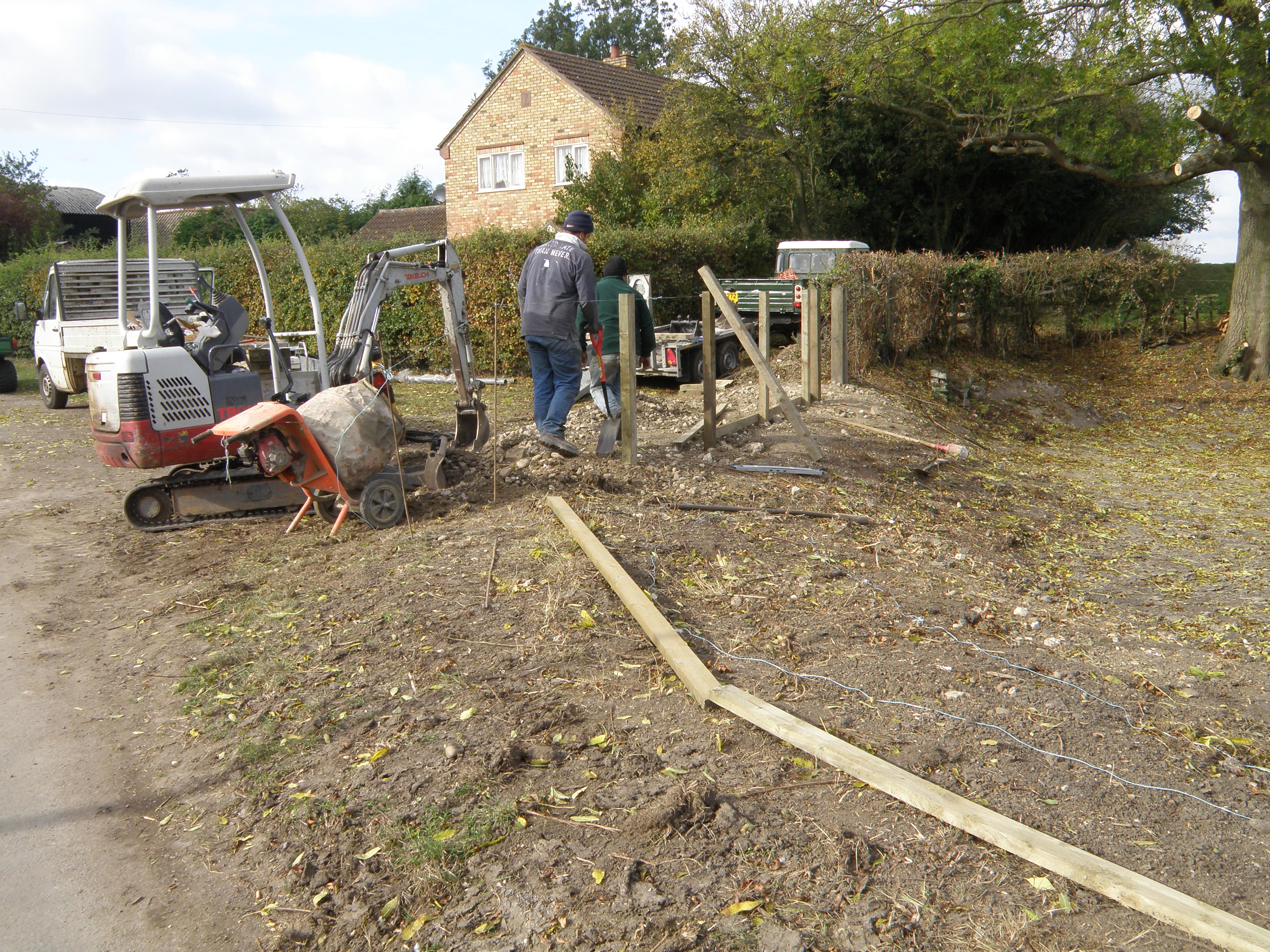
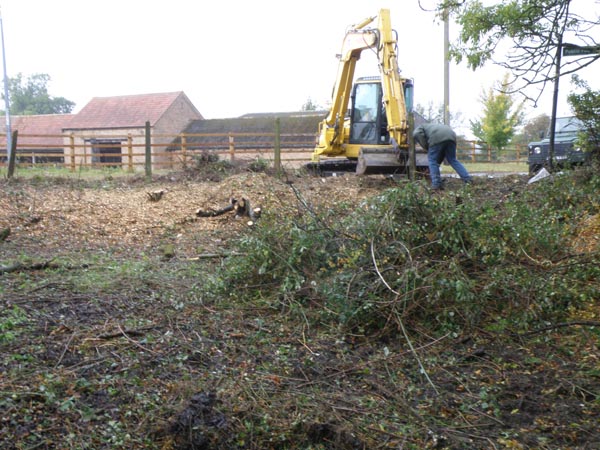
Removing the old concrete fence post’s
Chapel End Pond restoration 2011

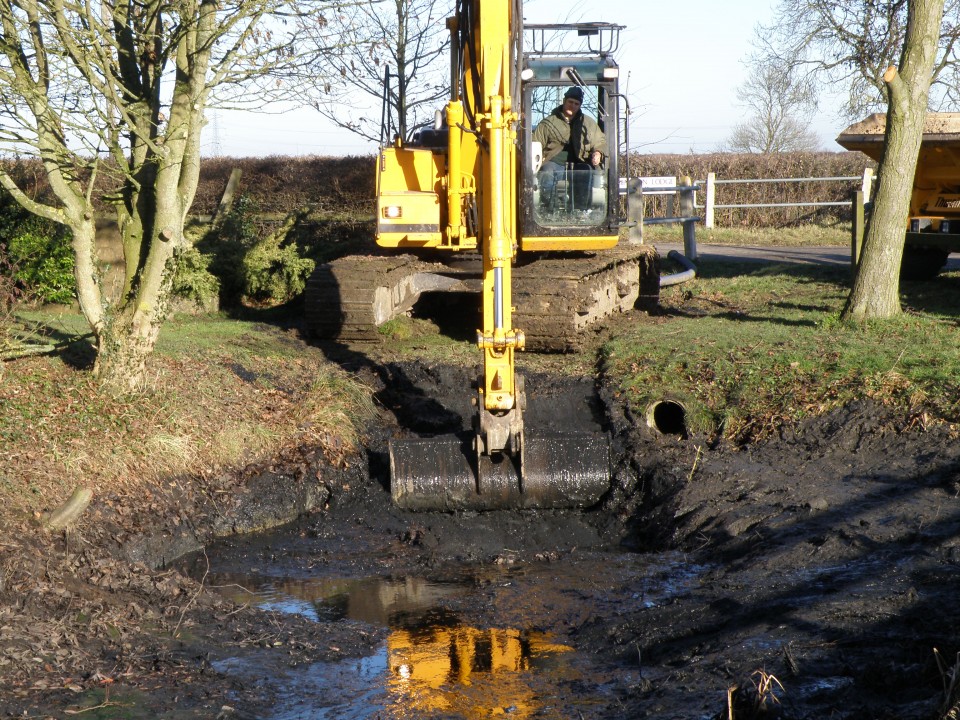
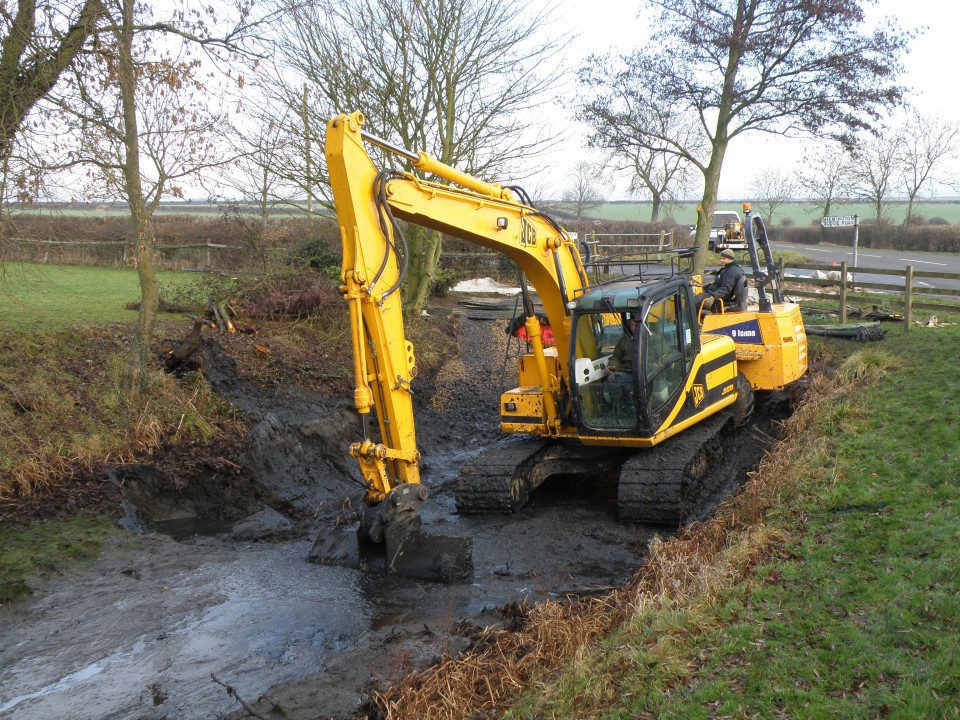
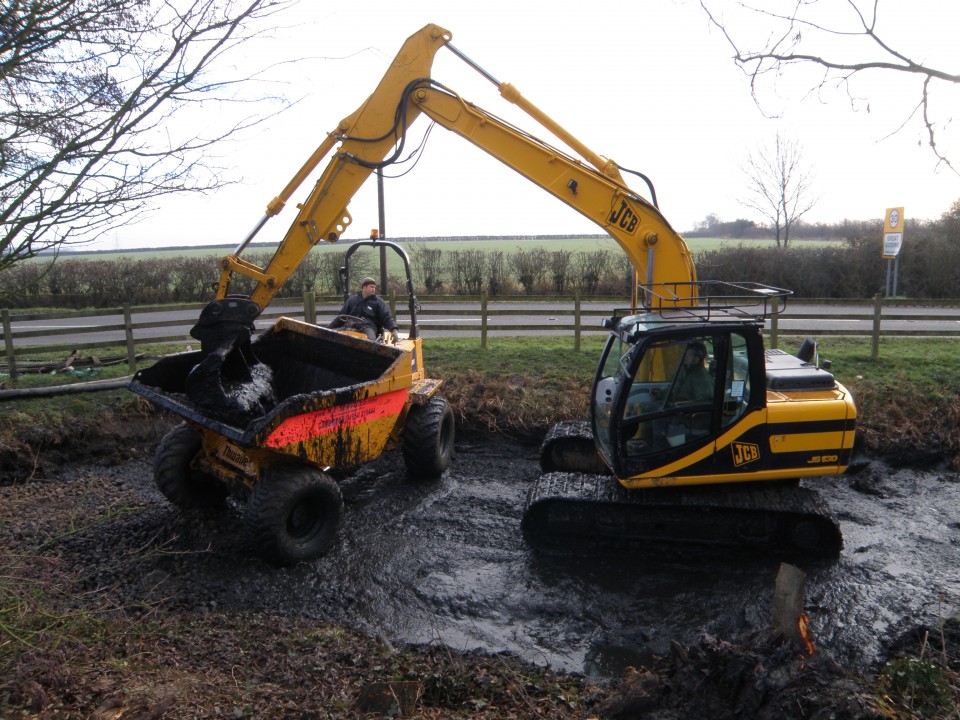
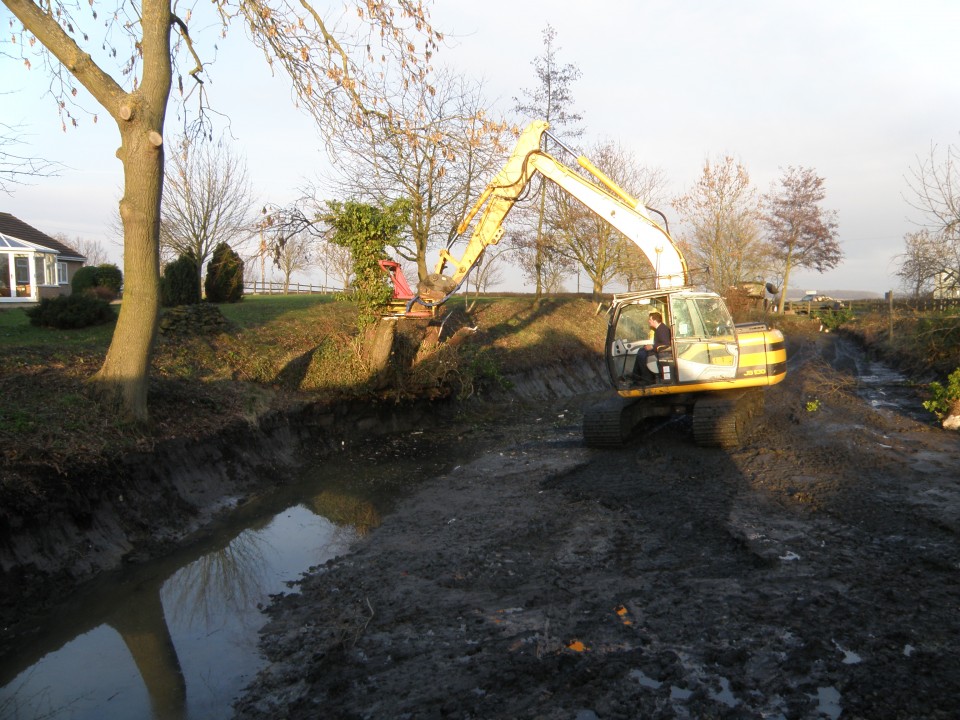
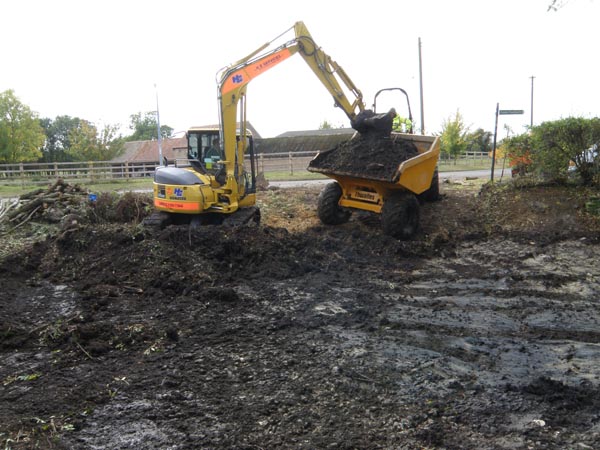
Midi digger and Midi dumper (not mini) Excavating the years of silt and associated rubbish from the pond. It was suggested on the initial survey that the pond had a hard base, this proved to be the case with a graduated cobbled bottom in excellent condition. So someone years back put a lot of effort into creating a pond where the mud wouldn’t stir up to much when livestock drank. There is also the suggestion that cart horse would have had their legs washed down after a days work in the field particularly if it was muddy going.
Chapel End Pond restoration 2011

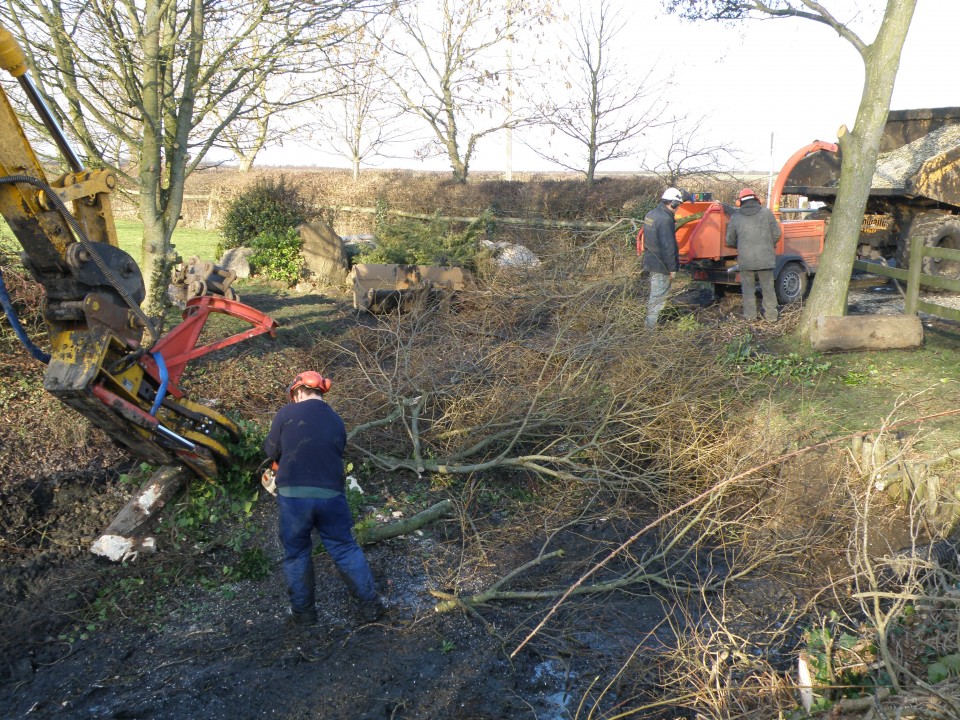
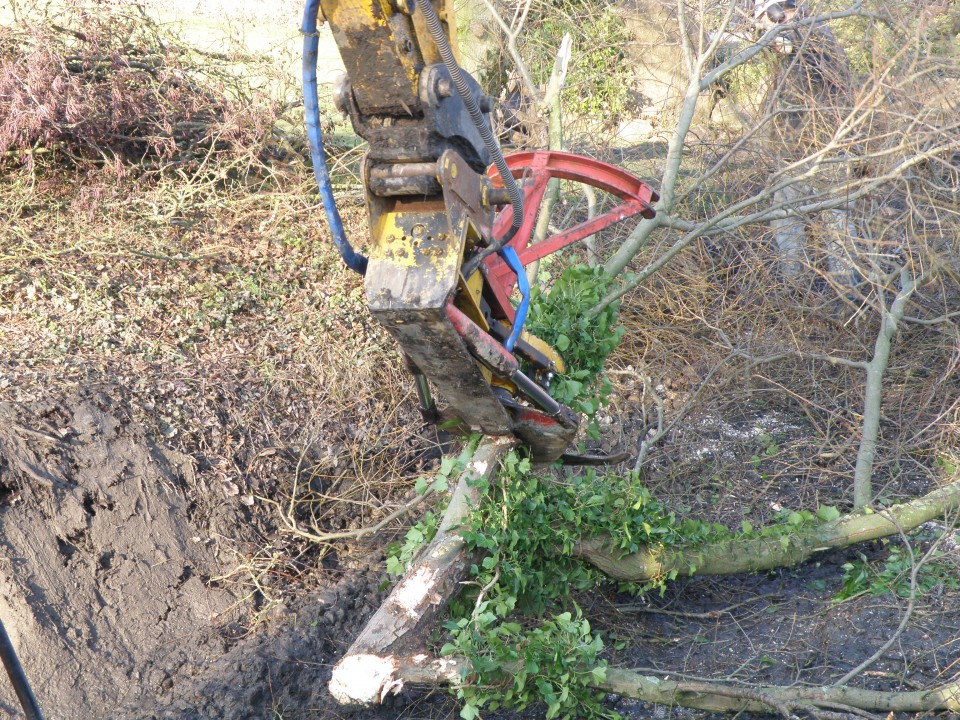
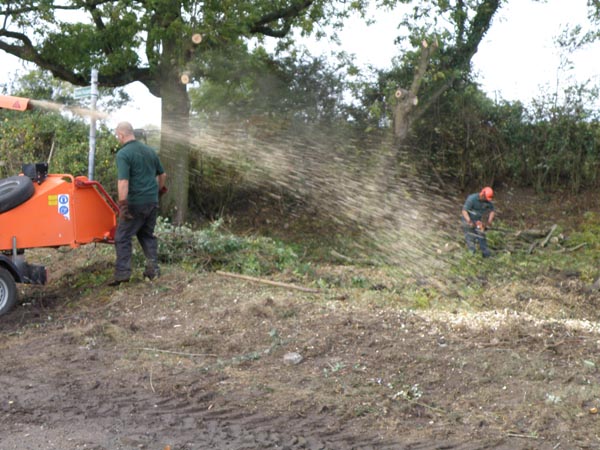
Chipping the green material, this was then excavated with the spoil.
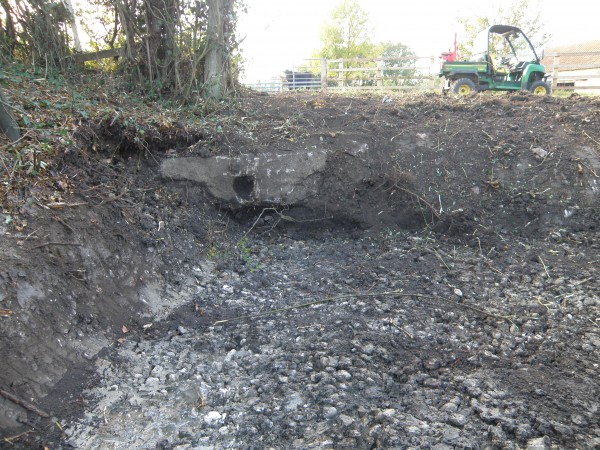
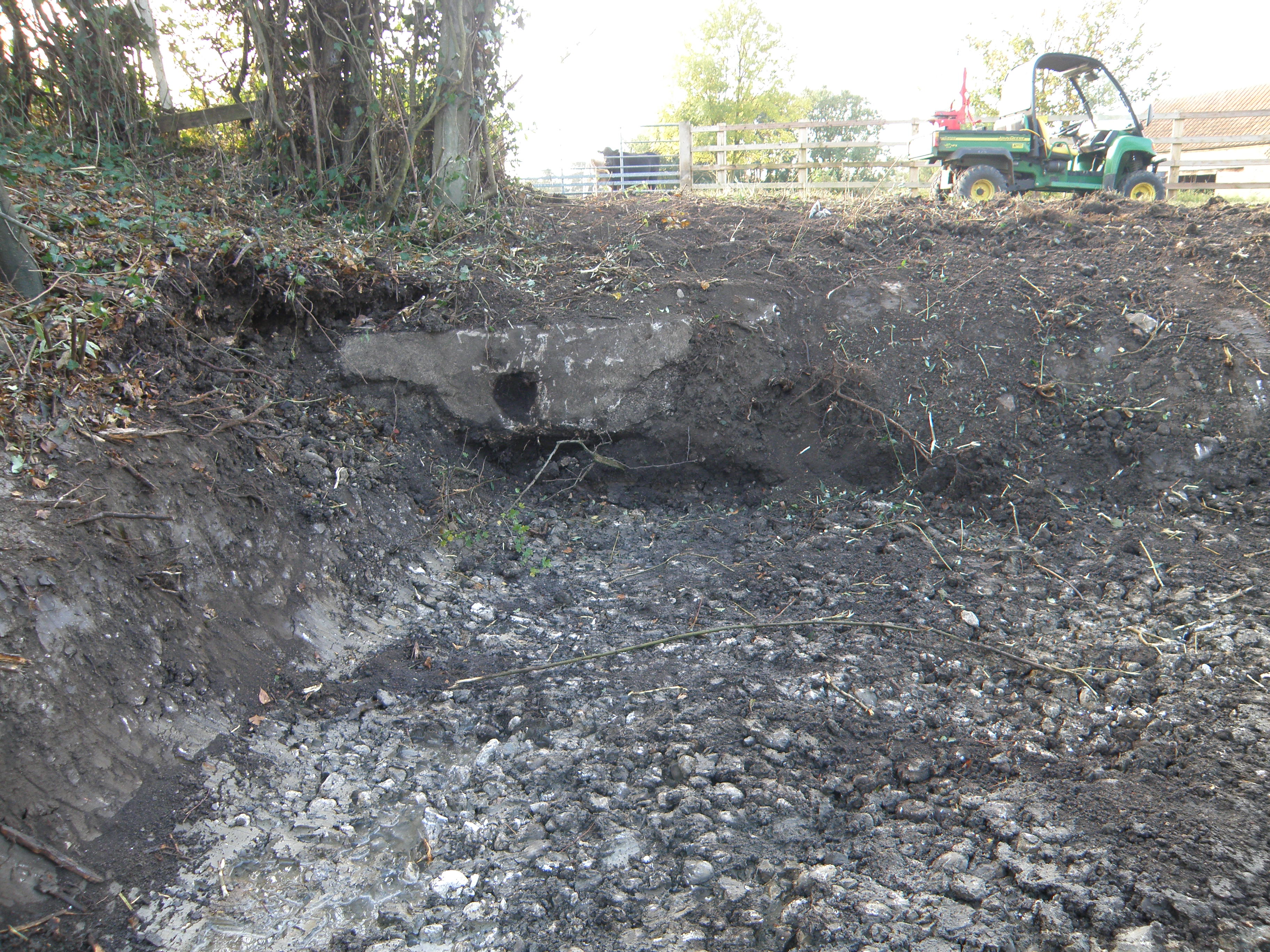
The above picture shows two things, first the completely silted up drain that stopped any road surface water from entering the pond and secondly the cobbled base of the pond which was in excellent condition and allowed the contractors to profile the pond to its original depth.
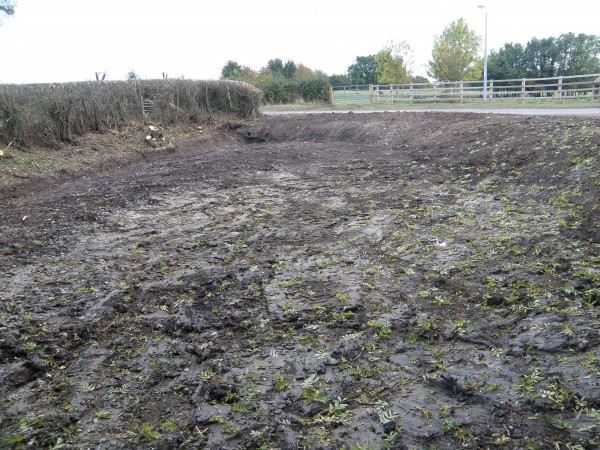
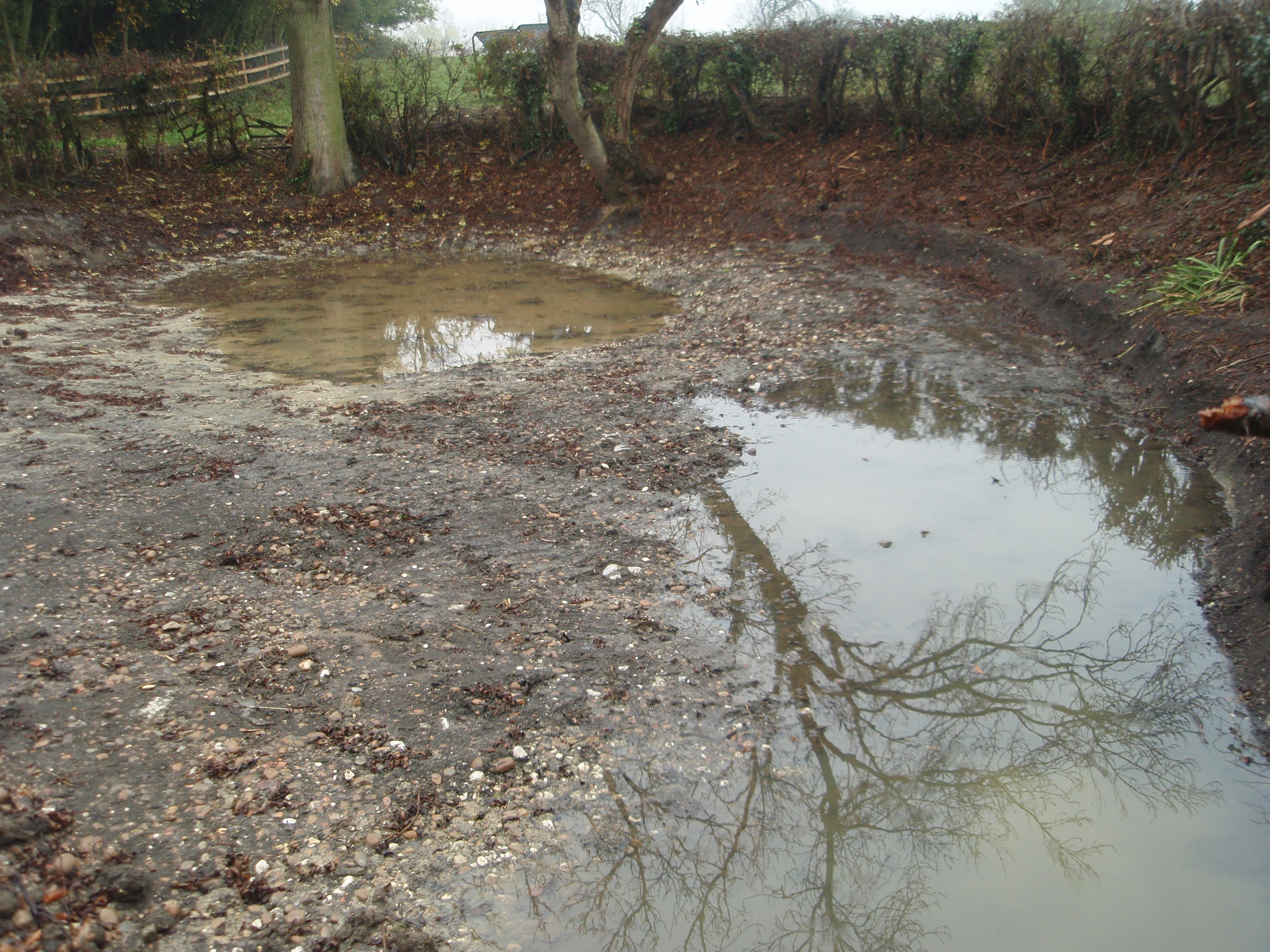
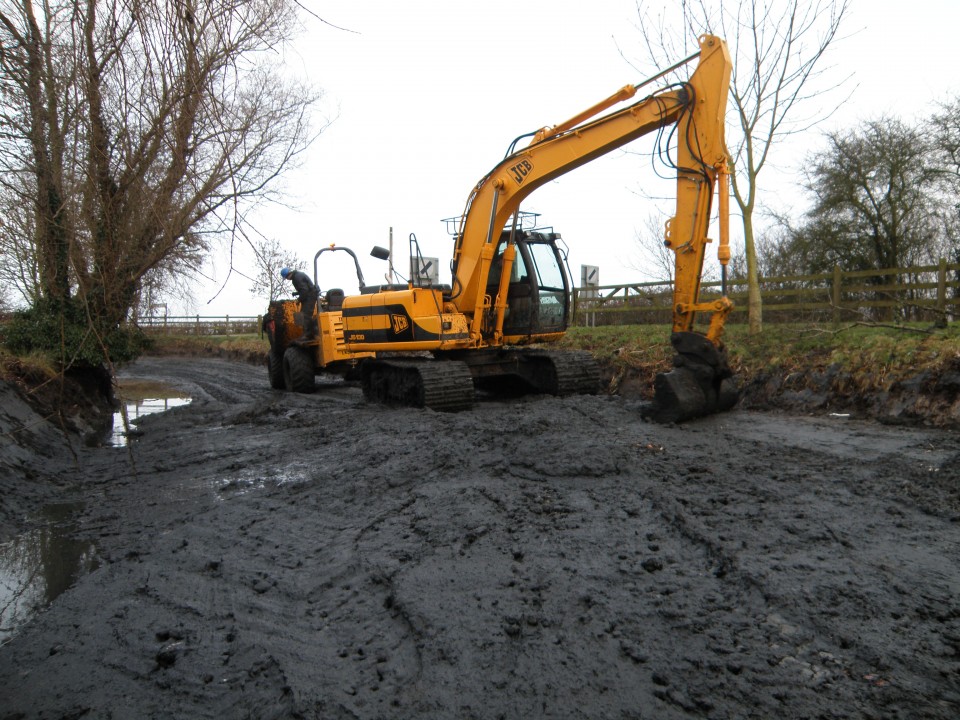
The pond cleared out to the stone base without too much damage.
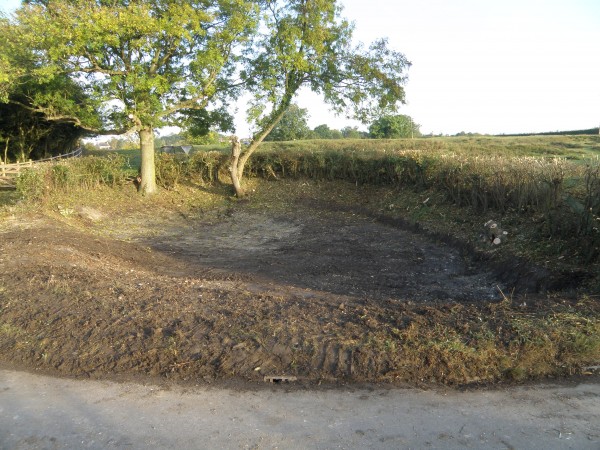
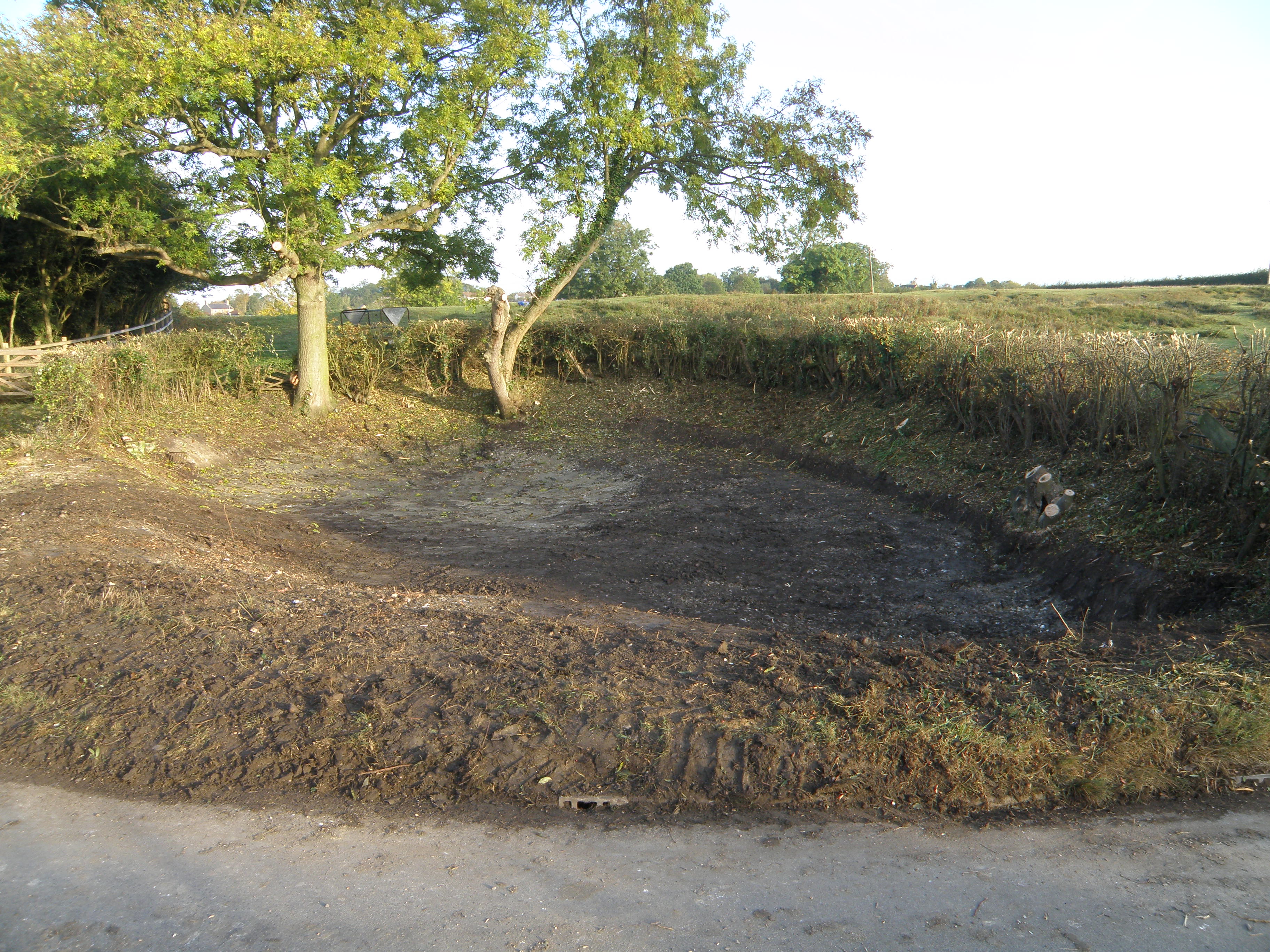
The shape of the pond on complete excavation and trimming of green materials.
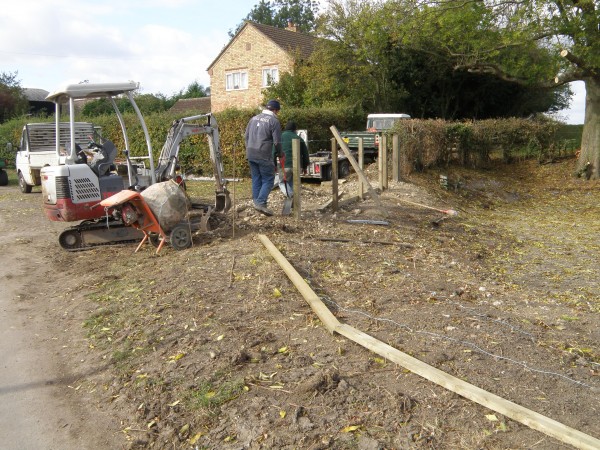
Laying out the fence line.
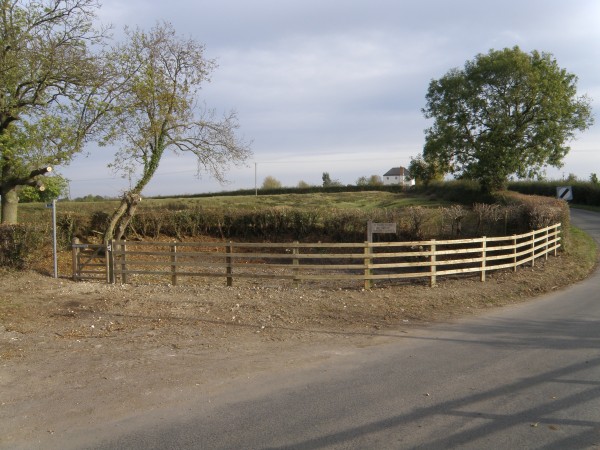
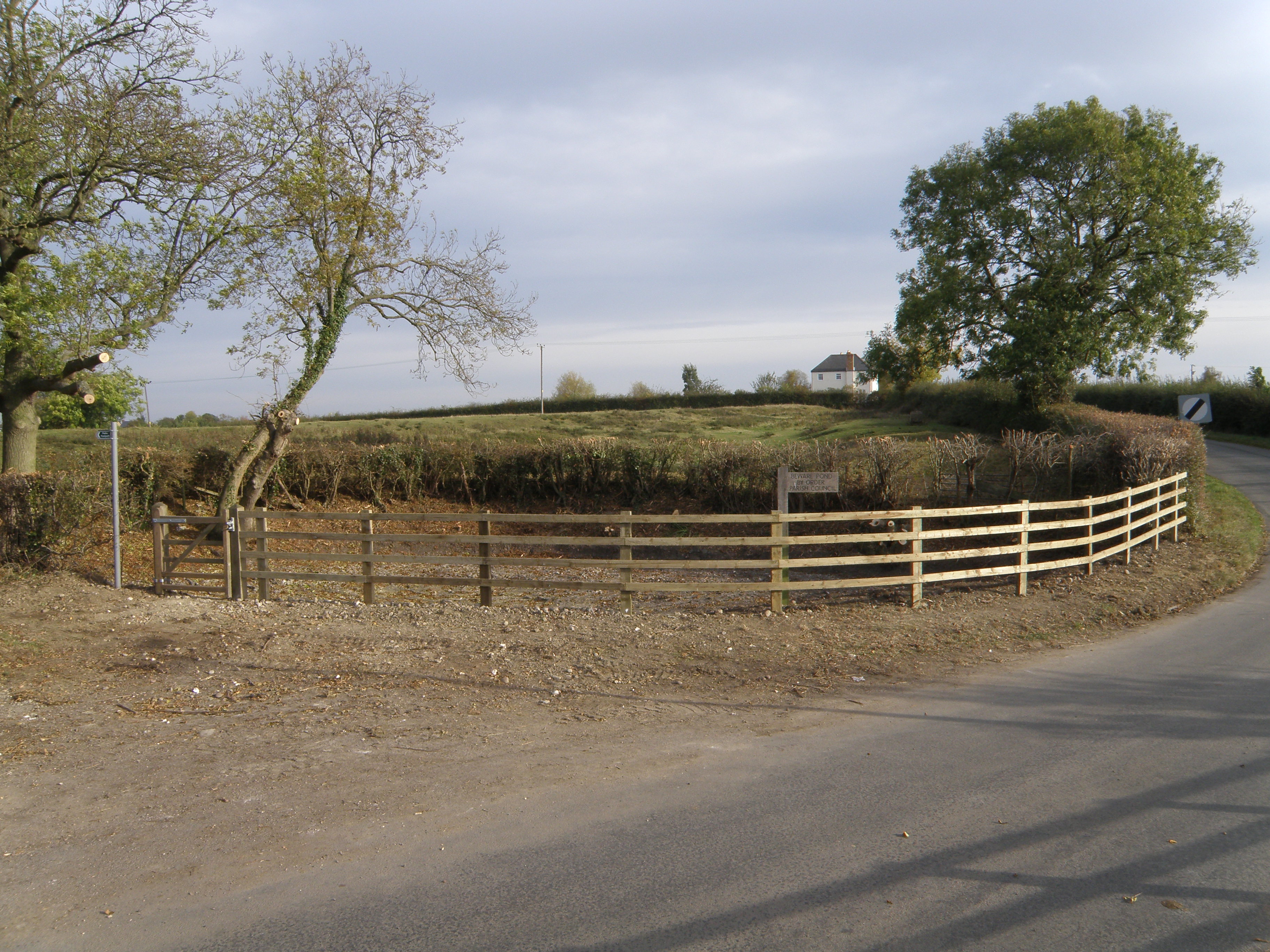
The completed project, just add water.
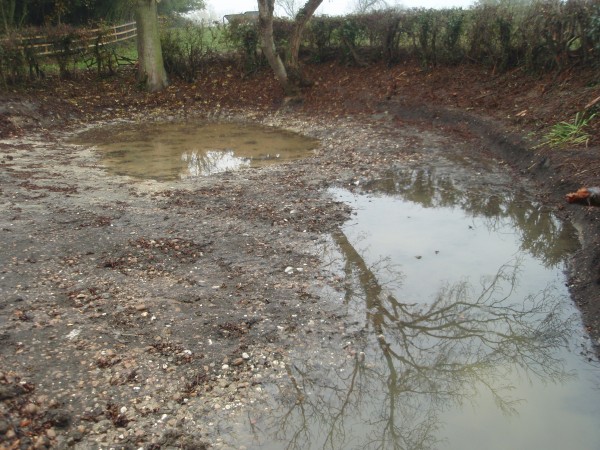
The first drop of rain on 31st October 2009
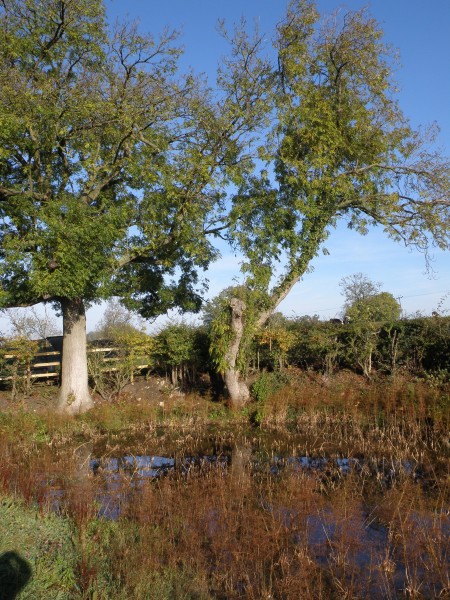
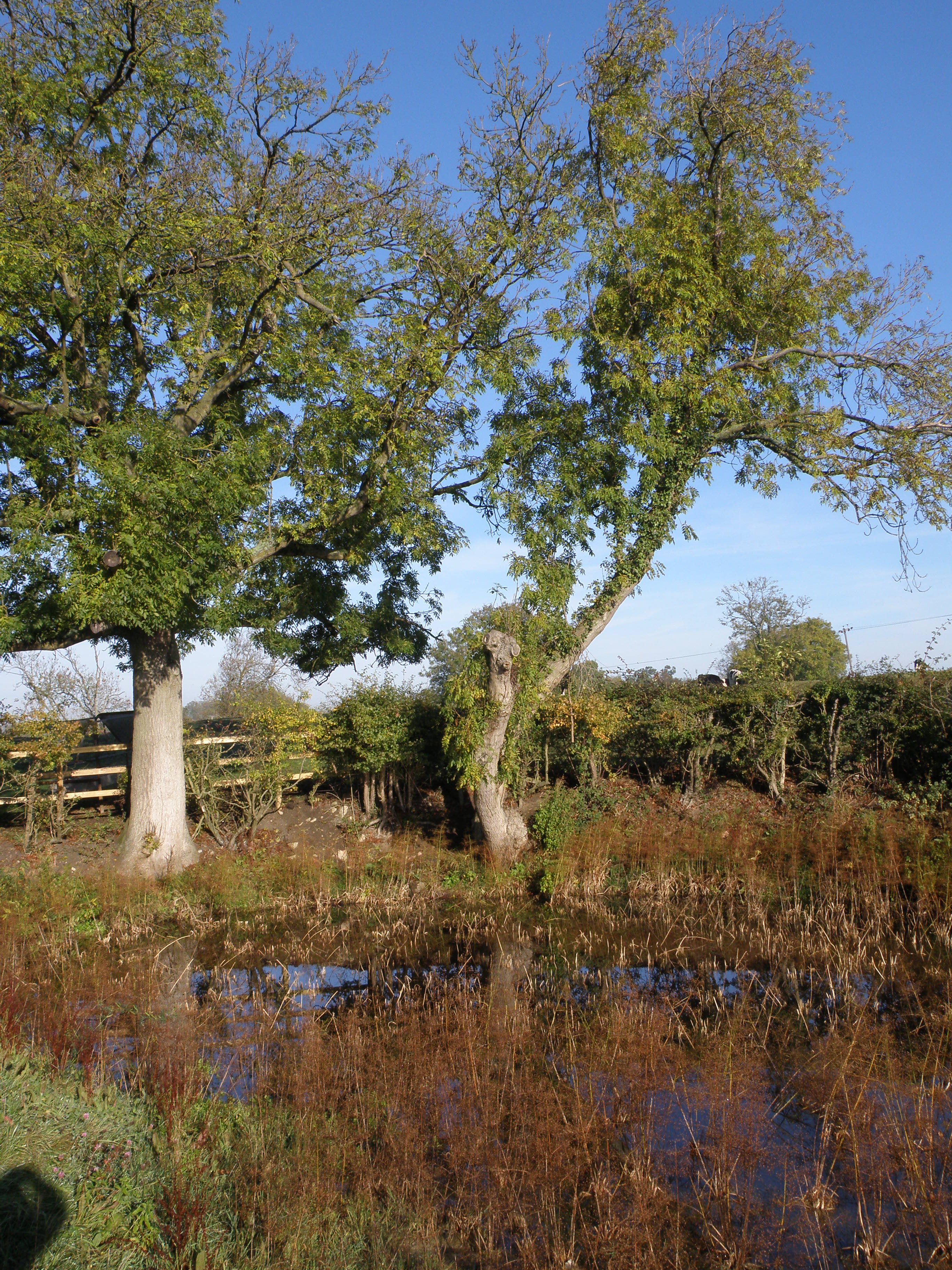
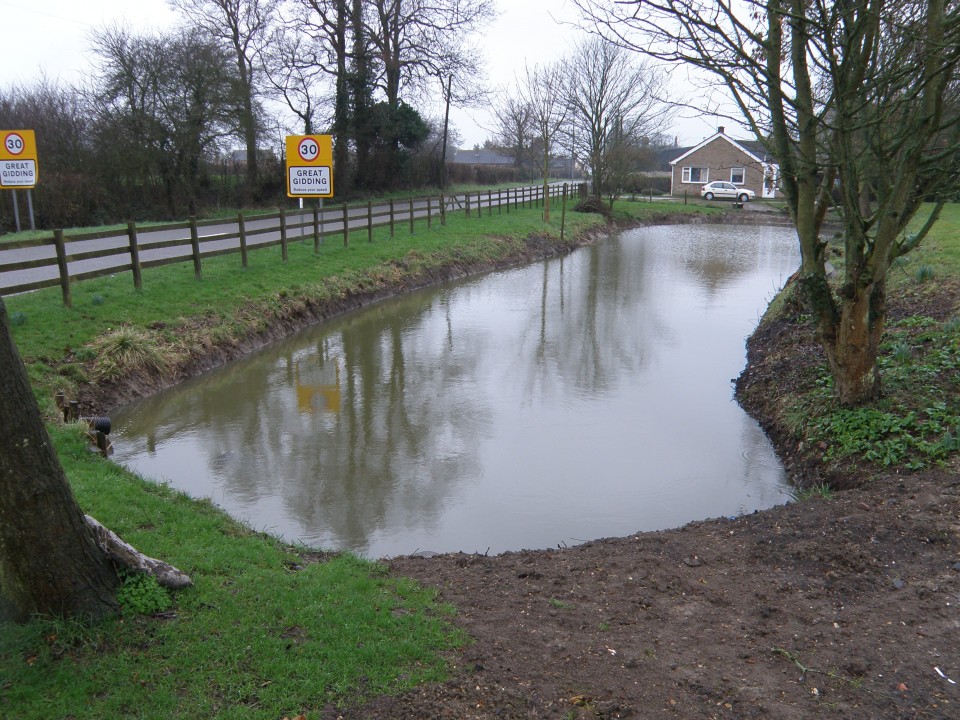
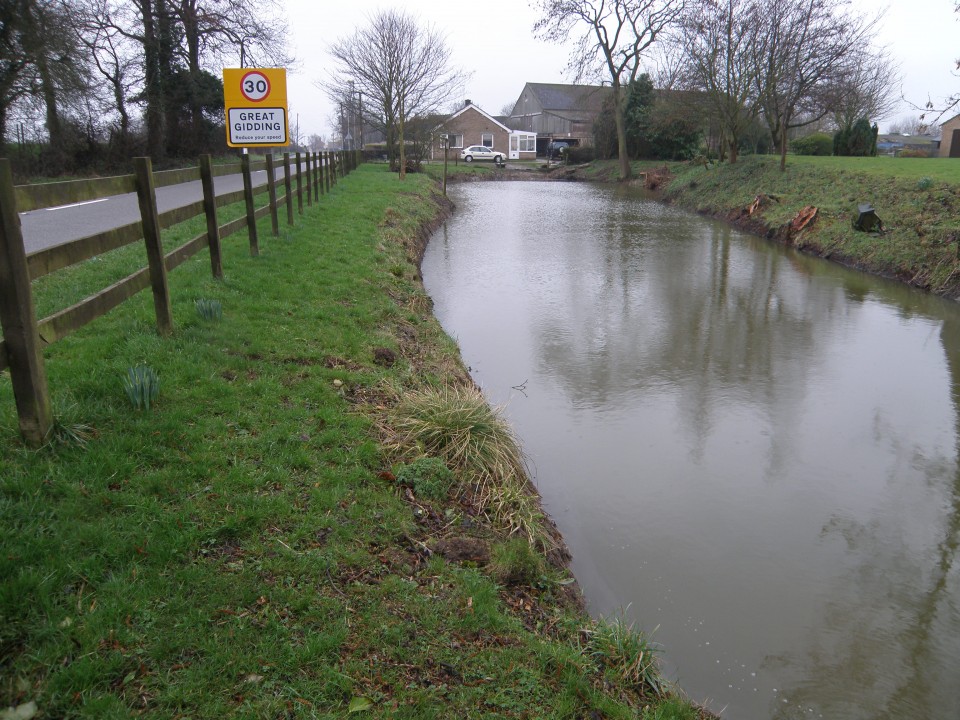
Two years on almost to the day and the aquatic life is thriving. The pond holds a good level of water and the drains work well both for filling and preventing overflow and consequently we have an environmental area that is attractive and functional. Bringing the story right up to date, the pond supports a thriving population of Great Crested Newts. Chapel End pond is now part of the Great Gidding Newt Trail.

An evening photograph of a newt survey underway.
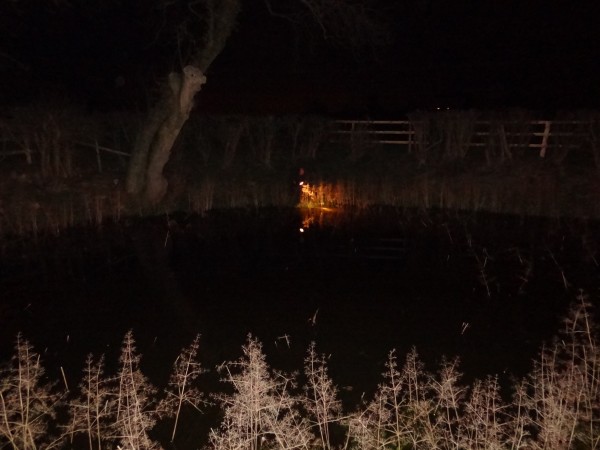
The hunt begins

Searching for Newts 19th March 2012
Townsend Pond

The big clean out

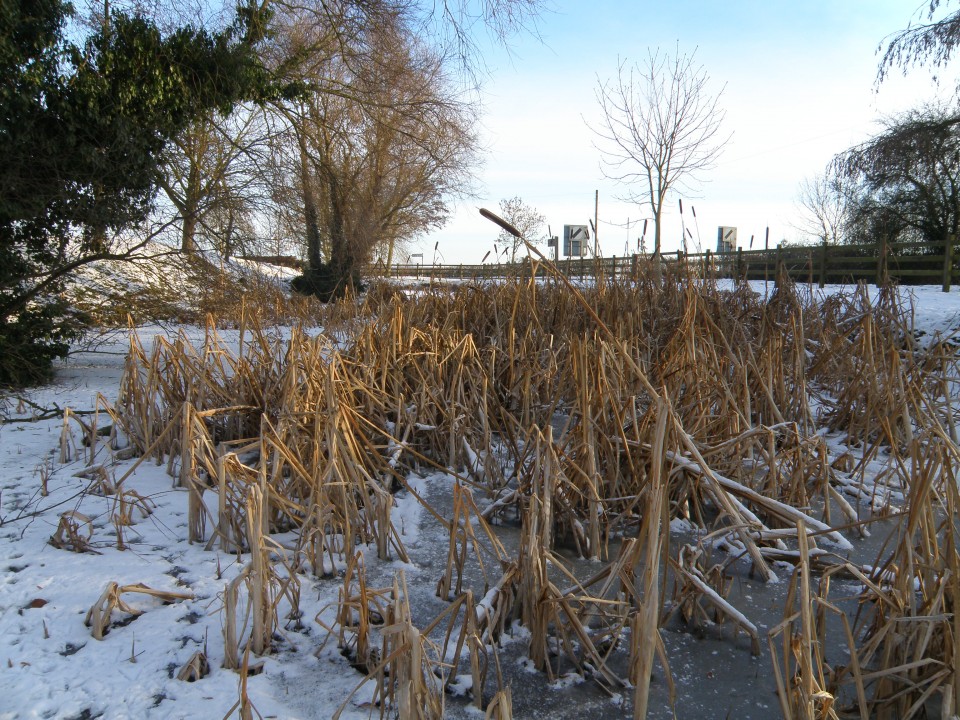
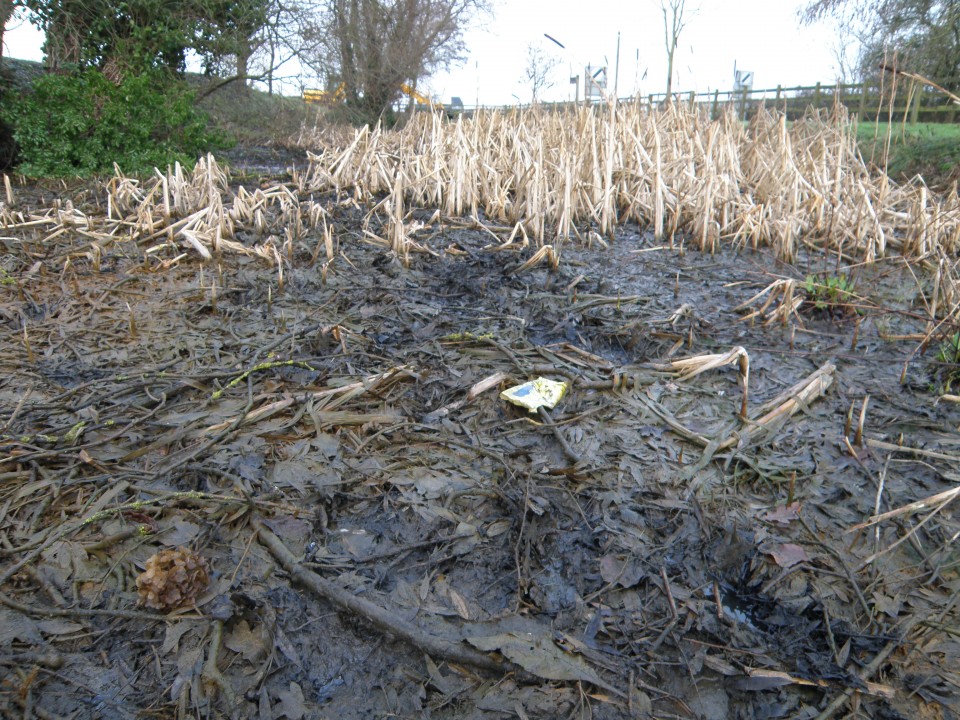
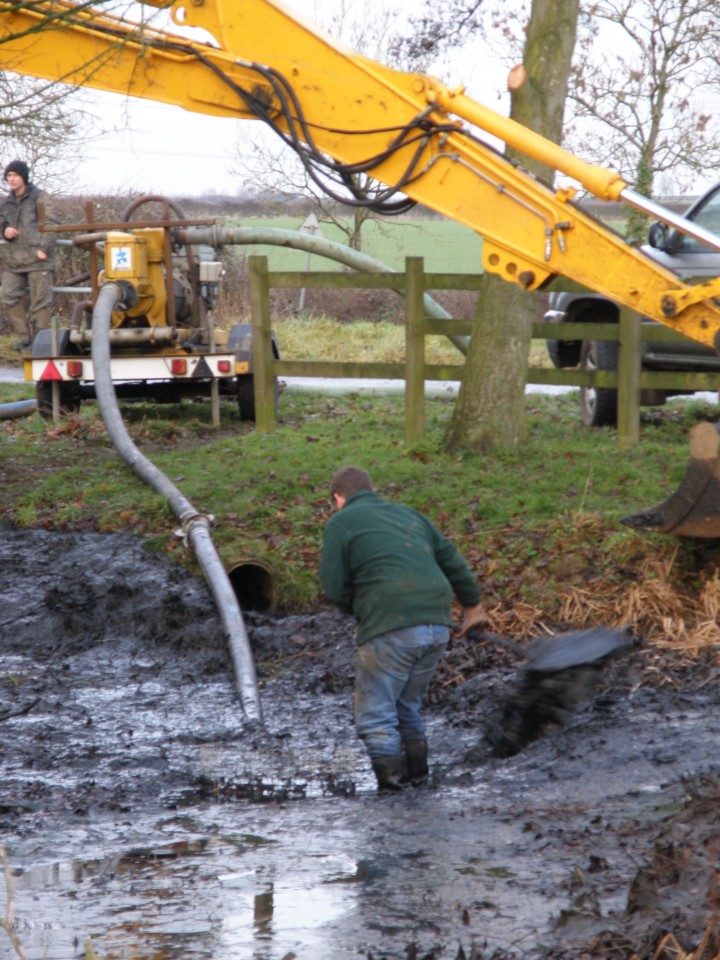
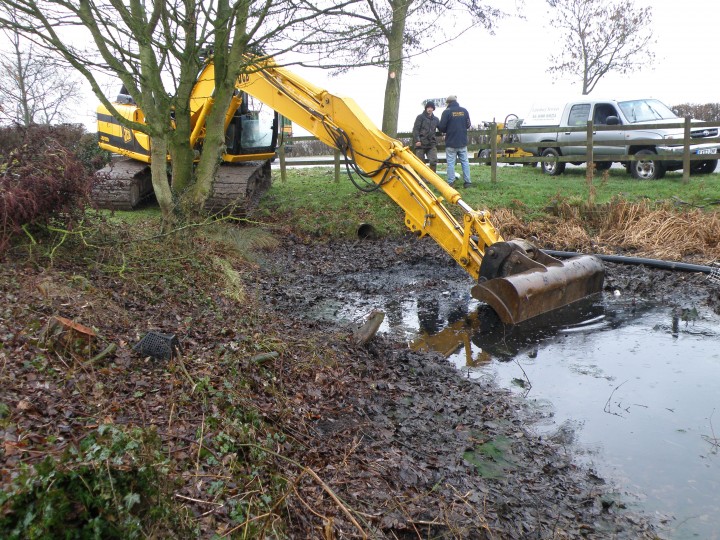
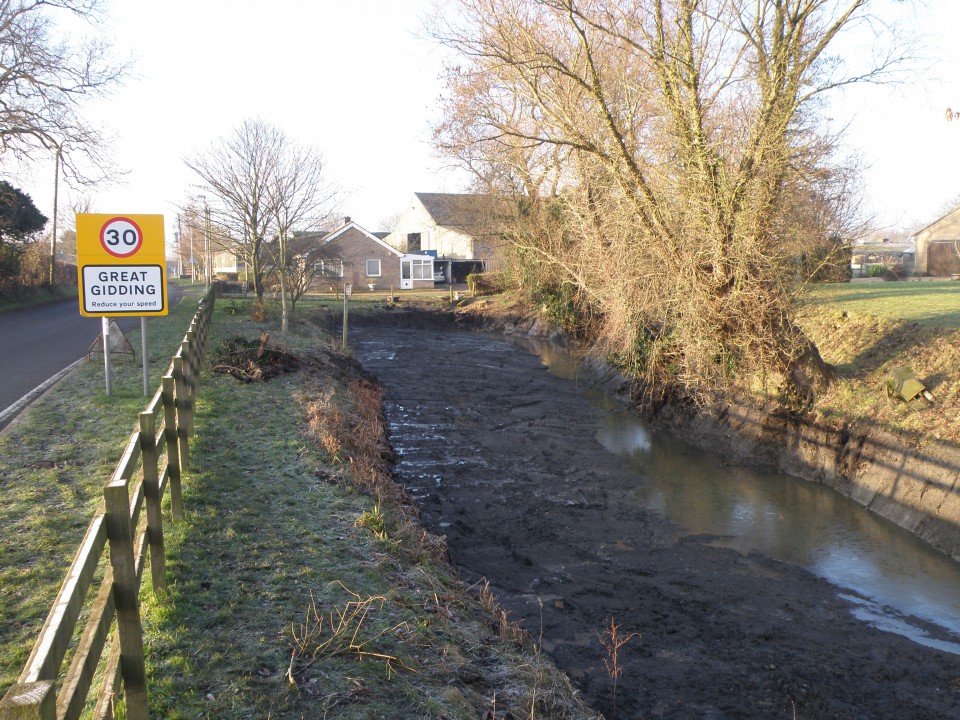
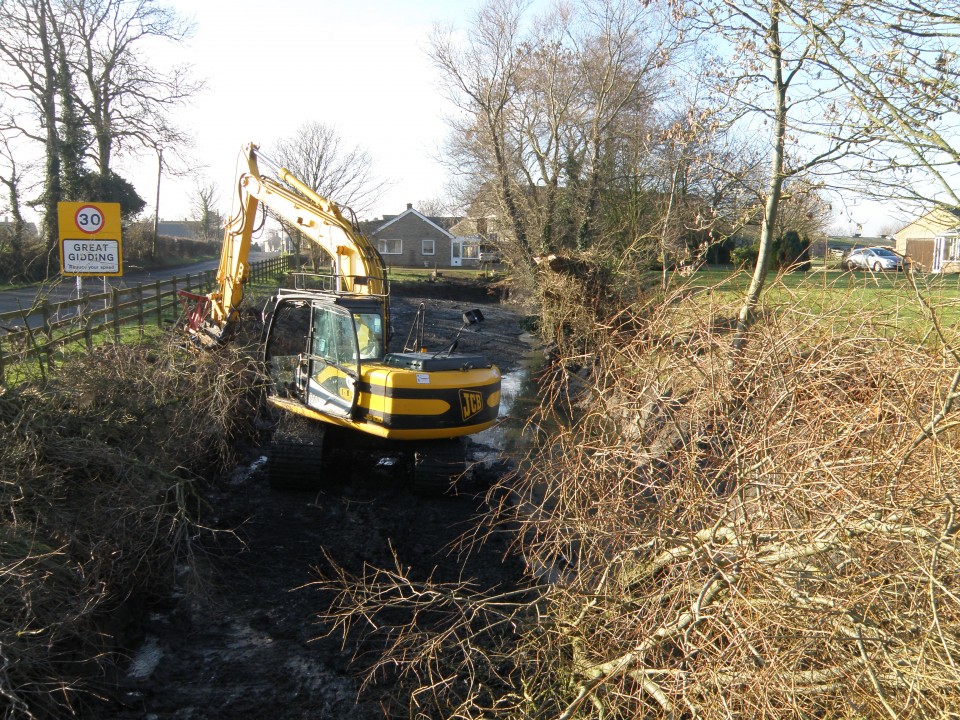
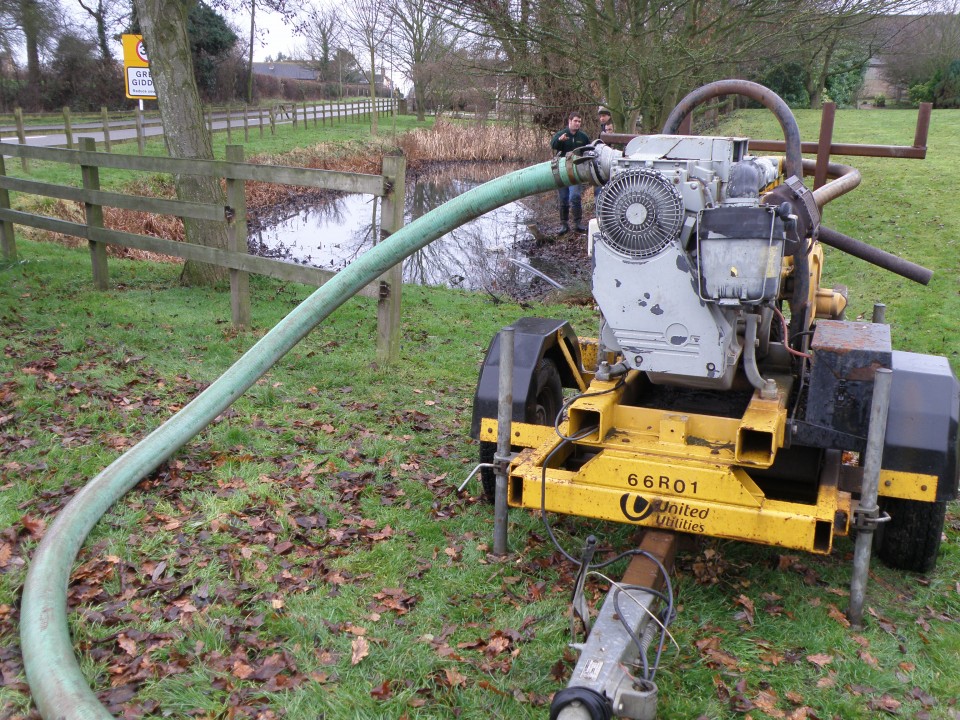
Townsend Pond or the Horse Pond as it is known in the village had reached crisis point. Almost completely silted up and giving off a foul smell when the water was low, it was becoming a bit of an environmental hazard. Long gone are the days when you could just get a gang organised and clear it out. Forms have to be filled in,notifications given and other ponderous red tape hurdles jumped.

Pond cleaning comes way down the list on priorities for any level of local government or agency so step in the Bedfordshire , Cambridgeshire, Northamptonshire  Wild life Trust along with some determined  Parish councillor activity and you get a result courtesy of a Lottery Environmental Grant for £10,000.  Certain criteria had to be met and managed but the result is a clean deep pond with a vibrant wildlife habitat and a viewing platform for serious pond dippers.

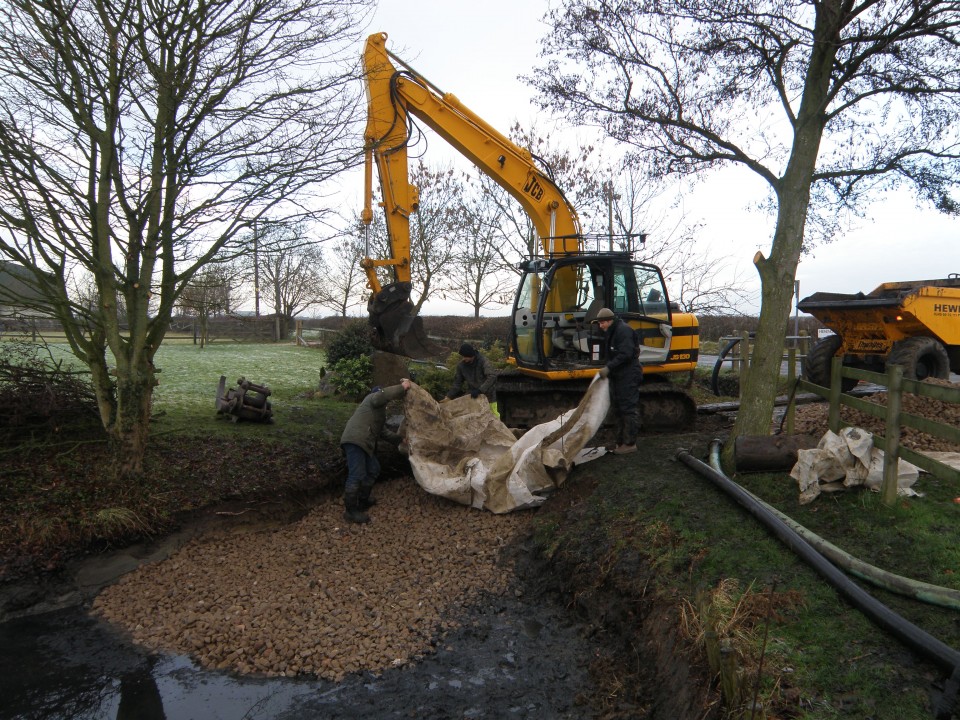
The work was carried out by Lattenbury Services who did a first class job.


A couple of thing of particular note were the benign weather conditions in January 2011 when the project started. No rain, the pond already low because of previous dry weather and the sunny days whilst the work was undertaken.

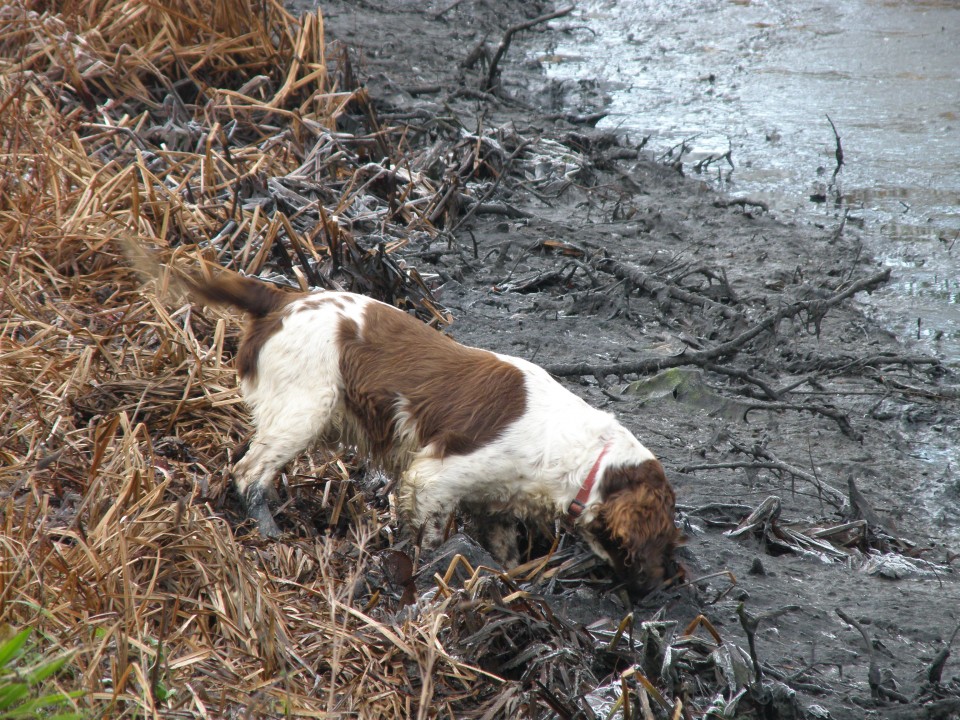
The second point was the remarkable cobble base that had been laid in previous times. When it was done, nobody’s quite sure but it was a sturdy piece of work and the lads carrying out the work this time were careful not to break this surface.

Another fact about Townsend Pond is that it used to stretch right to the road edge with a modest single rail wooden fence as the barrier. The pond was partially filled by using excavated soil when Great Gidding was put on to Mains Sewage in the late 1960’s.


Alfred’s Recommended website of the week

Alfred's Recommended website of the week

The Wildlife Trust  for Bedfordshire, Cambridgeshire and Northamptonshire.

Laura Watson, Community Conservation Officer produced the survey of the ponds in Great Gidding  their website, is packed with information and ideas to help us all enjoy our environment.

Look out for the Species A -Z  Everything you need to know from Acorn Barnacles to Zebra Spiders

Have you seen any toads this month? why not join Garden Watch or if you love Bluebells they have information just for you!

You can even sign up to receive their E-newsletter and so much more.

Bedfordshire, Cambridgeshire and Northamptonshire wildlife website