This coming Saturday, 5th February, there will be a working party in the Jubilee Wood, to tidy up the recently trimmed shrubs and trees. Michael will be there from 9.30AM, come along with heavy duty gloves as the main activity will be to add to the “dead hedge” (a structure made of the trimmings/prunings, to create a habitat for wildlife – come and see or take a look at the video below).
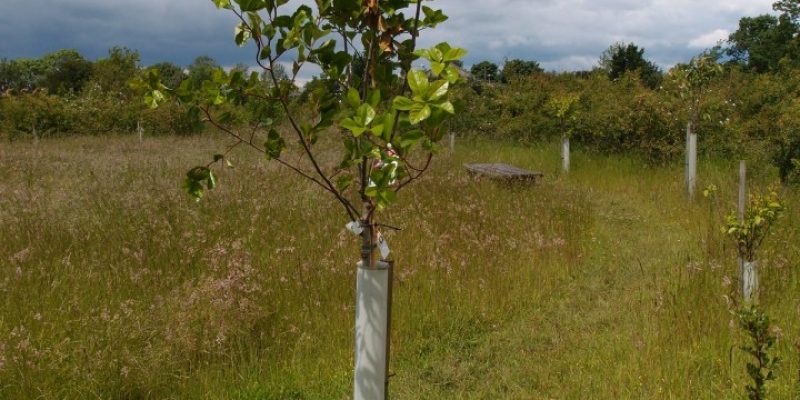
In addition, thanks to donations to the Great Gidding Charity, fruit trees have been purchased to be planted in the remaining spaces in the Orchard. These fruit trees have Royal associated names and will be planted to mark the Accession of Queen Elizabeth II to the throne, and the start of her Platinum Jubilee Year. At 11.00AM, there will be a rest from the activity, bring along a flask (you choose the contents), there will be cake, and we will drink a toast to Her Majesty.
Please spread the word to your neighbours, and join us at 9.30 AM or 11.00 AM.
After the blistering heat of May we have been enjoying a complete turn of weather in June with much needed rain and unusually strong winds which may or may not have made the insects happy. Some thunderstorms did reach us but fortunately weren’t serious enough to badly frighten the more sensitive animals and humans among us.
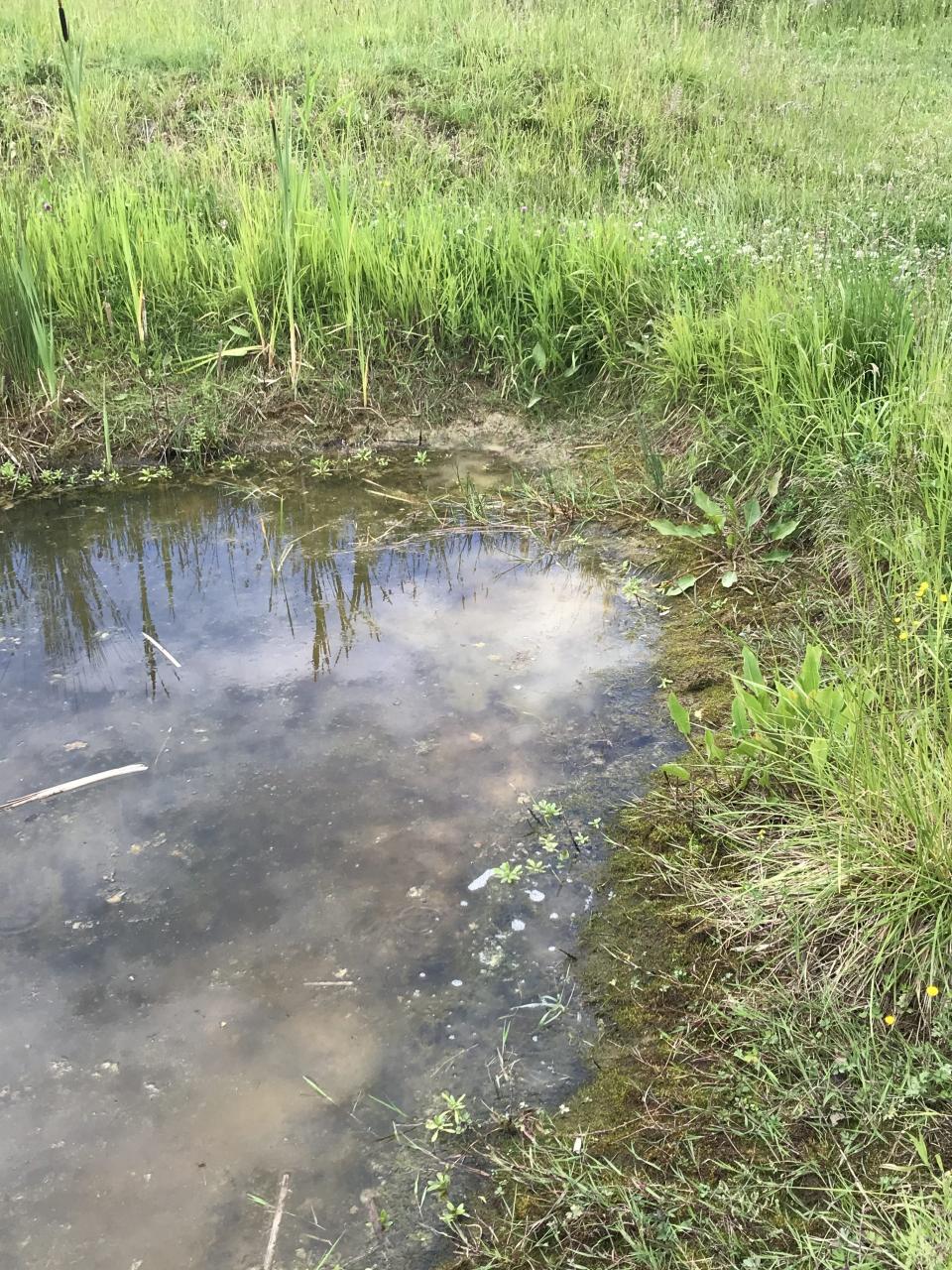
We still had some very warm days at the end of the month and the water level in the pond continues to lower, exposing the banks and generally making it more difficult to see what is going on as the weeds which were previously underwater are starting to poke their heads above the water line and the water is not so clear.
Butterflies
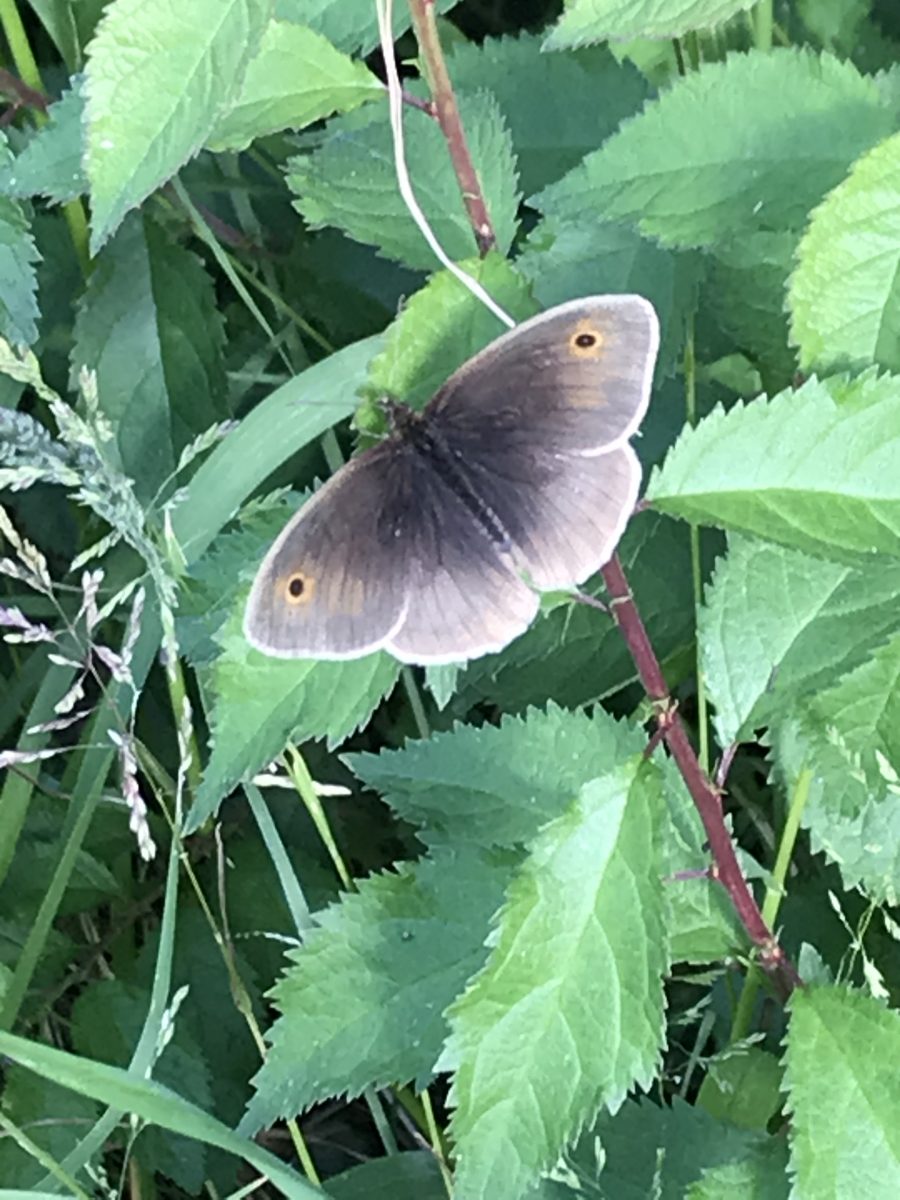
The warm weather has brought out the butterflies in the wood, and as you walk along the paths you can see drifts of Meadow Browns fly up around you. Many other butterflies are present and we can all learn more and connect with with the natural world on our doorstep by taking part in the Big Butterfly Count which starts on Friday 17th July until Sunday 9th August. You can download the App or sheets from the Butterfly Conservation Website (bigbutterflycount.org) and the whole family can take part. It only takes 15 mins so is perfect to do whilst walking around the wood and even if you don’t see any at all, it’s important to record it.
In medieval times chasing butterflies was seen as foolish and perhaps even sinful (wasting good working time!) and as they don’t produce anything useful like honey, or threaten us by stinging or biting they were seen as being pretty useless apart from tempting people away from work. Thank goodness times have changed and we can appreciate their beauty and fascinating lives…
Meadow brown in Jubilee Wood
Fruits
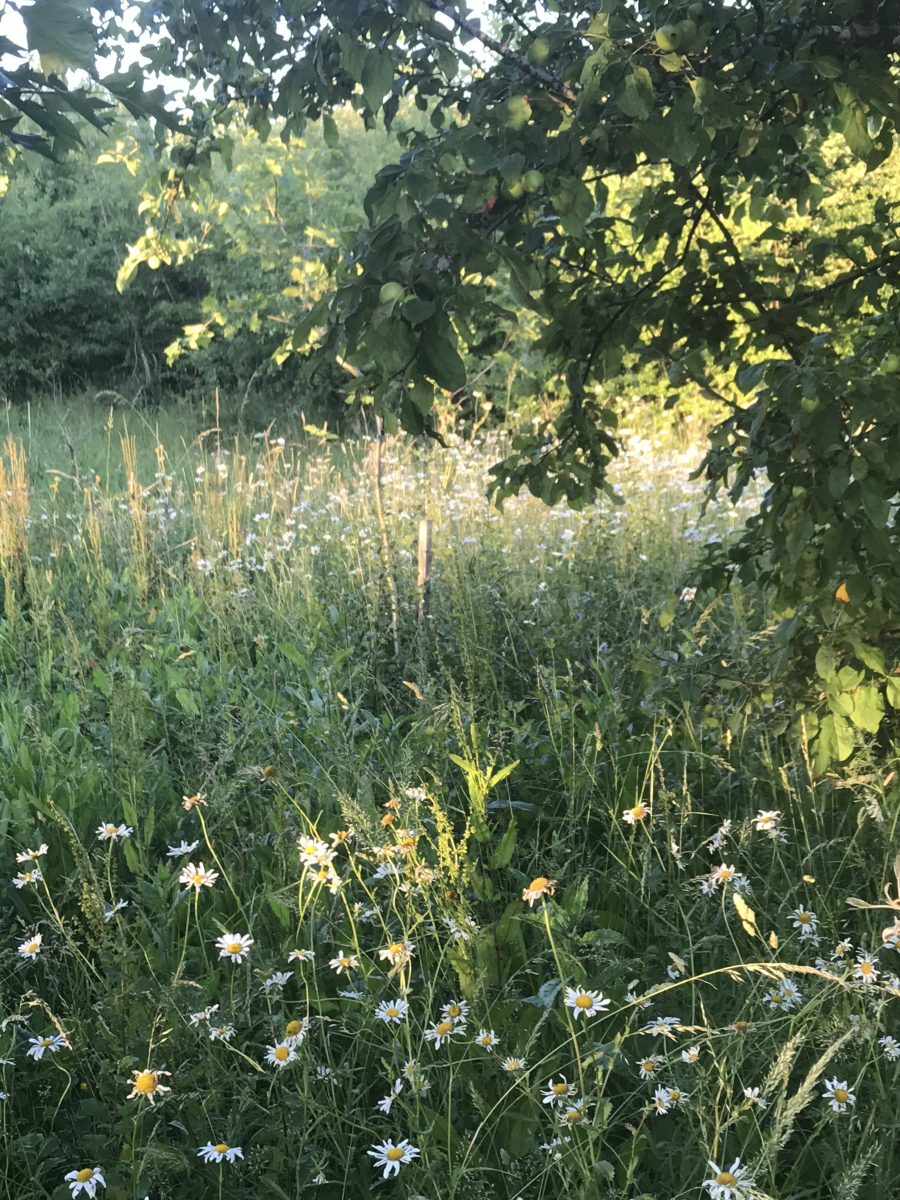
The trees in the wood are full of fruits and it promises to be a bumper year for many of them. Apples of all kinds, medlars, damson and hazel nuts to mention just a few. The village has a juicing press which is available for use by villagers and is now stored at the village hall so if anyone is interested in borrowing it or organising a community fruit pressing, please contact one of the Parish Councillors or the Clerk, Julie Trolove. All their details are on the website.
Trees
Ash dieback continues to be evident in the wood. As the spores of infection can be wind blown and are on the ground in the leaf litter from previous years, it’s almost impossible to control effectively.
It’s tempting to compare our present Covid pandemic with the pathogens that ravage some other species such as Dutch Elm disease, Varroa mite virus in bees, and Ash dieback. The causes may be varied: bacterial, viral, fungal etc., but after talking to someone who knows far more about these sort of things I realised that the pathogens all have one thing in common, and that is that they all need to keep their host alive in order to benefit from them. The more virulent strains are, strangely enough, likely to be the victim of their own success as the host dies so it’s often the less virulent ones that survive which could be seen as a slightly better outcome. We’ve seen how this modifies growth patterns in the Elm trees, which now rarely grow to maturity as the beetles which spread the fungus can detect young elms growing in hedgerows once they reach a certain size. In terms of trees, the hope is that identifying and breeding genetic variants which are resistant to or tolerant of the pathogens will allow us to see mature and plentiful specimens of Ash and Elm throughout our countryside in the future. What will happen to us humans is another matter……
Activities
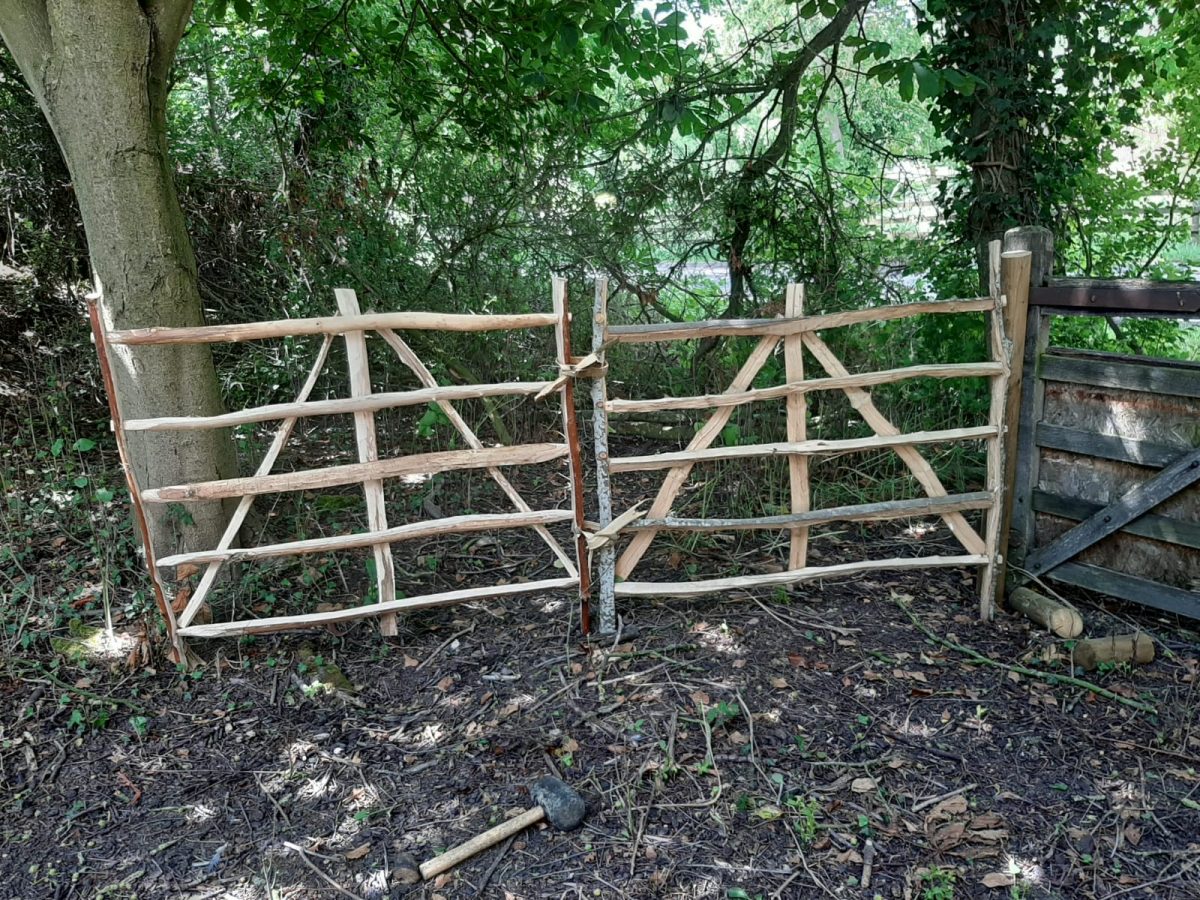
Ash sheep hurdles made by our very own village hurdle maker
Ash dieback has also provided an opportunity for some of the more creative members of the community to use their skills making sheep hurdles. They were originally used as lightweight fencing panels that could be moved easily from one area to another, wherever they were needed. From penning animals to shear or dip, to offering protection from bad weather, particularly at lambing time. They obviously had to be lightweight so several could be carried at one time over the shoulder but robust enough to be knocked into the ground and be used repeatedly. Michael has already embarked on making some hurdles from young saplings which needed to be thinned within the wood and perhaps it will be possible to get some feedback from him about the intricacies of the craft for a future blog….watch this space as not many villages still have an “old” village hurdle maker!!
Tomorrow, 6th July, Michael has organised a ‘Jubilee Wood ‘walk around’, 7:00 pm for a 7:15 pm start which is open to all. Please remember about social distancing but any questions, ideas and even (constructive!) criticisms will be welcome.
I wish you all a happy and healthy month ahead and hope that the recent lifting of some restrictions have helped to lift your spirits. No better place to celebrate than the Jubilee Wood!