December Jubilee Wood

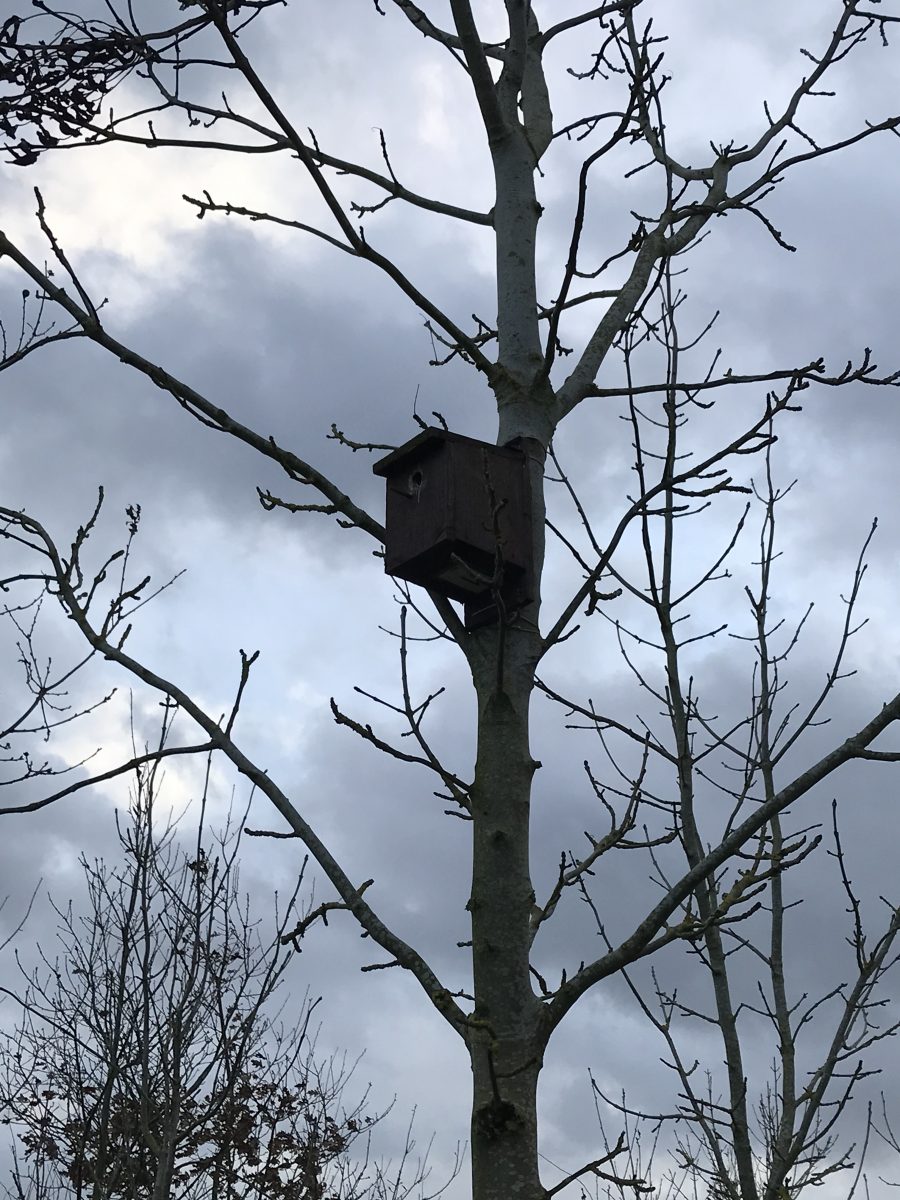
Bird box Jubilee Wood

December is traditionally the time for looking back over the year before looking ahead to the new one, which will undoubtedly be better and shinier with all the New Year’s resolutions we’ve so carefully made. The effects of too much eating and drinking can easily fool us all into making promises to ourselves that are harder to keep than to make!

However, weaving back through the Jubilee Wood memories of 2019, a tapestry of happy and interesting activities has been built up and stored on many a smart phone. Events such as pond dipping, creating art from nature, the making of hay and celebration of the summer solstice are just a few of the community get togethers that have taken place in the wood. The weather favoured some and not others but even that was always a useful reminder that we still can’t control that part of nature. After a dry spring, a mixed summer and a very wet late winter, inky black stretches of water can now be seen underneath the hardy hawthorns, and the pond has risen to new heights in an attempt to break its banks.
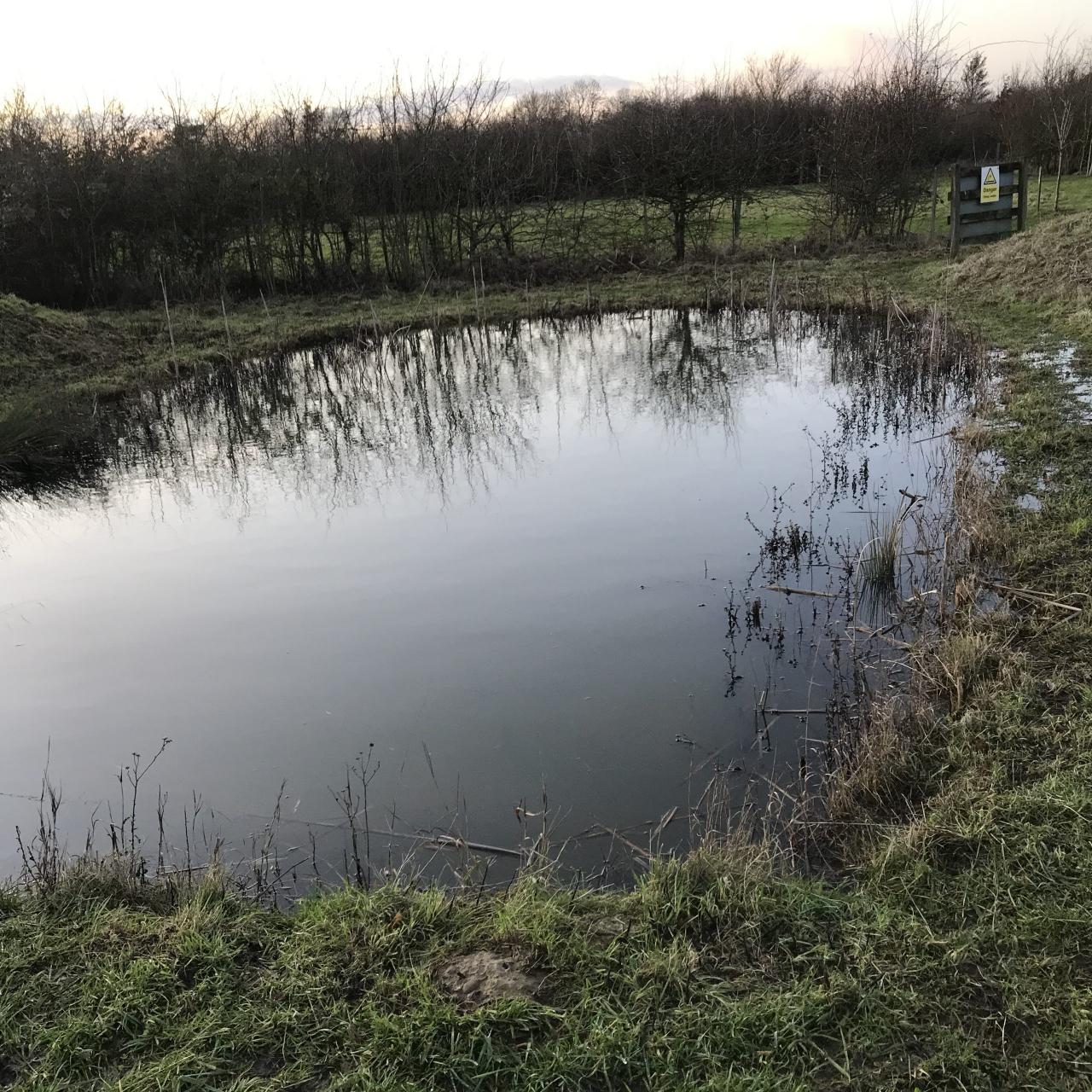
Jubilee Wood pond Dec 2019
Jubilee Wood pond December 2019

What went on in 2019?

The Jubilee Wood continues to be a place of quiet reflection for many as well as a fascinating place for anyone interested in nature and wanting to learn new things. The Huntingdonshire Fauna and Flora Society came and carried out a survey in June which is a useful benchmark regarding what can be found in the wood, and volunteers could help to build on the information by helping with a short survey in 2020 – watch this space for further details! The pop up events which took place throughout the year are a testimony to the generosity of those people who organised them and gave their time and expertise free of charge, as well as the interest that many of us have in learning something new. Perhaps for some of us it’s a case of revisiting things we had long forgotten, but sometimes that brings with it the memories of childhood pleasures such as the first time we went pond dipping or had different trees pointed out to us….. how many of us can recite different rhymes we learnt long ago about Oaks and Ashes or not casting a clout before May is out? According to the Friends of the Earth, half of the people in Britain who took part in a study couldn’t identify an oak leaf! Very unscientific as no details are given about the people who took part but perhaps we could all get more pleasure from nature if we understood a little more about it. The link to their tree quiz is at the end of the blog if you’re interested.
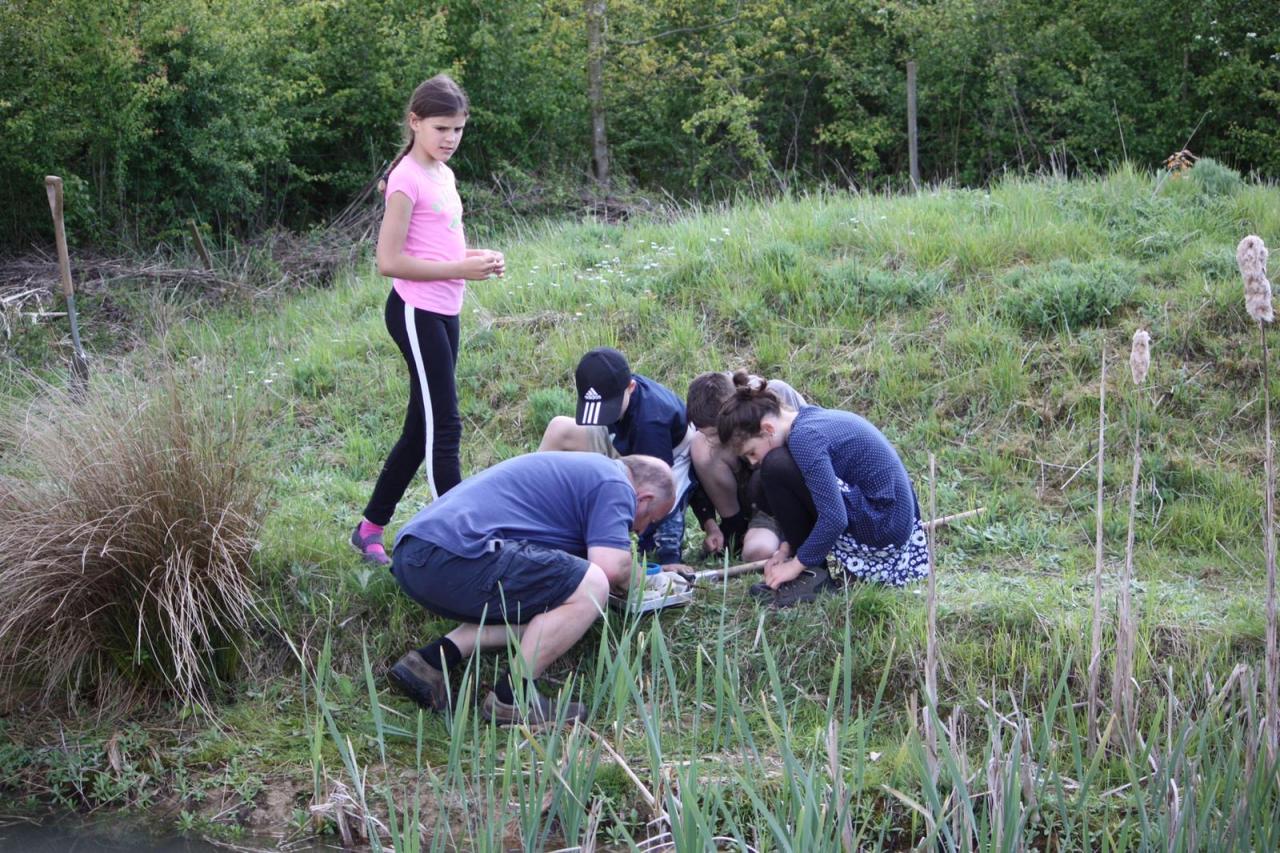
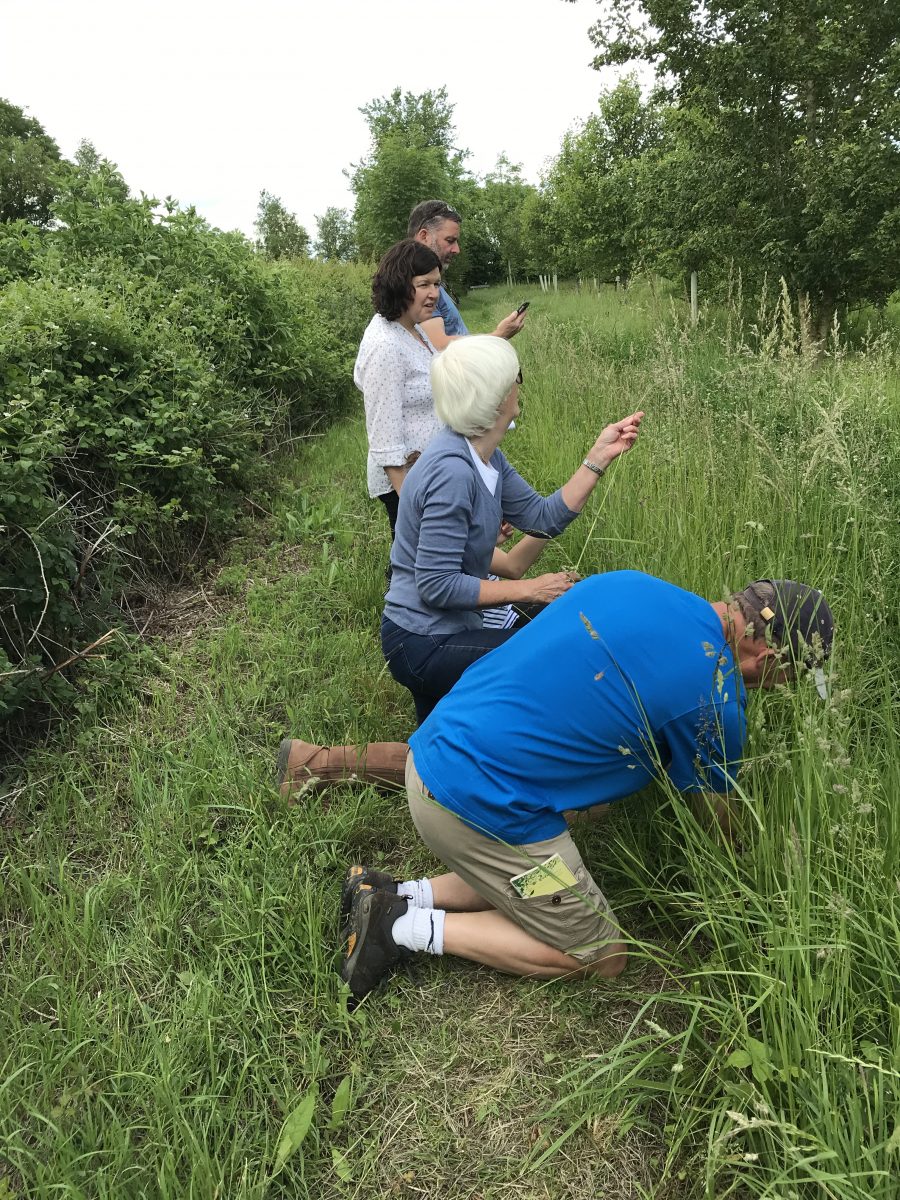
Pond dipping Jubilee Wood 2019
Pond dipping May 2019
Grass identification Jubilee Wood June 2019
Grass identifiction June 2019
Art in Nature Jubilee Wood August 2019
Art in nature August 2019
Holly Copse Jubilee Wood 2019
New Holly copse

What’s in store for 2020?

Looking forward to 2020 there will surely be many more fun and interesting events in the wood as long as people support this wonderful resource we have. Volunteers continue to manage the woodland by cutting back intrusive brambles and young hawthorn, and planting up new areas such as the holly copse.

You may have already spotted a couple of new additions as you wander around, especially if you’re a dog walker. The new dog pooh bin at the entrance should be a great help to dog owners, making it easier to keep the wood clean for everyone.  There is also a new …….art installation? or bird hide?…….. which has been created just off one of the main paths of the wood. A wonderful example of how waste material from the wood (in this case coppiced hazel) can be used to provide both a functional bird hide which fits in perfectly with its surroundings as well as something beautiful to look at. Anyone for willow weaving sculptures next year?!

Hazel hide Jubilee Wood 2019
Hazel screen

Finally, thanks to all the volunteers who, throughout the year, give their time to maintaining Jubilee Wood but especially to Michael who keeps the show on the road. Without his enthusiasm and hard work the wood could easily lose the diversity of species which is slowly but surely being built up. Sustainable woodland management allows a habitat to become a wonderful place, much loved by humans and of great benefit to plants and animals when managed well. Many people contribute in different ways to make our community wood a special place; making and positioning bird boxes, turning up on cold wet days with secateurs and strimmers to help manage the wood, cooking delicious cakes and soups for community events.

Hopefully, many more people will enjoy and share in the wood in 2020. Happy New Year.

The Wood Wanderer 
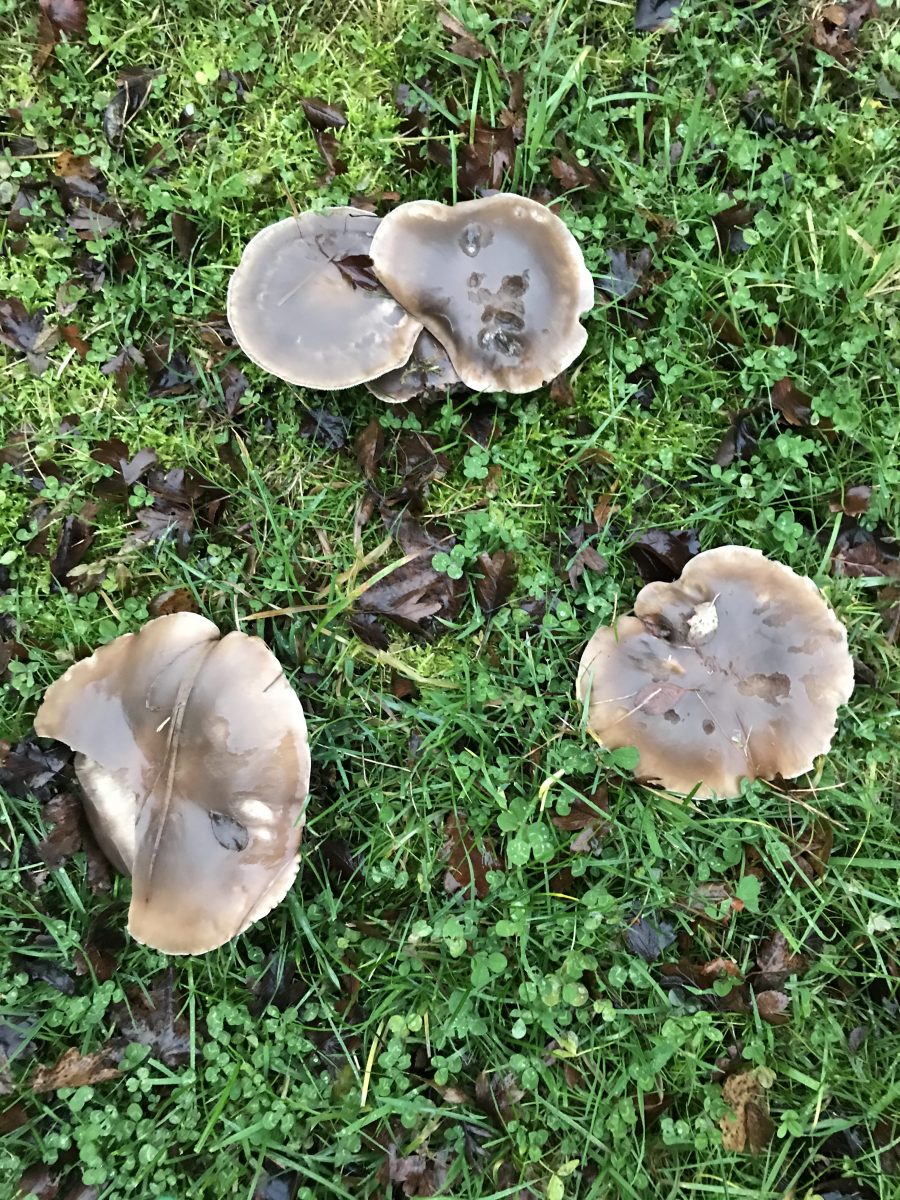
October /November in Jubilee Wood 2019

Winter maintenance work continues in the wood by hard working volunteers, with strimming around the pond and other areas, tidying up around the paths and hedges, and general clearing up where necessary. All these jobs improve the access and quality of the wood, and to help those of us whose identification skills are a little rusty, a selection of Field Studies Council laminated cards have been purchased with money raised from the Spring Plant sale and are now available to read and study in the arbour by the pond.

You say mushroom I say toadstool!

The frosty nights and chilly days in the last couple of days in November reminded us that winter is on its way. However, the relatively mild but wet weather over the last few weeks have encouraged many large mushrooms to emerge along the pathways in the wood, and got me wondering about the difference between a mushroom and a toadstool. It seems that there’s no real scientifically accepted difference and the terms can sometimes be used interchangeably for the same types of fungus, although the word toadstool seems to have a more negative association which is probably associated with folklore. Many fungi looked the perfect size and shape for a toad to sit on and as many toads were thought to be poisonous, the ‘toad stool’ was also considered dangerous to eat! Probably not such a bad thing, as we  have 14 species of poisonous fungi in the UK, so it’s very wise to leave them alone unless you know what they are as they can literally kill humans. You can often see where badgers and other animals have rooted around them and deer, rabbits, mice and squirrels as well as slugs and snails like tucking in to what is really the fruiting bodies of the fungus. Fungi can’t make its own food like plants by photosynthesis so produces enzymes which break down waste organic matter (like dead plants or animals) to be absorbed through fine threads, called the mycelium, and used for growth. We often can’t see the mycelium when it grows with roots of plants underground but it helps plants to improve their water and nutrient uptake and in return the plants provide fungi with sugars from photosynthesis.

What use are they?

Fungi also efficiently break down wood so are essential in our wood to help stop dead wood and leaves building up and then recycling nutrients back into the soil. There would be a significantly higher ground level amongst the trees in Jubilee Wood without them! With regards to other uses, not only are they used in medicines such as the well known penicillin, but also ‘anti-rejection’ drugs in organ transplants , and in many foods and drinks. Fizzy drinks, beer, wine, coffee and chocolate, as well as bread, cheese and [love it or hate it] Marmite, all depend on fungi. Not classified as either plants or animals, fungi belong to their very own group called a kingdom and have been around for millions of years, adapting to environments as different as the Arctic to the deserts and have even been found in space. Fungi are the heroes of recycling as we, as a species, wouldn’t be able to survive on this planet without them, so next time you walk around the wood and  see the humble mushroom[or toadstool],  just take a moment to think about how marvellous fungi are.

Jubilee Wood mushroom November blog

Useful Websites

https://www.woodlandtrust.org.uk/trees-woods-and-wildlife/fungi-and-lichens/

https://www.growwilduk.com/fungi/why-fungi-matter

Jubilee Wood species list

Jubilee Wood Summer 2018

Jubilee Wood, Great Gidding 16 June 2019

(agg) = aggregate species – not identified down to precise species
cf = compare with – identity not absolutely confirmed
sp = species – not identified down to species

Trees & Shrubs

  • Acer campestre – Field Maple
  • Aesculus hippocastanum – Horse Chestnut
  • Cornus sanguinea – Dogwood
  • Corylus avellana – Hazel
  • Crataegus monogyna – Hawthorn
  • Fraxinus excelsior – Ash
  • Juglans regia – Walnut
  • Malus sp – Apple
  • Prunus spinosa – Blackthorn
  • Prunus sp – Cherry
  • Pyrus sp – Pear
  • Quercus robur – Pedunculate Oak
  • Rosa arvensis – Field Rose
  • Rosa canina – Dog Rose
  • Rubus fruticosus (agg) – Bramble / Blackberry
  • Salix sp – Willow
  • Tilia cordata – Small-leaved Lime
  • Ulmus sp – Elm

Grasses & Rushes

Alopecurus pratensis – Meadow Foxtail
Arhenatherum elatius – False Oat-grass
Cynosurus cristatus – Crested Dog’s-tail
Dactylis glomerata – Cock’s foot
Festuca arundinacea – Tall Fescue
Holcus lanatus – Yorkshire Fog
Hordeum secalinum – Meadow Barley
Juncus cf articulatus – Jointed Rush
Juncus inflexus – Hard Rush
Lolium perenne – Perennial Ryegrass
Phleum pratense – Timothy
Poa annuaAnnual – Meadow Grass
Trisetum flavescens – Yellow Oat-grass
Typha latifolia – Reed mace (often incorrectly called ‘Bulrush’)

Flowering Plants

Alisma plantago-aquatica – Water Plantain
Bellis perennis – Daisy
Cerastium fontanum – Common Mouse-ear
Cirsium arvense – Creeping Thistle
Cirsium vulgare – Spear thistle
Convolvulus arvensis – Hedge Bindweed
Dactylorhiza fuchsia – Common Spotted Orchid
Epilobium cf lanceolatuma -Willowherb,possibly Spear-leaved Willowherb
Galium aparine – Common Cleavers (aka ‘Goose-grass’ or ‘Scratch-grass’)
Galium verum – Lady’s Bedstraw
Geranium dissectum – Cut-leaved Cranesbill
Glechoma hederacea – Ground Ivy
Hedera helix – Ivy
Heracleum sphondylium – Hogweed
Hypochoeris radicata – Common Cat’s-ear
Lamium album – White Dead-nettle
Leucanthemum vulgare – White Daisy
Lotus corniculatus – Bird’s foot Trefoil
Medicago lupulina – Black medick
Odontites verna – Red Bartsia
Picris echioides – Bristly Ox-tongue
Plantago lanceolatum – Ribwort Plantain
Potentilla reptans – Creeping Cinquefoil
Prunella vulgaris – Self heal
Pulicaria dysenterica – Common fleabane
Ranunculus acris – Meadow Buttercup
Ranunculus flammulla – Lesser Spearwort
Ranunculus repens – Creeping Buttercup
Rumex crispus – Curled Dock
Rumex obtusifolius – Broad leaved Dock
Senecio erucifolius – Hoary Ragwort
Senecio jacobaea – Common Ragwort
Torylis japonica – Upright Hedge Parsley
Trifolium campestre – Hop Trefoil
Trifoliium dubium – Lesser Trefoil
Trifolium pratense – Red Clover
Trifolium repens – White Clover
Urtica dioica – Nettle
Vicia hirsuta – Hairy Tare
Vicia sativa (agg)Common Vetch

Other Insects

Broad-bodied Chaser (dragonfly)

Jubilee Wood September 2019

Jubilee Wood September 2019

The days are rapidly getting shorter and the sun is moving lower in the sky as September comes to an end. As I write this on the twenty-third of September, I’m reminded that it is the Autumn equinox when day and night are of equal length. To make up for the gloom that some people can feel at this time of year, it is also thankfully a time of spectacular display in terms of nuts and berries, seeds and fungi, and the sight of flocks of migratory birds coming and going.

The hedgerows in the wood are full of blackberries and sloes, elderberries and haws, all ready for thrushes and blackberries to pick off their branches and for voles, hedgehogs and squirrels to harvest off the ground. The unusual episodes of hot weather we’ve had this summer seem to be abating and the sun is finally tolerable with a little more promise of rain in the air. The water level in the pond had become very low but, as always, regular observers will know that it will rise with the winter rain and will soon be back up to bank level.

Nature’s larder

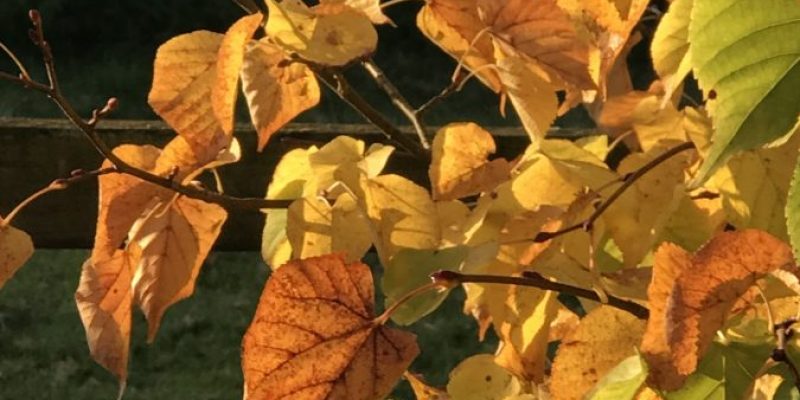
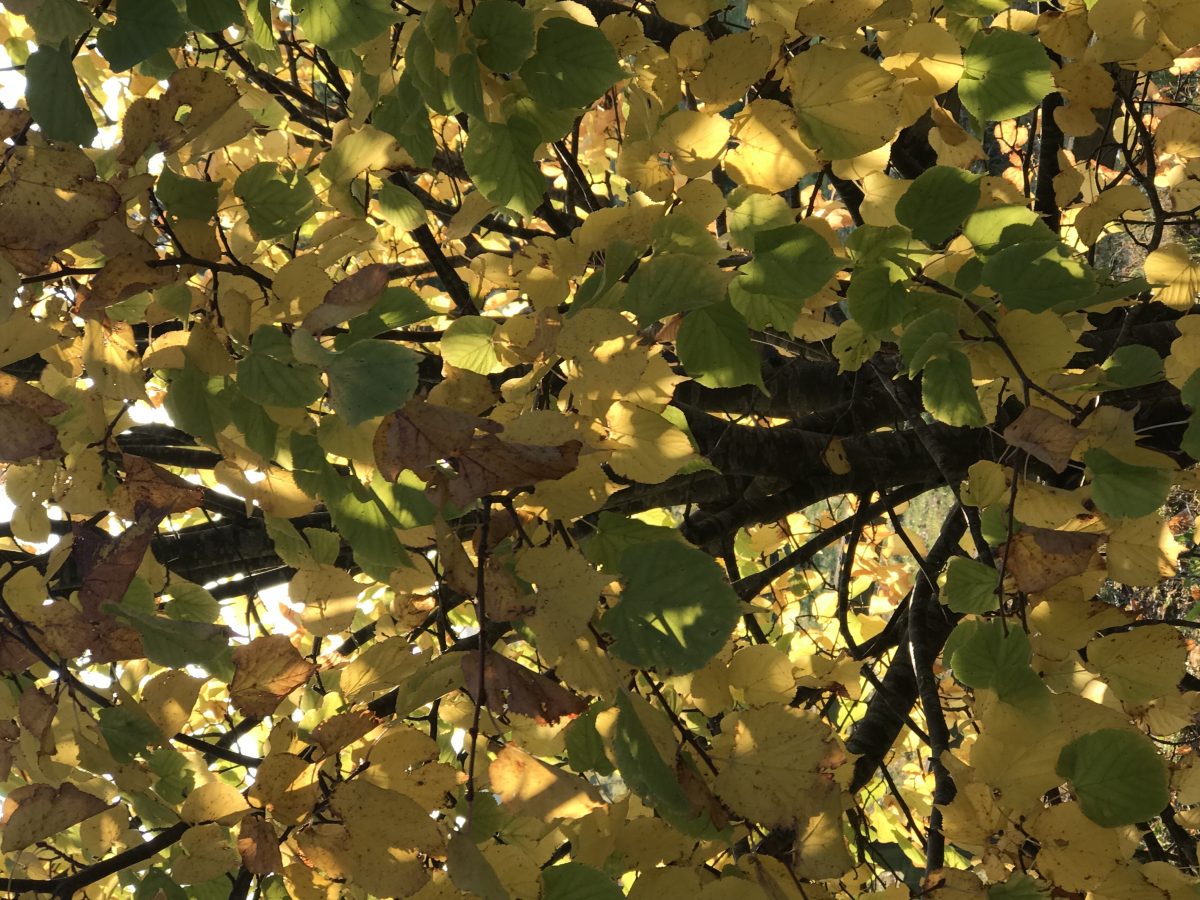
As the days get shorter and the nights get colder, the wood is gradually transforming as green leaves become yellow with bursts of red or purple. Berries and hips of all colours are providing a shiny display and the hazel nuts in the far corner of the wood are no doubt tempting squirrels and all sorts of mice and voles. They are high protein energy sources and are just as attractive to humans once they are brown and ripened. As one of the first foods picked by humans, they still haven’t lost that appeal as sales of a certain nut spread and individually wrapped chocolates confirm. Thanks to thoughtful planting by organisers and volunteers, Jubilee Wood is a larder of free food for all of us as well as a feast for the eyes. Soon the autumn colours will be dispersed by the October gales that seem to be becoming a regular occurrence so why not take a wander round before the next stage of the seasonal circle is centre stage?

The Wood Wanderer

Don’t forget to send in your sightings to specieslist@thegiddings.org.uk

Jubilee Wood August 2019

Jubilee Wood August 2019

August had been disappointingly cold and quite wet until the scorching bank holiday weekend, when butterflies fluttered around the edges of the wood and swallows flew high to find food… when swallows fly high, the weather will be dry.

Of course there is a practical reason for that rather than our avian friends having oracular powers, as on fine days insects are swept up high on warm thermal currents rising from the ground and that’s what the swallows feed on. No doubt we’ll all remember August as being hot and balmy which made it difficult to sleep at night but it was actually only a few days, followed by that spectacular thunder and rain which caught a few of us out as we forgot to close all the windows or was it only me?

Art from Nature event

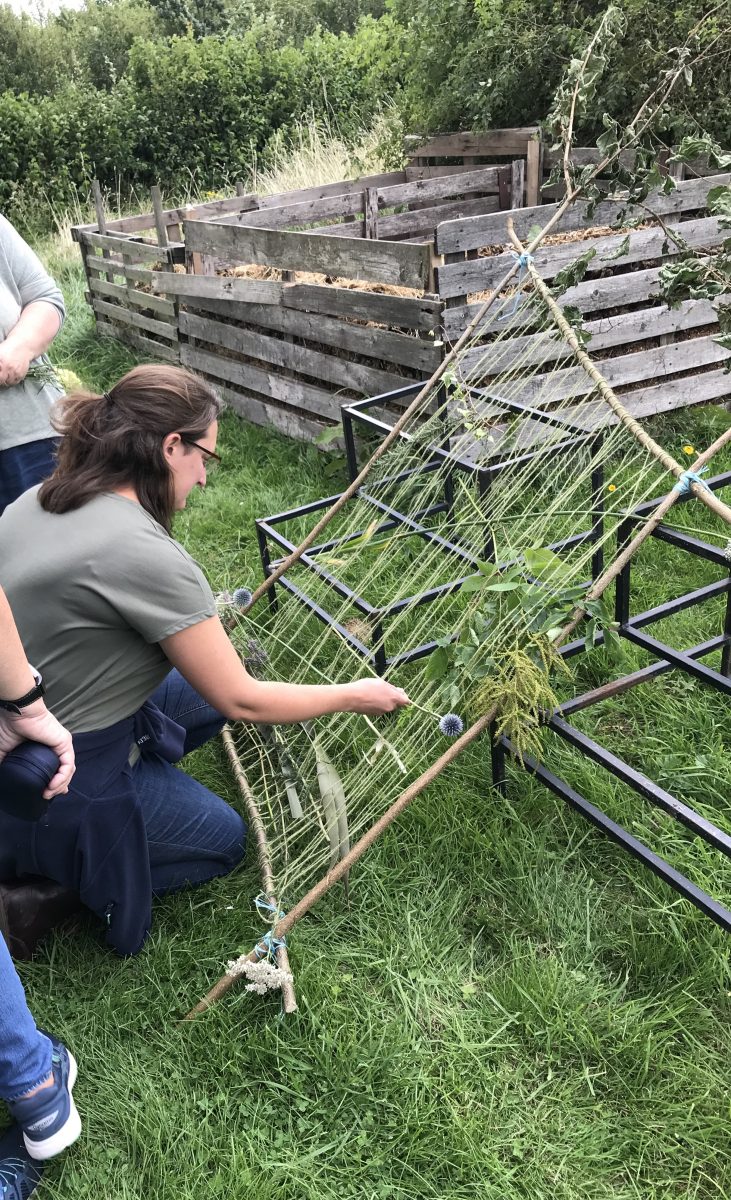
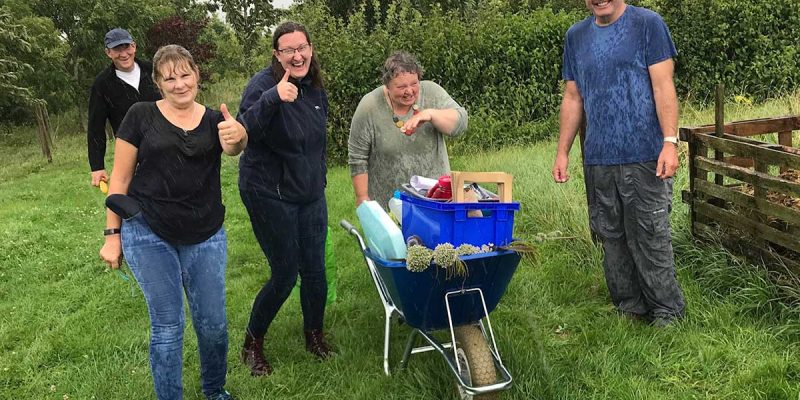
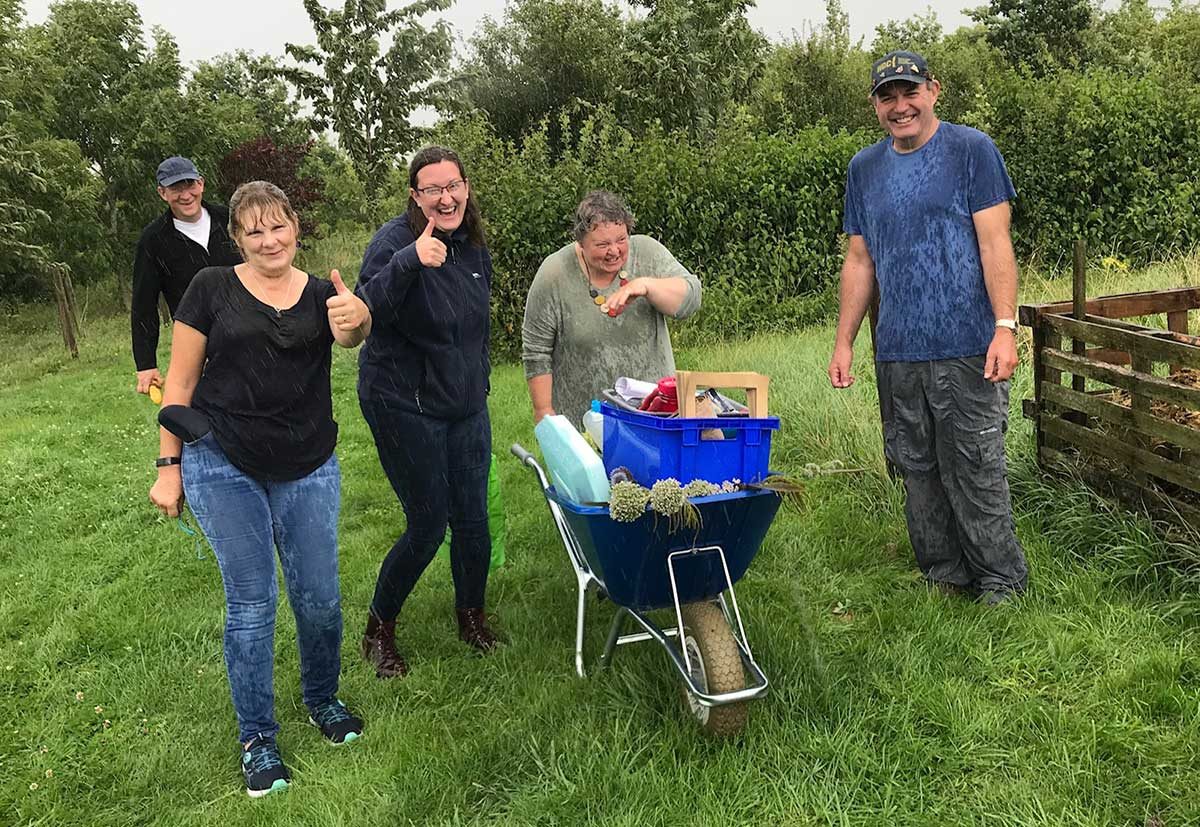
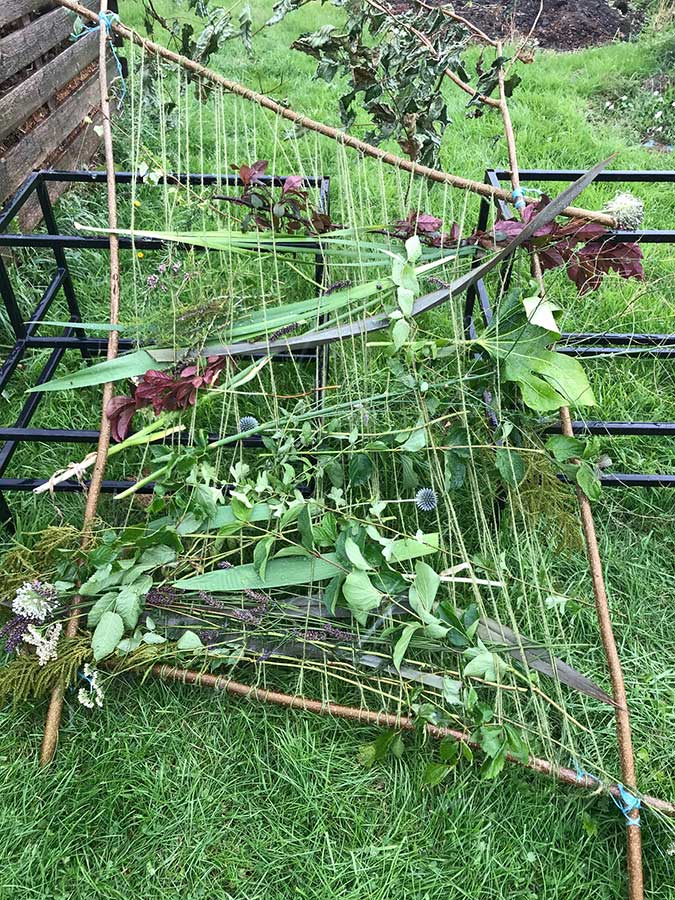
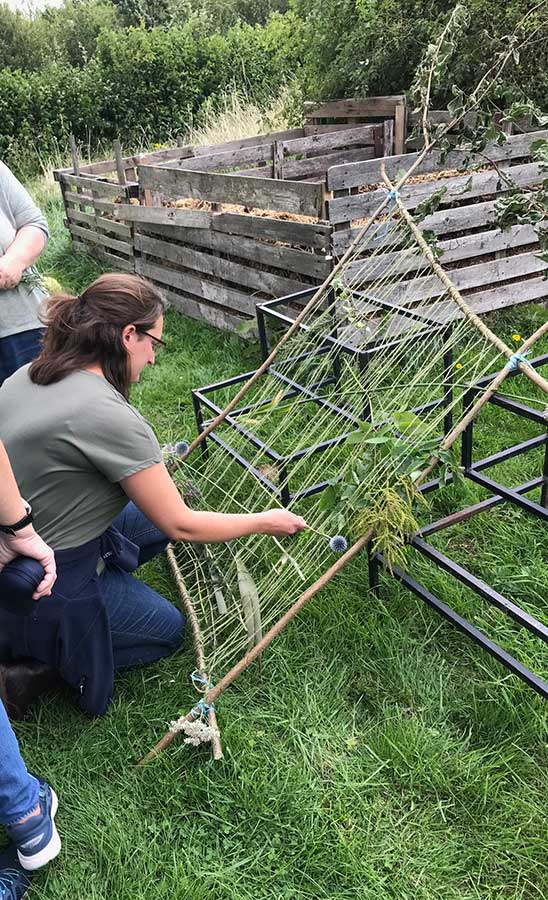
One Sunday early on in the month, several of us ventured down to the wood to try our hand at being artistic. Thanks go to Julie Trolove for providing us with greenery and grasses to get us started and for making a large weaving frame out of hazel and string. All started well with the sun shining and enthusiastic helpers having a go but as the building clouds darkened and the first spots of rain fell, we gatherers ended up searching for cover under the trees rather than material for weaving! Unfortunately it wasn’t going to be a short shower that day, but more of a prolonged and heavy downpour,  so drenched but still smiling, we decided that this was an activity for another, drier day!

Bird talk

Many of us are still lucky enough to hear some birdsong in our gardens at this time of year but might be disappointed not to see and hear them in the wood. The reason for their lack of appearance is very likely due to their seasonal moult. They are keeping out of sight in dense vegetation because they are moulting their feathers and are more susceptible to predators. Moulting is costly in terms of energy for birds so usually takes place when conditions are favourable for them, such as  after breeding when there is an abundance of food and cover. A little research  revealed some interesting facts about the time different species take to moult: a Blue Tit takes about 6 weeks, a Herring Gull can take 6 months and a Buzzard may take several years for a complete change of flight feathers. Keratin needed to make feathers is less abundant in vegetation than in insects,  so seed eating birds like Chaffinches usually take a couple of weeks longer to moult than insect eating birds like Robins and Dunnocks. It would be good to know how long it takes the Red Kites who constantly soar over the wood to moult, but even they seem to have been less noisy this month. The  dawn chorus is also much quieter, if heard at all, as summer draws on and most  birds have attracted their mates and raised their chicks so have less need to sing and protect their territory.  Some families of birds such as blue or long tailed tits can occasionally be sighted as they forage for food in and out of the trees and long grasses but others such as the swifts and swallows are already gathering together to fly back to Africa. 

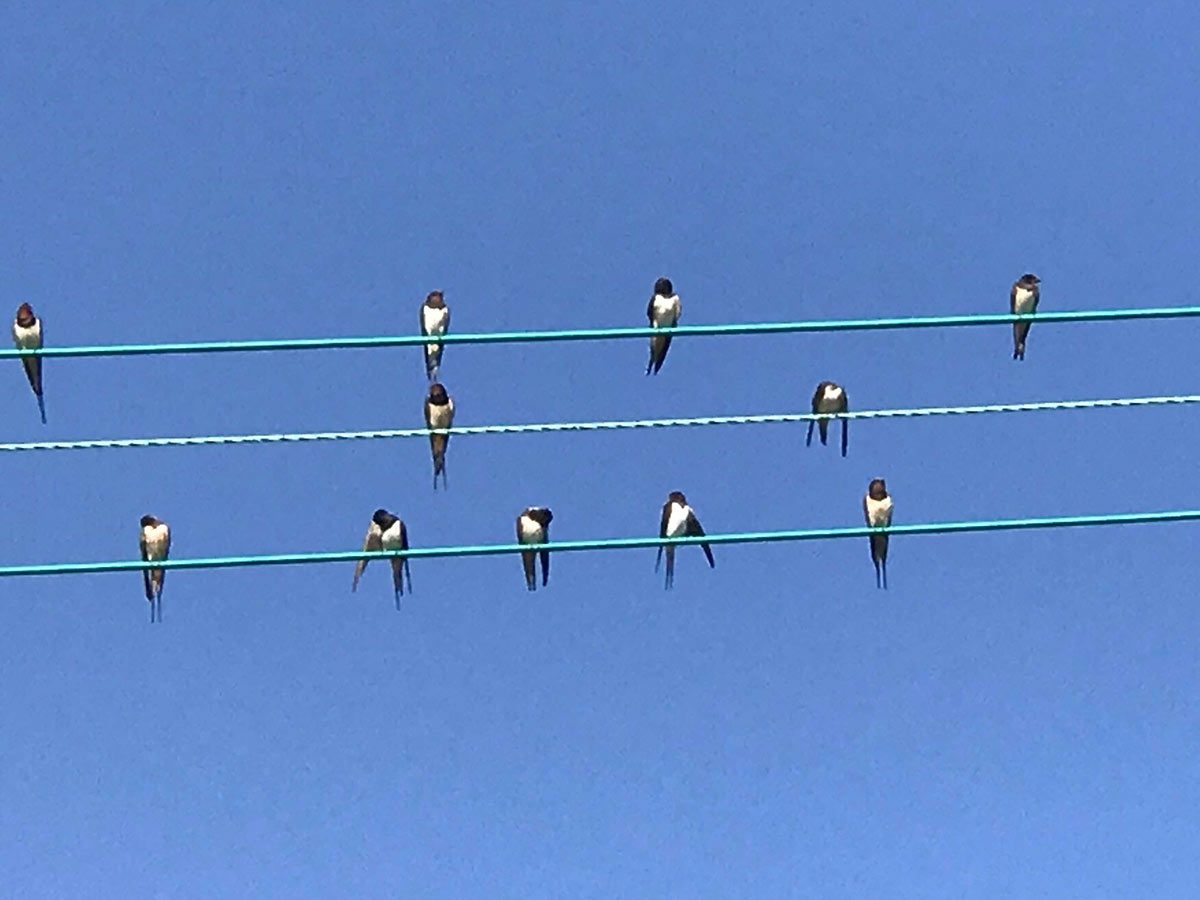
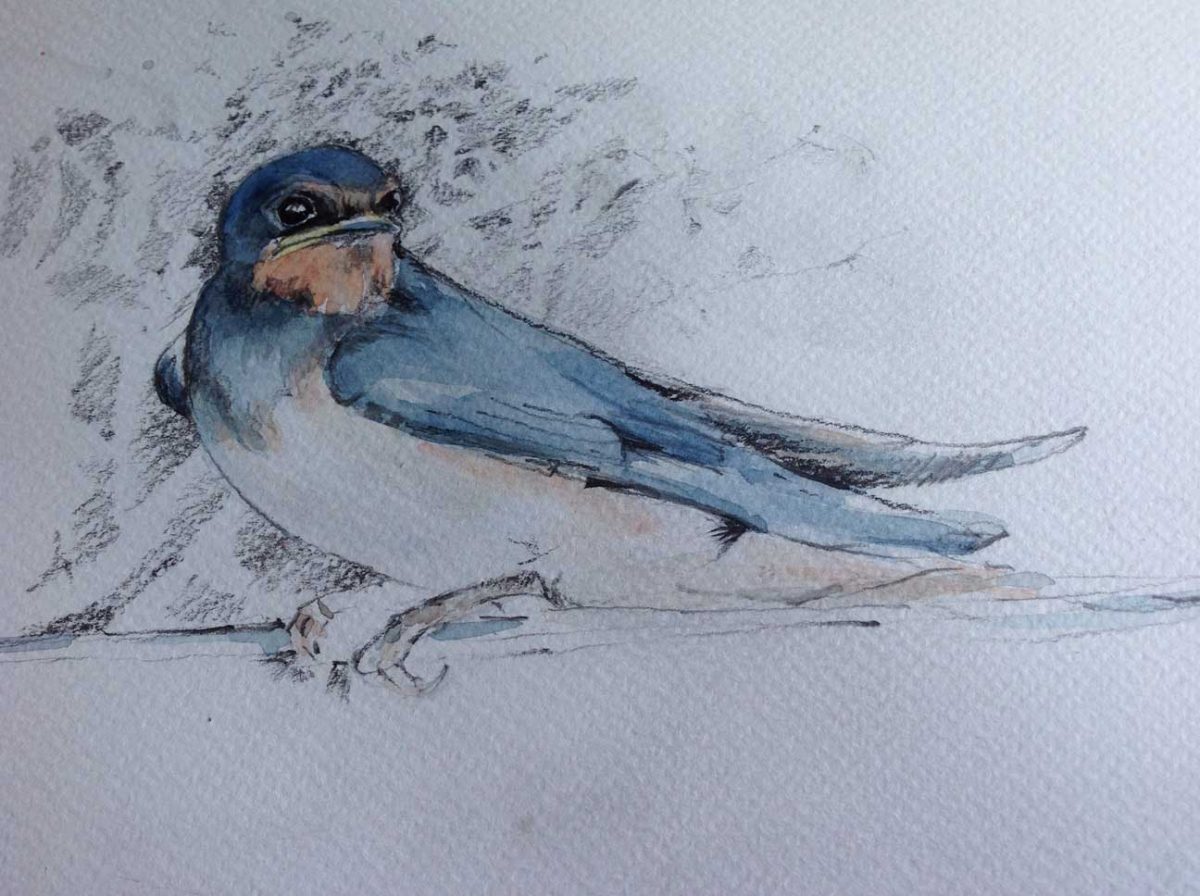
Swifts are one of the first species to migrate and will moult back in Africa but the swallows can be seen lining up on the telephone lines chittering away to each other in preparation for their long flight back. You can see them dip down for water as they glide over the Jubilee Wood pond (which is now at quite a low level) if you are lucky enough. W.H.Davies’ poem, Leisure, often comes to mind when watching them, ‘…A poor life this, if full of care, We have no time to stand and stare.’ We don’t even have to stand thanks to the lovely arbour we have by the pond!

Jubilee Wood species catalogue – send us your sightings!

The start of colder temperatures  and the passing of the months is a reminder that there will soon be different migrants arriving at our shores as others leave us. This ever changing landscape has encouraged some of us to think about keeping a record of what species of flora, fauna and fungi can be found in the Jubilee Wood throughout the year.

If anyone is interested in helping with this task, please let us know by emailing: specieslist@thegiddings.org.uk.

No experience is necessary to send in sightings, via specieslist@thegiddings.org.uk, of things you’ve found in the wood. There will be fliers coming around for those who don’t have access to or like using a computer to explain the details but all that’s needed is your name, the name of the species seen, the date and time, and what part of the wood it was seen in. Contact details would be helpful and if two of you can verify the sighting that’s even better. Please send a message if you want further information about this but it’s very much an amateur attempt at record keeping which will hopefully involve as many of the community as possible and provide an interesting snapshot of the wood for the future. We’ll  attempt to respond to any messages as soon as possible, but please be patient if you have to wait a Wandererday or two.    

Hoping the weather stays favourable for many a wander in the Jubilee Wood as we head into Autumn…

The Wood Wanderer

Jubilee Wood July 2019

It’s been a month of very varied weather from windy and wet days interspersed with blisteringly hot ones including the hottest temperature officially recorded in the UK at the Cambridge Botanic Garden of 38.7C. It looks like it’s going to be the second hottest year  ever recorded on Earth although it’s still too early to be sure about that prediction, but experiencing a week of sweltering days and nights here in our part of the world makes me inclined to believe it.

Benefits of planting trees

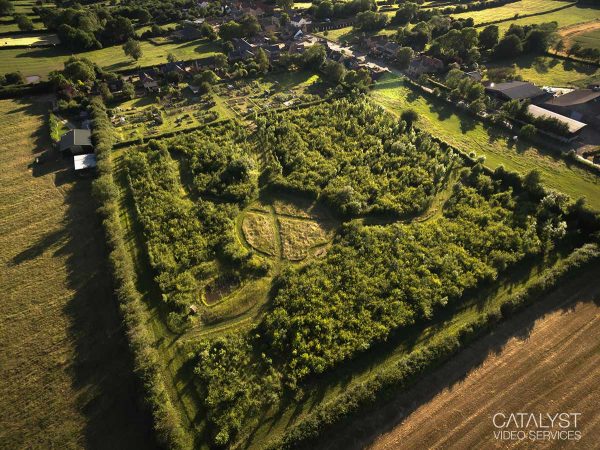
At least we are lucky enough to have access to nature’s air conditioning system, a wood. There are multiple practical benefits to trees as well as the obvious ones of being able to appreciate their beauty and changing form throughout the year. People in cities have been really struggling to cope with the heat wave and city authorities throughout the world are realising the benefits of planting trees which shade the streets and cool the air as water evaporates from their leaves. This process, called transpiration, helps cool the tree and also pumps water and minerals up tiny capillaries from the roots to the leaves for photosynthesis to occur. Fortunately for us, we feel the cooling effect this produces as we walk under their canopy whether we’re in the city or the countryside. Jubilee Wood is a wonderful place to go when it’s hot and we need to cool down, the maturing trees providing cool shade and air along the winding pathways that lead to the central area.

July evening Jubilee Wood

A perfect space

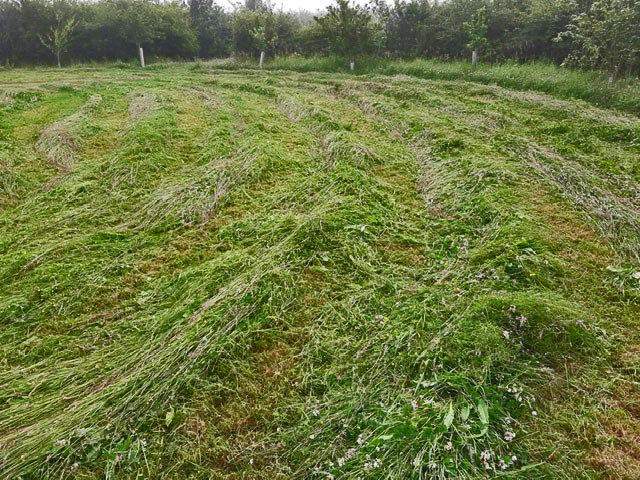
Following the cutting of the grass along the rides and this central area early in the month by hard working volunteers, the wonderful smell of hay drifted round the wood before it was quickly baled up whilst this unpredictable weather held warm and sunny. The summer picnic could then be enjoyed on shorter grass, and the Pop up Knowledge Share which this month was ‘Nature and Well Being – a journey through the senses ‘, took place just before the picnic. It is a perfect space for encouraging us all to be aware of our surroundings and to enjoy the opportunity of socialising together. 

Hay making in Jubilee Wood

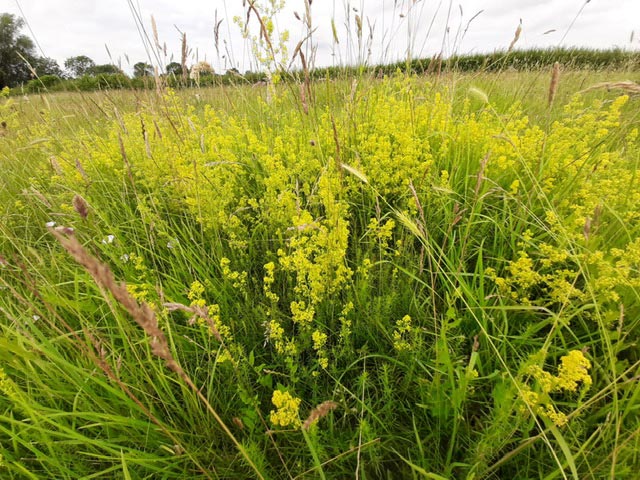
Lady’s bedstraw

Plants such as Galium verum, or Lady’s bedstraw are growing in the wood, and it is much more evident generally in hedgerows and edges of fields this year so conditions must have been just right for it to spread. The yellow flowers have a sweet, honey like smell and are very attractive to pollinators, especially moths. It’s probably the reason why it was used as a stuffing for beds and as a floor covering, but it was also used as dyes for butter, cheese, hair and textiles. It’s also sometimes called Cheese Rennet because it can curdle milk and was used in cheese making, a convenient vegetarian replacement for rennet!. As well as all these attributes it has a long history of use as a herbal medicine so it is an extremely useful plant as well as a lovely one to look at.

Lady's bedstraw
Lady’s bedstraw

Cinnabar Moth

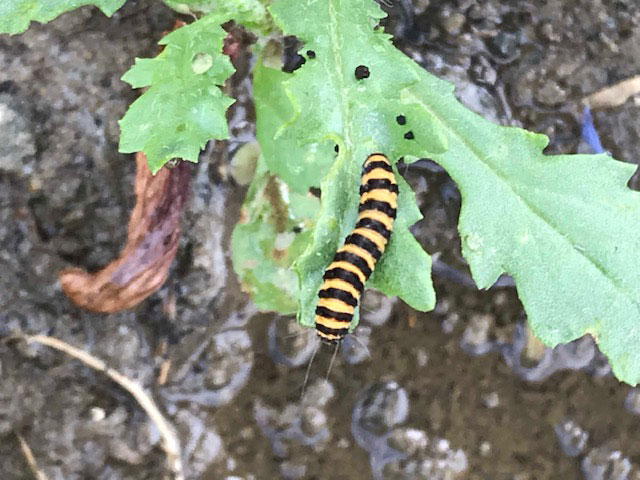
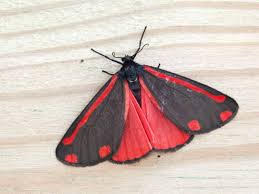
Finally, it’s been a fantastic year for Cinnabar Moth caterpillars which can be found on the tall yellow daisy known as Ragwort, Senecio jacobaea or on Groundsel, Senecio vulgaris, which are their two food sources. The toxins within Ragwort make it so bitter that it’s usually avoided but cinnabar caterpillars actually benefit from it as they become toxic themselves and their colourful yellow and black stripes warn predators that it wouldn’t be a good idea to eat them. When fully grown they then leave the plants and pupate just beneath the surface of the soil for the winter. Keep an eye out for them as you wander round the wood and look forward to seeing the flashes of red and black moths early next summer…..

Cinnabar moth
Cinnabar moth

The Wood Wanderer

Jubilee Wood in June 2019

Jubilee Wood in June 2019

June has been a busy month in the wood, not only for wildlife and growing trees and plants but also for humans. We had a visit from members of the Hunts. Flora and Fauna society, who came to look around the wood and record their sightings of all the diverse flora and fauna we now have in the wood. Once the results have been collated they will be sending them onto us and they will be invaluable as a benchmark to measure how the wood is doing in the future.

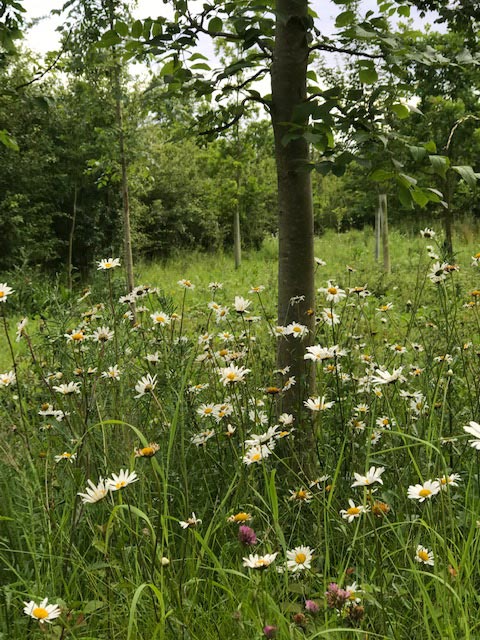
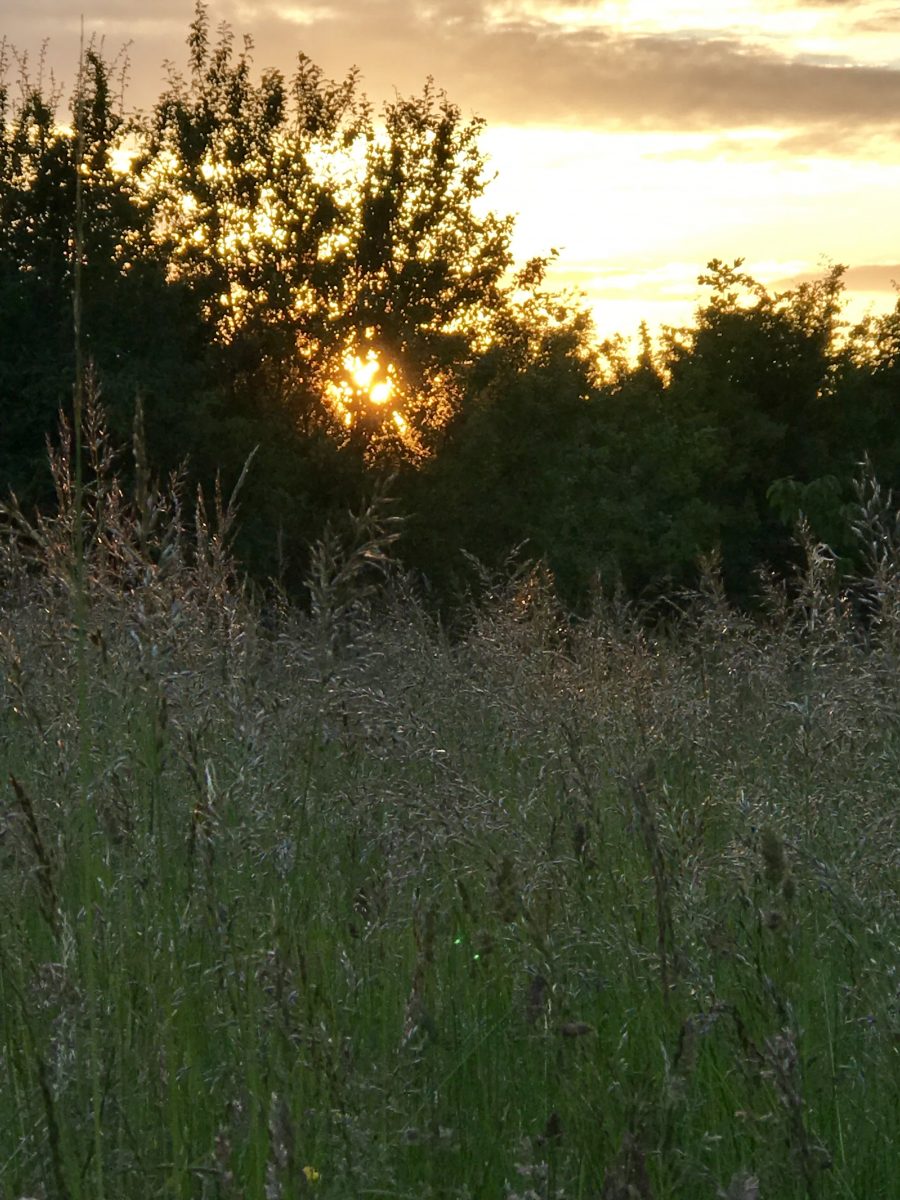
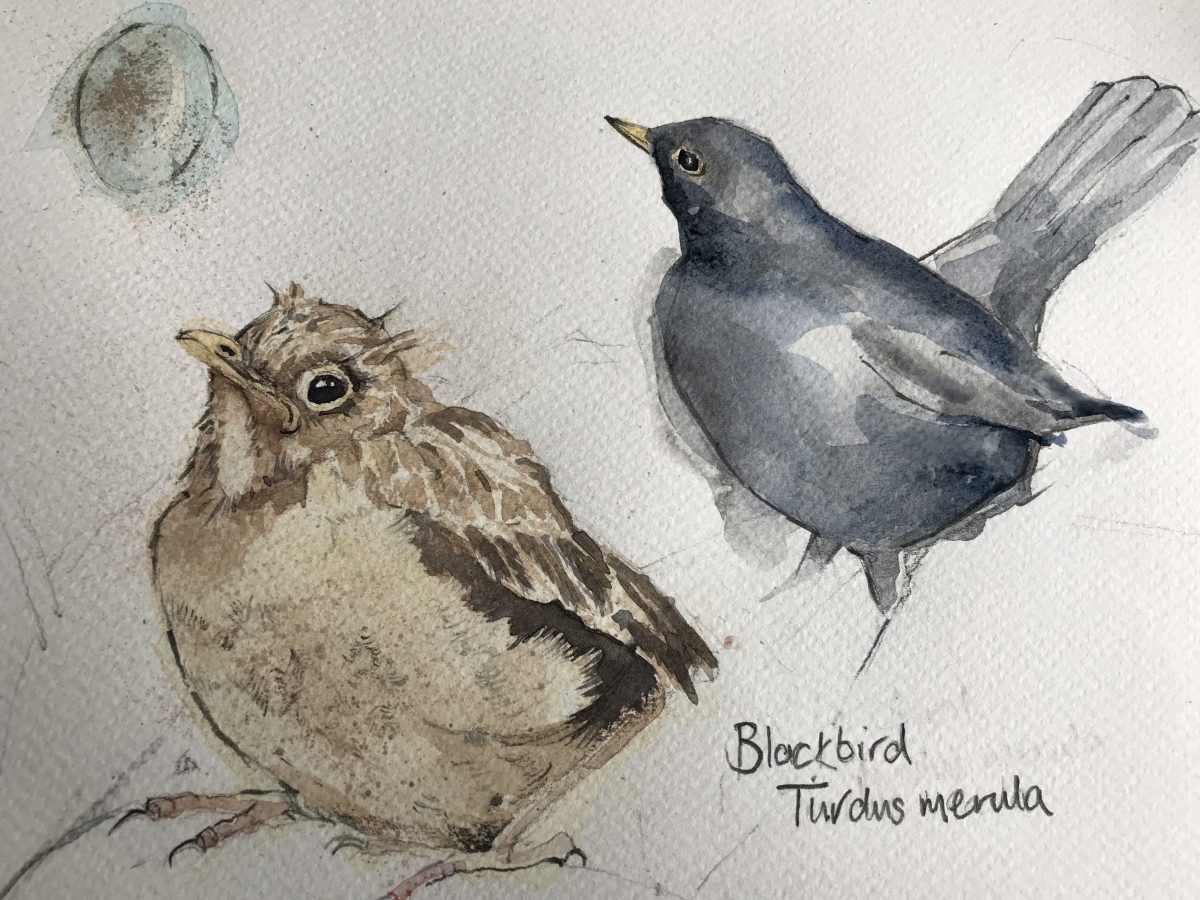
The summer solstice was also celebrated in the wood. The evening was quiet and rain free as several of us watched the sun go down on the longest day and joined in a short meditation which left us all feeling peaceful and very appreciative of the wood at the slightly magical time of twilight when the white daisies and clover shone out in the dusk. The birds seemed to want to join in before they finally took their rest with blackbirds booming out their strident but melodious song and collared doves in the background lulling us with their gentle call. Thanks to Janice for suggesting the idea and introducing many of us to a very different experience of the wood at twilight, a peaceful and calm space after the busyness of the day.

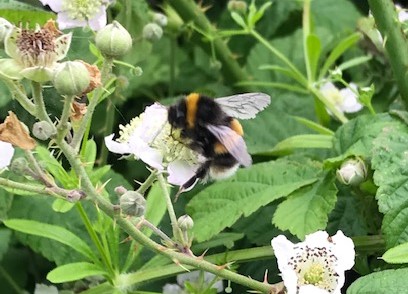
The experience got me thinking about the word recreation, because most of us use the wood in one way or another for exercise and leisure, or pastimes such as bird watching. It’s a word which seems appropriate to describe our desire to re create a sense of calmness and space in our lives but in a practical sense there’s re-creation going on all the time in our wood. The bird boxes are hosting the next generation of blackbirds, tits and robins, the pond is providing a safe haven for the young of the great crested newts before they are big enough to go on their way, and the dragonflies and damselflies are almost fighting each other for places to lay their eggs. It’s certainly a place where creation can be seen if you’re patient enough to sit and just listen and watch as nature takes its course. Perhaps you’ll be lucky enough to see some fledglings as they take their first tentative flight, but just walking through the clover filled grass paths provides us with plenty of opportunity to test our wild bee identification skills. The bumblebee conservation trust is asking for data nationwide and their website provides lots of information on how you can help. It only takes an hour or so every month and you can download identification apps. from their site or Friends of the Earth, (website links below). Perhaps we’ll bump into old friends and new acquaintances as we walk around recording our findings!

Keep a look out on the website for the July Jubilee Wood knowledge share which is on Nature and Well Being and happy bee hunting.

The Wood Wanderer
http://www.bumblebeeconservation.org

https://friendsoftheearth.uk/bee-count

May 2019 in the Jubilee Wood

May 2019 in the Jubilee Wood

‘Spring comes and it is May’   John Clare

How true those words are! Everything is full of life, grass and plants are growing almost visibly and the sound of bird song is everywhere. The cuckoo has arrived back in the area and has been heard several times although there is definitely a collared dove in the wood who is suspiciously good at imitating the sound of the cuckoo…..we once had a starling in the garden who imitated the sound of the telephone which was funny for a while…..

Hibernation for many animals will have finished and they will becoming active so it’s time to look out for hedgehogs, queen bees, grass snakes ,frogs and toads to mention just a few. The Huntingdonshire Fauna and Flora Society will be visiting the wood on the 16th so there will an opportunity to share local knowledge as well as perhaps learn something new about all of the above. There will also be a ‘knowledge share’ in the wood on Sunday 9th when the theme will be Grass Identification. These get-togethers are very informal, fun and for all the family so come along at about 2.30 pm and join in if you can. All are welcome.

Identifying flora and fauna is very satisfying in itself but it can also be extremely helpful to record what you see for general conservation work. Everyday records help us to keep in touch with how individual species and their habitats are doing and the Biological Records Centre has some useful information on free Apps which you can use if you want to help (http://www.brc.ac.uk/apps). The Jubilee Wood is such a wonderful habitat in which to record wildlife and plants and even if you find it difficult to keep records regularly, no information is wasted even if it’s a one off observation.

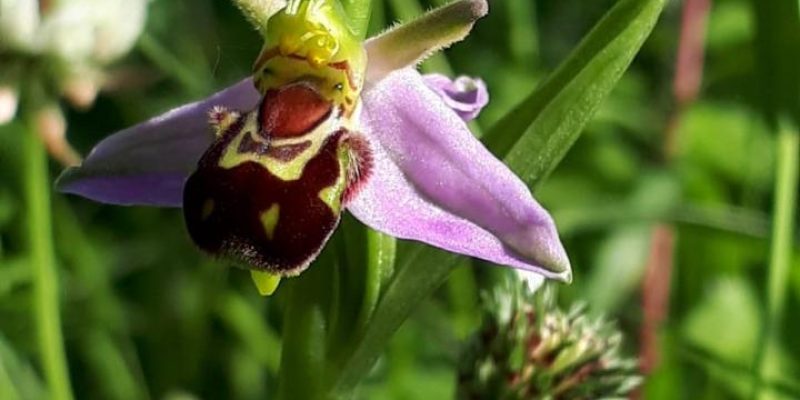
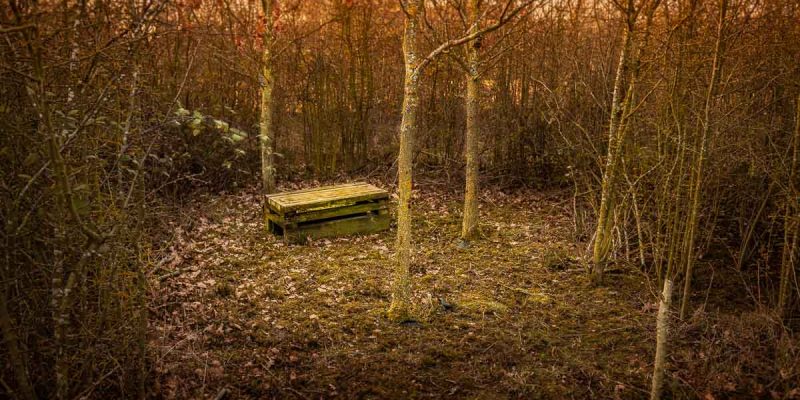
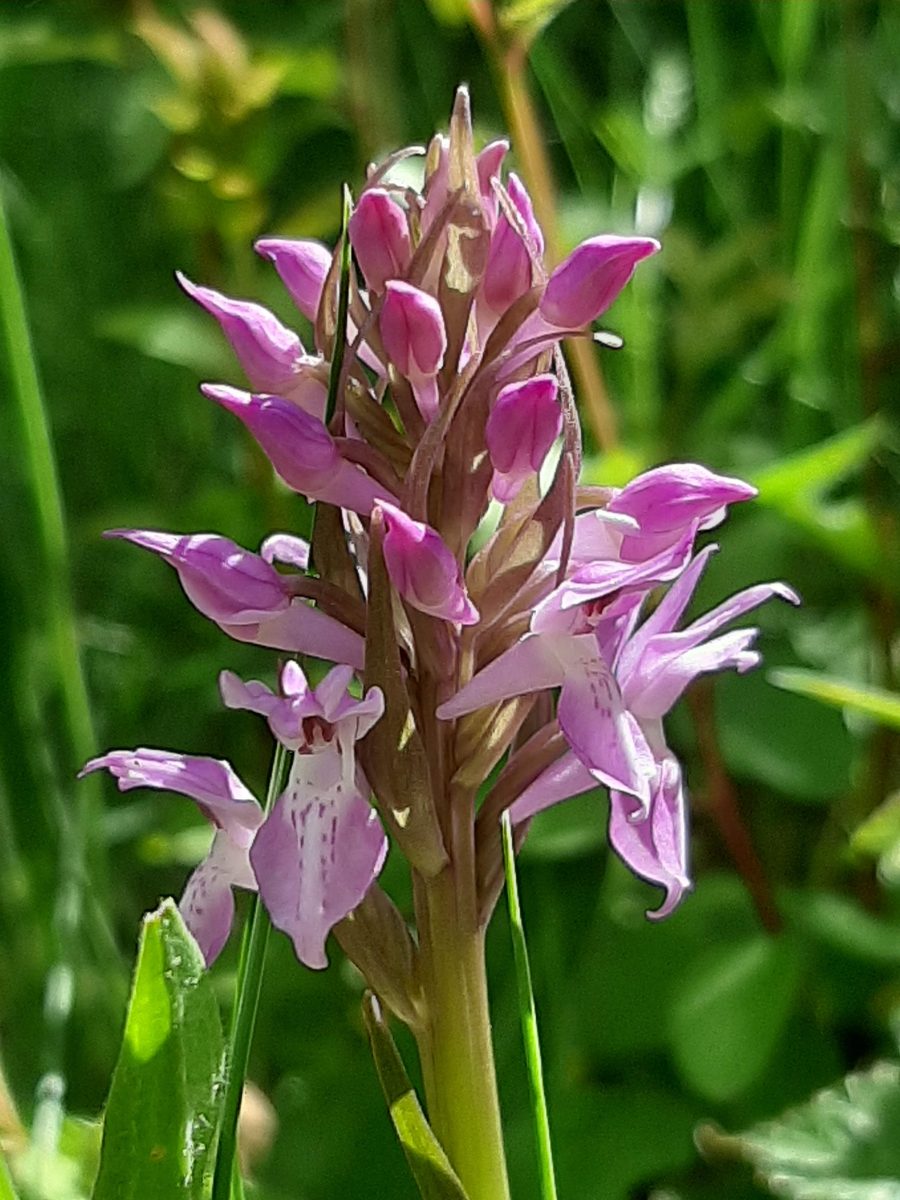
As we move on into summer the Wood seems to change every day, with the trees spreading out their canopies, the birds nurturing their young in the many bird boxes which have been generously placed around the wood, and sitings of Common Orchids, Common Swift moths and the beautiful Cinnabar moth with its exotic rosy pink markings on black wings. It’s a busy time and one which we can all enjoy, even if it’s just for a few minutes. Ten minutes quietly walking, watching and listening in Jubilee Wood might just be the medicine we all need, and if that might be a bit too difficult for you these days, the benefits are just as great if you sit on the welcoming bench at the entrance to the wood and take it all in. Might be worth bringing a cushion though!

The Wood Wanderer
“Pop up” Jubilee Wood Knowledge Share

"Pop up" Jubilee Wood Knowledge Share

The July Knowledge Share – Sunday 14th from 2.30pm

‘Nature & Well Being’ – “A Journey through the senses” With an opportunity to do some practical exercises in and around the wood. This event is kindly being hosted by Rachel Giddens.

—————————————————————————————————————————————————————————————–

Summer Picnic
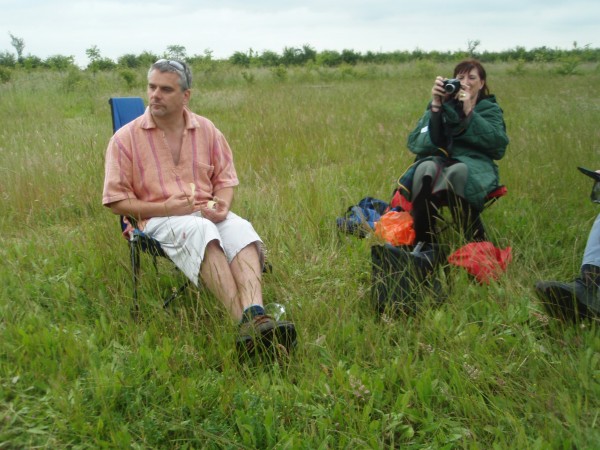
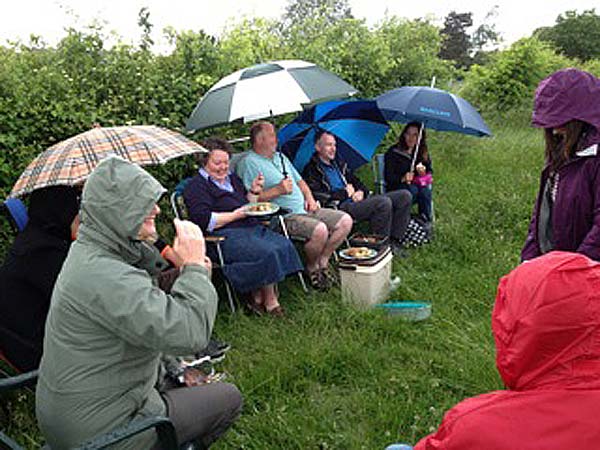
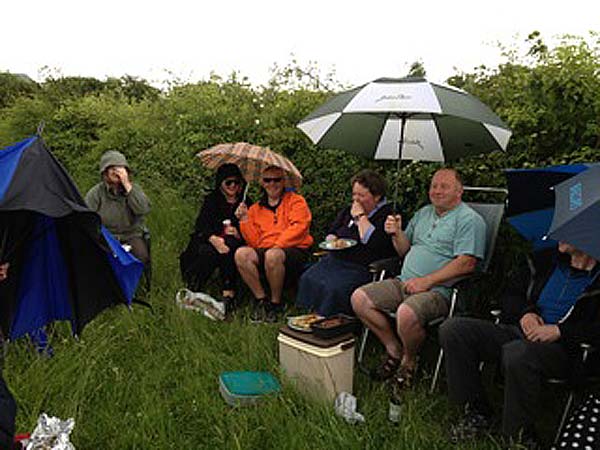
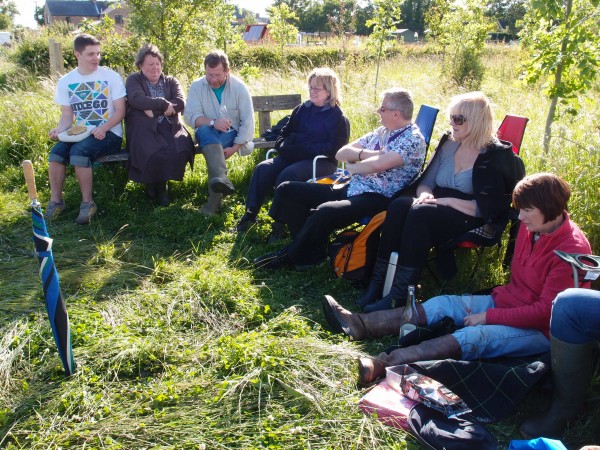
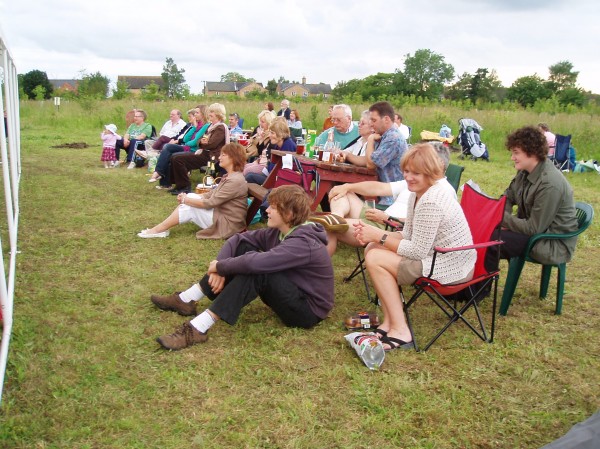
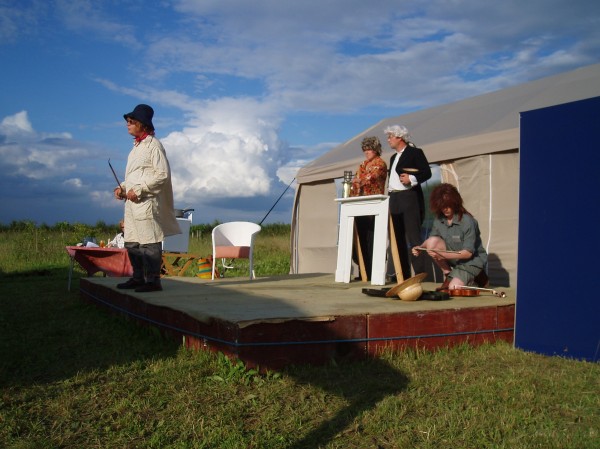
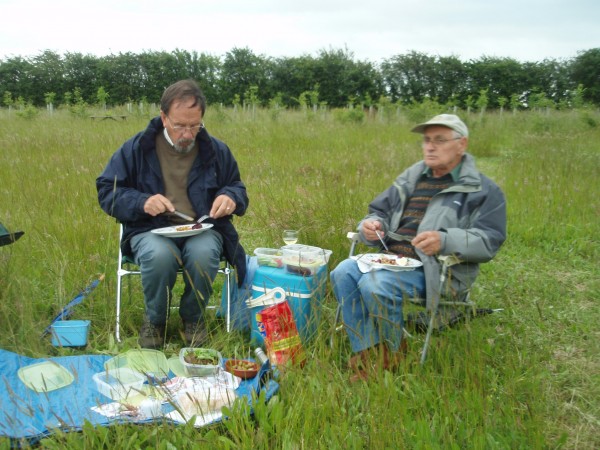
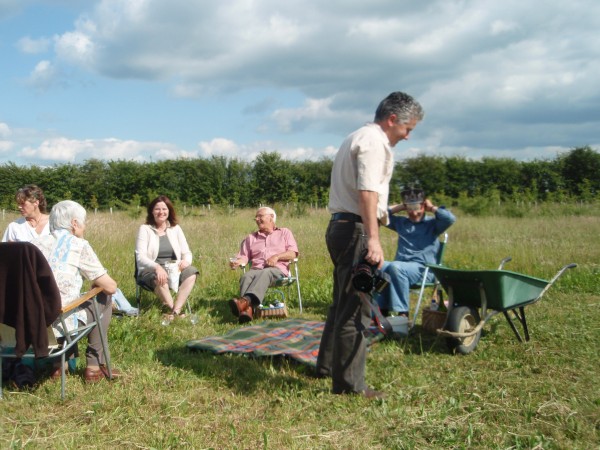
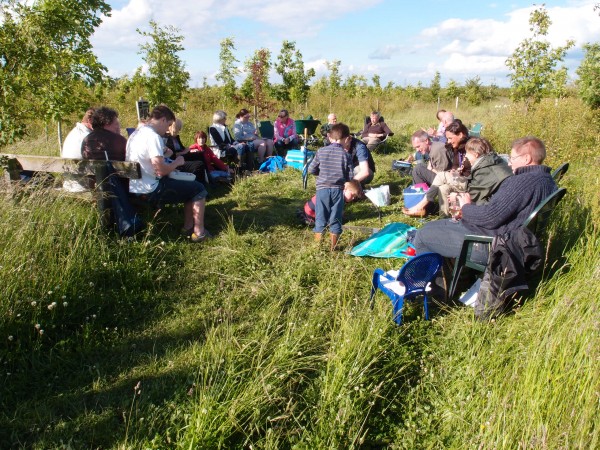
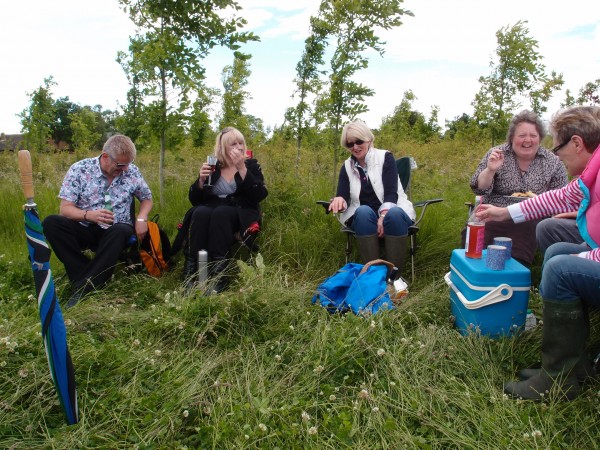
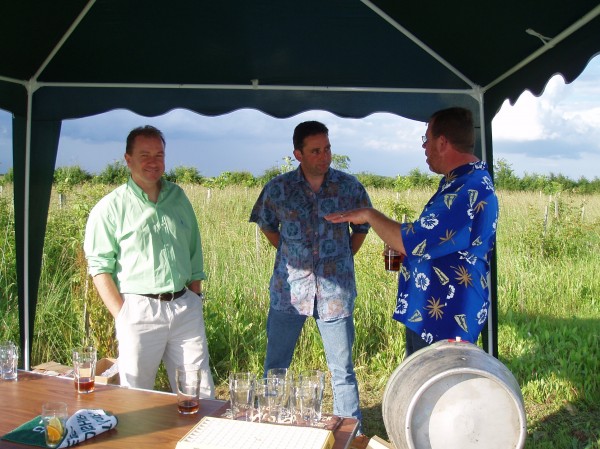
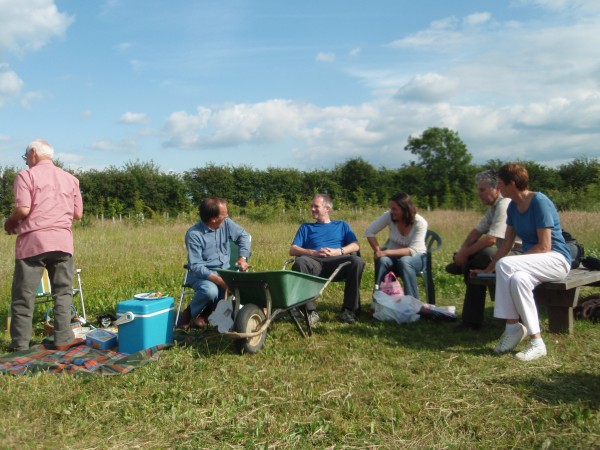
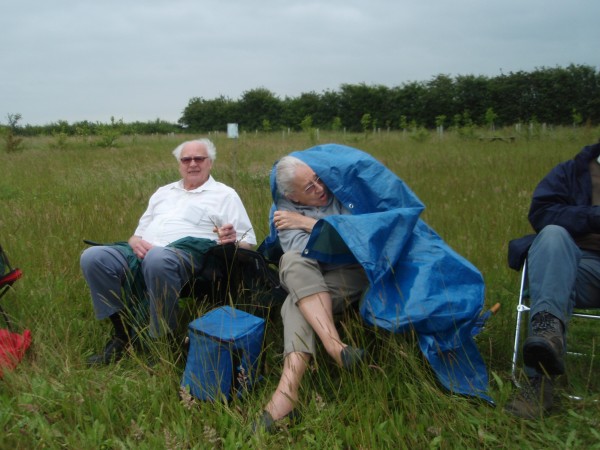
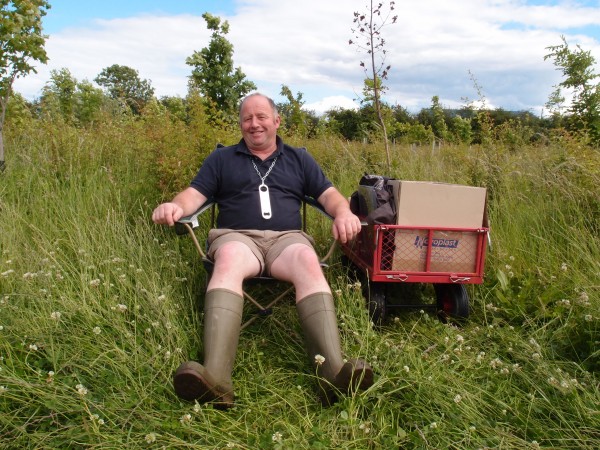
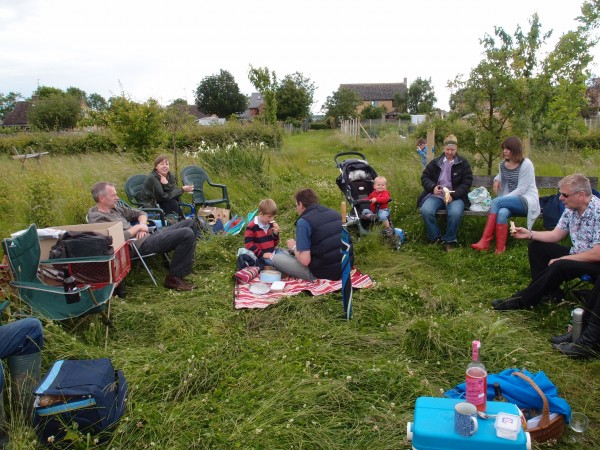
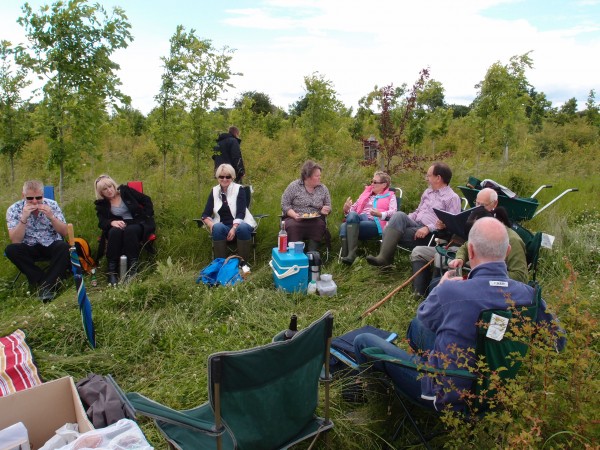
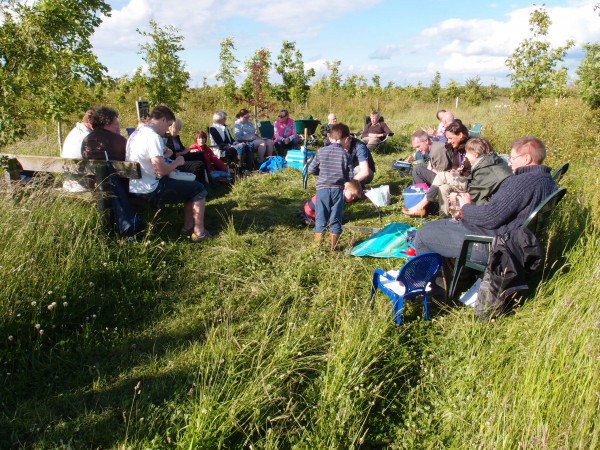
Following on straight after, the Jubilee Wood Summer Picnic is back on the Great Gidding social calendar from 4pm. The weather is always memorable at this event mostly for north easterly winds or the european monsoon but photographic evidence below does show some sunny picnics. Bring your picnic hampers and celebrate a traditional English summers pastime. To help select the right dress code please refer to the pictures below.
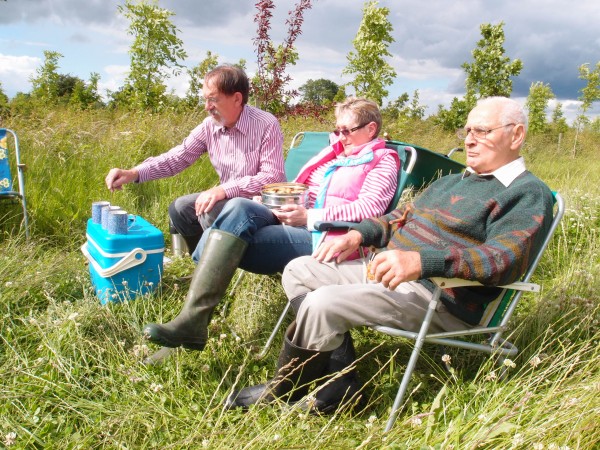
Previous Summer Picnics

Jubilee Wood in March

Jubilee Wood in March

Jubilee Wood in March

March 2019 Jubilee Wood

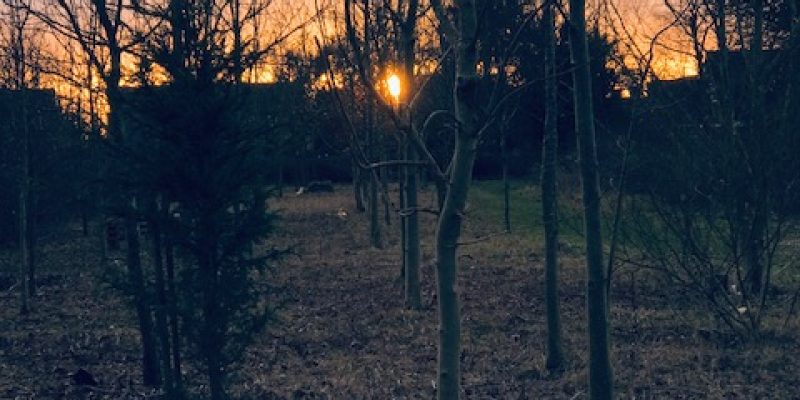
As the weak winter sun dips down behind the trees in the wood, and we welcome the first official days of spring with the vernal equinox, it’s hard not to wish for signs of summer with long days and busy hours as wildlife does what wildlife has always done in the season of plenty…….replenishing fat reserves, bringing up young ones and if lucky, having a bit of relaxation after the winter and unpredictable weather of spring.

Spring is a time of uncertainty as we wait to see whether different species have survived the winter, and unfortunately, many of the Ash trees in the wood are showing signs of dieback but time alone will tell how many will survive. It’s a worrying sight and yet nature has a way of compensating and filling the void. Those of us who are old enough to remember how Dutch elm disease changed the look of the landscape should be heartened to know that there are still several quite large elms in this area as well as several small ones in hedgerows, and no doubt some of the Ash trees will adapt and survive in a similar way.

Butterflies are definitely a species which can find winter challenging and many butterfly lovers are waiting to see if the offspring of Chequered Skippers which were reintroduced to England last year from Belgium have survived the winter. The chosen site in Rockingham forest has been kept secret but Butterfly Conservation staff and volunteers are closely monitoring the site. The Chequered Skipper was first recorded in Britain near Bedford in May 1798 by Charles Abott. For many years it was known only in England, found in a band of woodlands stretching from Oxfordshire to Lincolnshire and Cambridgeshire. Its presence was one of the reasons Charles Rothschild, a pioneer of conservation, set up his estate in the heart of this area, at Ashton near Oundle. Most of us will be familiar with the excellent pub in Ashton named after the butterfly but wouldn’t it be wonderful if we could host them here in Jubilee Wood? Thanks to the recent hard work of volunteers in clearing areas around the edges of the wood, the sunny, flower rich open areas are all ready for their return.

On another positive note, sightings of the great crested newts in the pond have been reported so we know that some at least, have survived the winter. It’s a hazardous journey for some of them to return to the pond looking for a mate, especially if they have to travel across the road from their winter home, and at least one unfortunate newt wasn’t lucky enough to make it this year. Perhaps we’ll have to ask the parish council for ‘Newts crossing’ signs next year….or even an underpass!

With so much happening at this time, perhaps we should just take time to appreciate the excitement of seeing the first unfurling of tiny leaves on the trees, the powdery catkins and the glorious golden colour of wild aconites and dandelions. The sound of the dawn chorus never fails to remind us it’s Spring as the rich melodies of blackbirds, doves, robins, and even the squabbling of the sparrows and starlings are played out in this very special part of the year.

The Woodwalker

Useful websites