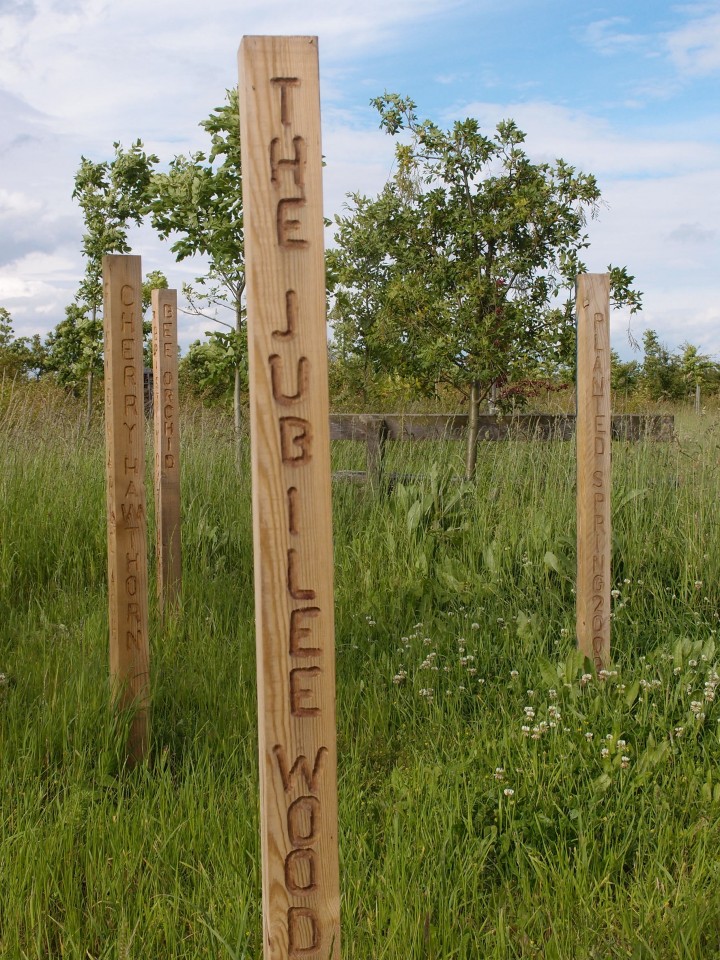
An occasional update of events, happenings and interesting things that have been observed in the Jubilee Wood (latest news at the top of the post)
January 2017
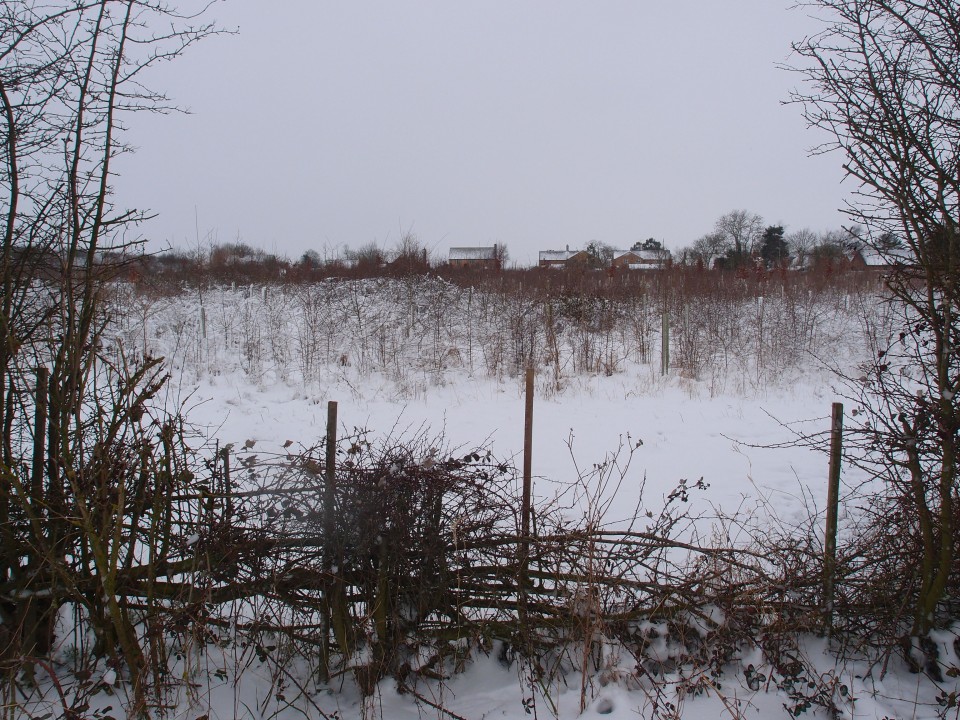
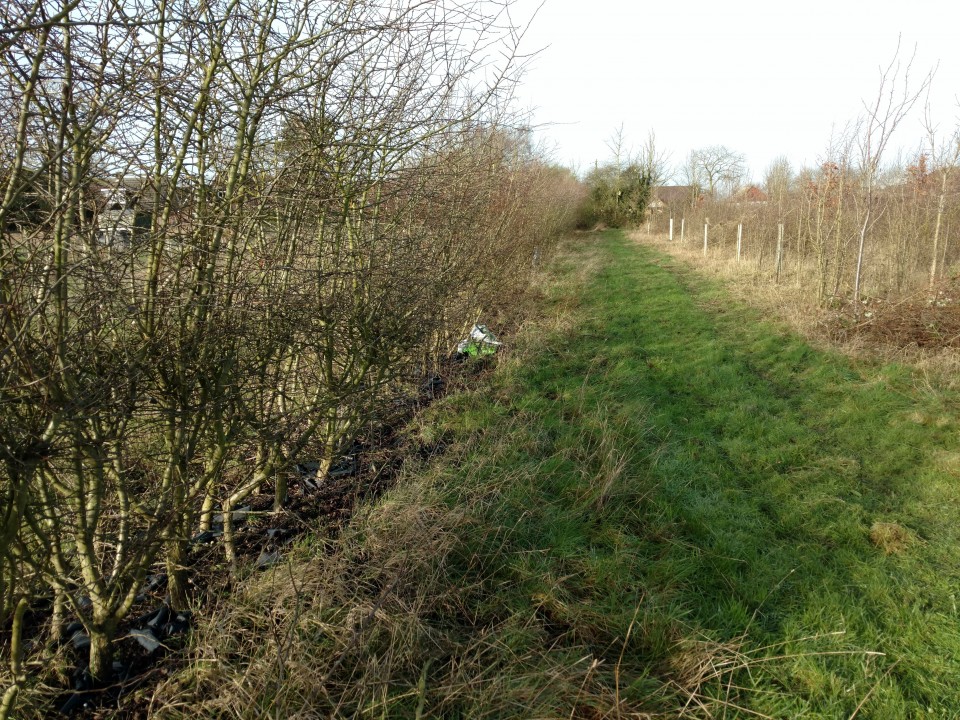
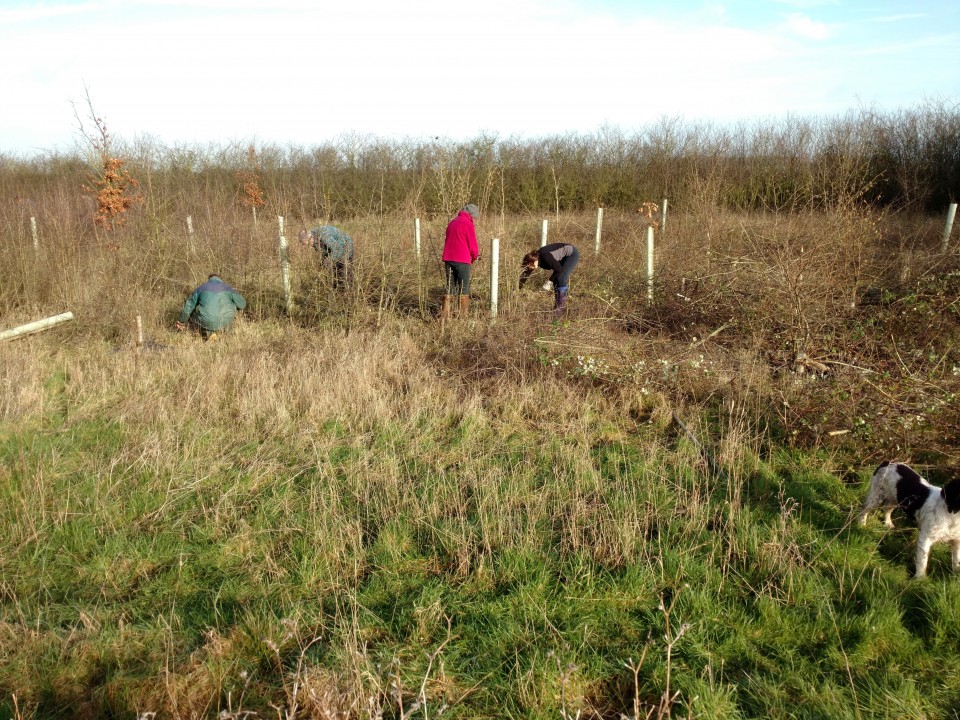
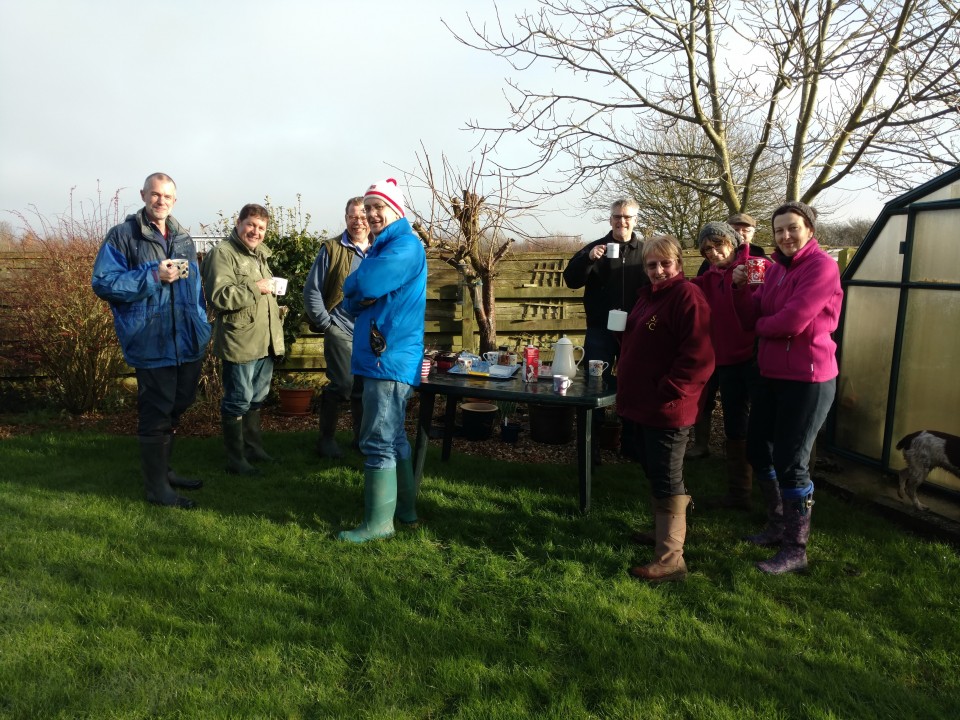
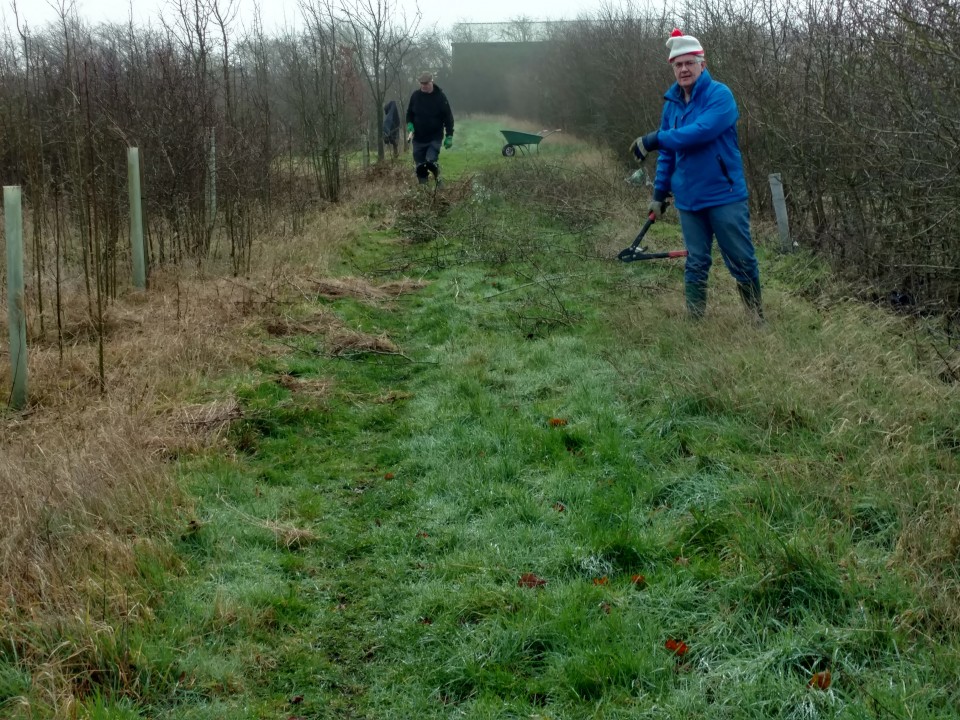
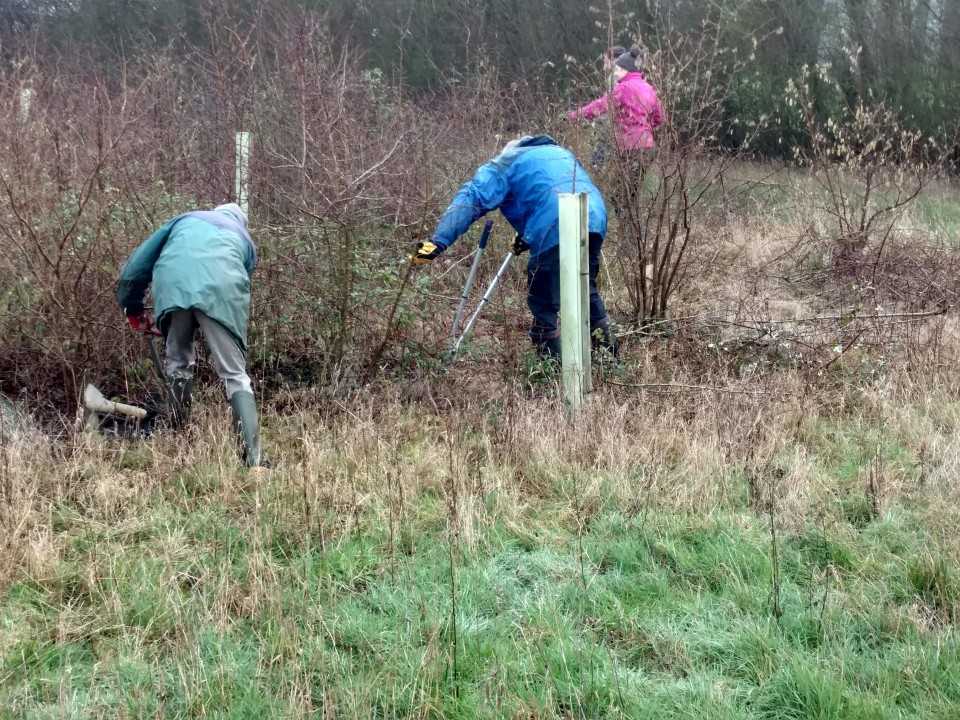
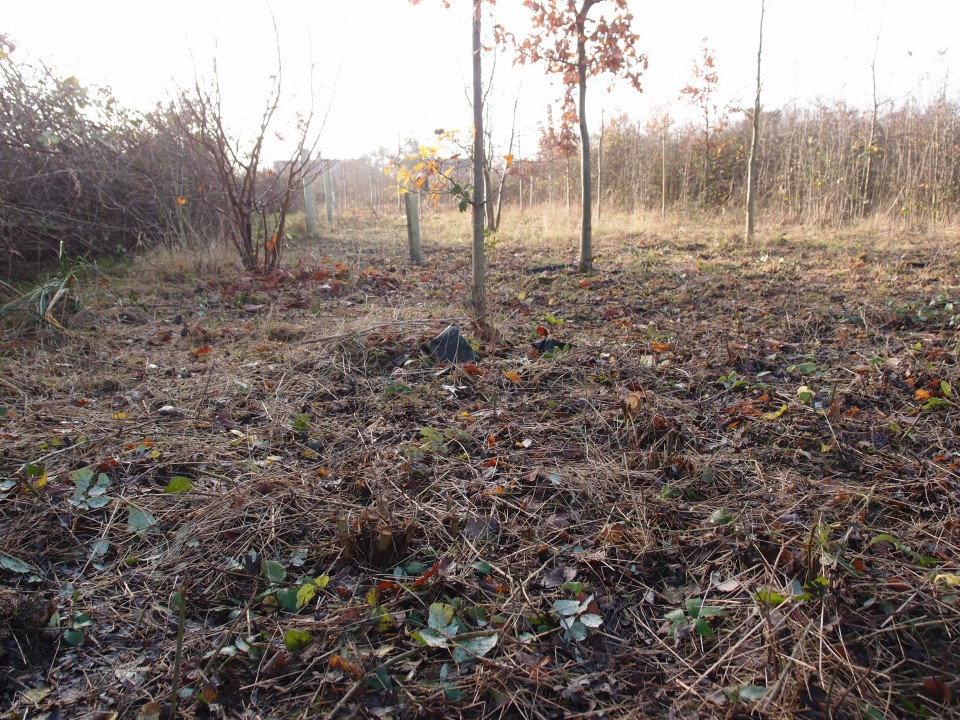
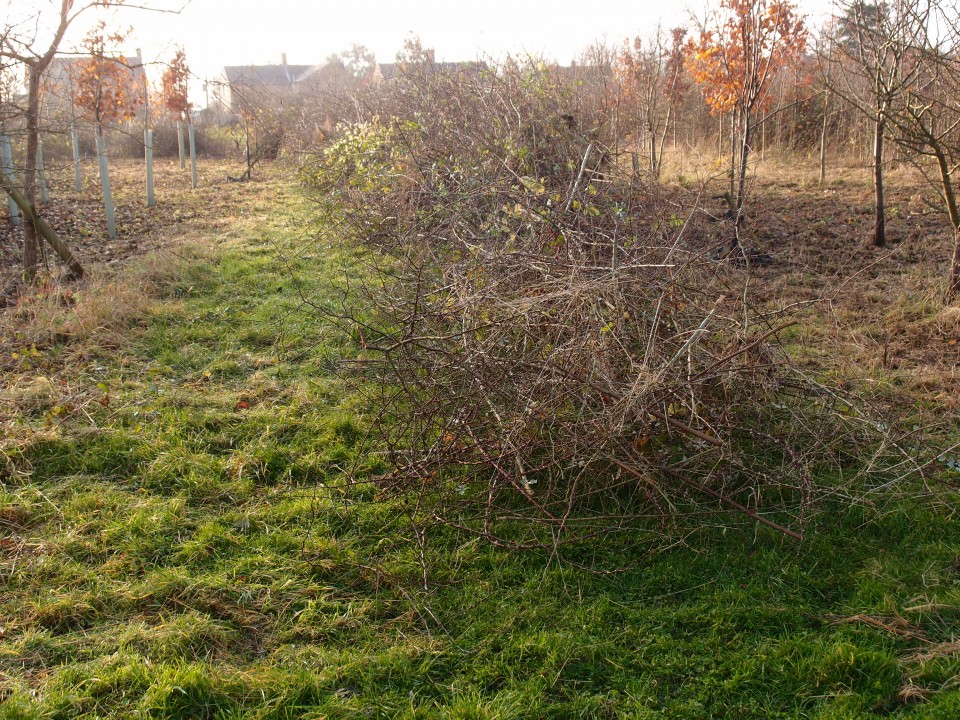
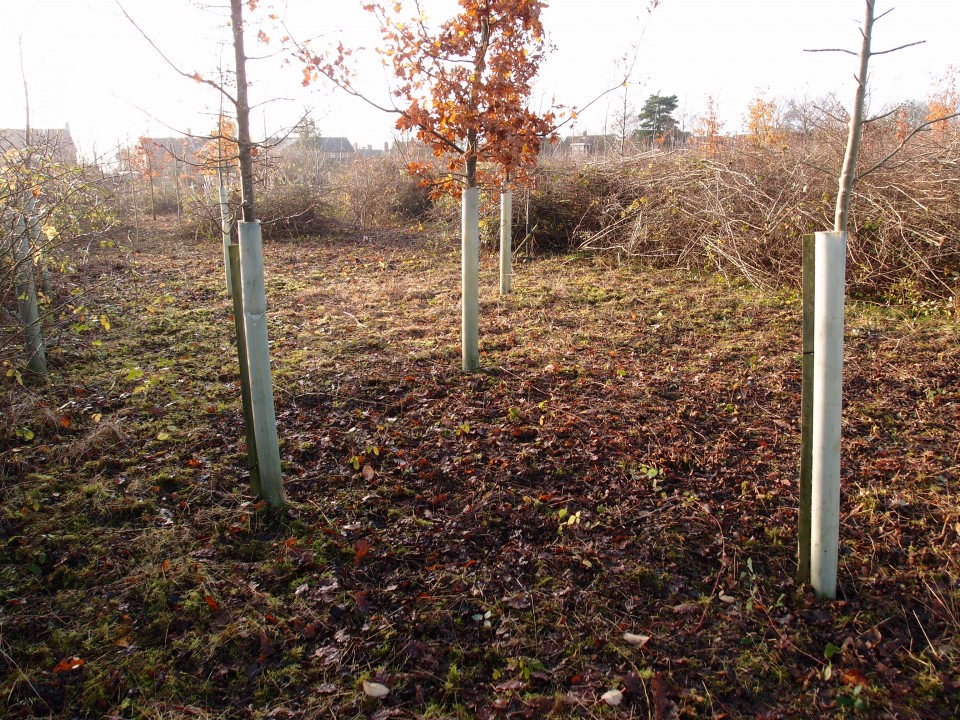
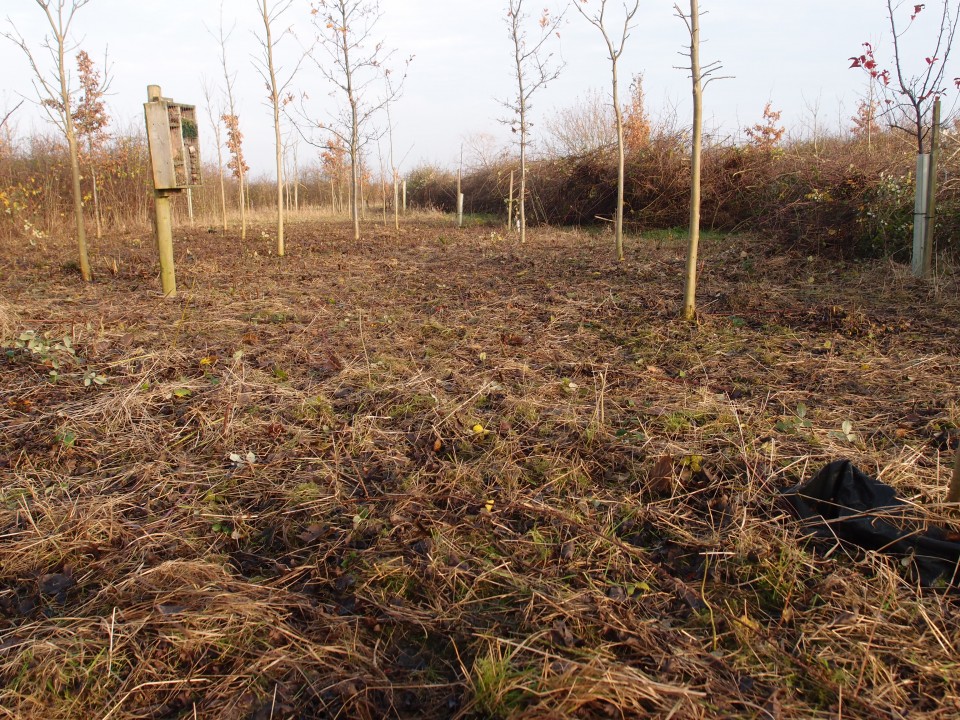
For a quiet month there has been quite a lot of activity in the Jubilee Wood mostly to do with winter maintenance. The hedges on the wood perimeter have been lightly flailed back to their original thickness. A great deal of lopping of Hawthorn, Blackthorn and Bramble has taken place on the inner tree line to maintain the width of the path ways. The internal paths have had the same treatment to stop encroachment. This year I have also focused on clearing the above from around as many Oak trees as I can. Most of the Oaks are strong upright specimens that will outgrow any competition but are few are just struggling to compete with the other species. In a natural environment the strongest species would outgrow the others but as this is a managed woodland and I have spent countless hours in the first few years weeding in and around the tree tubes to get the trees off to a competitive start then helping the Oaks is no big deal. There are still some to do so if anyone can spare a few hours for lopping then that would be a good thing.
What about the other tree species, well the Ash trees are growing quite strongly, how the Ash Die-back disease will affect us is to early to say. I understand the scientific community have sequenced the Ash genome and have found differences compared to European Ash that has been devastated. How this affects disease resistance is not clear yet. Hopefully their will be some background immunity but we have to wait and see. Certainly looking around the Parish some of the older Ash trees are dying off quite fast whether this is Die-back or age or another factor difficult to know but I would remind you when out walking on footpaths or roads. Just be aware of your surroundings especially under trees.
As for the other tree species in the wood, well they continue to thrive, albeit with a little trimming here and there to give them best chance.
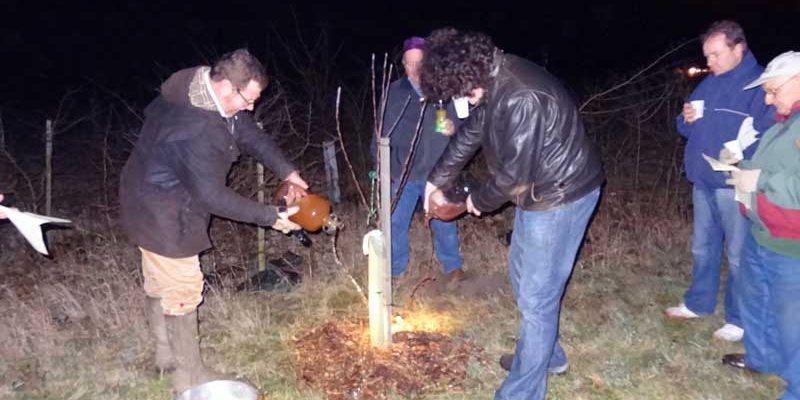
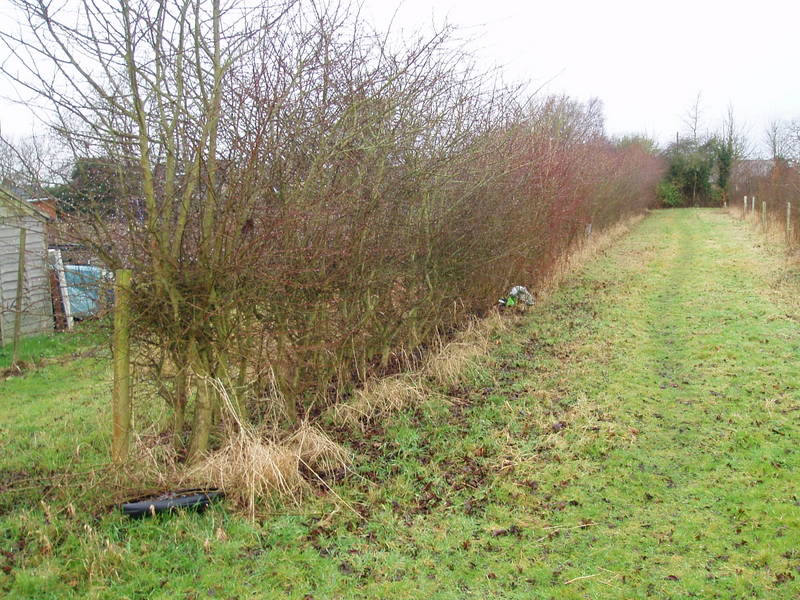
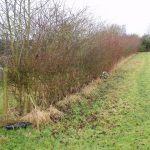
As part of the winter maintenance programme the Parish council have via the Jubilee Wood maintenance budget, contracted for the dividing hedge between the allotments and the wood to be professionally laid. This always looks at first sight to be a bit of a massacre but environmentally is sound practise as you are stimulating strong dense growth from the base of the hedge. Originally hedge laying was a way of stock proofing boundary hedges and done well looks attractive. There will be some clear up work for the community to do but I’m hoping to sequence this with a “Wassail”
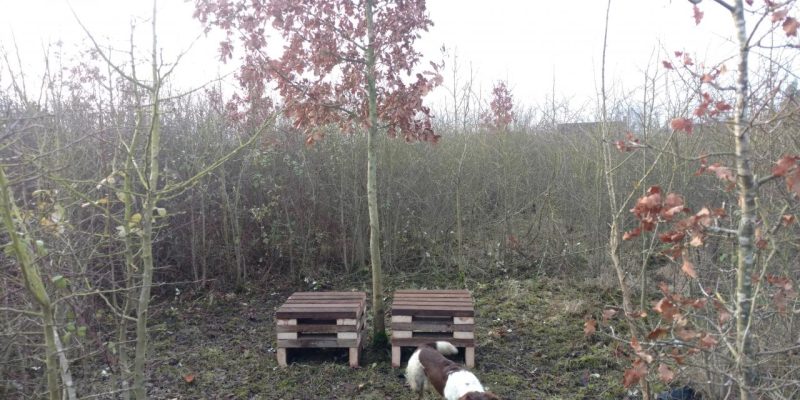
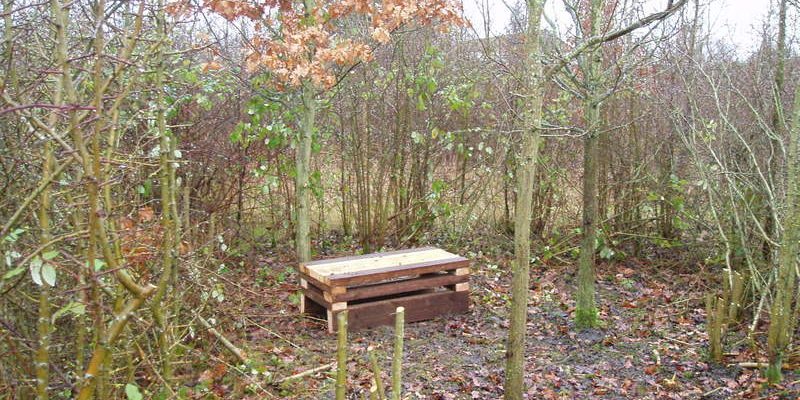
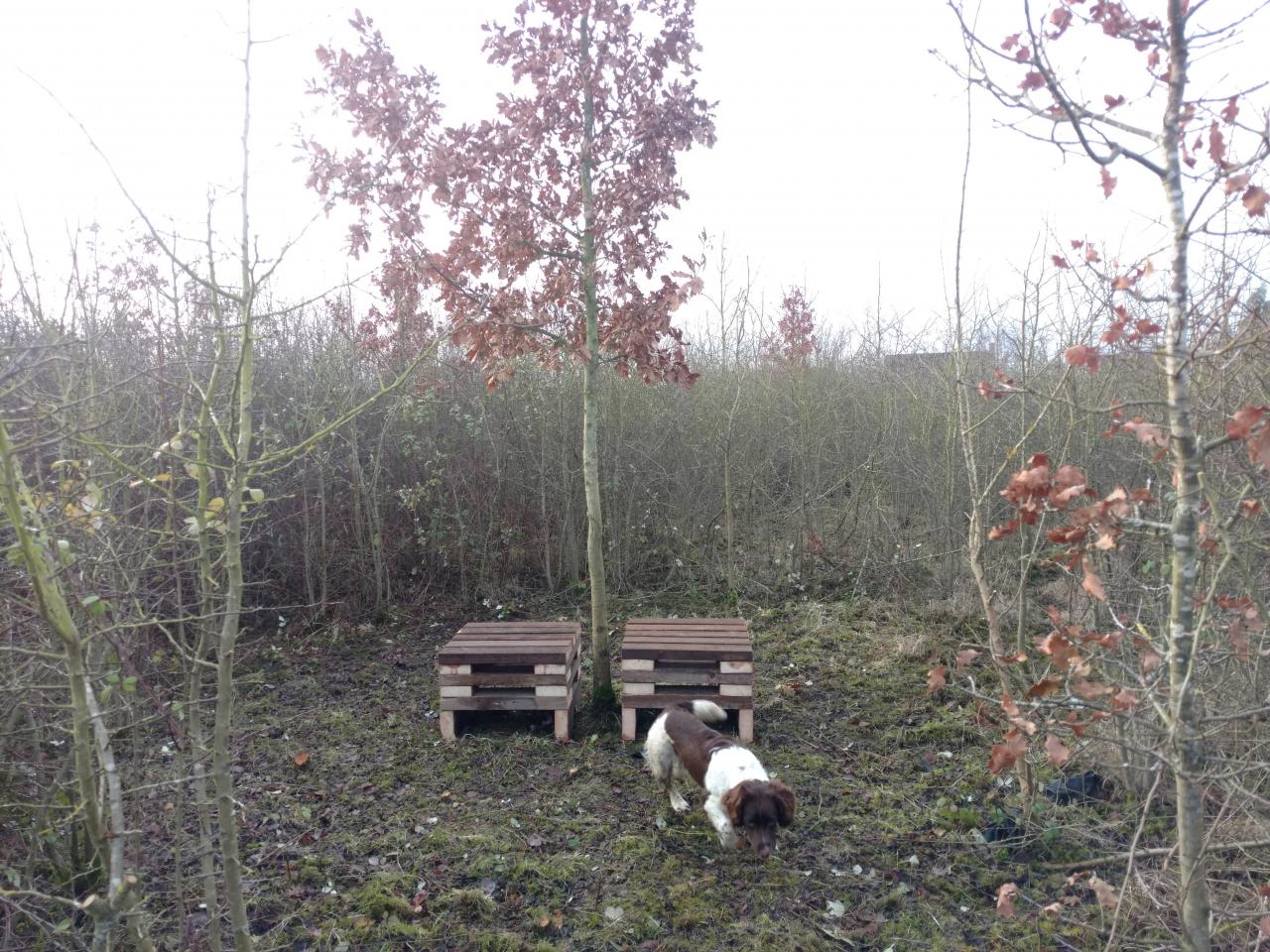
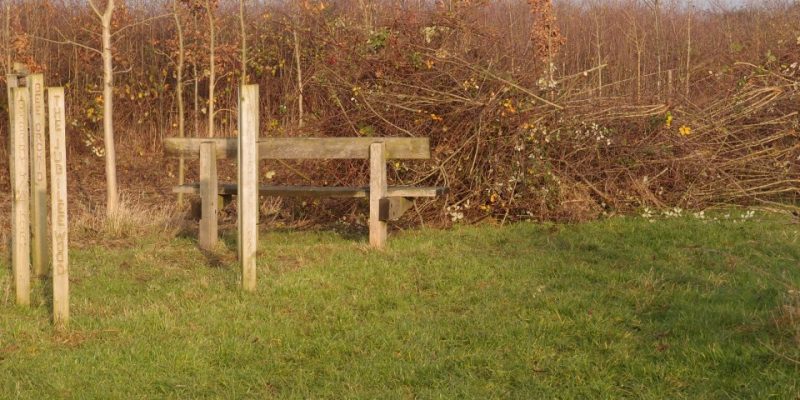
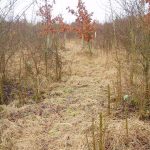
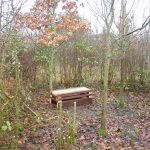
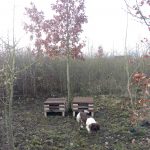
Finally, two new seating areas have been created, not easily seen so you have to go looking for them and they are on a blind track. A word of warning, the ground is a little uneven so watch where you walk
-
-
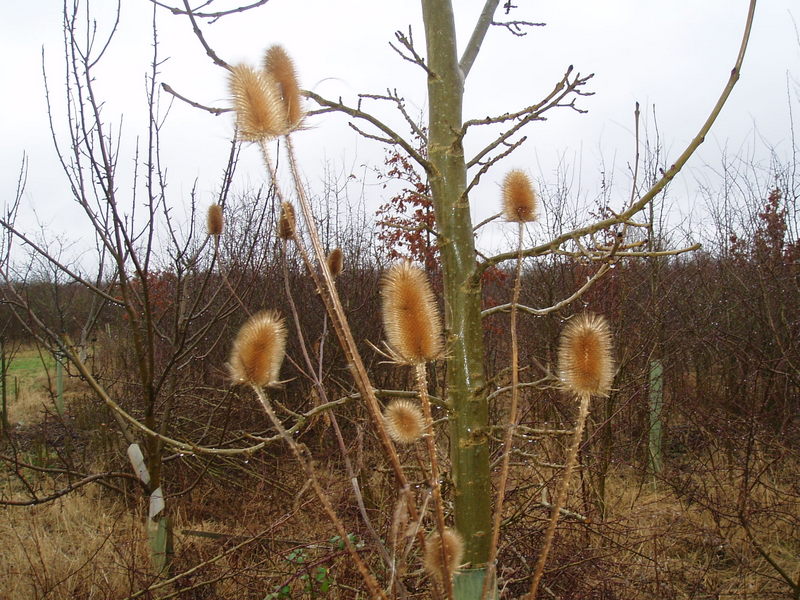
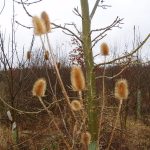
Teasels, good for bird food.
-
-
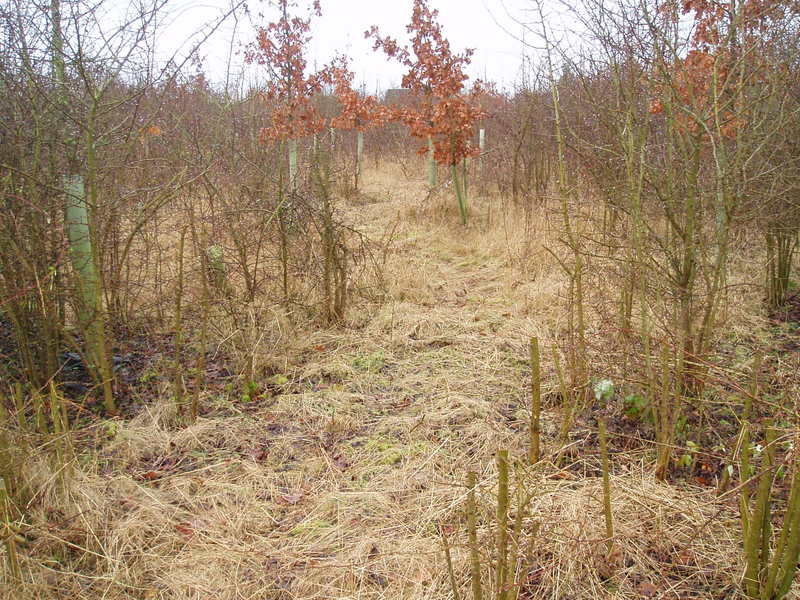
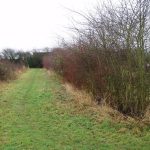
One of two new pathways opened up in the Jubilee Wood
-
-
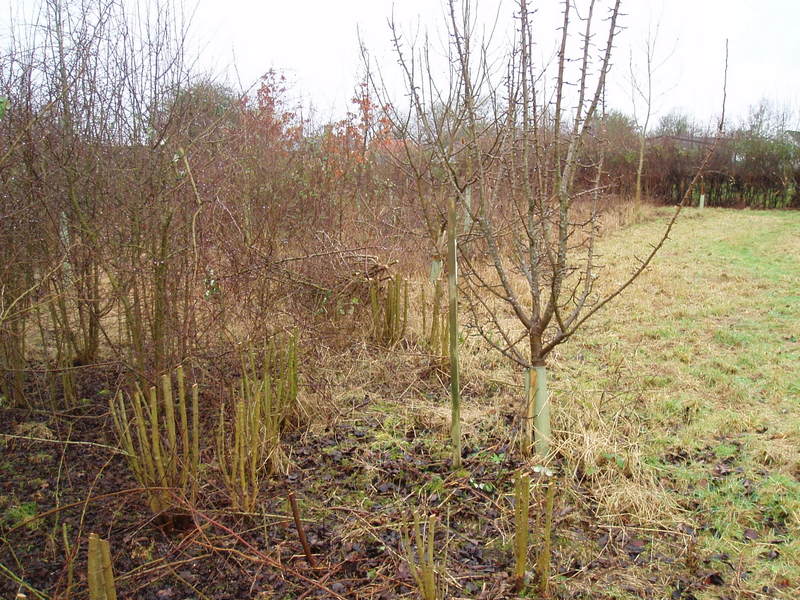
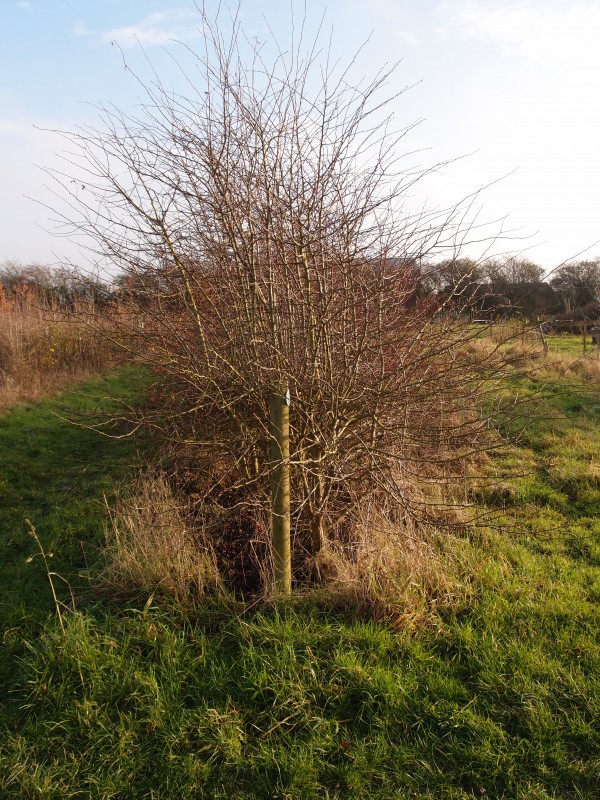
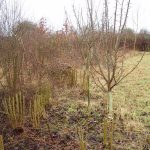
Pruning work around the fruit trees
-
-
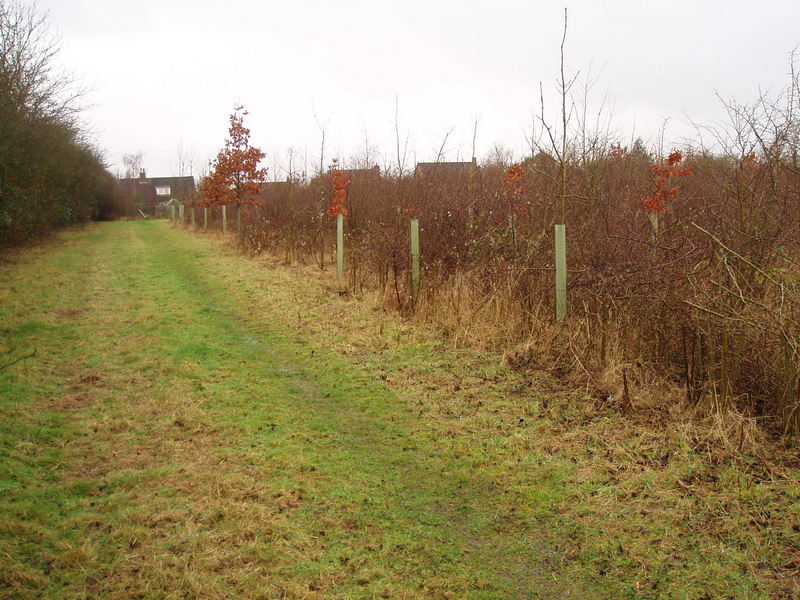
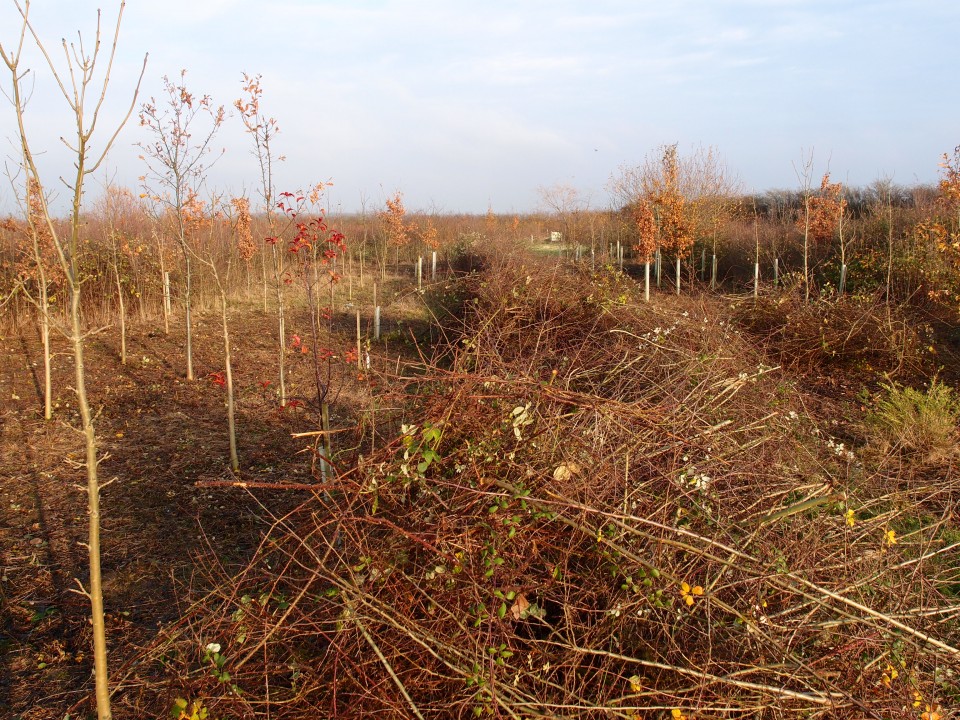
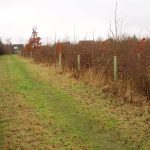
Tree line and some of the pruning work undertaken
-
-
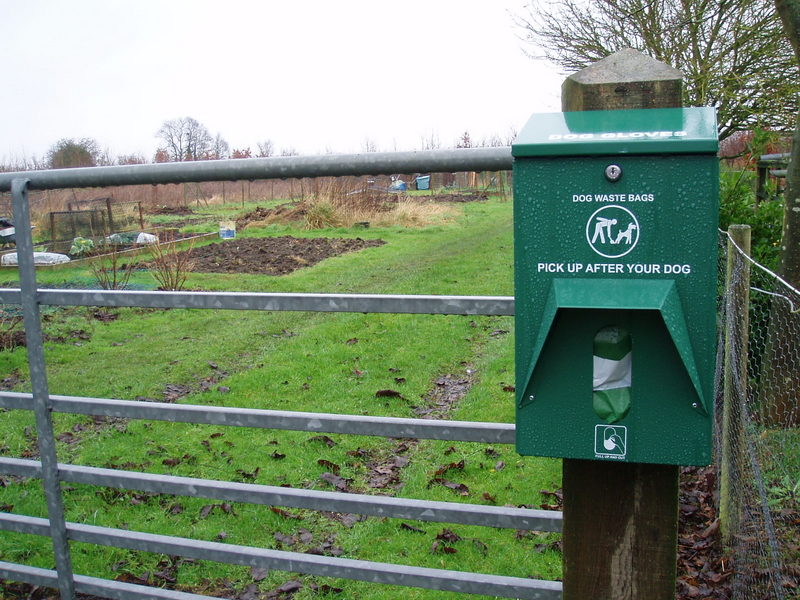
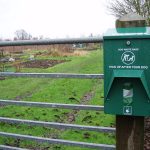
Dog poo bag dispenser for the use of by the Allotment gate
-
-
-
-
A new bench, can only be accesed one way.
-
-
New seating area.
June 2016
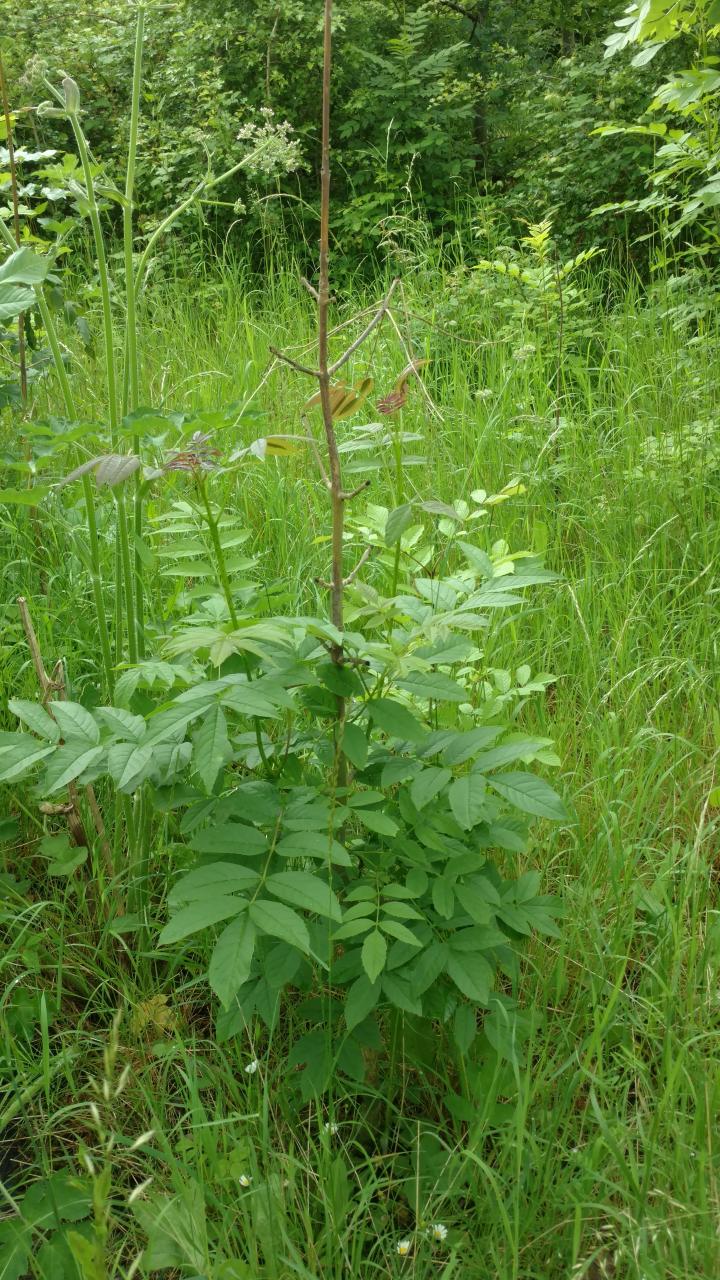
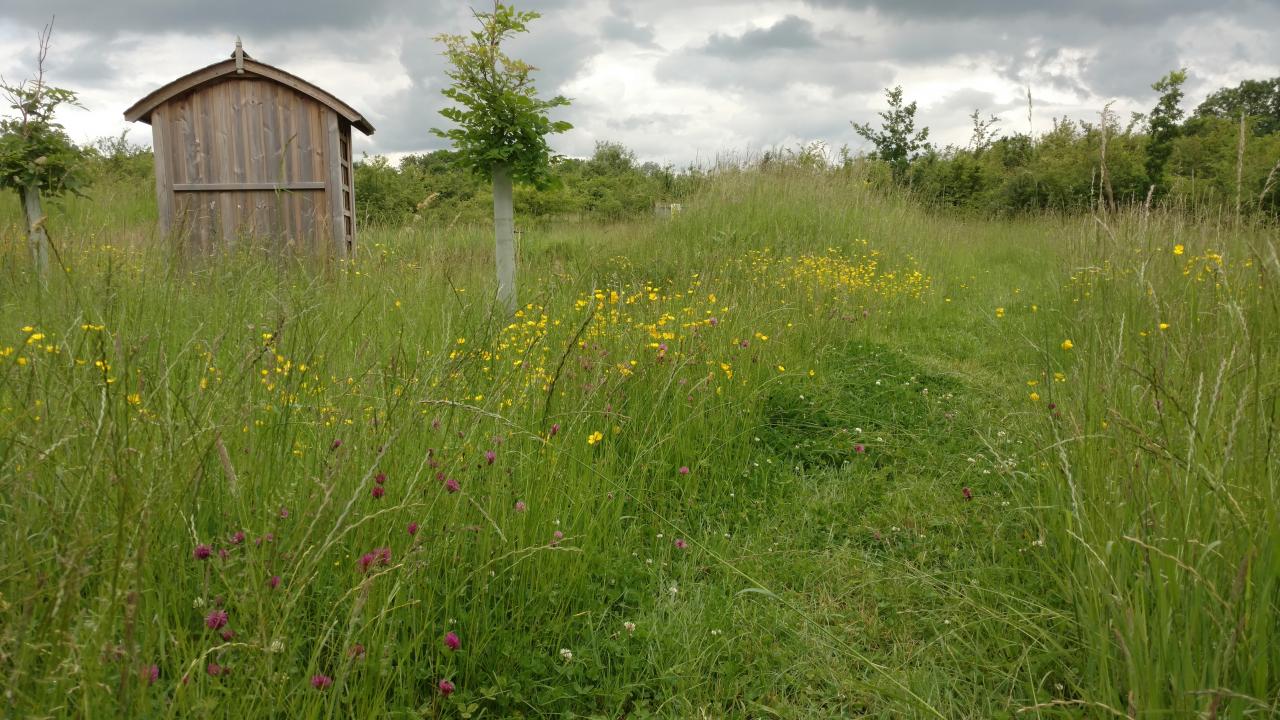
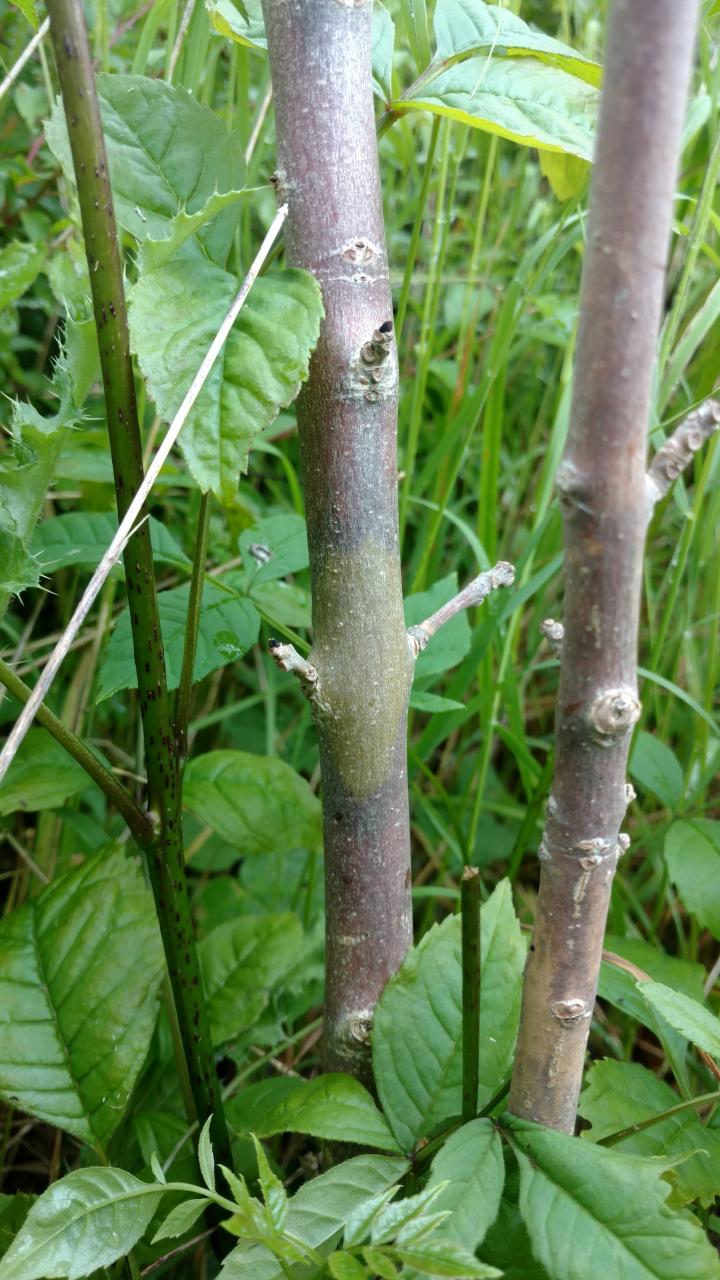
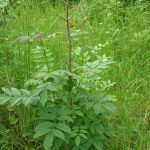
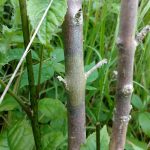
Its been a while since the last report but hopefully more people have found the Jubilee Wood and discovered for themselves the tranquillity and diverse species that can now be seen in the slowly maturing woodland. On the down side it is evident that Ash Die back disease is established in the wood. Quite a few self set trees are showing the classic sign of a diamond shaped lesion/mark on the stem with leaf loss above. It is not clear how quickly the disease will spread to larger Ash trees. If there is a plus side to this disease it is that because Ash readily grows on this soil almost as a weed there is a chance that natural immunity or slight disease resistance may be evident in the background population. Only time will tell.
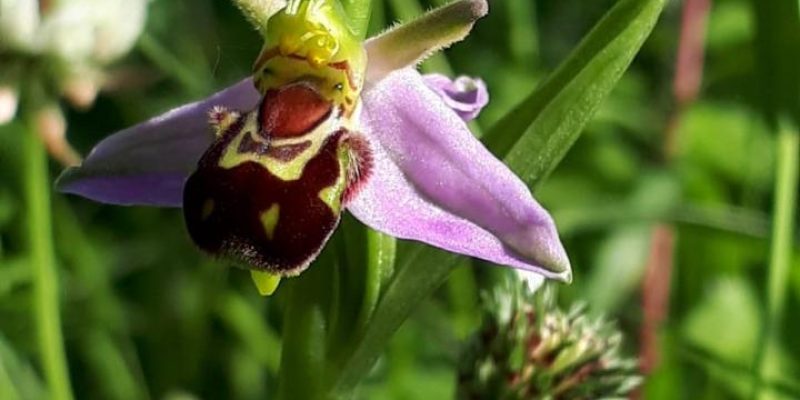
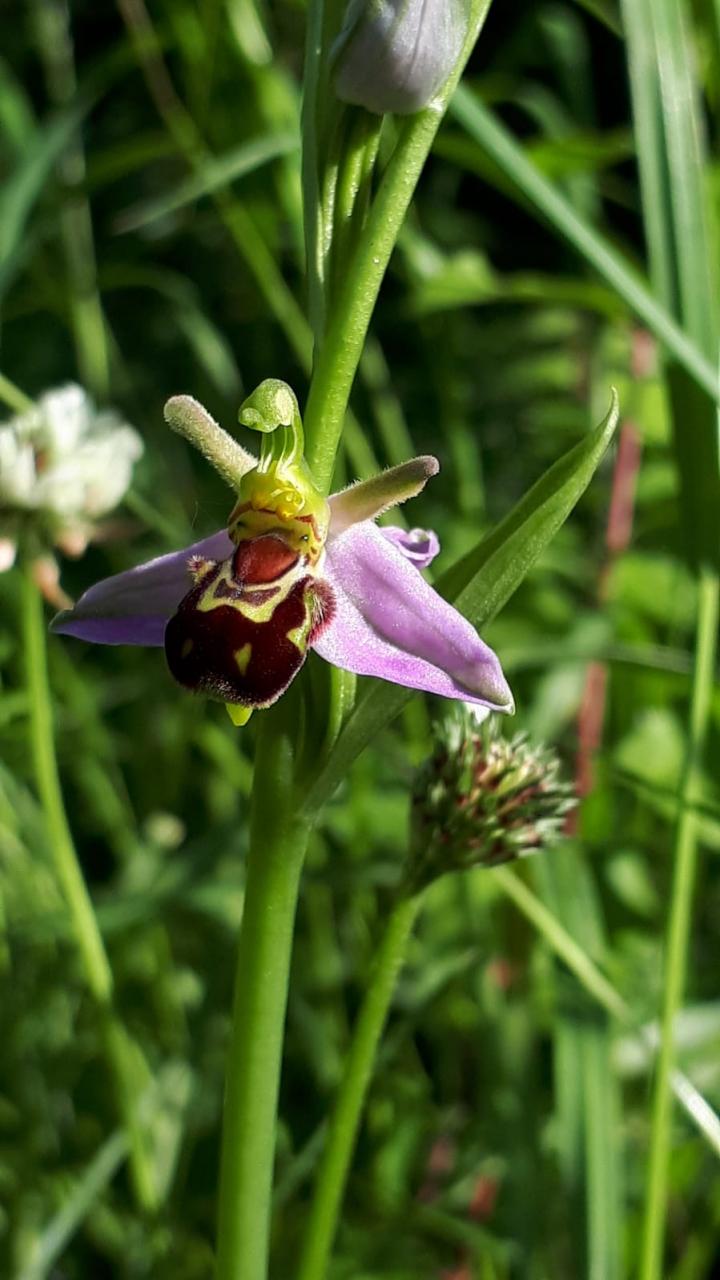
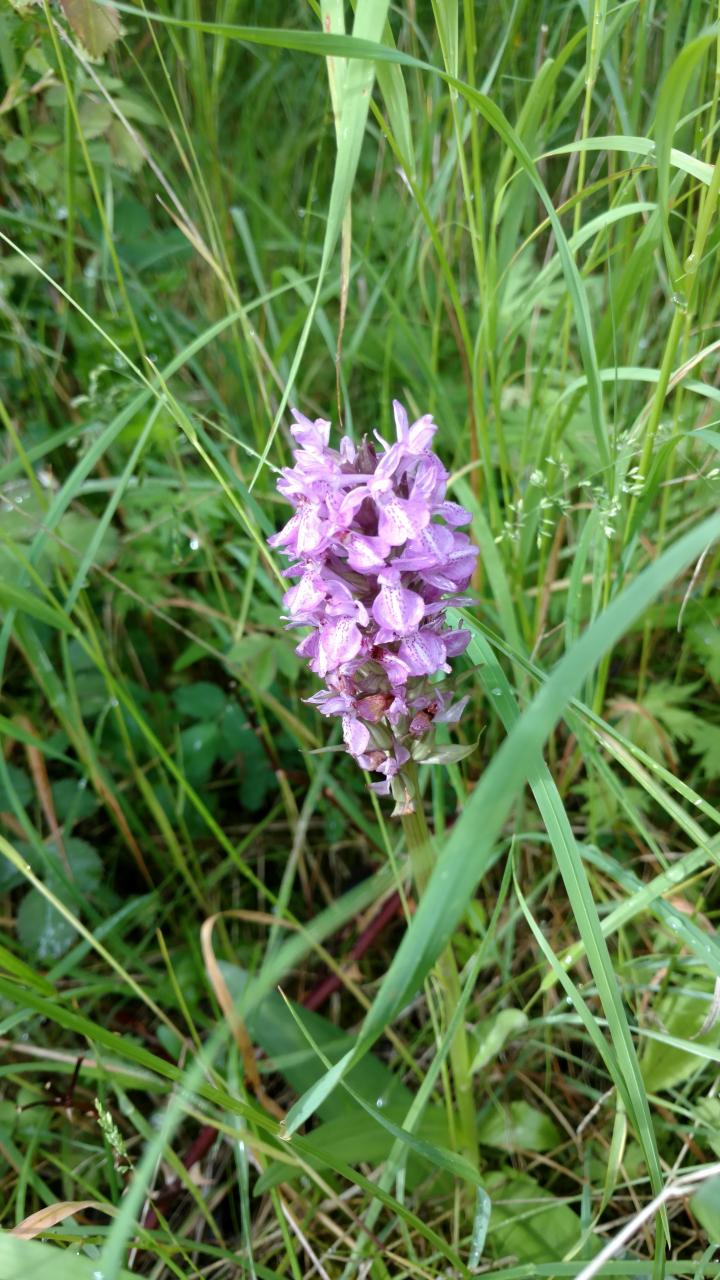
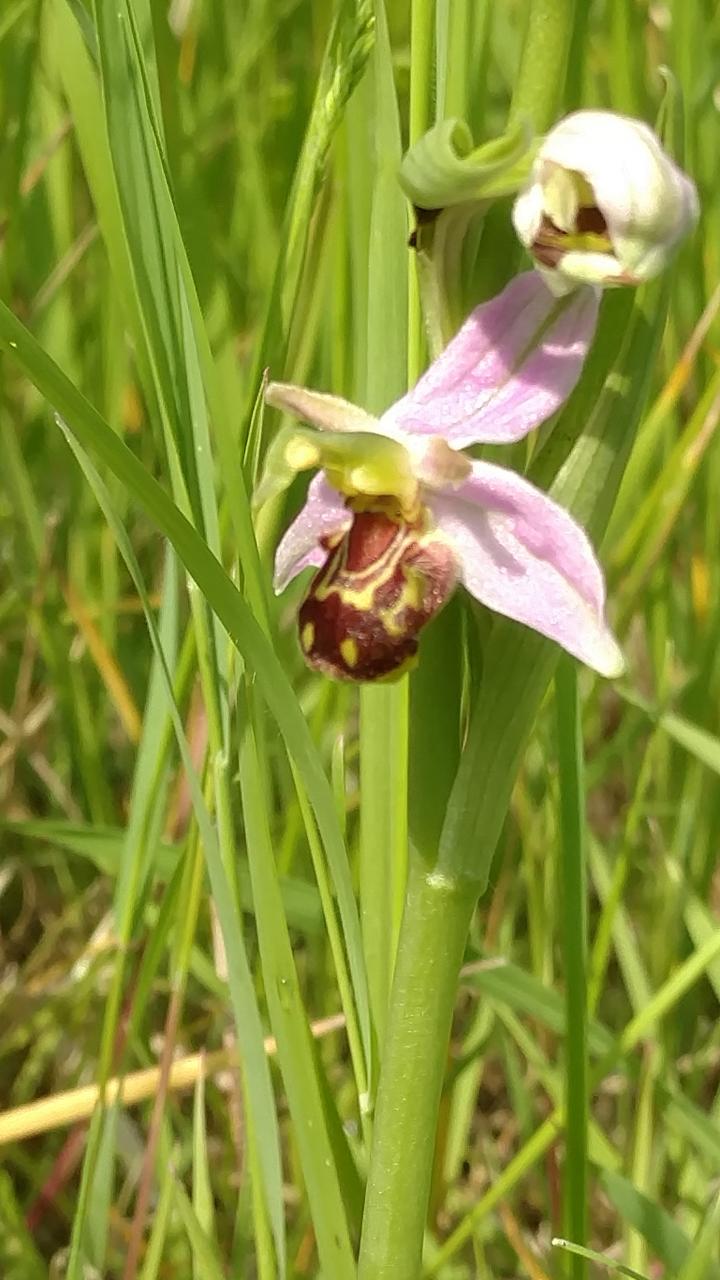
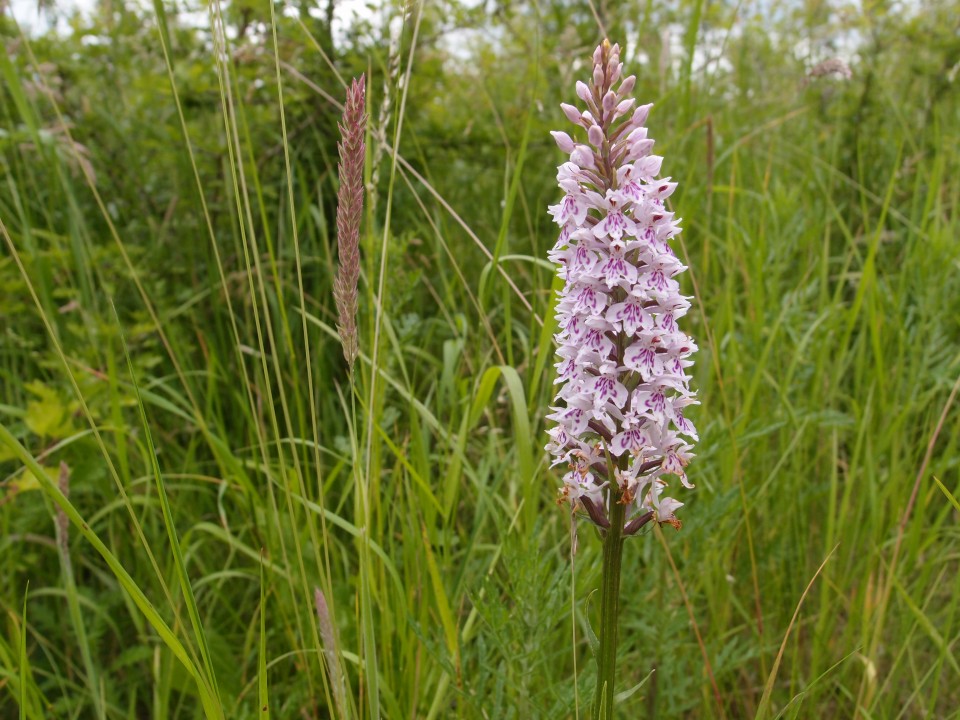
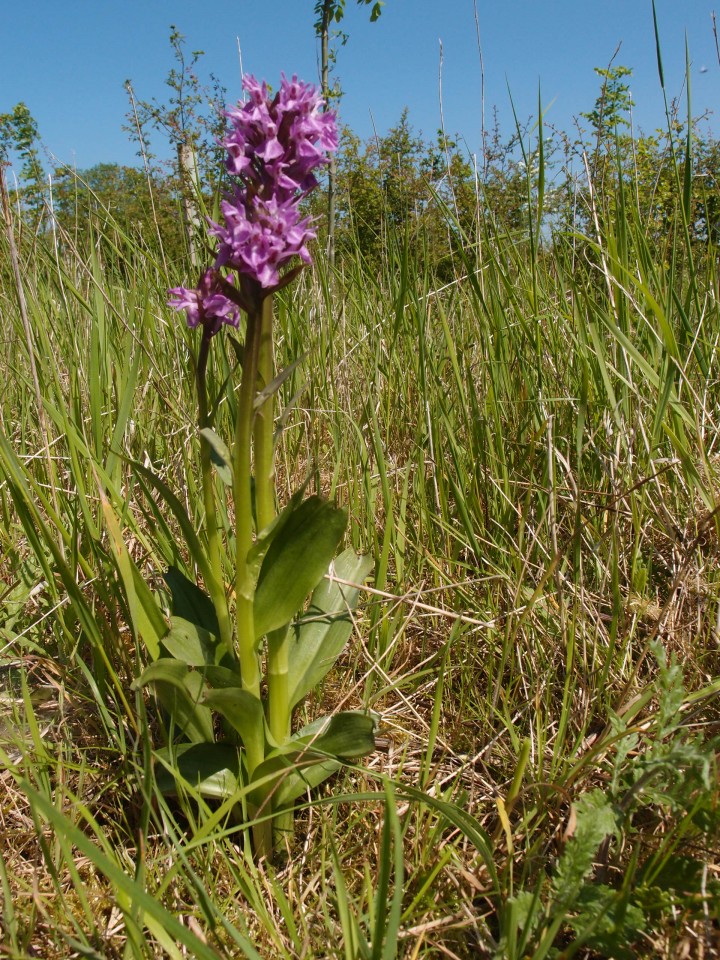
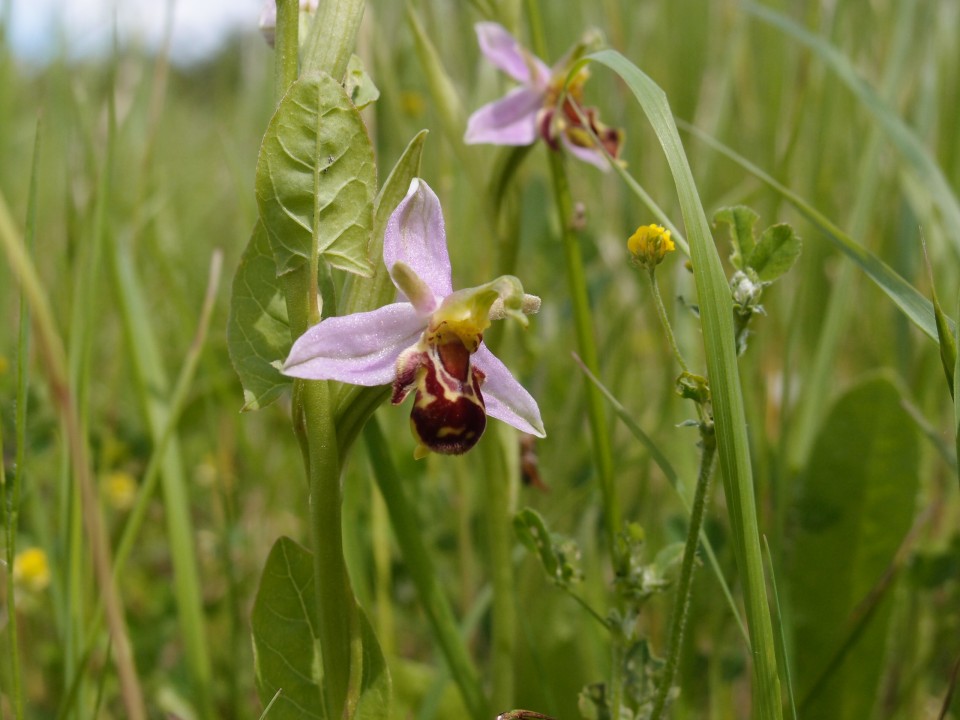
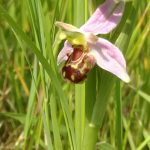
On the positive side, the Bee Orchids are back this year. Very difficult to spot but worth the effort as they are quite splendid plants to look at closely. Other more common Orchids can be found along with a great selection of wild flowers.
Bird life continues to thrive as the hawthorn coverage becomes greater so the nesting opportunities improve. Barn Owls are regular visitors, silently drifting over the wood and adjoining pastures and you are always guaranteed a Red Kite wheeling on the thermals.
If anyone wants to do a bird survey and report back what you see, please do.
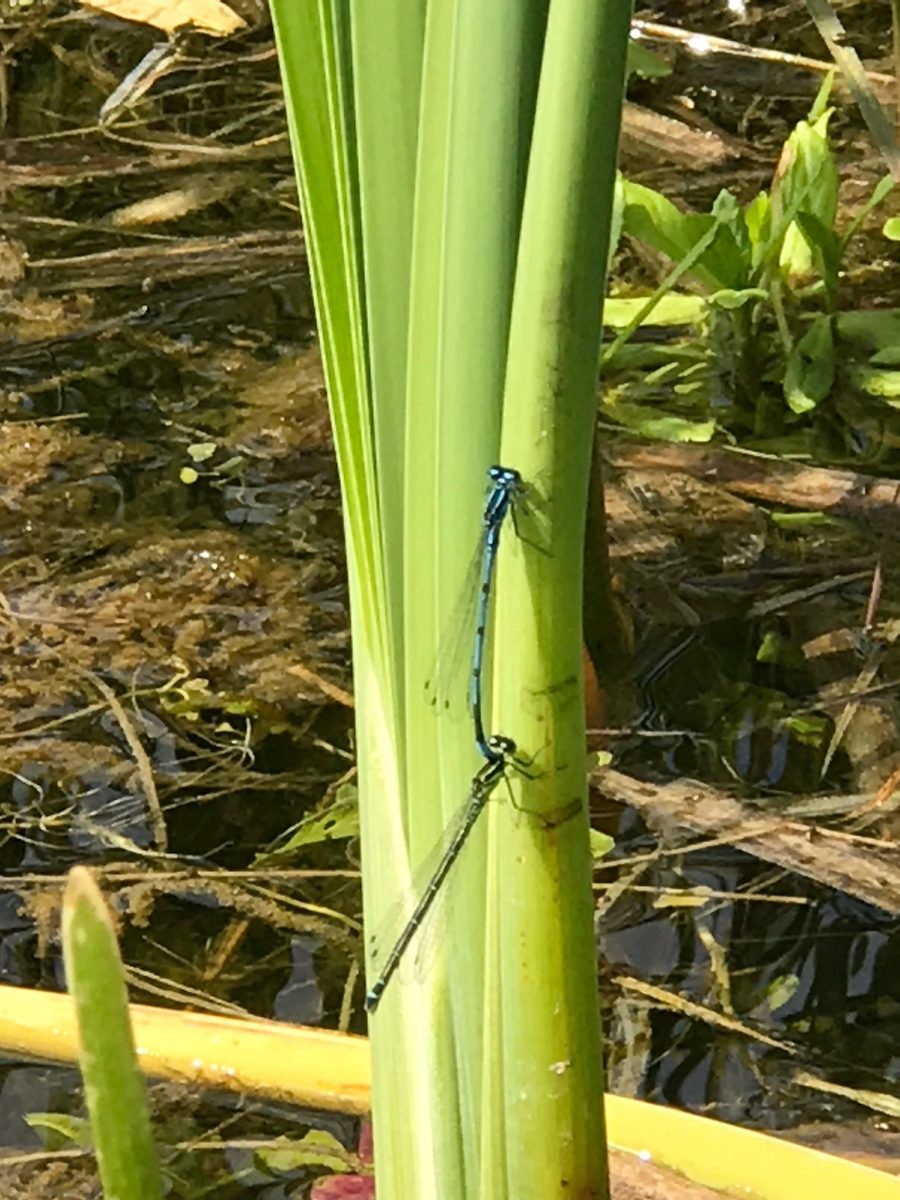
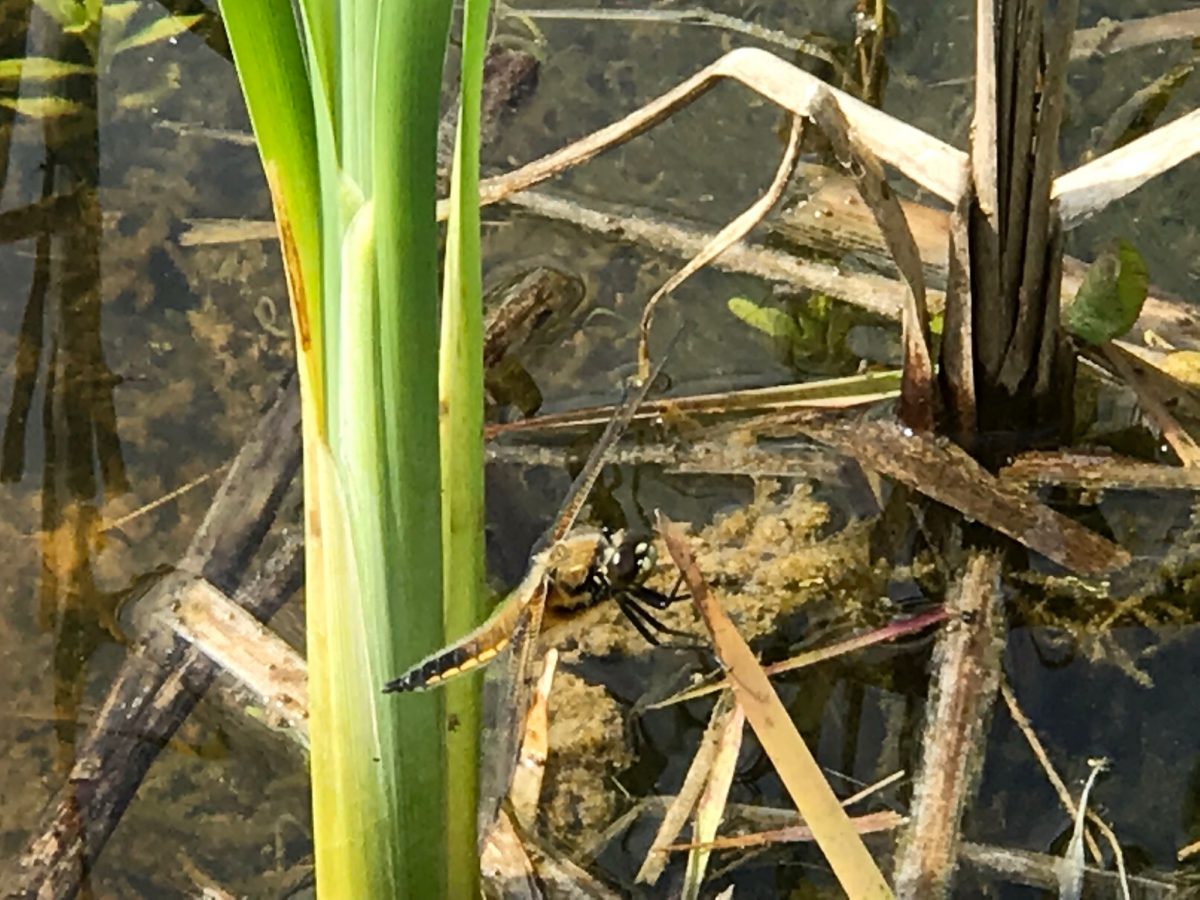
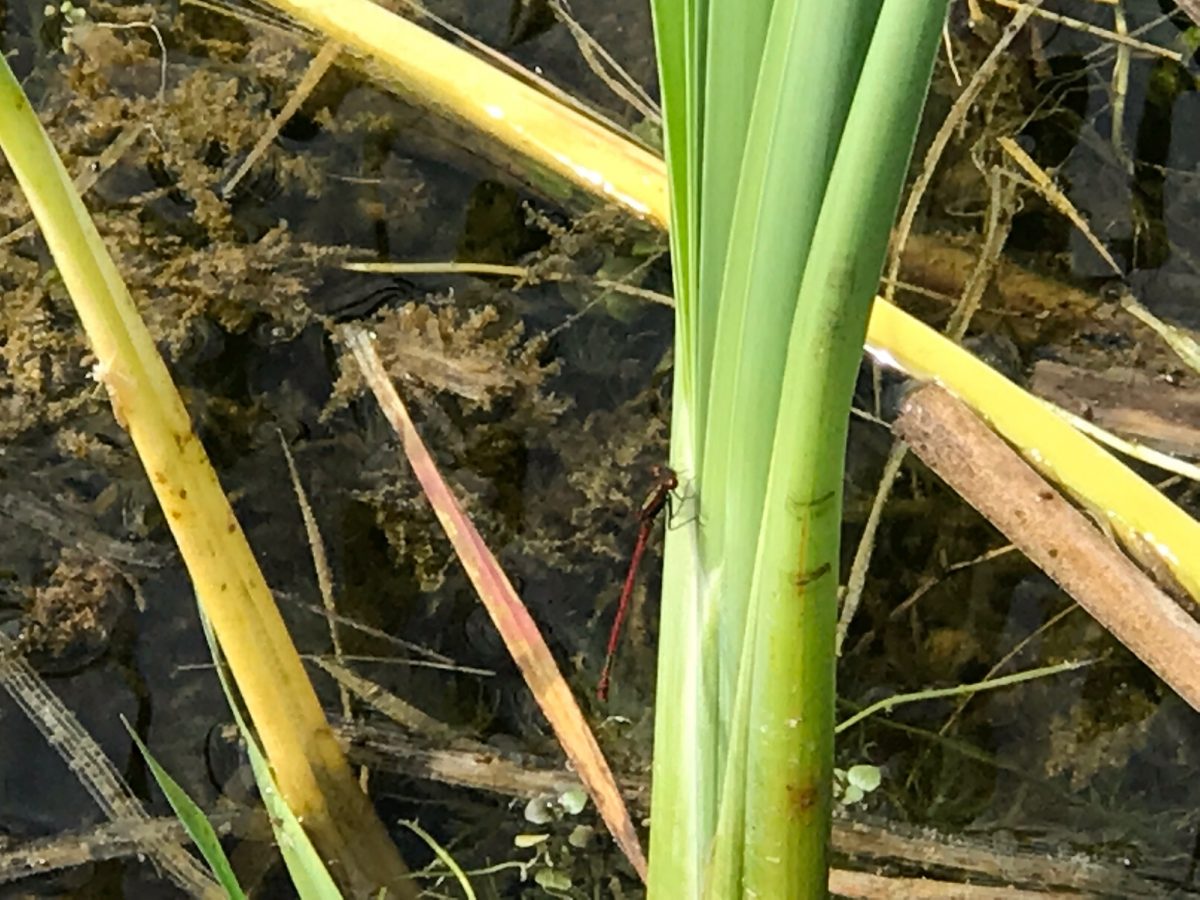
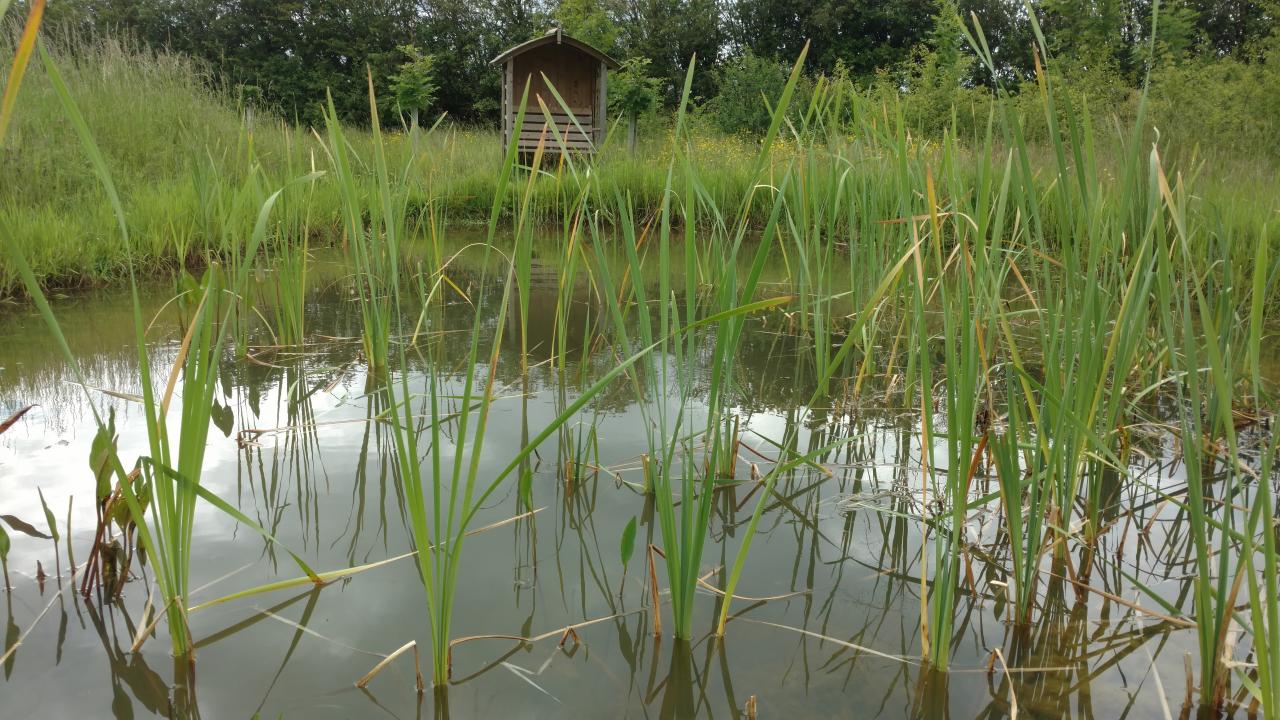
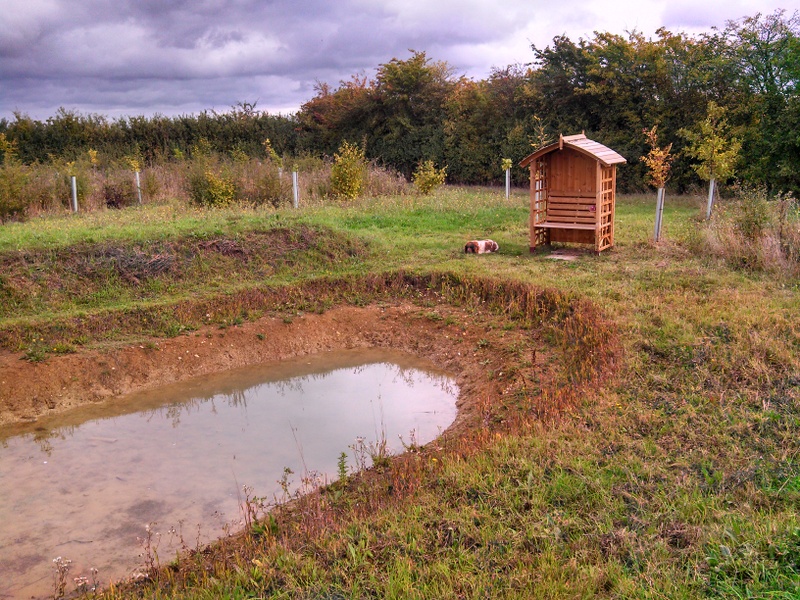
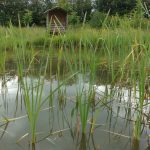
The pond offers the biggest improvement to wild life habitat. From the Swallows swooping over and scooping up water which is an amazing sight in itself to all the bugs whizzing around, the waterborne insects, newts and dragonfly’s
-
-
Ash Dieback, note upper leaves have not developed
-
-
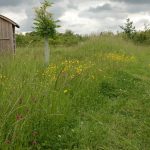
Jubilee Wood
-
-
Jubilee Wood pond
-
-
Ash Dieback tell tale sign of infection
-
-
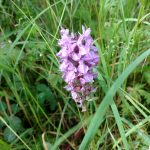
Common Orchid
-
-
Bee Orchid
Don’t forget to scroll down to see previous reports and activities.
Jan 2014
The wet weather continues unabated, at least the Jubilee Pond is full again.
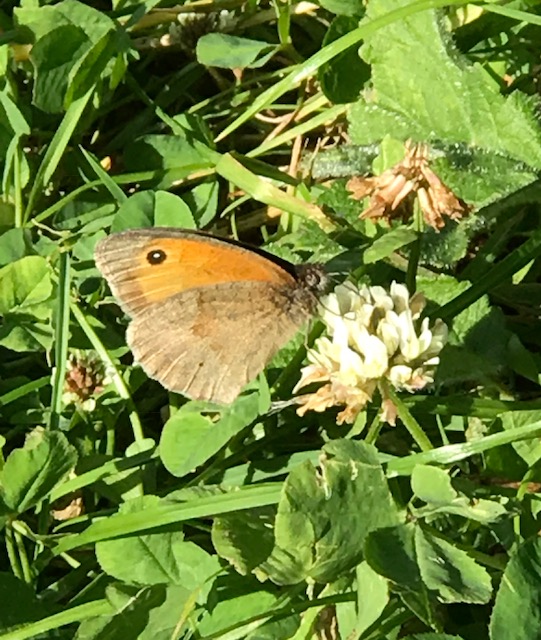
Its excellent to report that the wood is visited very regularly evidenced by the muddy grass tracks all around. What I’ve noticed is the good numbers of small birds that are readily seen. Blackbirds especially also the Tit families, Wrens which are supposed to be the most numerous small bird, Green Woodpeckers.and many other brown blobs which are a blur. On which point if any bird spotters would like to spot and identify the species seen in the Jubilee Wood please do so. Like wise for Butterflies.
We had a comprehensive Moth and Gall survey carried out last year the results of which are below. There are some moth results outstanding but work is in progress to bring them to this forum.
We look forward to some warm and dry days after a blast of snow and Ice just to put the seasons into context.
Survey Results for Leaf Miners And Galls
For most species there is a link out to an external website to explain lifespan and habitat of these interesting members of the animal kingdom. For leaf miners the adult moth is shown with text about the mine. A big thank you to Barry Dickerson and Andrew Frost for observing and recording.
LEAF-MINERS RECORDED IN JUBILEE WOOD, GREAT GIDDING – 25-09-13 by
BARRY DICKERSON
To find out more about Leaf Miners click this link to British Leaf Miners
Listed below is a list of Plant Galls identified by Barry Dickerson following on from the moth survey that was conducted earlier .
PLANT GALLS FROM JUBILEE WOOD GREAT GIDDING GRID REF TL1283
COLLECTED BY B Dickerson DETERMINED BY P Walker 25/09/2013
Andricus kollari Knoppler Gall on Acorns
Andricus fecundator Artichoke Gall Bud of Oak
Neuroterus numismalis Silk Button Gall Oak Leaves
Neuroterus quercusbaccarum Common Spangle Gall on Oak Leaves
Neuroterus albipes Smooth Gall on Oak Leaves
Cynips quercusfolii Gall on Oak leaves
Cynips divisa Oak Pea Gall on Oak Leaves
Diplolepis nervosa Pea Gall on Rose leaves
Aceria macrochylus on Maple Leaf
Phollocoptes goniothorax on Hawthorn leaves
To find out more about plant galls click this link to The British Plant Gall Society
Autumn report
Our local Moth experts were back in the wood in early October to see what late season moths were about but unfortunately it was a bit to cool for good moth trapping however a survey of Leaf Mining moths and plant galls (caused by flies) was successfully undertaken. We hope to have a full report of all species identified soon.
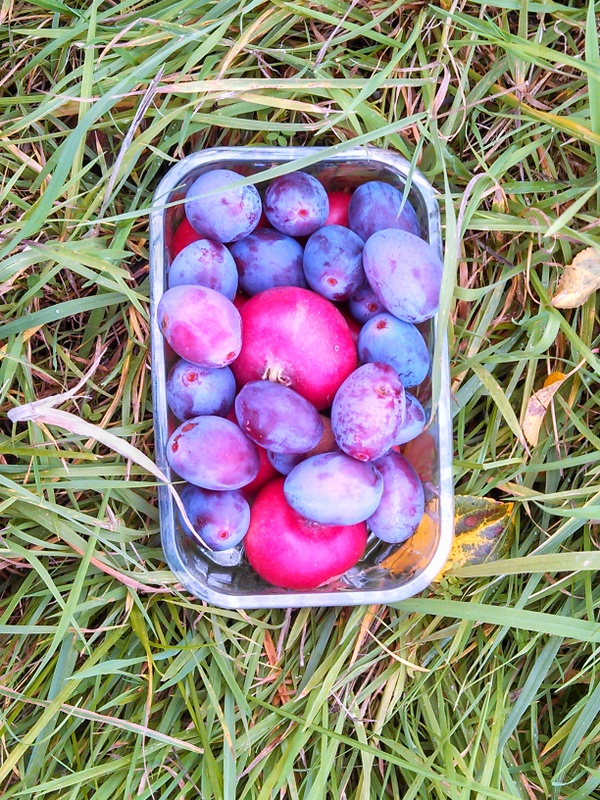
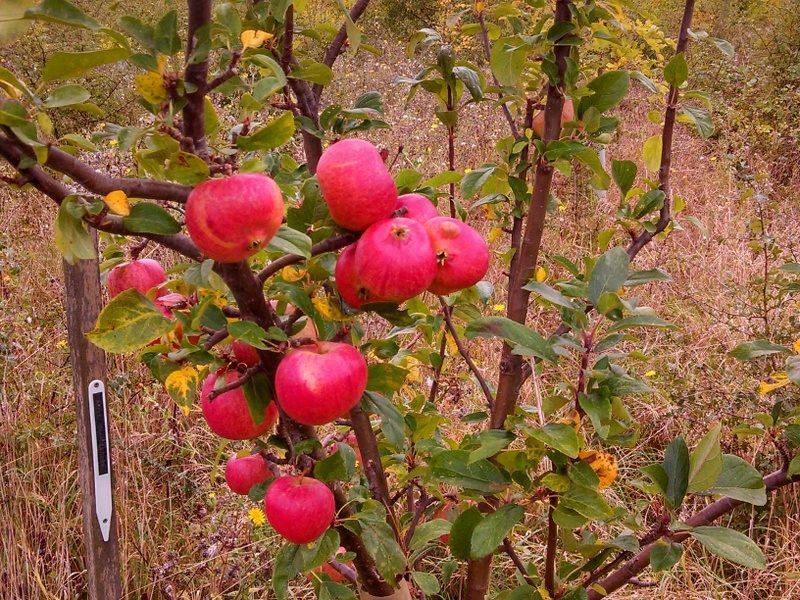
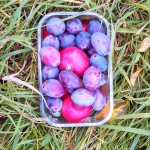
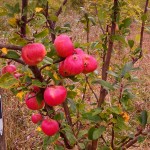
As most of you have seen its been a tremendous fruit year and the fruit trees in the wood have produced despite being of young age. Its good to report that the fruit has been “scrumped” which was what we hoped would happen. I managed to sample some of the apples and picked the last of the Damsons.
Nationally tree diseases are making the news, every species seems to be suffering. Whether its because of better monitoring or climate change its difficult to say. All I can suggest is that if you are planting trees make sure they are from good reputable tree nurseries.
-
-
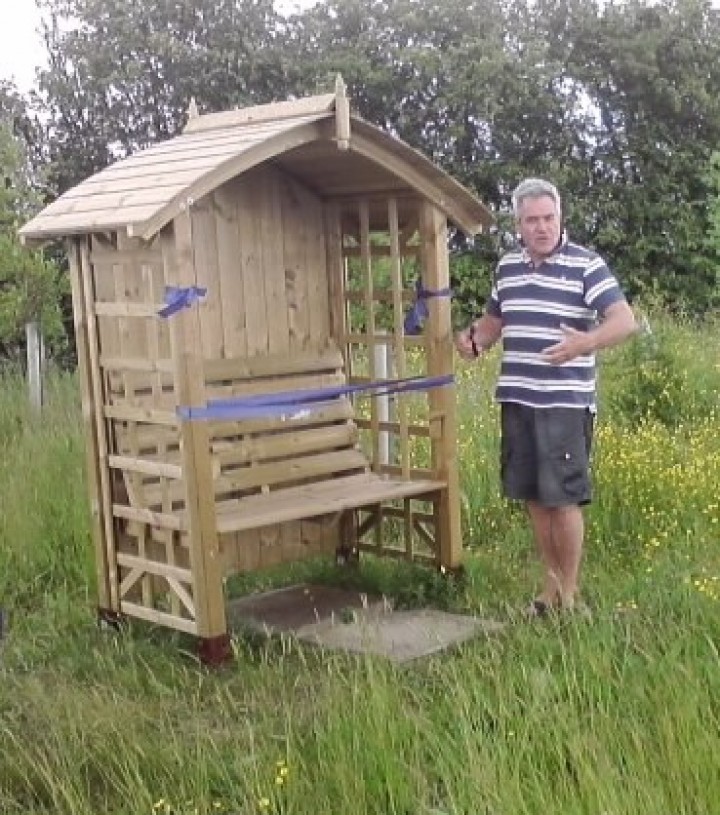
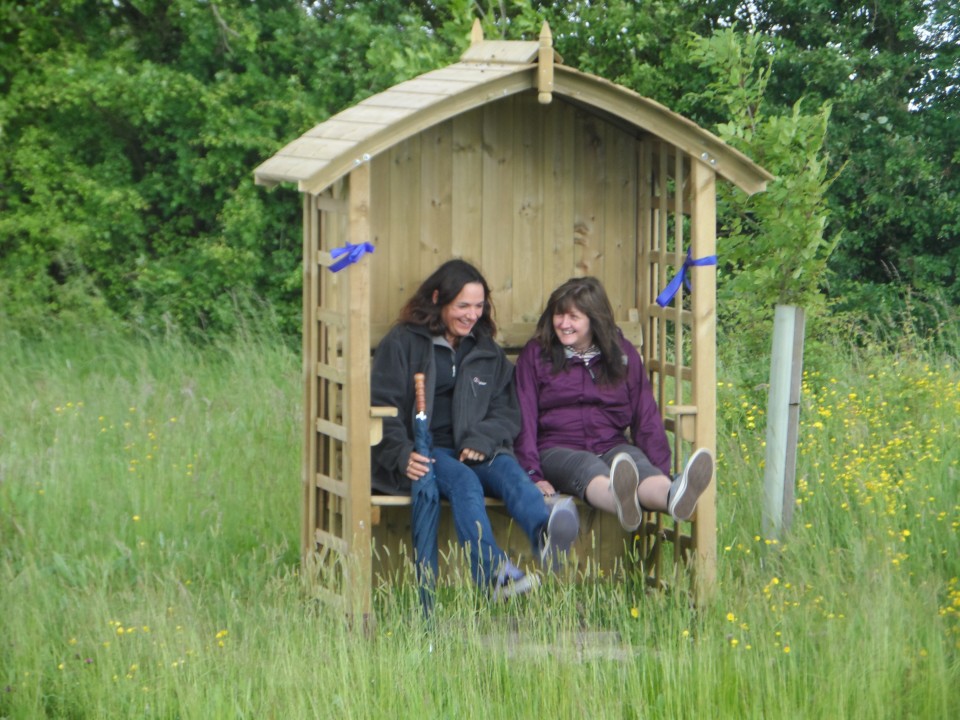
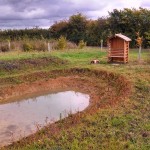
The new Arbour
-
-
Fruit selection
-
-
Ripening apples
-
-
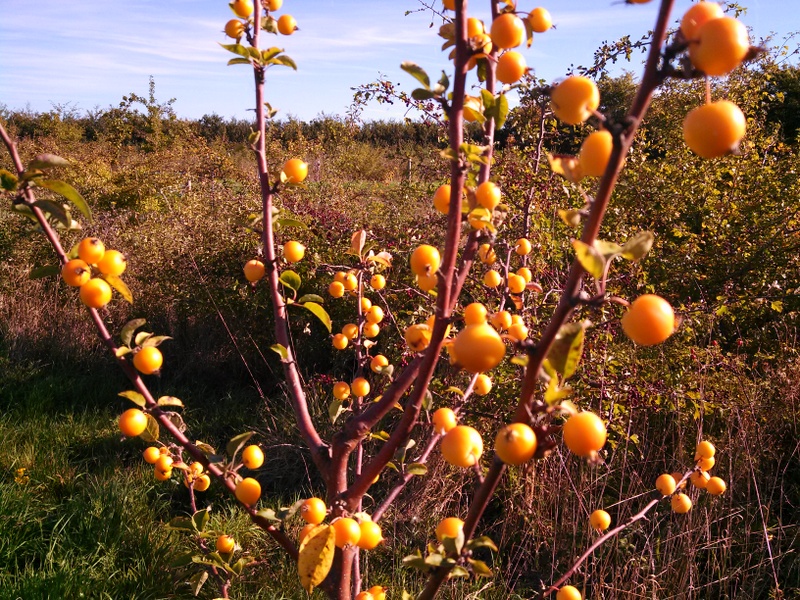
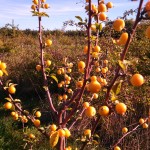
Golden Hornet crabs
-
-
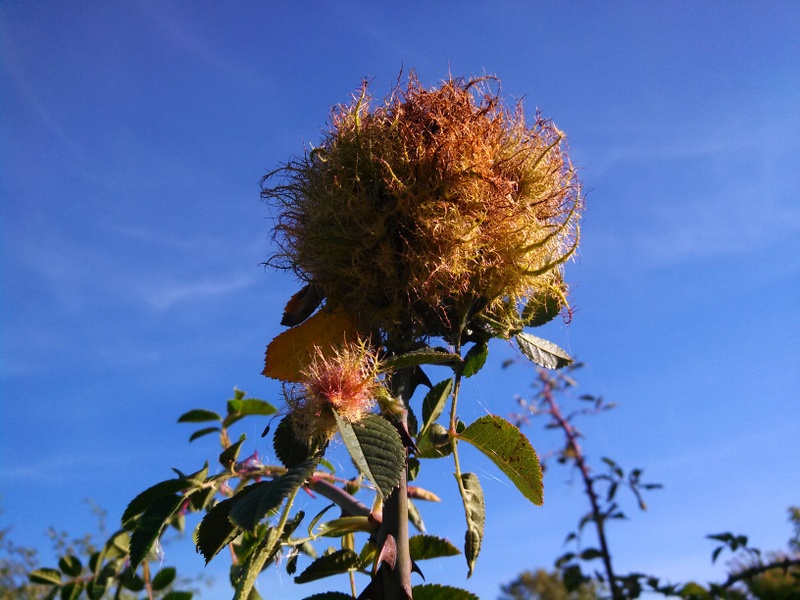
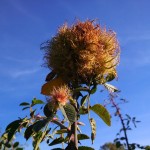
This is a Gall on a Dog Rose caused by a parasite triggering an abnormal growth of plant tissue.
-
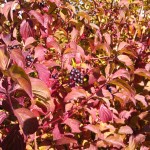
-
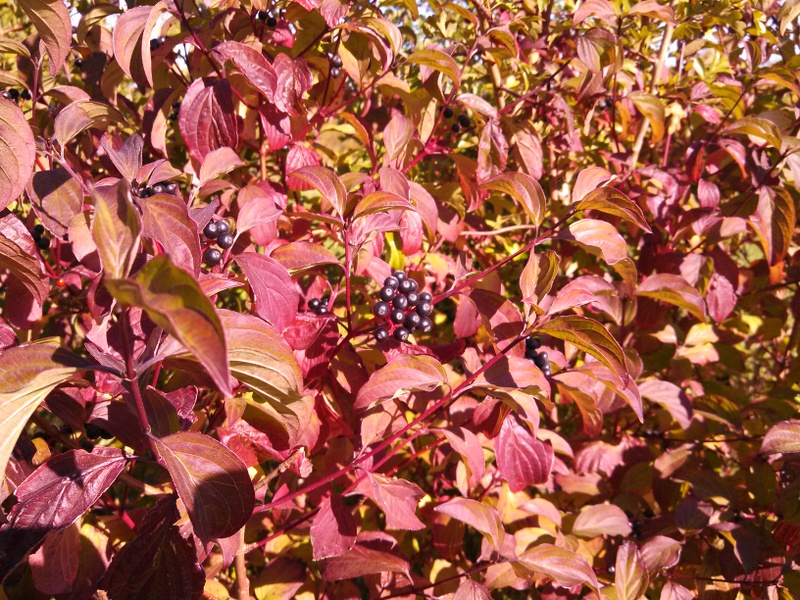
Viburnum in the wood
-
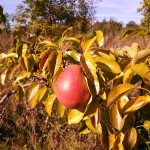
-
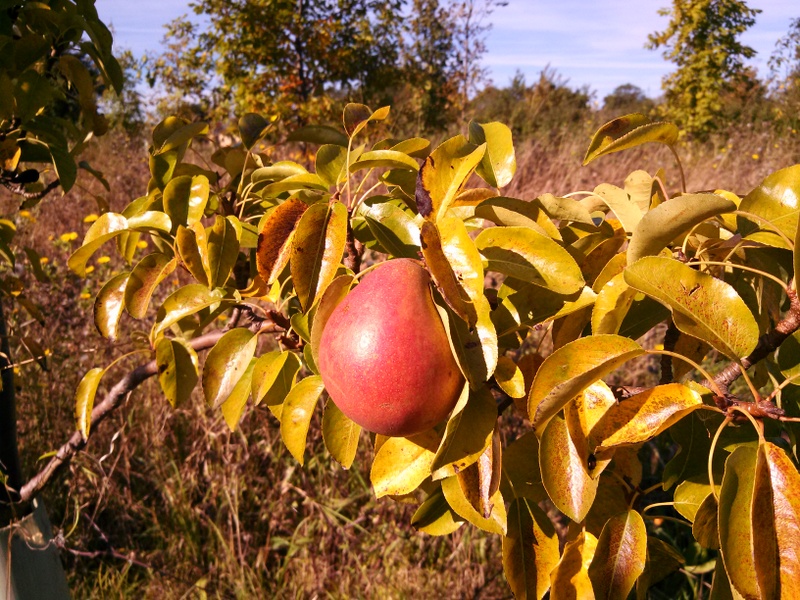
One of many Pears
-
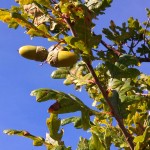
-
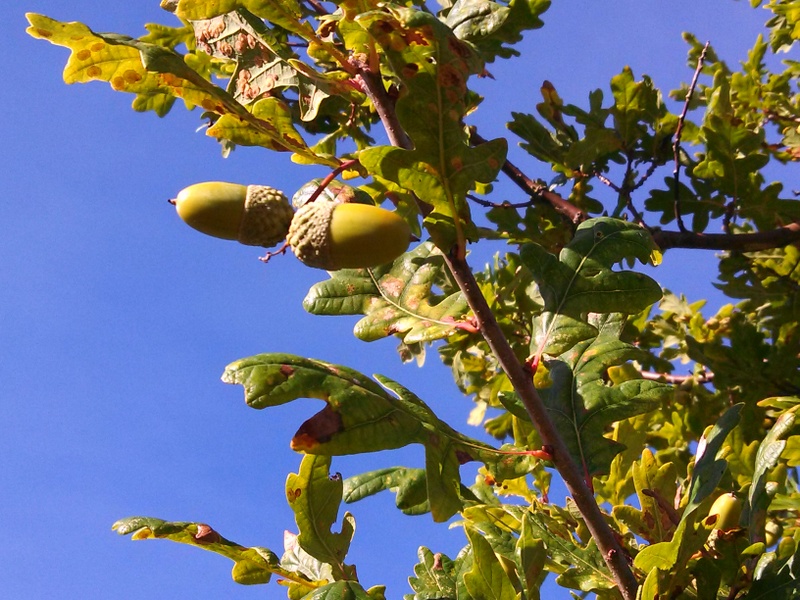
Acorns in Abundance
-
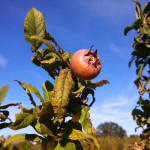
-
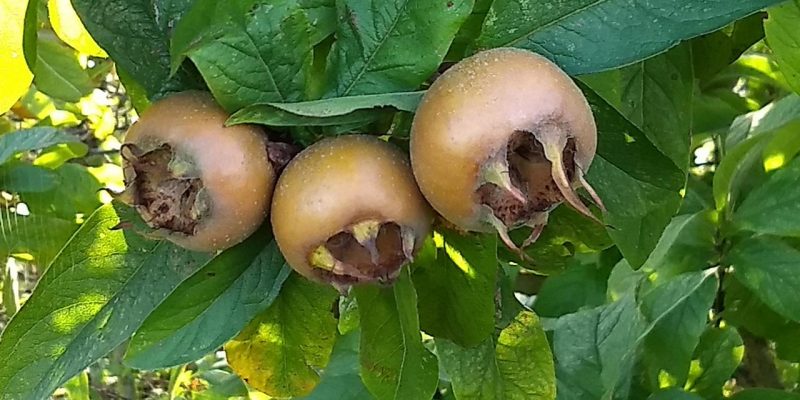
Medlar
Moth night update
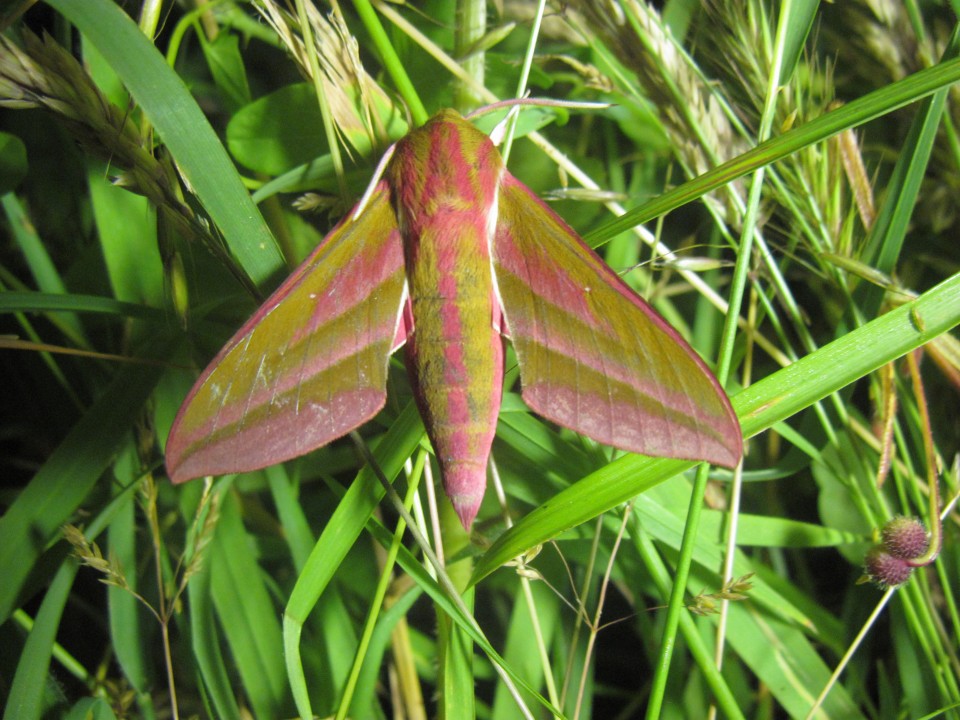
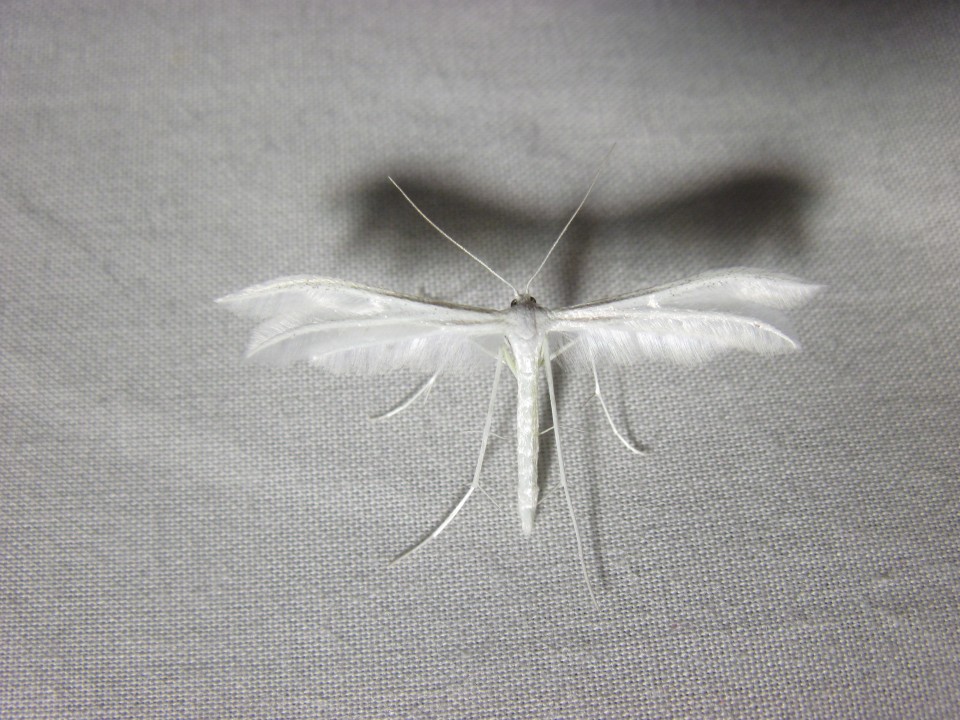
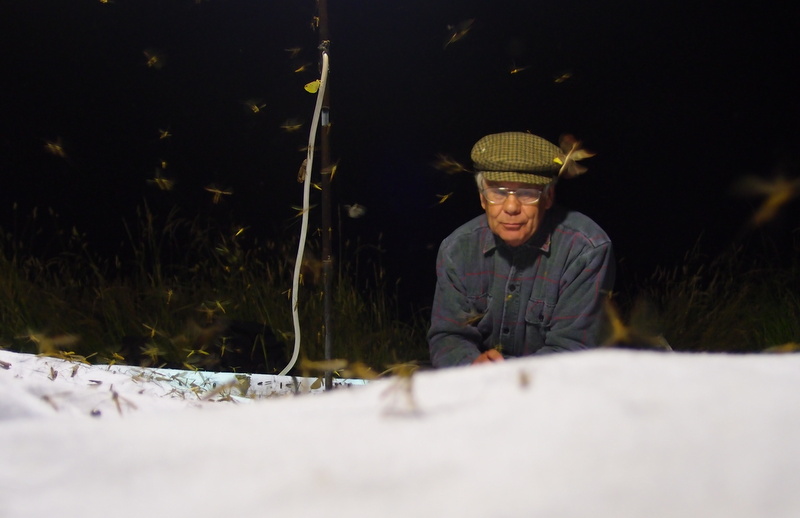
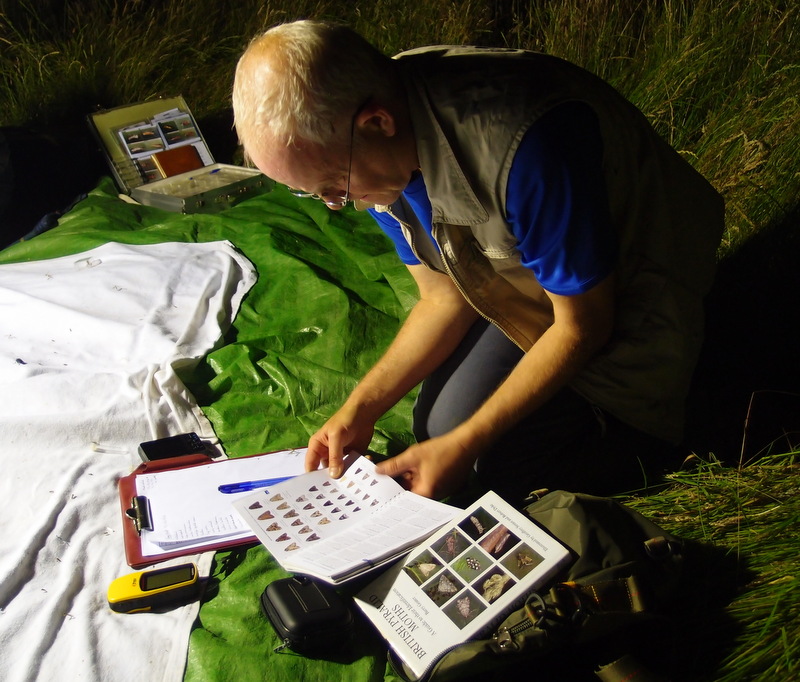
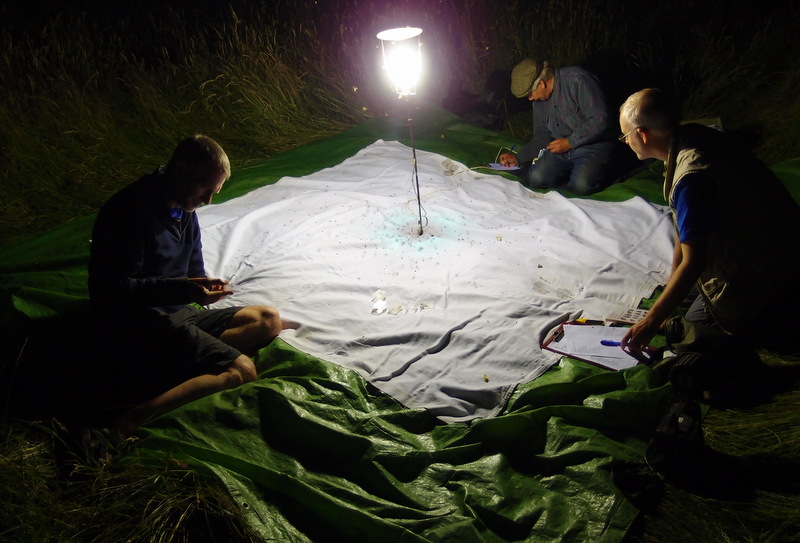
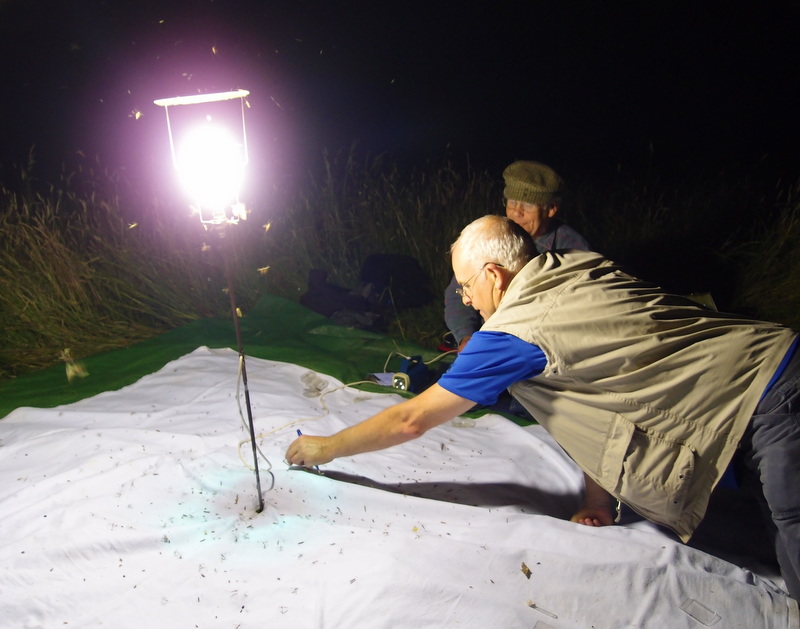
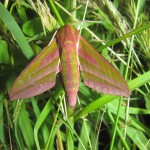
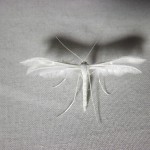
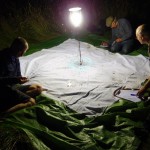
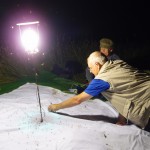
Two very successful moth trap and identification evenings have been held in the Jubilee Wood during July. Over 8o species of moths have been identified which for such a young wood is very good. This suggests that the ecology of the wood is reasonably sound and that the food chain for all species is working. It was a real eye opener to see how a moth trap works and the knowledge that Barry and Andrew displayed in identifying the various species.
Special mention to Nick Hughes for supplying a power lead and electric to run one of the traps. Cheers Nick !
See the gallery below of the team in action. A full species report will be saved in the Jubilee Wood archive folder.
Early July 2013
Moth Night, with a bit of luck and belief in the long range weather forecast we are holding two moth trapping evenings very soon. The first is a test evening on Saturday 6th July and then a follow up on Friday the 12th July. Both events will start at dusk and continue until late into the night or until moth activity ceases. The purpose is to see and identify the species that inhabit the Jubilee wood. A report will follow with some pictures if all goes well.
-
-
-
-
-
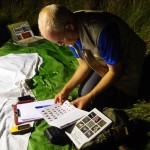
Serious stuff, all the gear for moth identification and location.
-
-
-
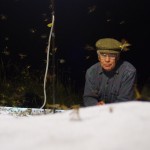
Andrew and Barry checking moth species in the Jubilee Wood
Late June 2013
The natural world seems to be catching up after the cold winter and spring although it is noticeable how some things are flourishing and others not.
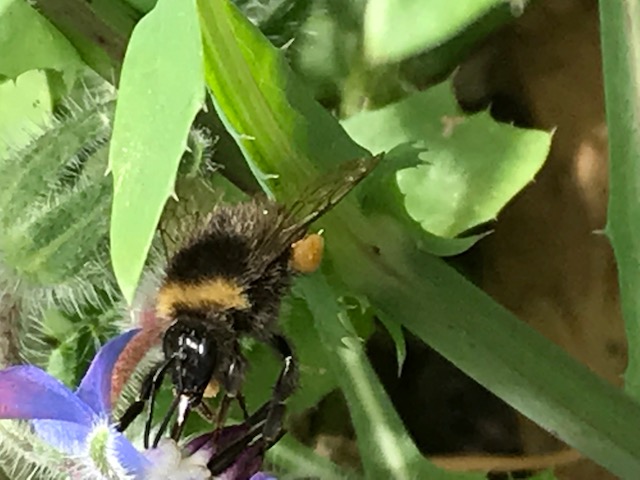
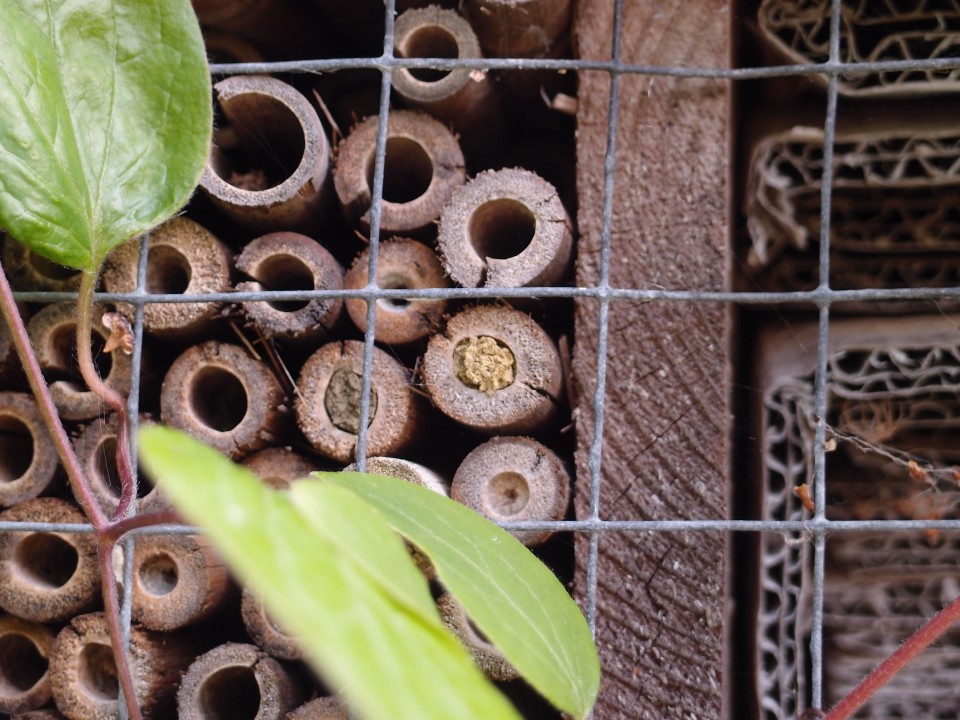
Good news, Mason Bees have been laying eggs in the bug shelter. Look at the ends of the bamboo canes and you will see they are packed with mud beyond which is an egg. These will hatch next spring. Lots of Marsh Orchids of various types are spreading throughout the wood. No sign of Bee Orchids yet and no Yellow Rattle. There is still time even the Clover is only really starting to flower. Scroll down to June 2012 for photos of wild flowers.
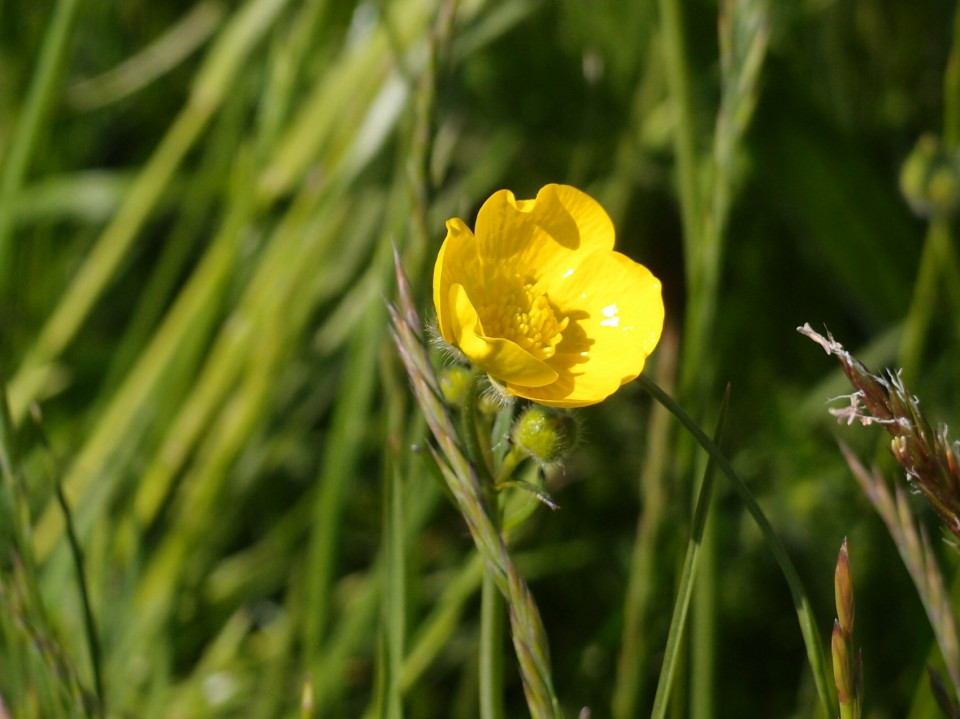
Plenty of Buttercups on which the Bees seem quite active. No sign of Ash Dieback yet but its probably to early.
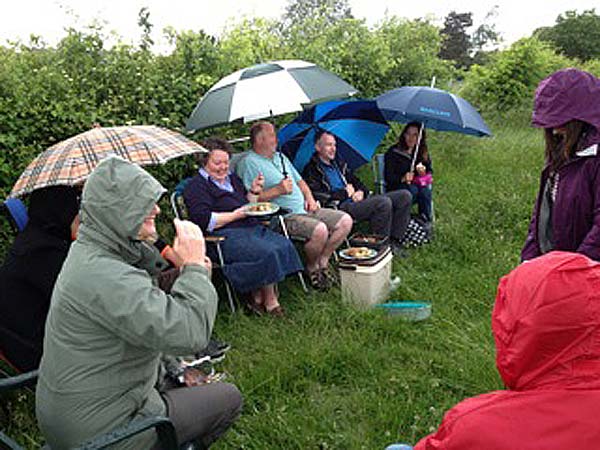
The 10th and final Mid Summer picnic has been held and true to form it was cold, wet and jolly for those who attended.
The Arbour has been put in place, it provides a great view of the setting sun over Main Street. More importantly its a great place to sit quietly and listen to the birds and the bees and watch all the insect life around the Jubilee Pond.
May 2013
At last some blossom to report, Cherry, Crab Apple and Blackthorn have finally burst open to give the feeling that spring or summer has arrived along with the general greening of the countryside. It is reasonable to suggest that the year is about 4 to 6 weeks behind.
The Jubilee pond is Proving popular with the Great Crested Newts. If you sit on one of the mounds for a few minutes you will see them coming to the surface for air. Plenty of other bugs to be seen.
Don’t forget the Midsummer Picnic on June 23rd. Full details here
March 2013
Good news, observations around the newly dug Jubilee Pond suggest that Common Newts have taken up residence on the shallow ledges of the pond. No real surprise this as newts have all ways been present in this area although it does help sell the Newt Trail. We think frog spawn has appeared so another good sign that the pond is becoming environmentally sound.
Also observed, a Great Diving Beetle about the size of a 50p piece.
The Barn Owl is now a regular visitor. It can be seen most mornings either perched on a branch or drifting silently over the wood after prey.
We hope that the Arbour will arrive for summer use. It is hoped that we can place the Jubilee Wood file somewhere within the structure so that it can be read but also kept dry.
Photographs are always welcome as are your own observations or comments. Please use the comments box to have your say.
January 2013
Its good to see that there are plenty of visitors to the wood both human and animal, the paths being well trodden. It was great to see a Barn Owl hunting over the wood on several days. The open central area and the wide mown paths are ideal for small mammals and consequently food for the owl. There are quite a few Barn Owl nest boxes around the parish and they do seem to be occupied. Little Owls can also be seen and heard on a regular basis. A Green Woodpecker was seen, busy prodding the ground for food. We all know about the success of the Red Kite breeding programme and without fail one or two Kite are seen drifting over the wood and the village. They seem to start at the top of the village and drift down the hill.
The new pond is brim full, hardly surprising really given the weather of the past 9 months. Plenty of invertebrates have already taken up residence and no doubt some of the things you cant see without a microscope are busy colonising the water. The plan is to let nature take its course unless we get an infestation of algae or similar then it will be hands on.
Advance notice that the Parish Council have kindly donated a sum of money from the charity account for the purchase of an Arbour to be sited near the pond. This is to recognise 10 years since the wood was planted. It is hoped that it will be installed for the 10th mid summer picnic on Sunday 23rd of June at 1500hrs
November 2012
As we reflect on probably regarded as the worst summer weather that anyone can remember the natural world grows on. Of course the big news is Ash Die-back disease which can be viewed here. The other main news is the tremendous growth that Oak trees have put on, the relentless growth of grass, thistles and clover.
The midsummer picnic came and went, picnicking in welly’s is ok but the novelty soon wears thin. Several attempts were made to organise a Moth Watch but each time it rained so a fresh attempt will be made next year.
The Jubilee pond remained full all summer and careful viewing shows lots of small water creatures have taken residence. We are trying not to introduce anything by hand into the pond. It is a bit of an experiment to see how colonisation takes place naturally.
The Newt trail signs are now in place.
Mid June
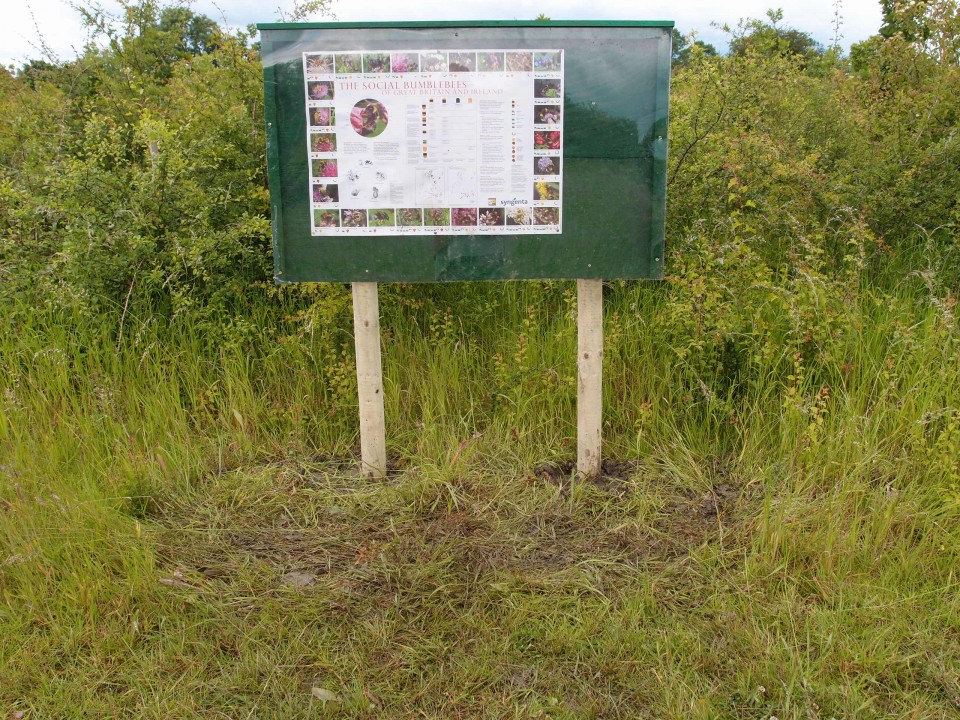
A new notice board has been erected in the Jubilee Wood near the central grass area. We hope to maintain a relevant flow of woodland notices and information. The first offering is a splendid poster sent to us courtesy of Syngenta . Its all about Bumble Bees of Great Britain and Ireland.
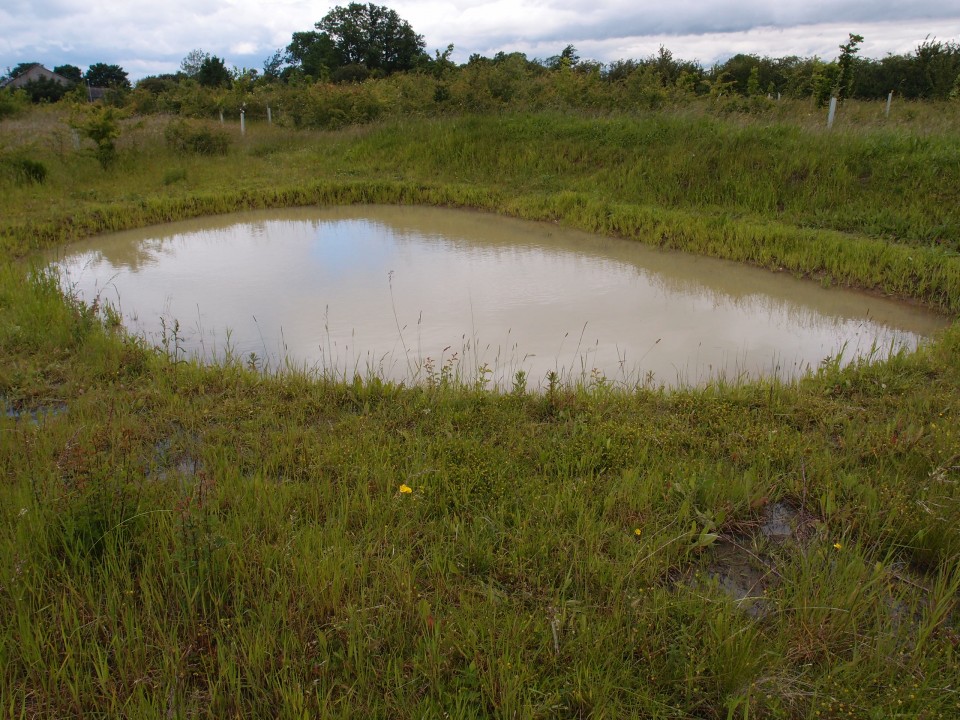
The Jubilee pond has maintained its level. Hardly surprising in the wettest June on record. There was an element of doubt as to the exact location that the pond should have been excavated but on evidence thus far its in the right place.
Moth watch, the weather has not been calm enough to set up a moth trap so far this summer. We will go ahead at some point but it will be at short notice so look out for a last minute e-mail or text.
June 2012
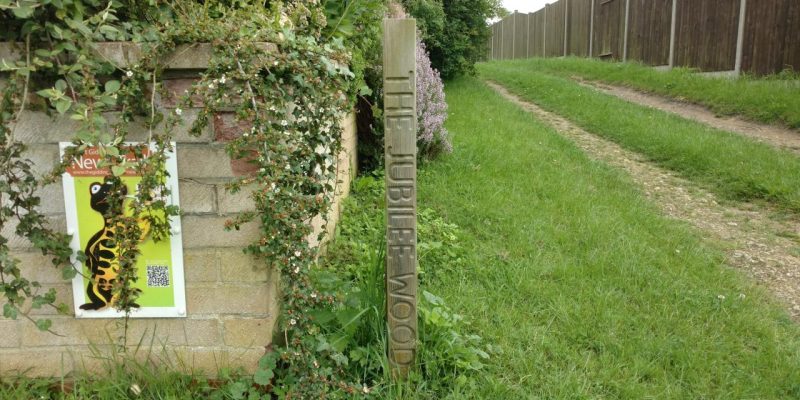
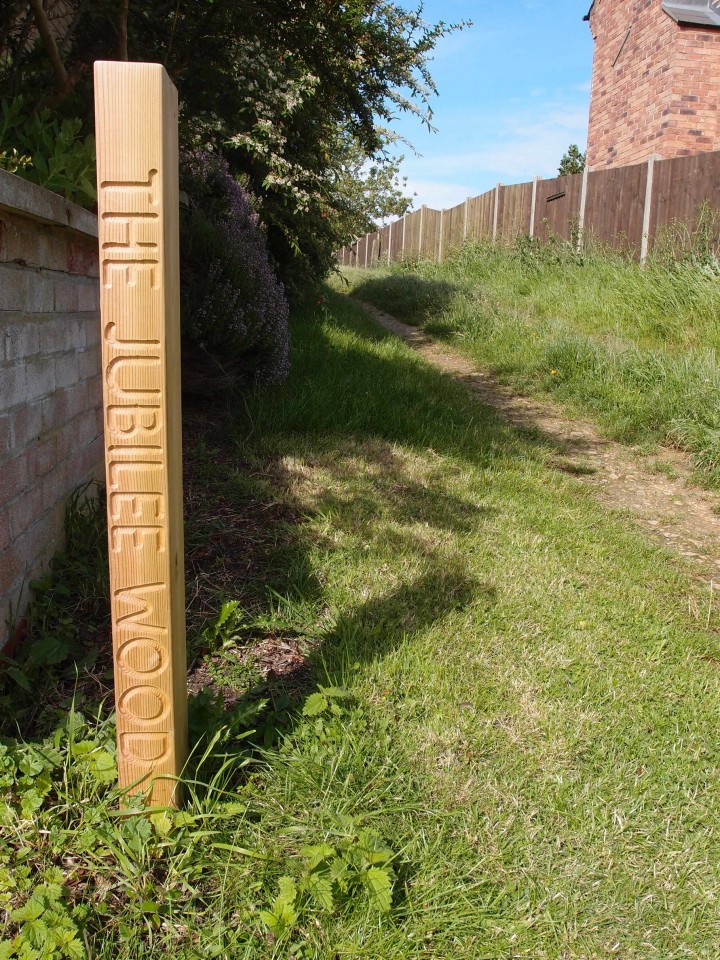
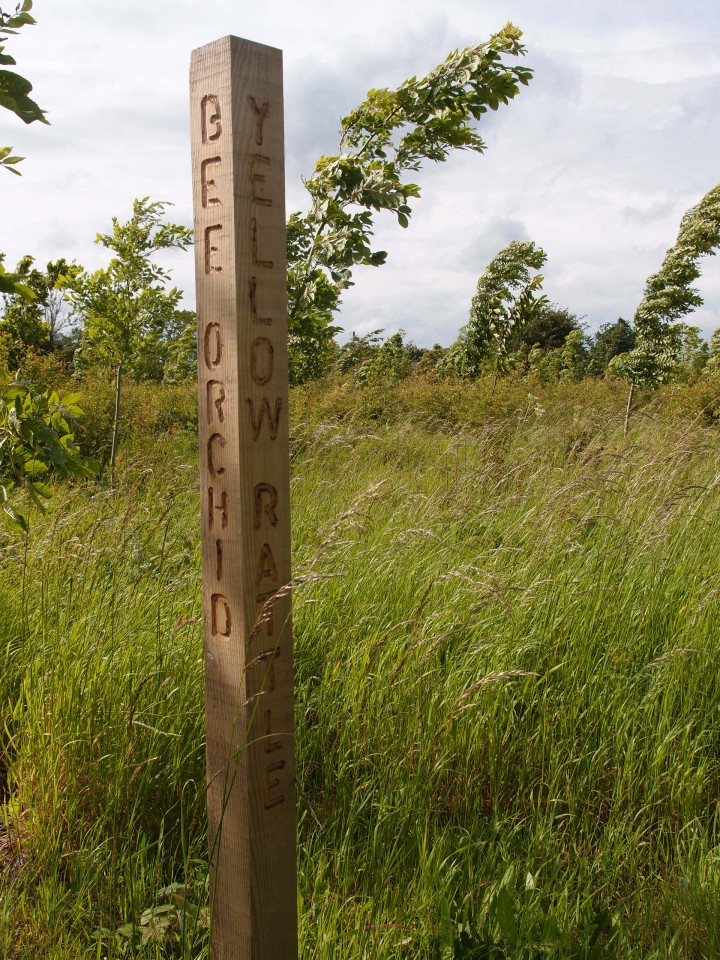
New wooden post signs have been place at the entrance to the Jubilee Wood.
June 2012
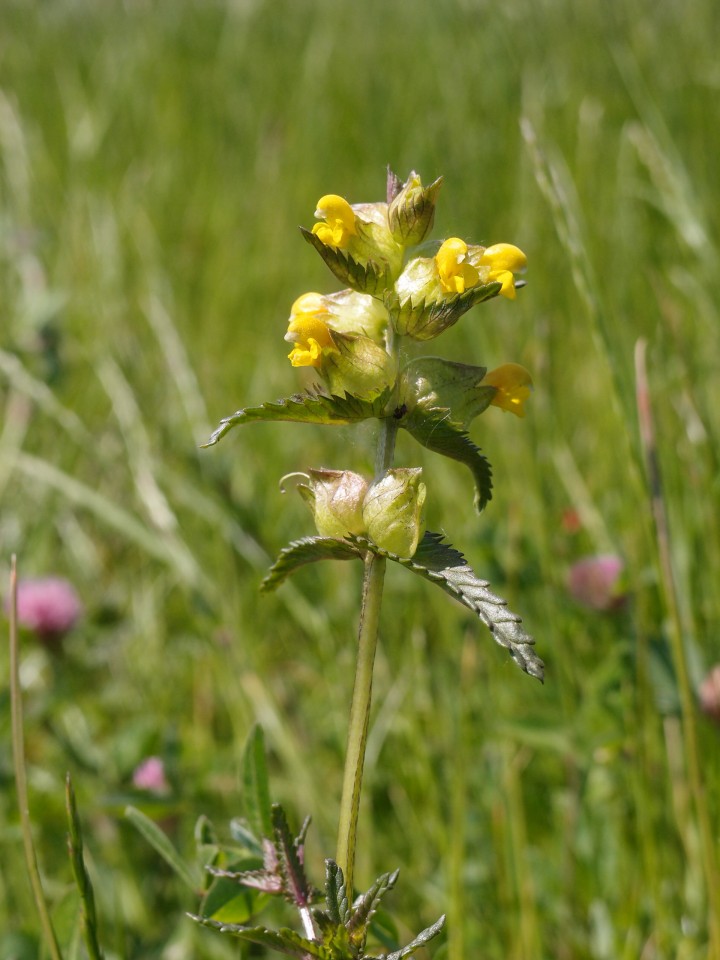
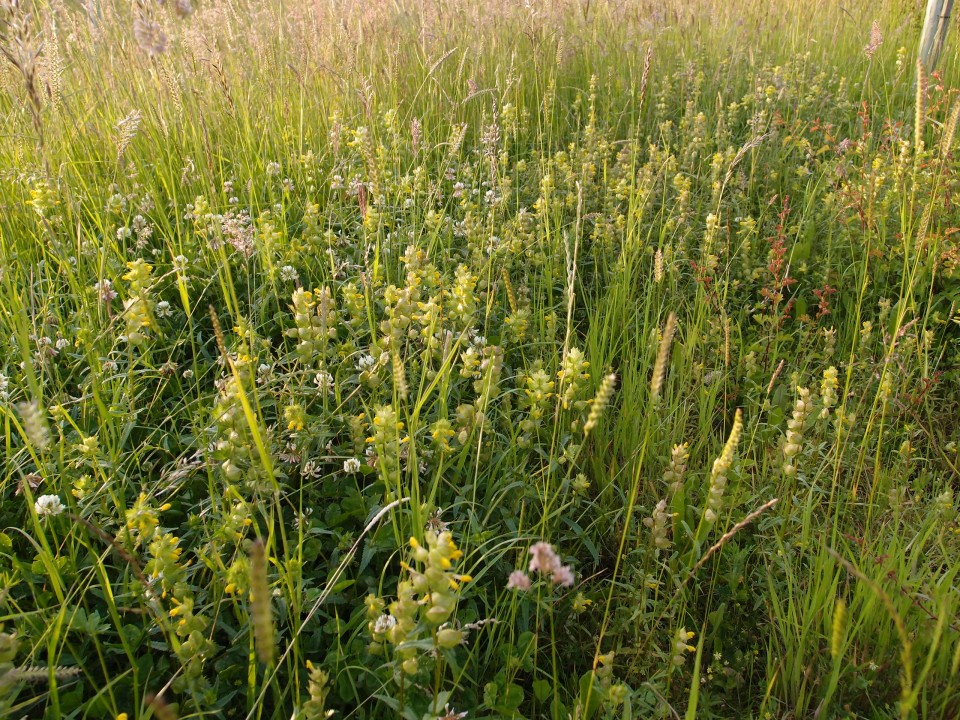
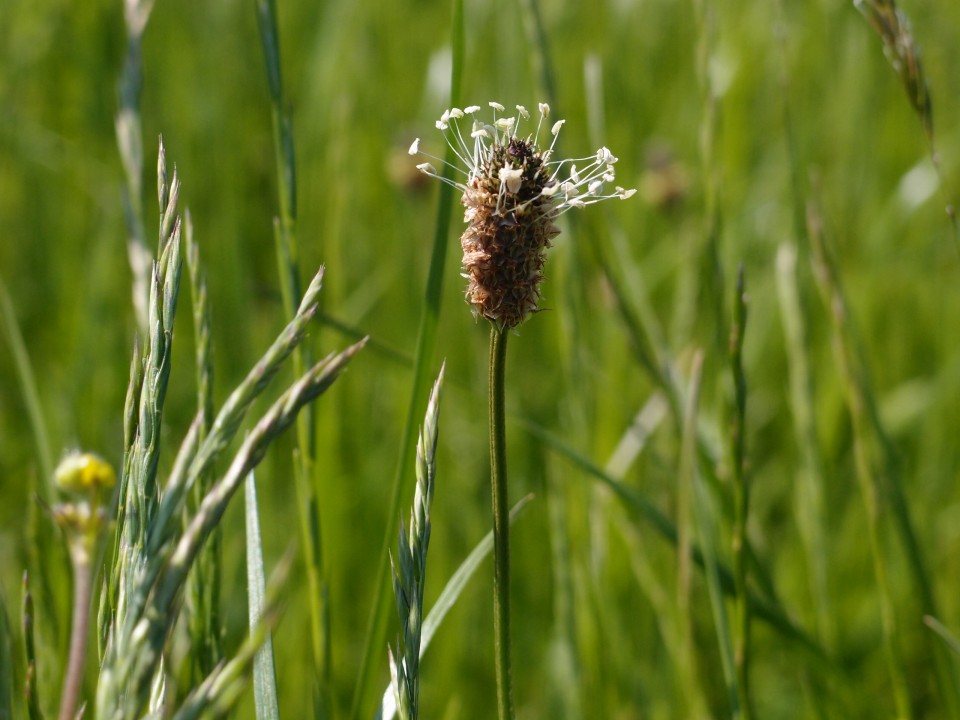
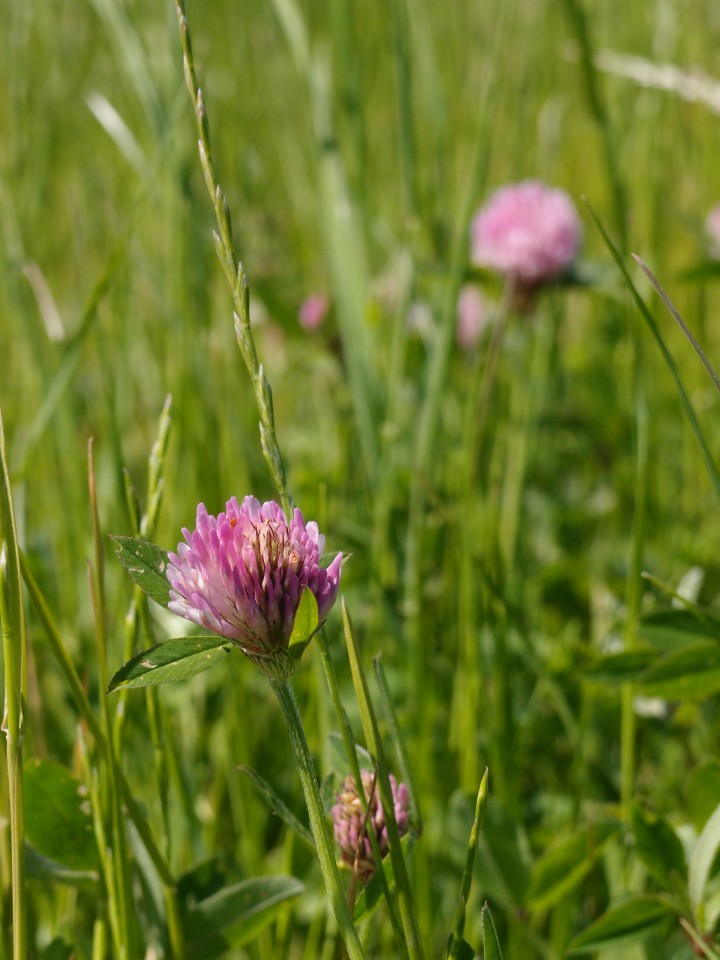
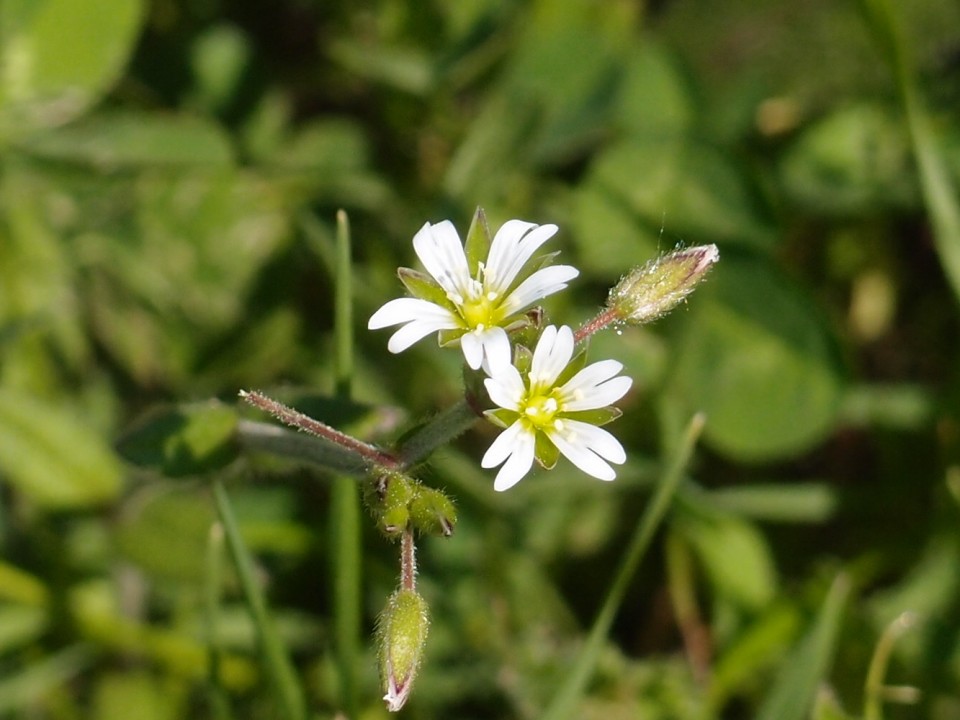
Some of the wild flowers to be seen in June. This year the grasses are showing very strong but its still quite easy to spot all the wild flowers that have become established. Interestingly Yellow Rattle has really got going and is showing how it can inhibit grass growth which is good environmentally but not so good if you want to make hay.
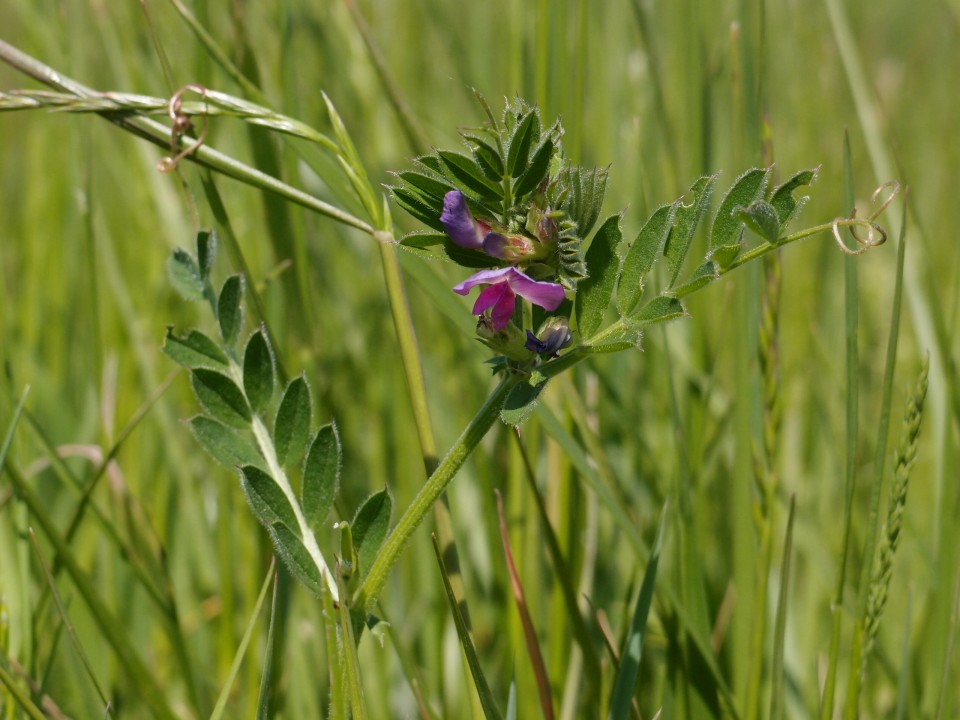
The Bee Orchids are back but the Marsh Orchids although spreading are not seen in such numbers this year. The vetches and tares are all growing well.