Jubilee Wood in December

Jubilee Wood in December

Jubilee Wood in December


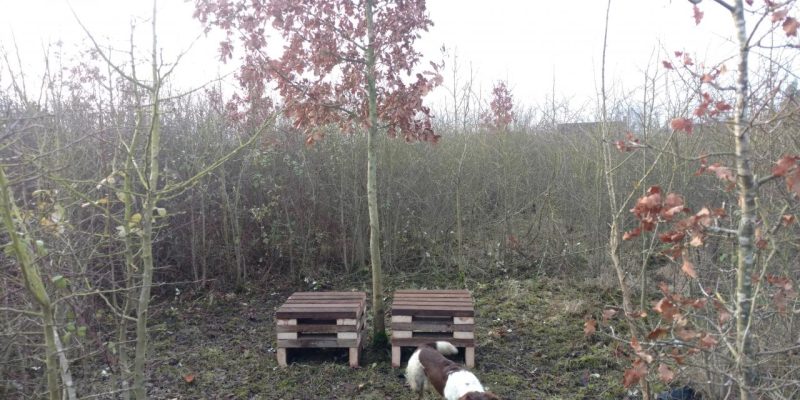
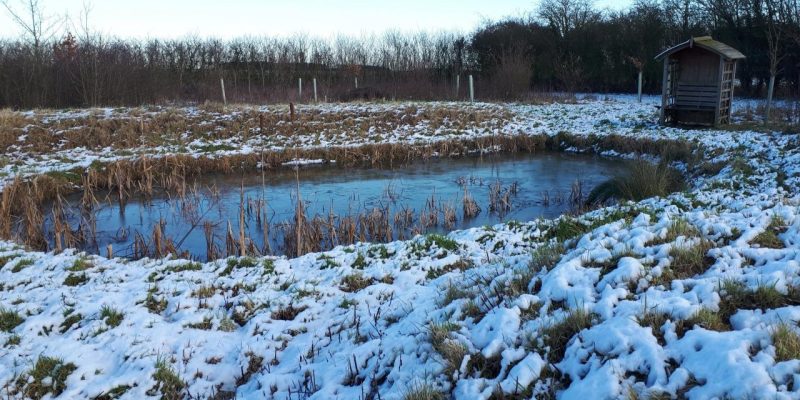
December can be a difficult month for some people, with the nights at their longest it can seem a dark and challenging time, but if we look at the natural world we might learn a way of seeing things differently.Wandering around the wood, whether the late afternoon sunshine is sinking below the trees, or the bare branches are being blown around under cold grey skies, I wonder how all the plants, birds  and mammals cope at this time of year.


Hibernation and dormancy helps many of them to protect themselves against the elements, and if you look closely at deciduous trees you will see a scar where the leaves have been shed, providing protection from infection and severe weather. Most insects and other invertebrates hibernate during the winter as they can’t produce their own body heat like birds and mammals but something they can do is burrow down deeper into the soil to benefit from an increase in a few degrees of soil temperature. Apparently earthworms can avoid freezing by increasing the amount of sugars in their body fluids, reducing  the temperature at which they will freeze – in the same way putting antifreeze in your car washer fluid keeps it liquid!


Seed heads provide  food for birds over the winter months but they can also provide shelter for various insects, whilst long  grass and dead leaves can provide safe havens for several moth and butterfly life cycle stages, protecting them from winter weather and predators. Most species enter a dormant phase and this can be as an egg, larva, pupa or adult insect, dependent upon species. The majority of butterflies and moths overwinter in the larval stage, with pupae being the next most common choice, followed by eggs and adults.  Adult moths can hibernate under the bark of logs or deep in amongst dense ivy, perhaps sharing winter digs in the Jubilee Wood with our old friends the Great Crested Newts! Some like the Brimstone, Small Tortoiseshell, Peacock and Comma overwinter as dormant adults and we certainly need to help them as much as we can. The full results of this year’s Big Butterfly Count are out and can be viewed by following the link below and whilst many populations thrived in the good conditions, sadly the number of the Meadow Brown, which was so abundant in the Jubilee Wood this summer, is down by 56% since 2017 so there’s still a lot of conservation work to do.


Perhaps this ability of nature to adapt to conditions is something we could benefit from. Slowing down during these dark days may be useful for us too, giving ourselves time to recharge our batteries in whatever ways suit us. Reading those books we never got round to, planning wildlife friendly changes to the garden next year and  making New Year resolutions to find time to visit the Jubilee Wood more often if we can, whether it be a for quiet walk or a community event such as helping to clear undergrowth and a general tidy up. Whatever you decide, a Happy New Year to you and hopefully the Jubilee Wood will be part of a very healthy one for you too!


The Wood Wanderer


Interesting websites:
https://www.earthwormwatch.org

https://butterfly-conservation.org

A busy apple pressing day September 2018

A busy apple pressing day September 2018

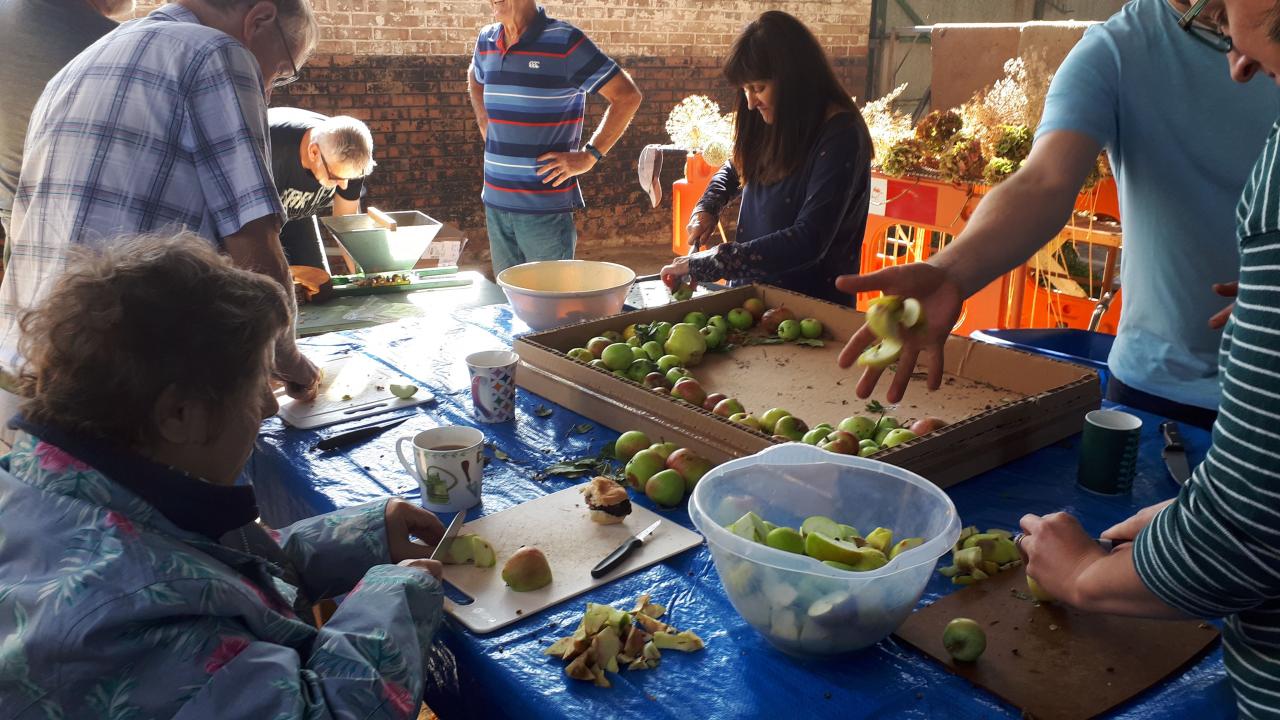
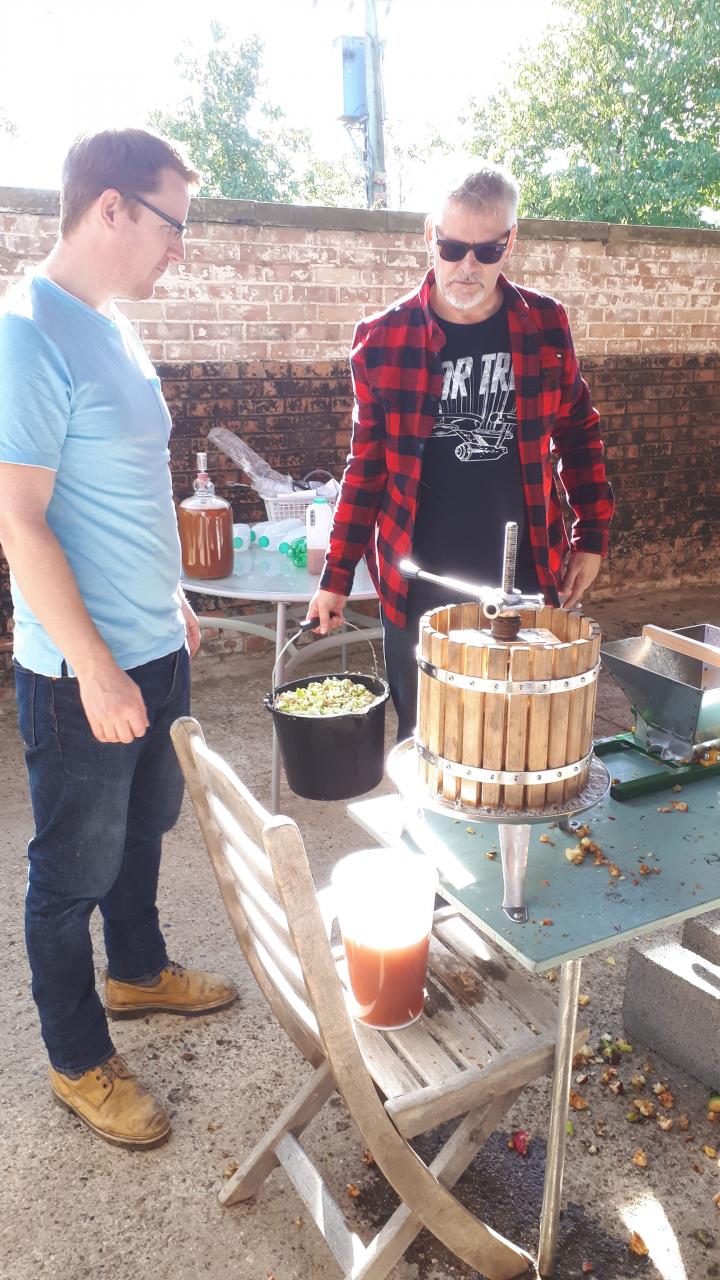
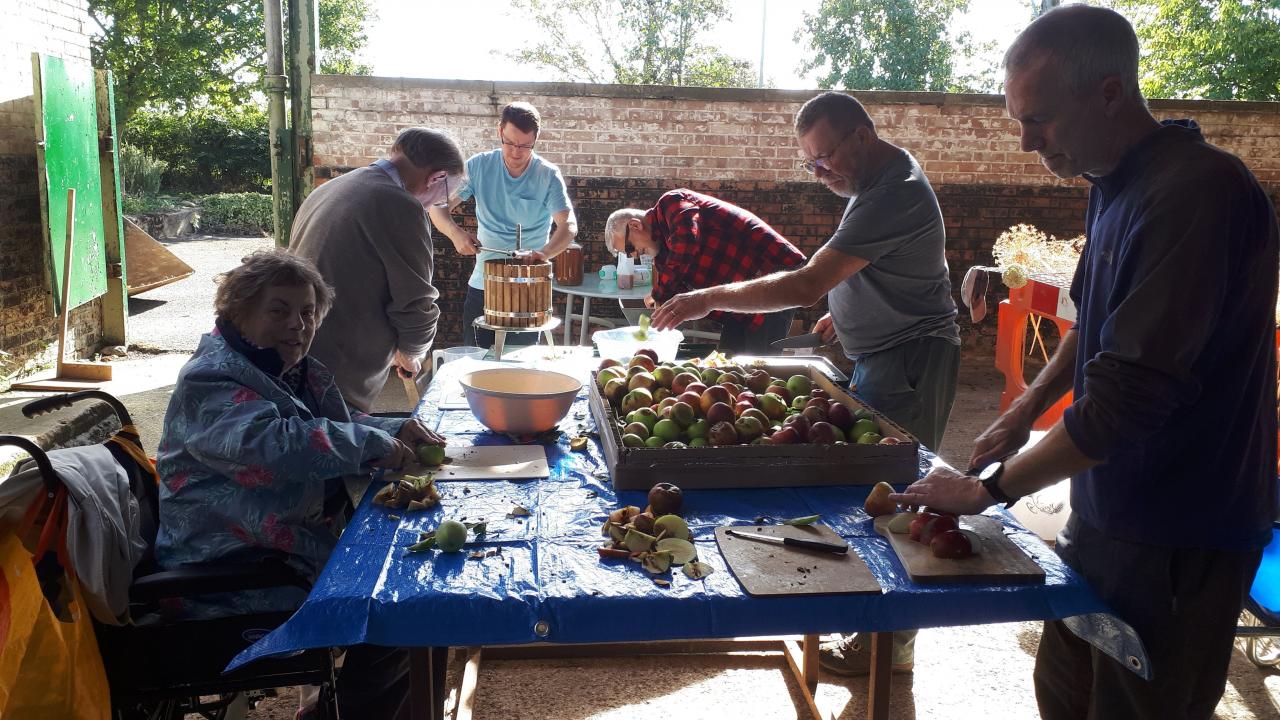
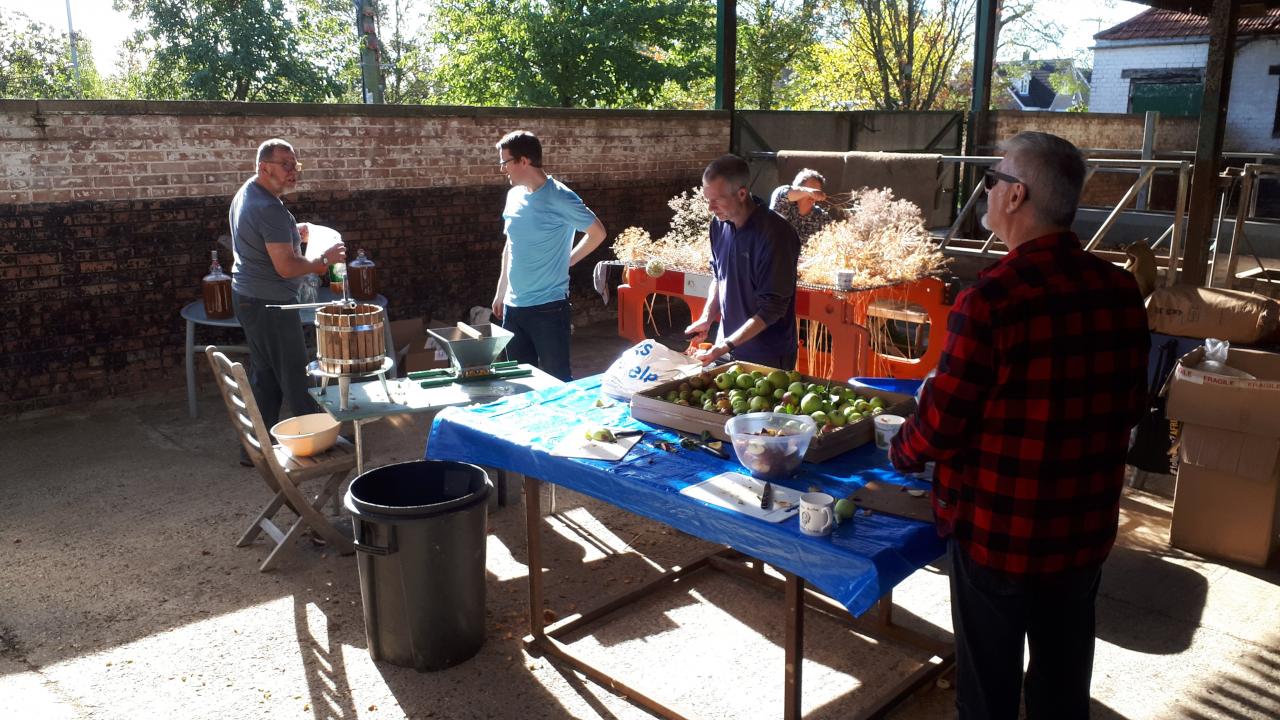
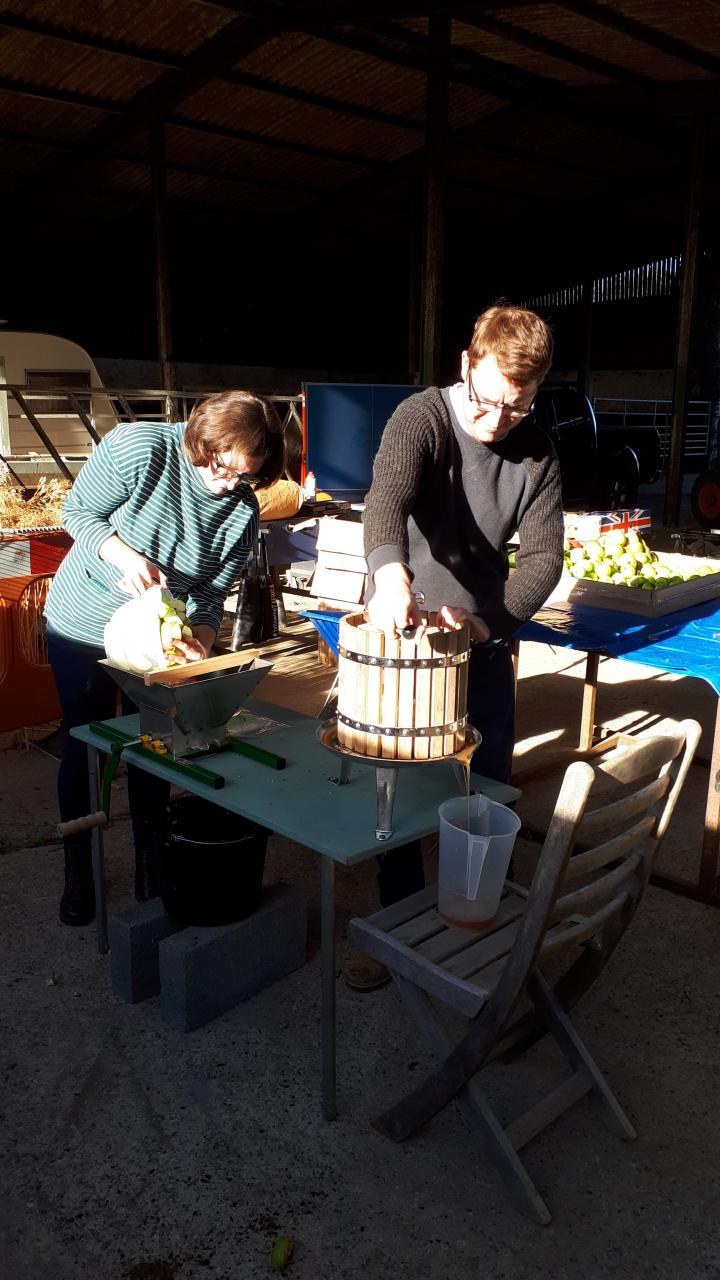
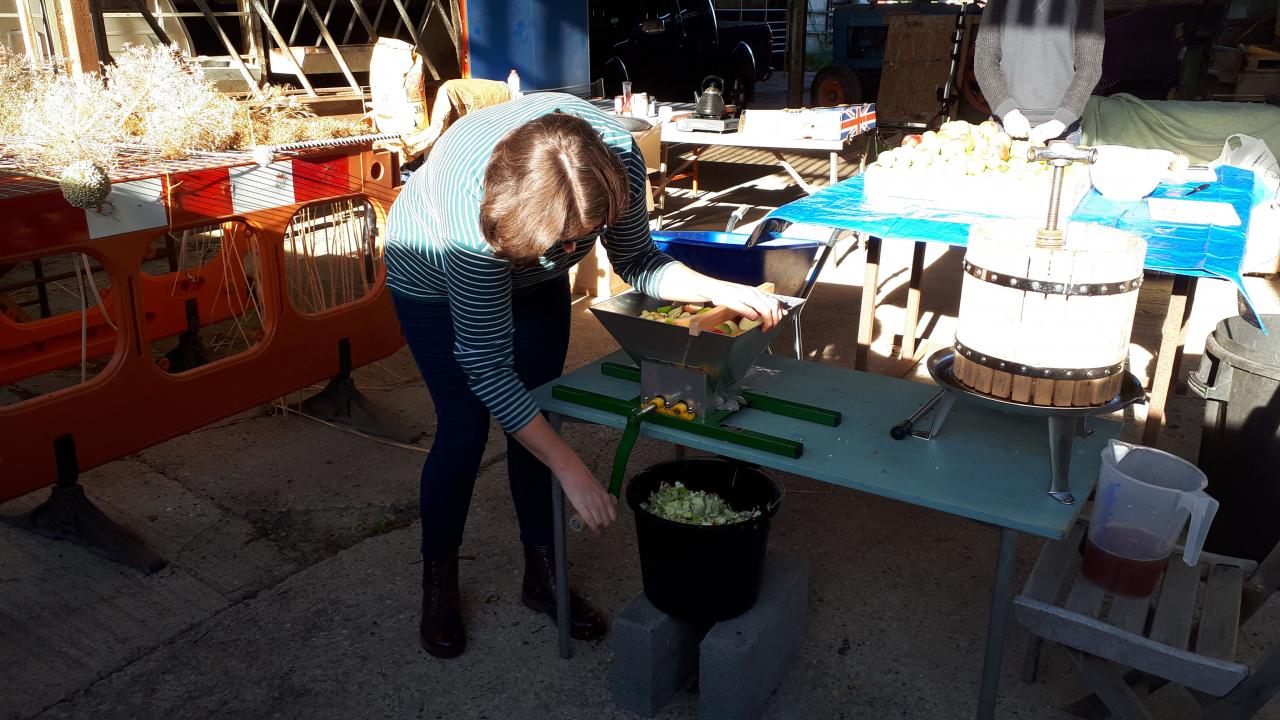
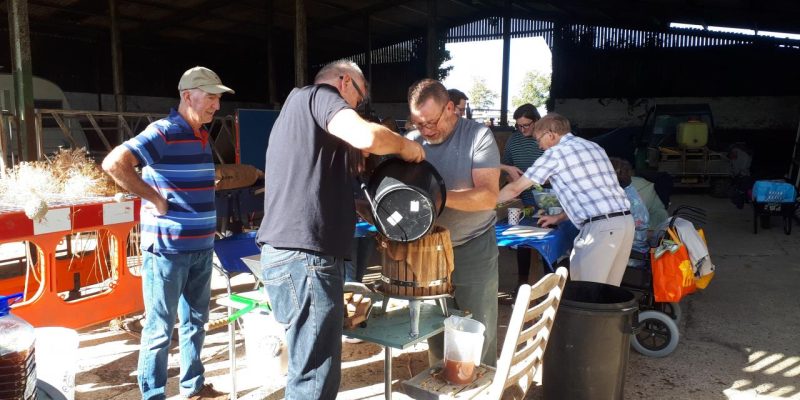
A lovely sunny morning welcomed the various pressers and extractors of apple juice to Manor Site Farm laden with apples from gardens, allotments and a paltry amount from the Jubilee Wood apple trees.

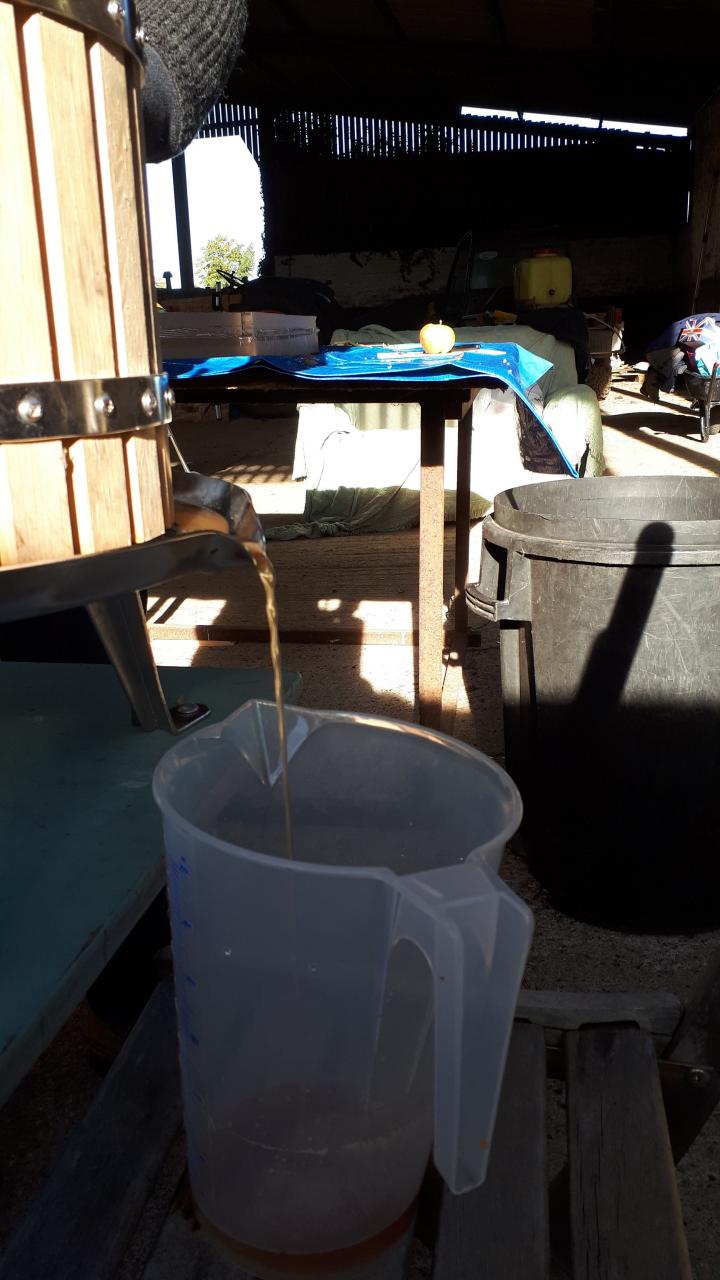
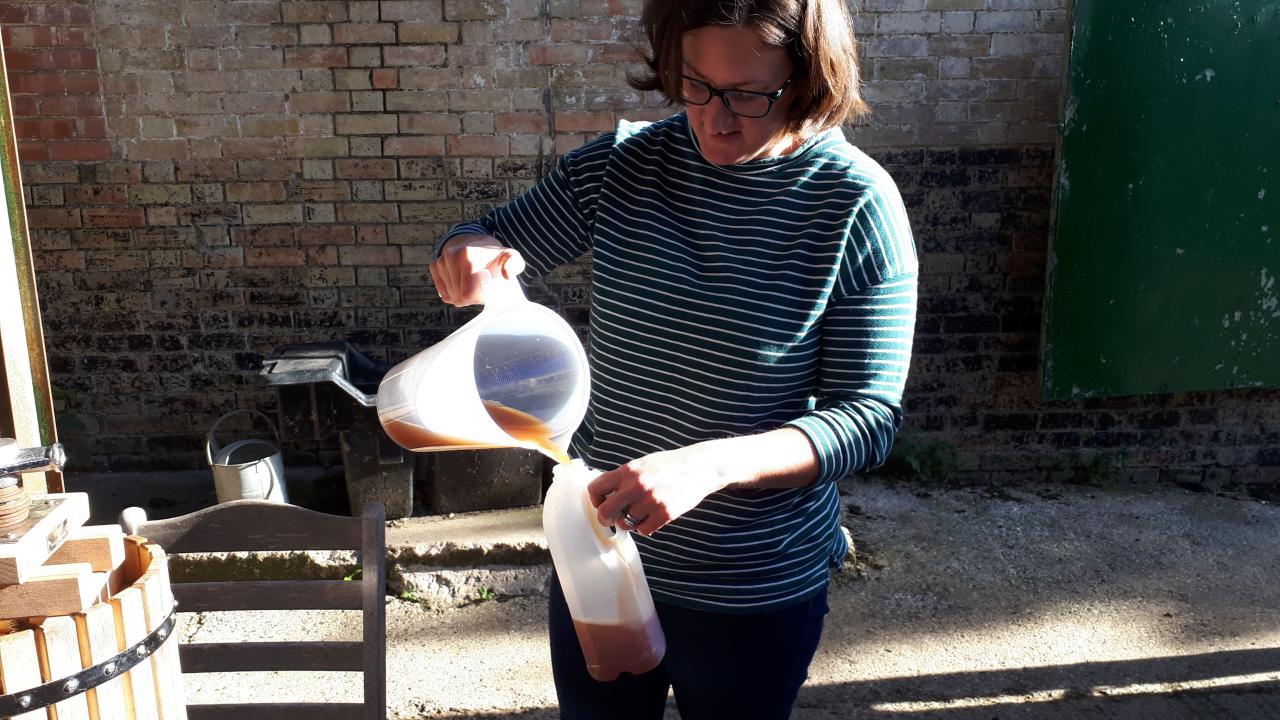
Using the community apple press and apple pulper the crew soon got to grips with the process. Some apples were juicy some were a little dry, some were a bit tart some were sweet. The blending of cooking apples, dessert apples and wild crab apples will have created some unique tasting apple juice and for the brave, cider!  About 20 litres of  juice was pressed some destined for the Demijohn and fermentation and possibly cider or rank apple juice. The result will be a tasting at the 2019 Wassail (date tbc)

A great mornings entertainment with refreshments thrown in. Still plenty of time for parishoners to use the equipment in their own backyard  for this autumn.

Jubilee Wood September 2018

Jubilee Wood September 2018

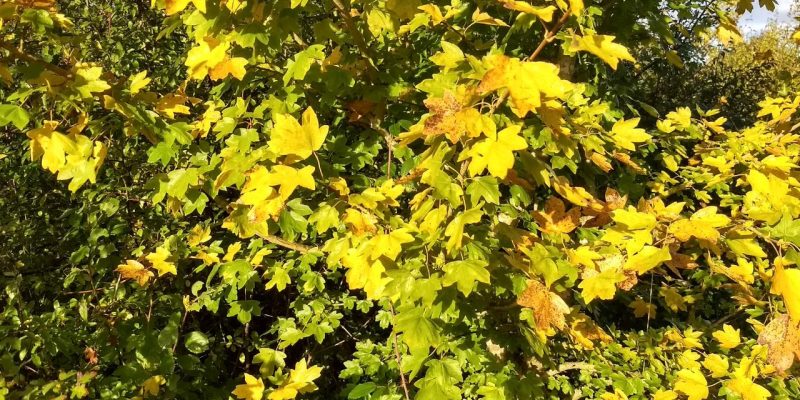
Autumn approaches but the wood is still full of leaf even if there are some early signs of yellowing in some of the trees.

John Keats’ poem To Autumn with its famous first line:

Season of mists and mellow fruitfulness

always makes me think of cooler mornings and watery sunshine on the fluttering patches of reds and yellow as the trees lose their leaf chlorophyll.

As daylight hours shorten and the temperature cools, chlorophyll begins to decrease and the orange and yellows (carotenoids) that have always been there start to show through. However, the reds and purples,(anthocyanins) aren’t present in the leaf through through the growing season but develop in late summer. When the autumn days are bright and cool and nights are chilly then the leaf colours are at their best.Now is the time to start walking through the wood on a regular basis to watch the colours of the shrubs and trees changing.

It’s also the time to pick the last of the blackberries, although many are already passed their best. Folklore has much to say about the humble bramble but one story I particularly like warns against the picking of its berries after the 29th September, also known as Michaelmas. On that date, so the legend goes,Lucifer was cast out of heaven and landing on the prickly bush cursed the shrub and its fruit, so anyone picking the fruit after that date risked stirring up the devil’s anger. Of course, it’s also a good way of remembering that most blackberries are past their best by the end of September so if you want some fruit for free, and to avoid the devil’s anger, get picking!

Which brings me nicely to the Apple juicing  event on 29th  September at Manor Site Farm where the wonderful crop of apples enjoyed by most of us this year can be pressed to make  apple juice which also freezes well. Come and enjoy some time together with fellow growers and/or tasters. All the details regarding on the village website, www.thegiddings.org.uk.

I think  Keats would approve of such things:
by a cider press, with patient look, Thou watches the last oozing, hours by hours.

Hopefully the Gidding pressing won’t take quite that long!

The Wood Wanderer

Jubilee Wood August 2018

Jubilee Wood August 2018

August weather has been a little more familiar than the heatwave we’ve experienced over the last couple of months but as always, nature adapts and familiar sights are in the wood even if they are a little earlier in the season than we would expect.

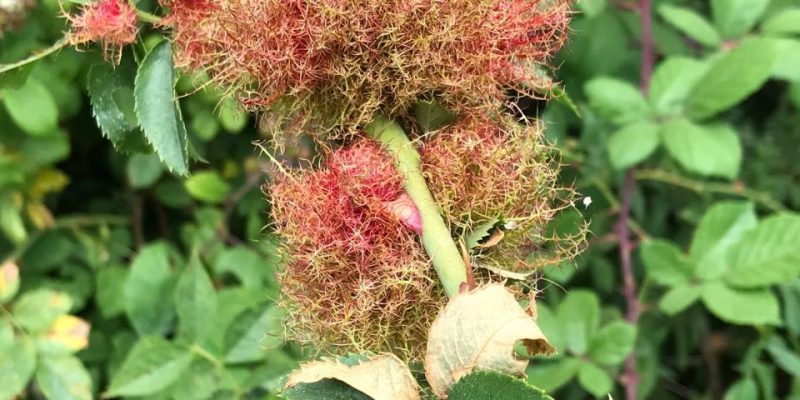
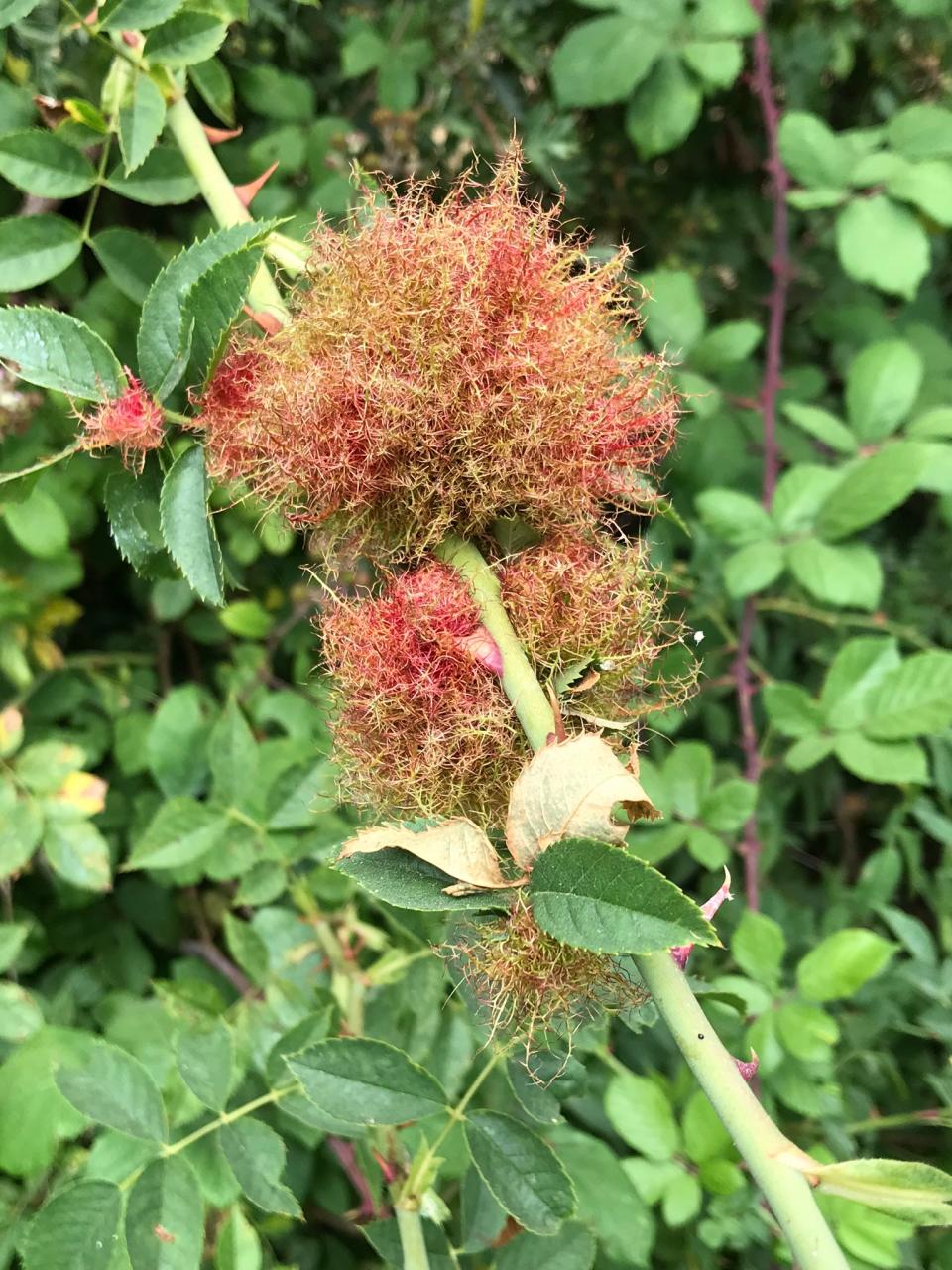
Look out for the  Robin’s Pincushion (see photo) which is  a gall caused by the larvae of a tiny gall wasp, Dipoloepis rosae and is very common in hedgerows and woods. It is usually found on Dog roses (Rosa canina) and gets redder in the autumn, but this year it  seems to be maturing early and can be easily recognised. Each gall has many grubs inside it which feed on the gall tissues throughout the winter and emerge during the spring as adults.

Look around and you’ll see that the  wood is full of other interesting things at this time of year too. Fruits and nuts, fascinating seed heads and of course, the ever present wildlife which really appreciates the cover provided for them are just a few things to watch out for.

Why not have a wander around and see how the wood is changing with the progress of the season,  you won’t be disappointed!

The Wood  Wanderer.

Jubilee Wood July 2018

Jubilee Wood July 2018

Although it’s  been a very dry and hot month, the trees in the wood appear to be coping although the lowering of the pond level shows just how much the water table has gone down so they must be digging deep with their roots.

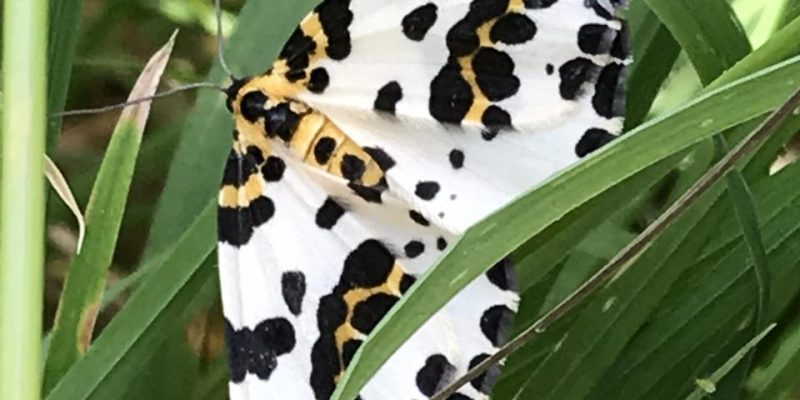
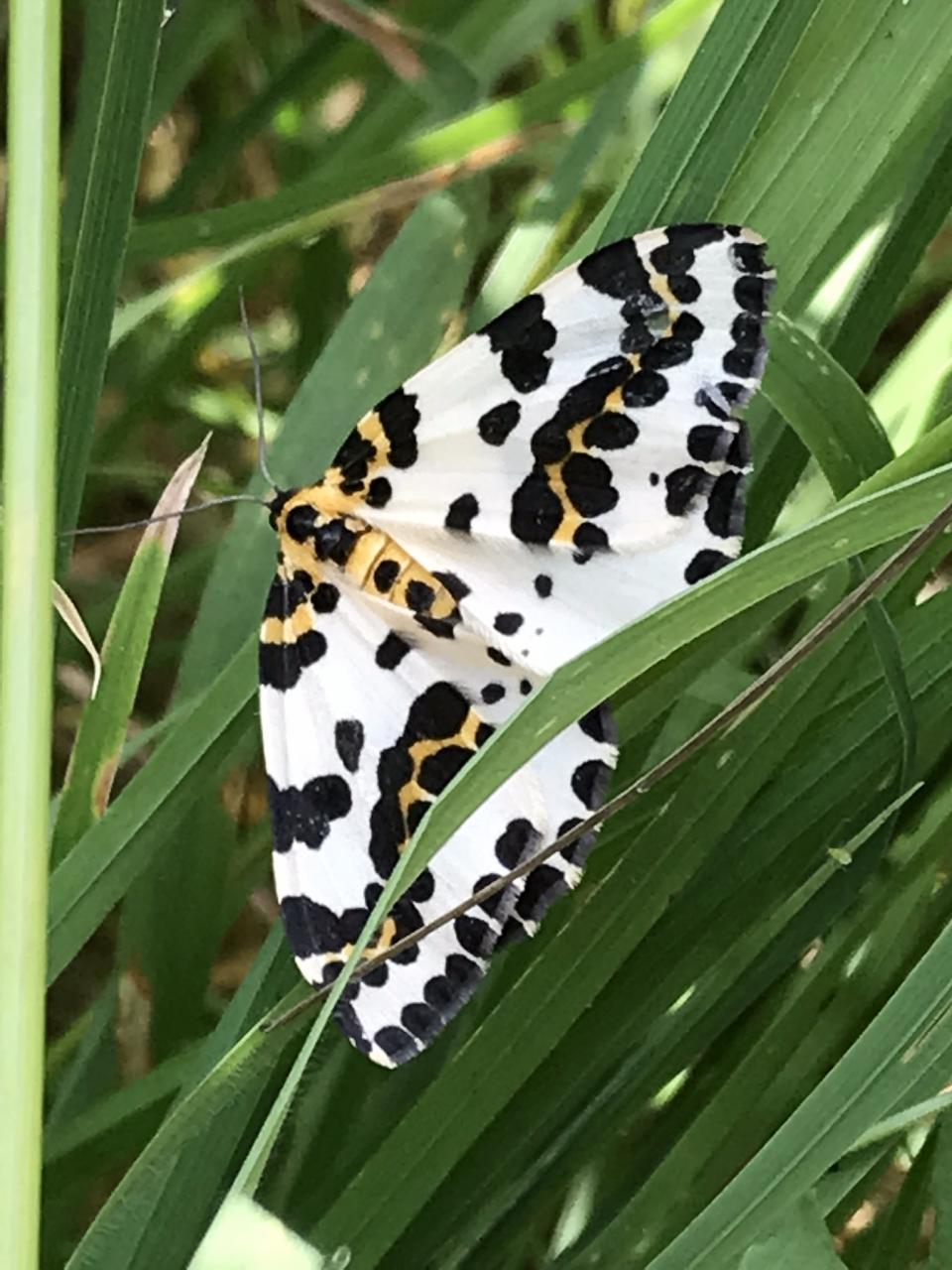
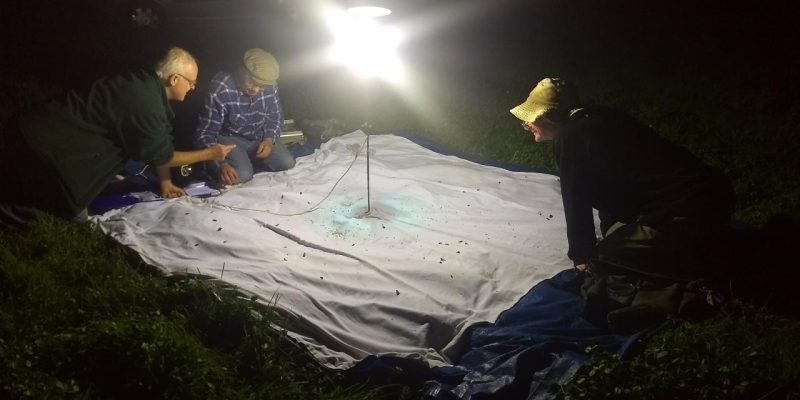
All species will have been affected by this unusual summer weather but on the positive side the wood has been full of butterflies and moths, some of which haven’t been recorded there before. We’re very fortunate to have enthusiastic and  knowledgeable volunteers who come to the wood to trap and record moths on a regular basis and they are always pleased to welcome people and explain what they are doing if you’re interested. Although they often have to come at short notice, due to the weather conditions, they came this month and  recorded over 75 different sorts of moths of all shapes and sizes , the most interesting of which was an Ear moth. Sadly it isn’t shaped like an ear, but a new moth which was recorded, the Magpie moth, which flies during the day doesn’t look like a magpie either! Always good to have a first and it shows how the wood  is encouraging more diversity as it grows.

It will be interesting to see the effects of this unusually long period of drought which often aren’t apparent for months to come. Let’s enjoy the warm evenings while we can and trust to nature which is far better at adapting than we are.

The Woodland Wanderer

Useful links

http://mothscount.org/text/27/National_Moth_Recording_Scheme.html

http://www.bbc.co.uk/nature/22115362

Magpie Moth caught on camera by the Woodland Wanderer.

Jubilee wood – June 2018

Jubilee wood - June 2018

June is bursting out all over in the Jubilee wood!

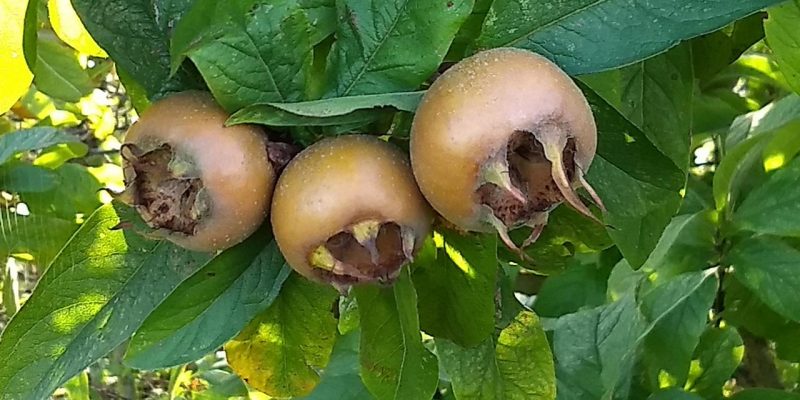
The trees have exploded into life, their leaves forming a canopy of green in every shade nature can manage. The flowers on the fruit and hazel trees have already started to form into fruit and nuts (see photo below) but the elder flower and privet are still blossoming and feeling the warm air with the sweet scent as you pass by.

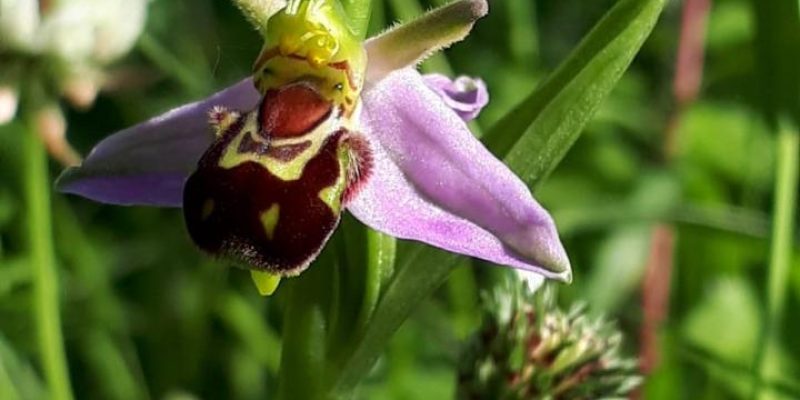
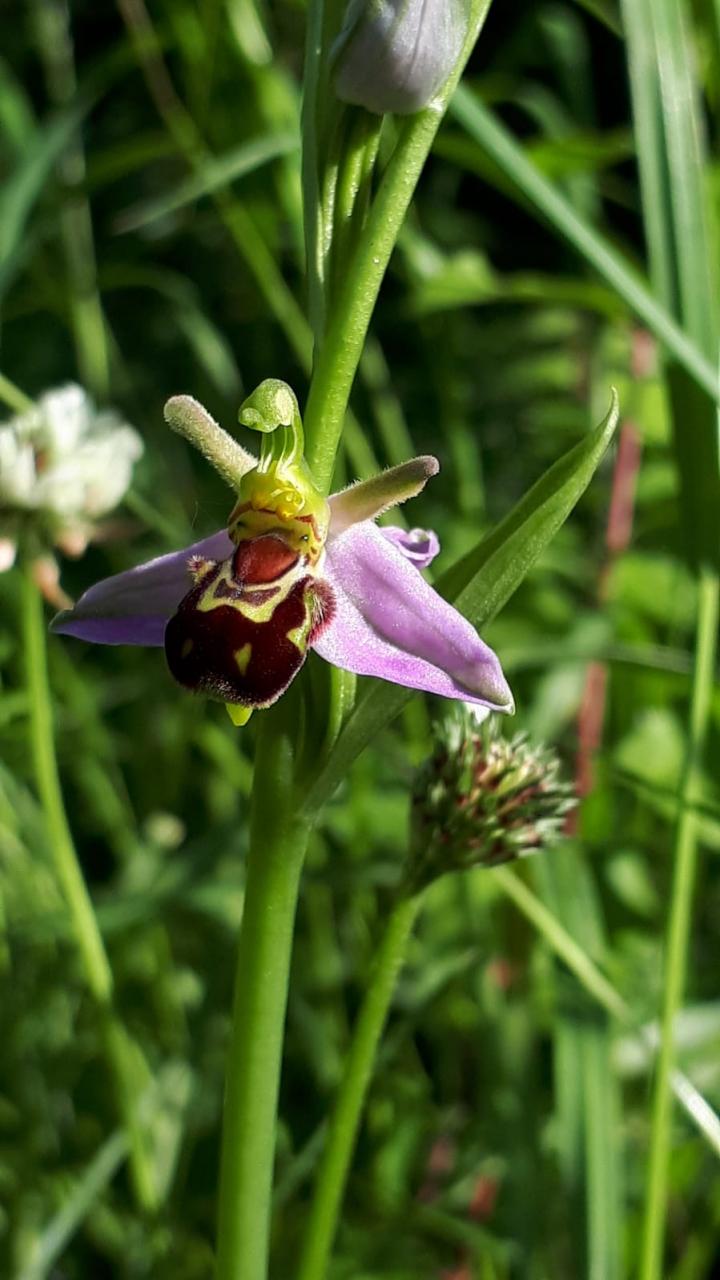
Bee orchid

The flowers at ground level are also putting on a wonderful display, so look down as well! Michael was the first to find the elusive but very beautiful Bee orchid flowering (see photo below). The common orchid is now spreading in the wood and if you look carefully along the small paths of the wood you might still see some in flower. The oxeye daisy is now colonising the wood and as a grassland perennial it flowers from May to September so we can enjoy it for many weeks to come. Along with other flowers they attract all sorts of pollinating insects including bees, butterflies and hover flies, so they look wonderful but also have an important job to play in the complex interactions of our environment.

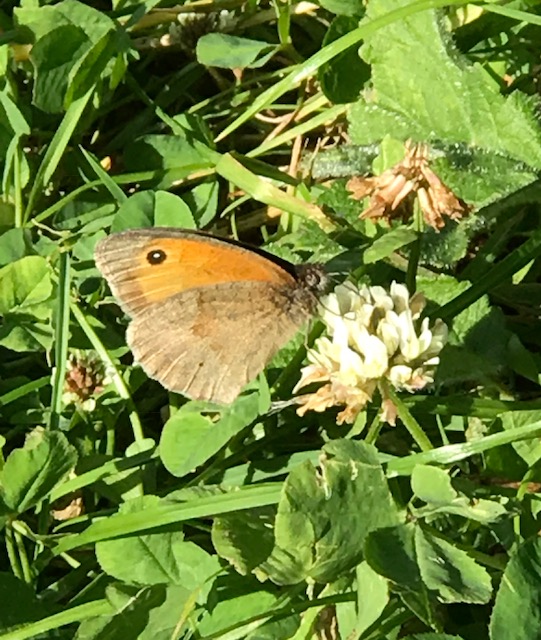
Meadow Brown

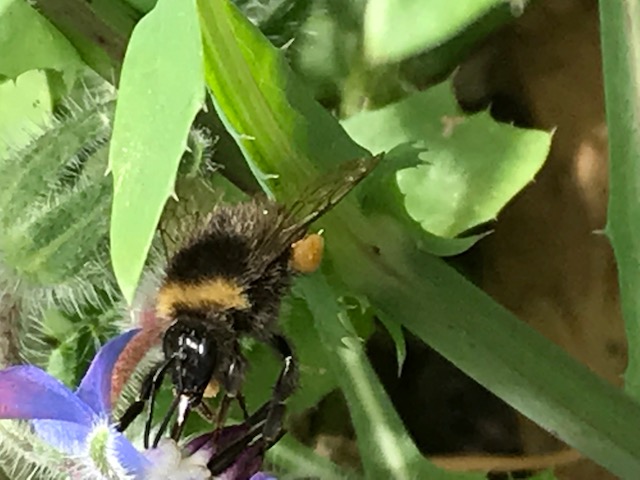
This recent spell of sunny weather and flowering plants  has brought out so many pollinators, that as you walk around the wood you can’t help notice the Meadow Brown (Manila jurtina)  butterflies as they dart about. They are small, yellow orange and brown and the forewing has a black spot at the tip but the hind wing is brown, grey and cream. It’s one of our most widespread butterflies and often close their wings when they settle.

Great British Bee count

You can help another pollinator by joining in the Great British Bee count at friendsoftheearth.uk as  the data they collect will help to monitor how bees are doing. It’s only going for another week so you’ll have to be quick but it provides you with a handy identification chart and lots of information about our busy friends. I was relieved to find that it’s an easy and free App to download!

The Shepherd’s calendar

As our great local poet, John Clare, said  about this wonderful month of June in his poem The Shepherd’s calendar, June

Now summer is in flower and natures hum
Is never silent round her sultry bloom
Insects as small as dust are never done………

And in celebration of another much maligned insect, the spider, he conjures up a wonderful picture…

Where it’s silk netting lace on twigs and leaves
The mottled spider at eves leisure weaves
That every morning meets the poets eye
Like faireys dew wet dresses hung to dry

Ok, so you might not believe in fairies but you have to admit there’s a certain type of magic in nature and we have a bit of it right on our doorstep in the Jubilee Wood.

The Woodland Wanderer

Useful links

https://butterfly-conservation.org/50/identify-a-butterfly.html

https://www.bumblebeeconservation.org/red-tailed-bumblebees/early-bumblebee/

https://www.woodlandtrust.org.uk/blog/2017/06/nine-wild-uk-orchids/


The Jubilee Wood in May

The Jubilee Wood in May

Jubilee Wood in May 2018

May has been another interesting month weather wise, sometimes pouring with rain and at other times so hot it’s been difficult to be outside.It doesn’t seem to have bothered Mother Nature though, and the Jubilee wood is growing at a fast pace, full of flowering trees and hedges as well as many different varieties of ground cover including grasses and wildflowers.

The pond

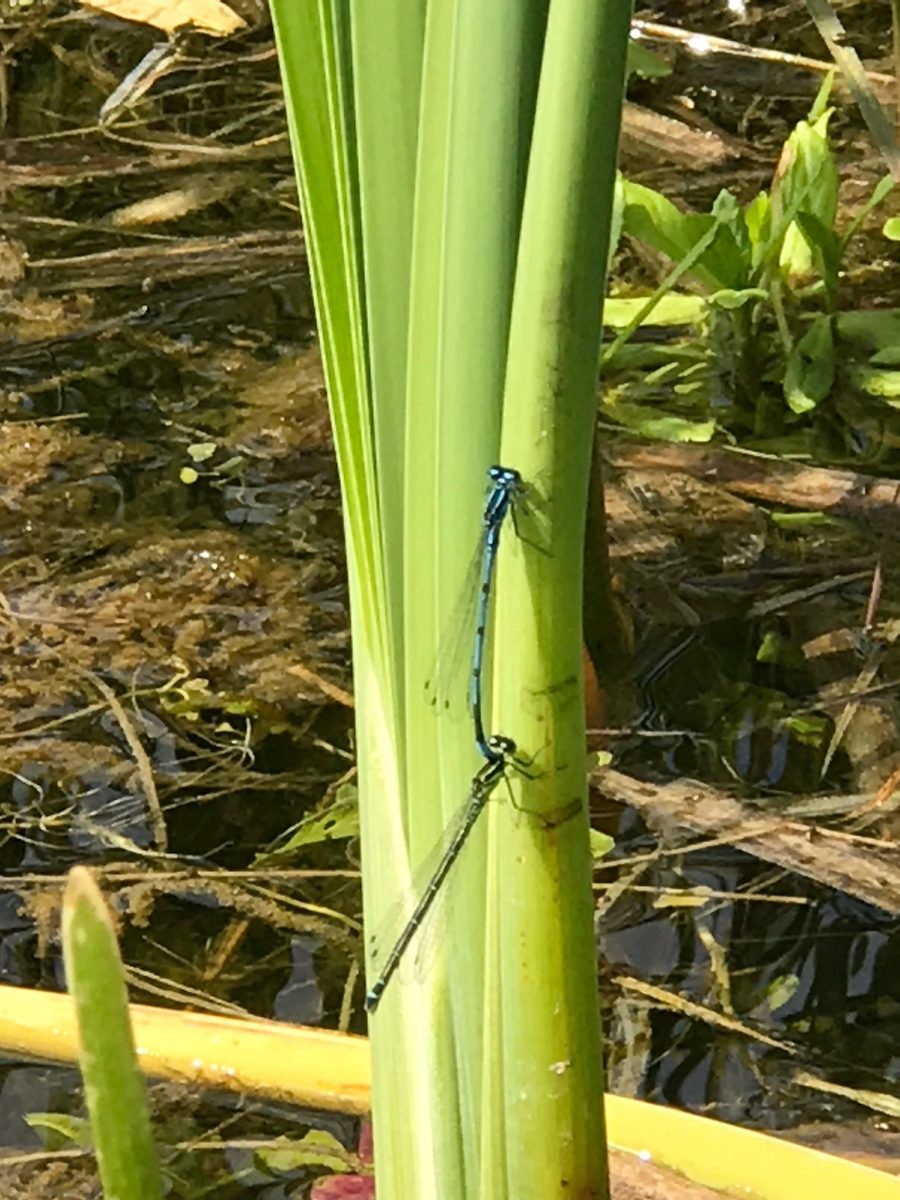
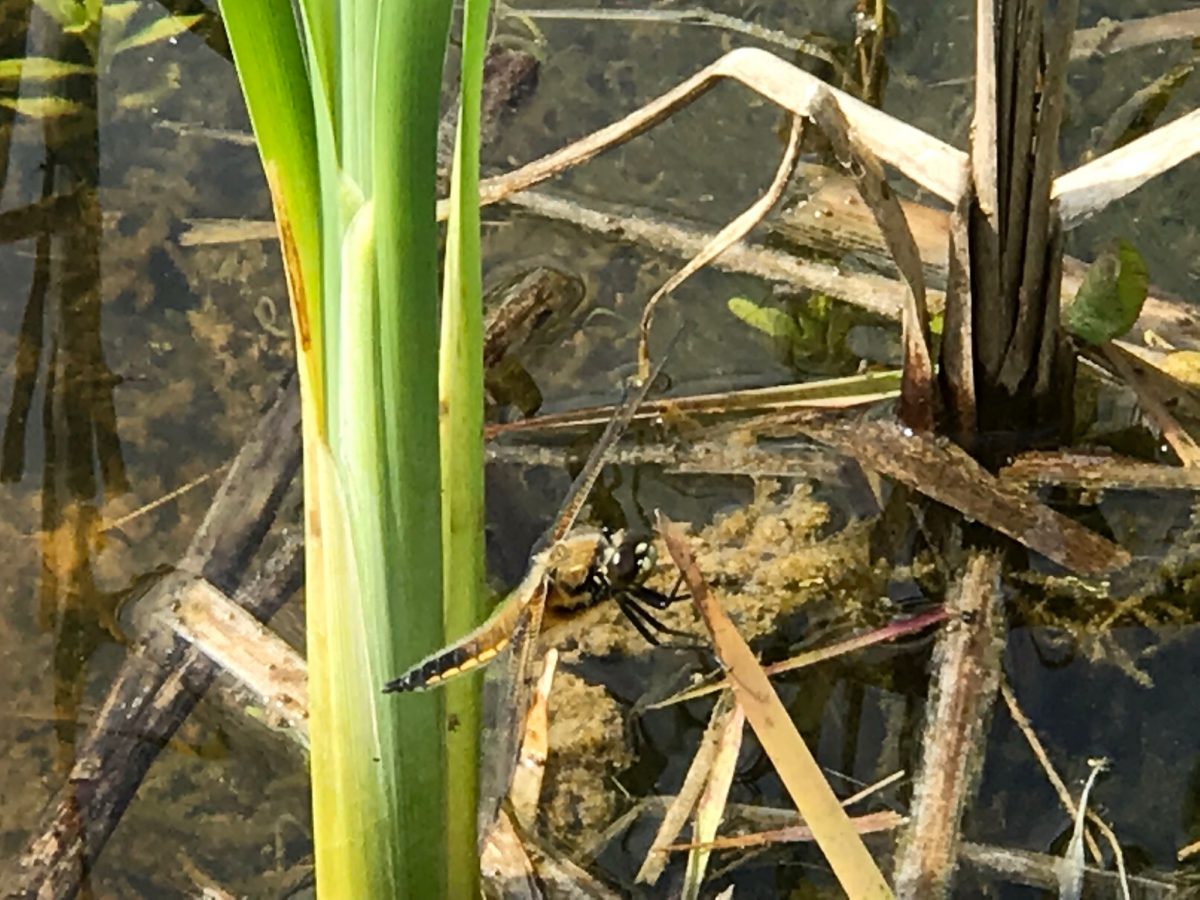
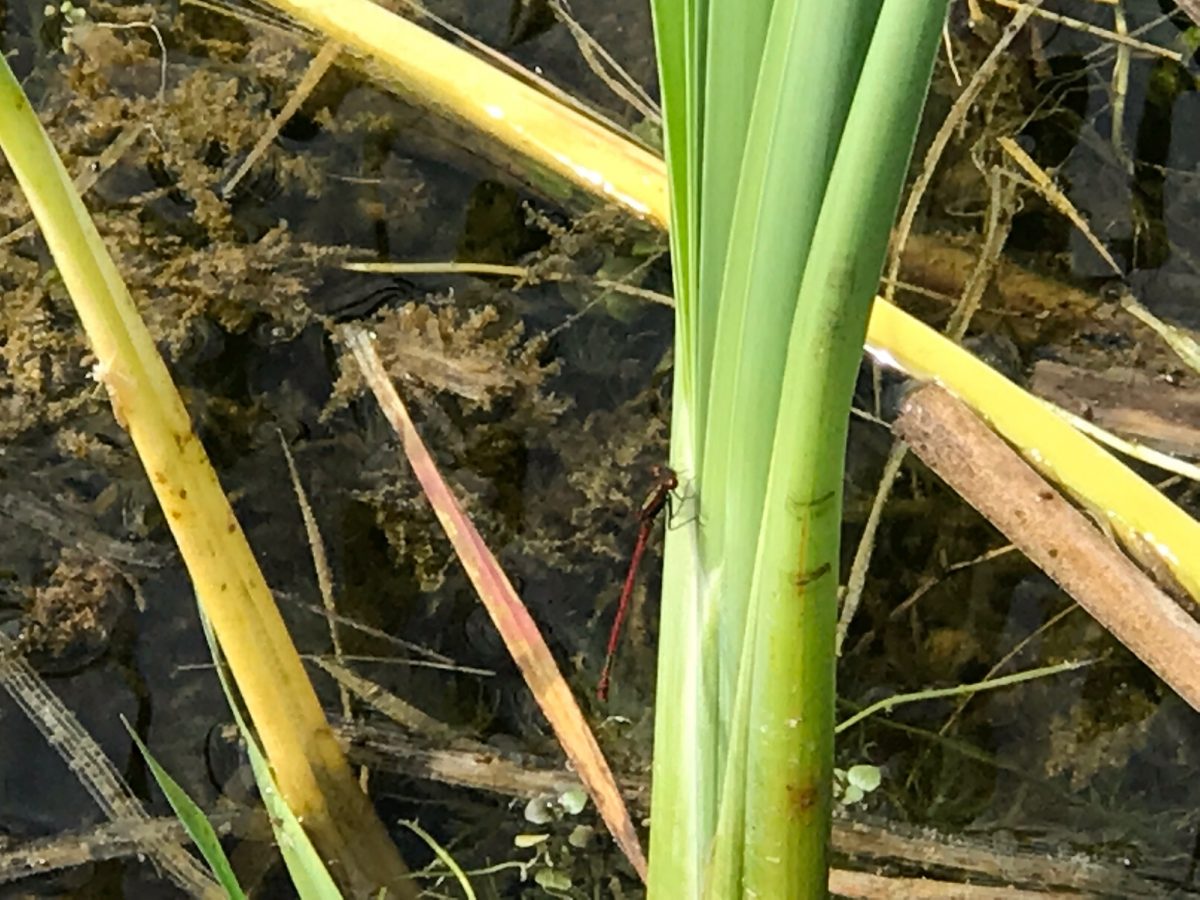
The pond is now quiet as far as the newts are concerned but there’s plenty of activity still to be seen as the damsel and dragon flies take their opportunity to fascinate the viewer with their aerobatic displays on sunny days, and in case you’re wondering how to tell the difference between the two….

Dragonflies and damselflies

Dragonflies and damselflies belong to the insect order Odonata meaning ‘toothed jaws.’ They originated some 300 million years ago and have survived with relatively little change in their basic structure. Collectively known as Dragonflies they are divided into two distinct sub-orders, the Anisoptera (true dragonflies) and Zygoptera (damselflies). There are a number of differences between these sub-orders which will help you decide if you are looking at a dragonfly or damselfly:
Unequal wings

Anisoptera means ‘unequal wings’ as the forewing is narrower than the hindwing. They are generally larger and more robust with a powerful flight. When the insect comes to rest it leaves the wings outstretched. The head shape is spherical with eyes that cover most of the head and usually meet in the middle at a contact point.

Equal wings

Zygoptera means ‘equal wings’ as the wings do not differ in shape. The damselflies are usually smaller insects with a weaker fluttery flight and when they come to rest most species fold the wings neatly together and hold them above the abdomen. They have a rectangular head shape with eyes located at the side of the head which are clearly separated with no contact point.

Can you identify the following from these photos taken recently at the Jubilee pond?

The Wood Walker

Jubilee Wood April 2018

Jubilee Wood  April 2018

Jubilee Wood

April was quite a month of extremes in terms of weather, but nature has a way of forging on regardless whilst most of us humans are struggling to cope.

The great crested newts are a good example, having overwintered near to the pond under stones or vegetation, they returned to the pond in Jubilee Wood to mate and lay eggs. If you were lucky enough to see them earlier on in the month, you might have been surprised at just how many there were, but if you didn’t get to see them we’ve attached some photos taken at the pond. Apologies for the quality but you have to take the opportunity when you can and although these photos taken with a  phone may not be the best, they give an idea of their form and colour.

Spotting the newts may take a couple of minutes before you recognise them as they tend to look like dark bits of small vegetation floating under the water’s surface until you see them suddenly shoot along, splaying out their legs and waggling their tails. The males have more of a  crest during the mating season and females lay individual eggs on plant leaves and carefully wrap them up to protect them. Two to four weeks later larvae (sometimes called newt tadpoles) will hatch out with feathery gills around the head, distinguishing them from frog and toad tadpoles. A couple of months after they hatch the larvae start to grow their front legs followed by the back legs. Later on in the summer they’ll leave the pond but will stay close by to find a place to overwinter, and next Spring it will all begin again…….wonderful!

Video

The Woodland Walker.


Video

Spring Moth Survey

Spring Moth Survey

Despite the never ending rain and gloom of the 2018 spring, last Saturday evening, 7th April the weather conditions were such that our local moth specialists asked permission to survey the Jubilee Wood, hoping to find some early season species to add to the growing list of finds already recorded in previous surveys.

A very succesful evening where 16 seperate species were identified and recorded including a Dotted Chestnut which is less common but pleasing to find as the numbers of these appears to be increasing. All the species found suggest that the Jubilee Wood despite being a new or young plantation is proving its environmental worth.  The species that are recorded should be found given the right conditions, its when common species are not observed then we should be concerned.

My thanks to Barry and Andrew for there willingness to share their knowledge with us.


Species List for Great Gidding, Jubilee Wood on 08-04-18
Code               Taxon Vernacular
695       Agonopterix alstromeriana
1746       Anticlea badiata Shoulder Stripe
1750       Lampropteryx suffumata Water Carpet
1917       Selenia dentaria Early Thorn
1947       Ectropis bistortata Engrailed
2139      Cerastis rubricosa Red Chestnut
2182      Orthosia cruda Small Quaker
2185      Orthosia populeti Lead-coloured Drab
2187      Orthosia cerasi Common Quaker
2188      Orthosia incerta Clouded Drab
2190     Orthosia gothica Hebrew Character
2243     Xylocampa areola Early Grey
2256     Eupsilia transversa Satellite
2258     Conistra vaccinii Chestnut
2260     Conistra rubiginea Dotted Chestnut
2469      Scoliopteryx libatrix Herald

The gap in the Jubilee Wood hedge, a photographic record

The gap in the Jubilee Wood hedge, a photographic record

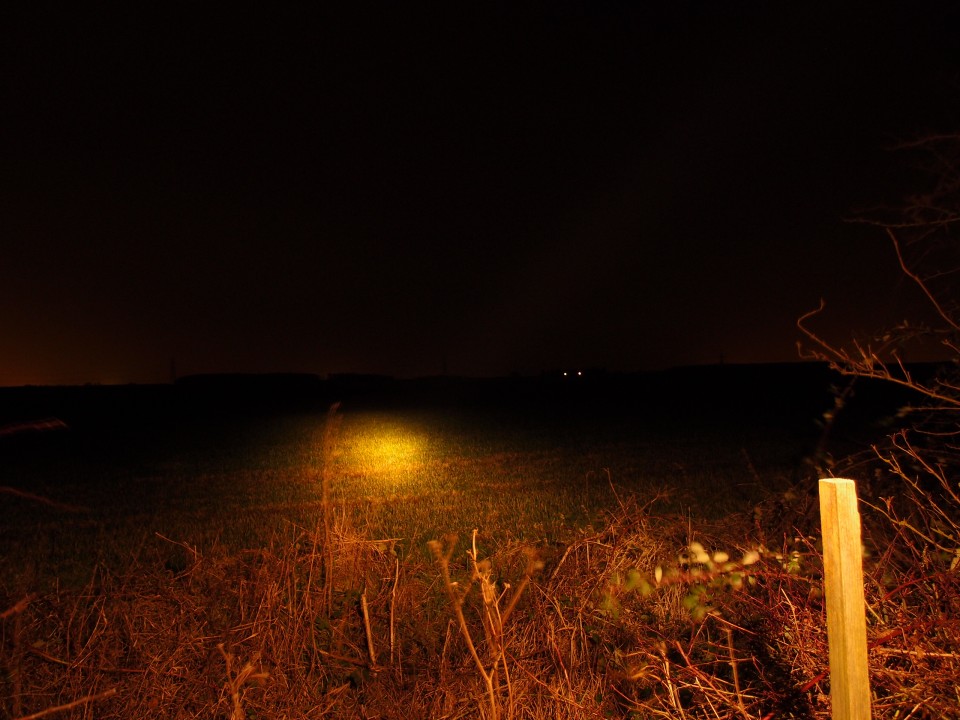
This is an interactive exercise for digital camera users, a chance to get your photograph on the village website.


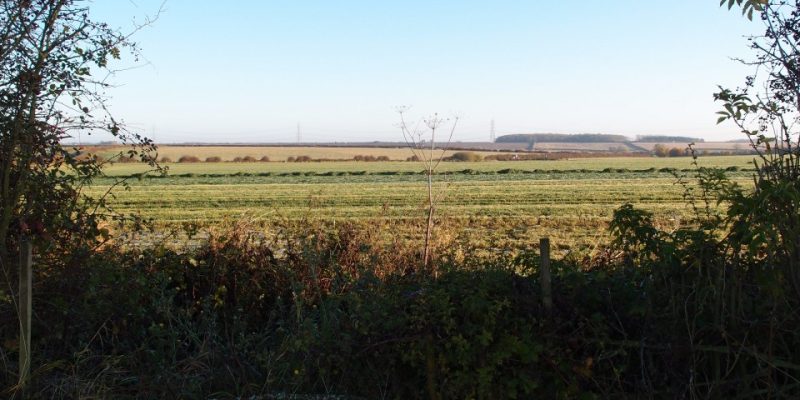
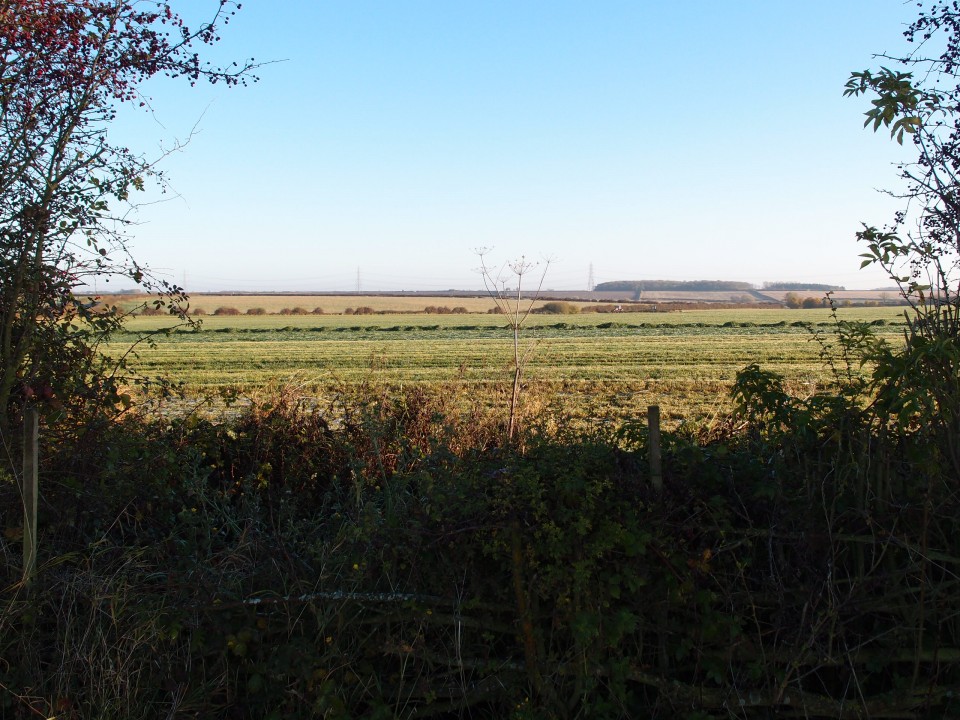
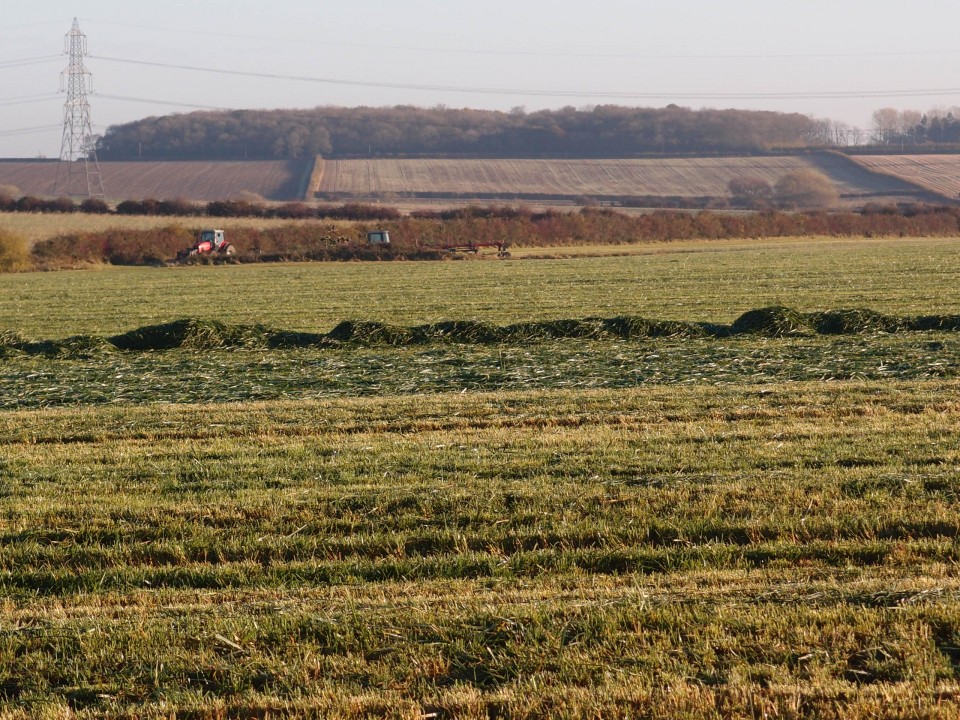
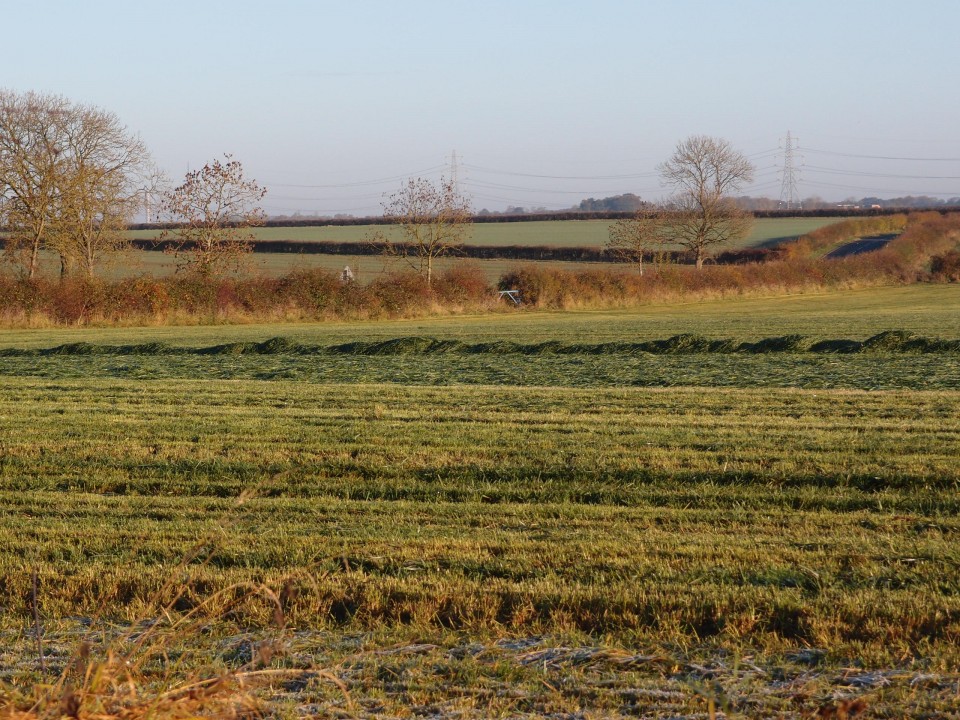
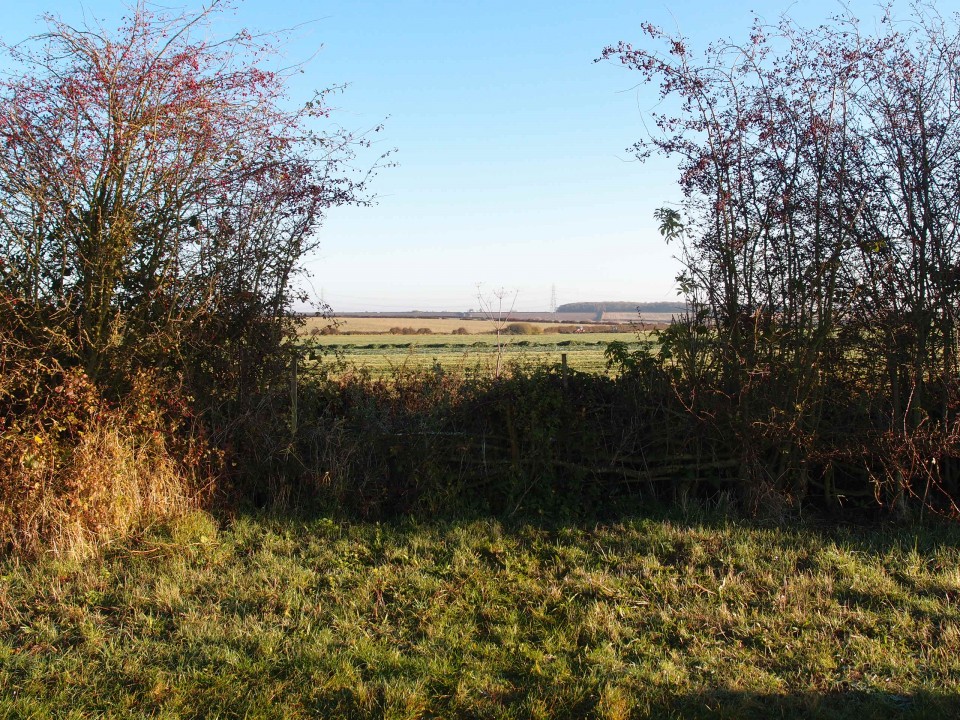
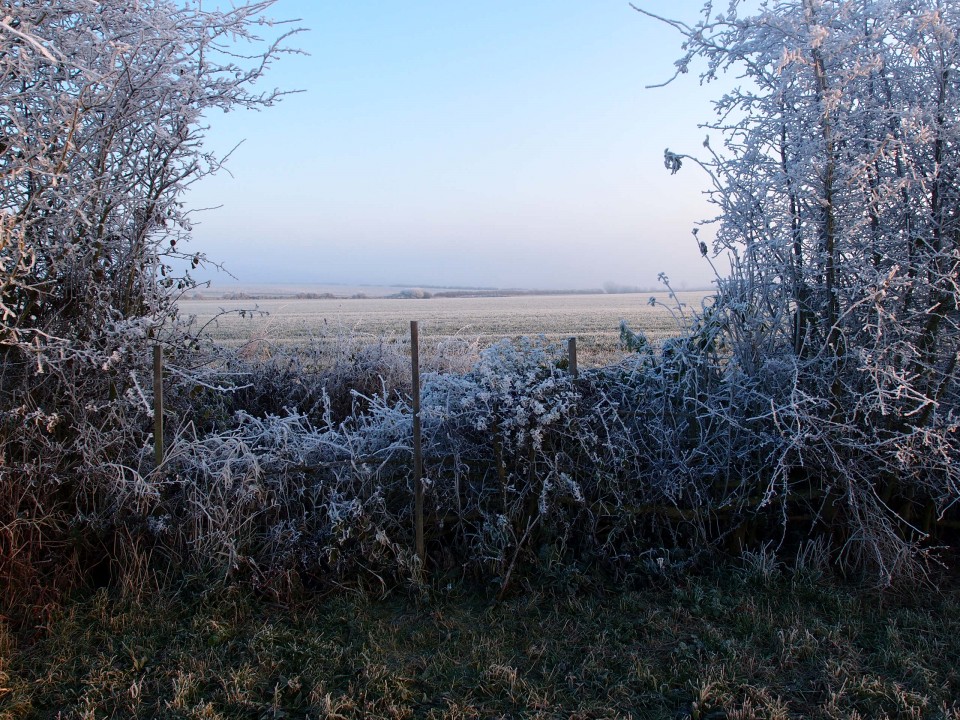
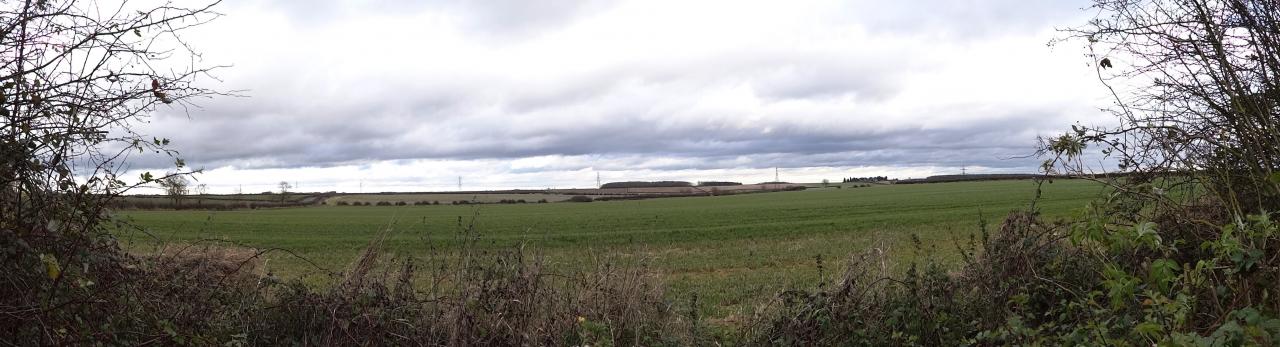
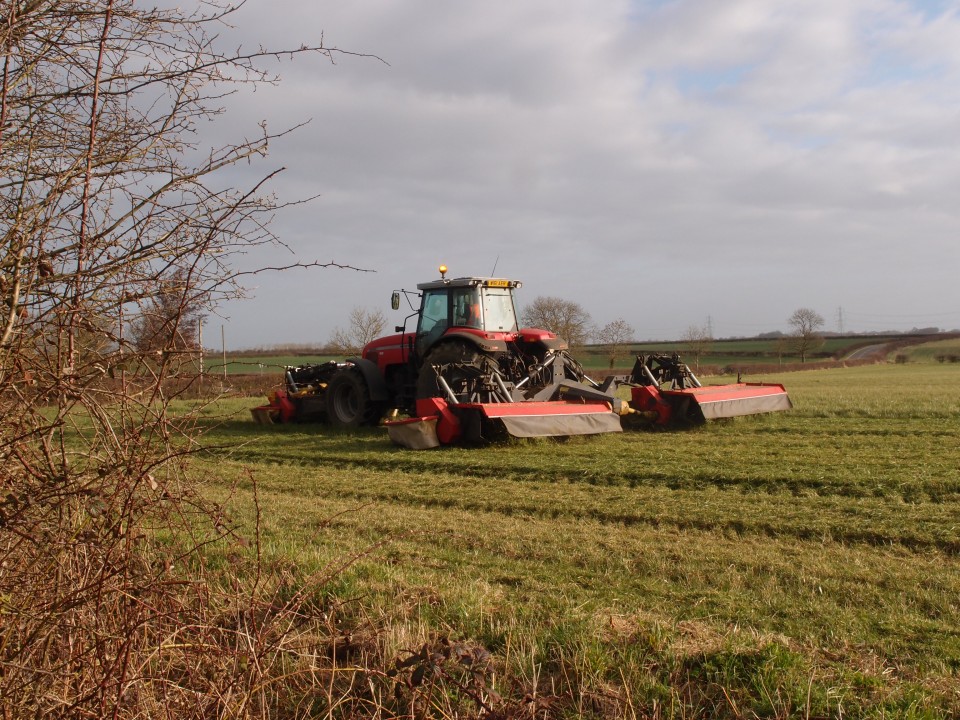
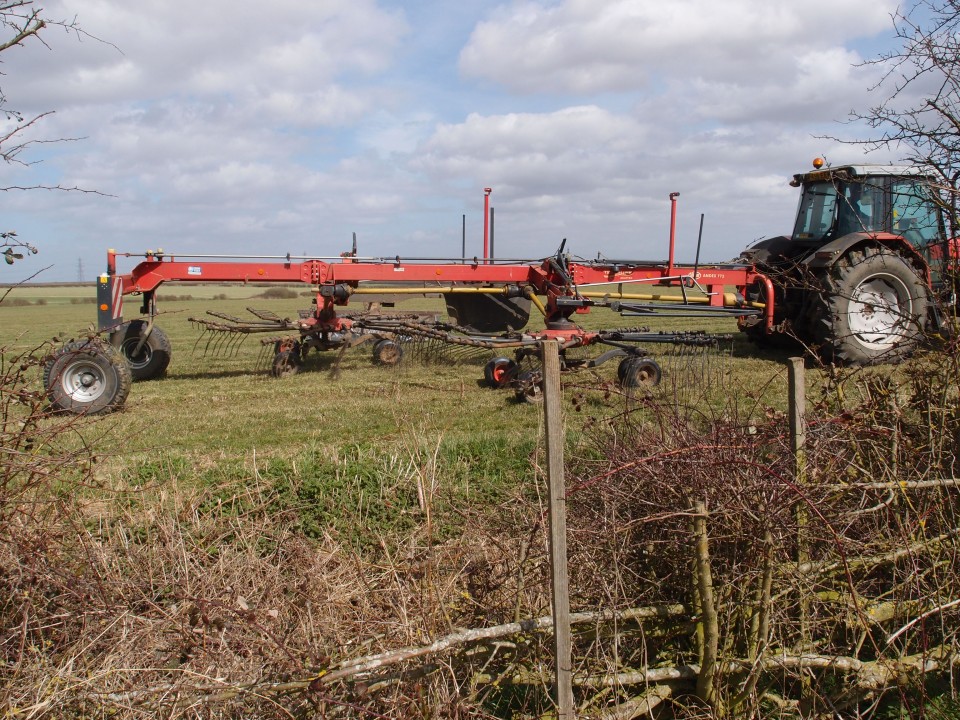
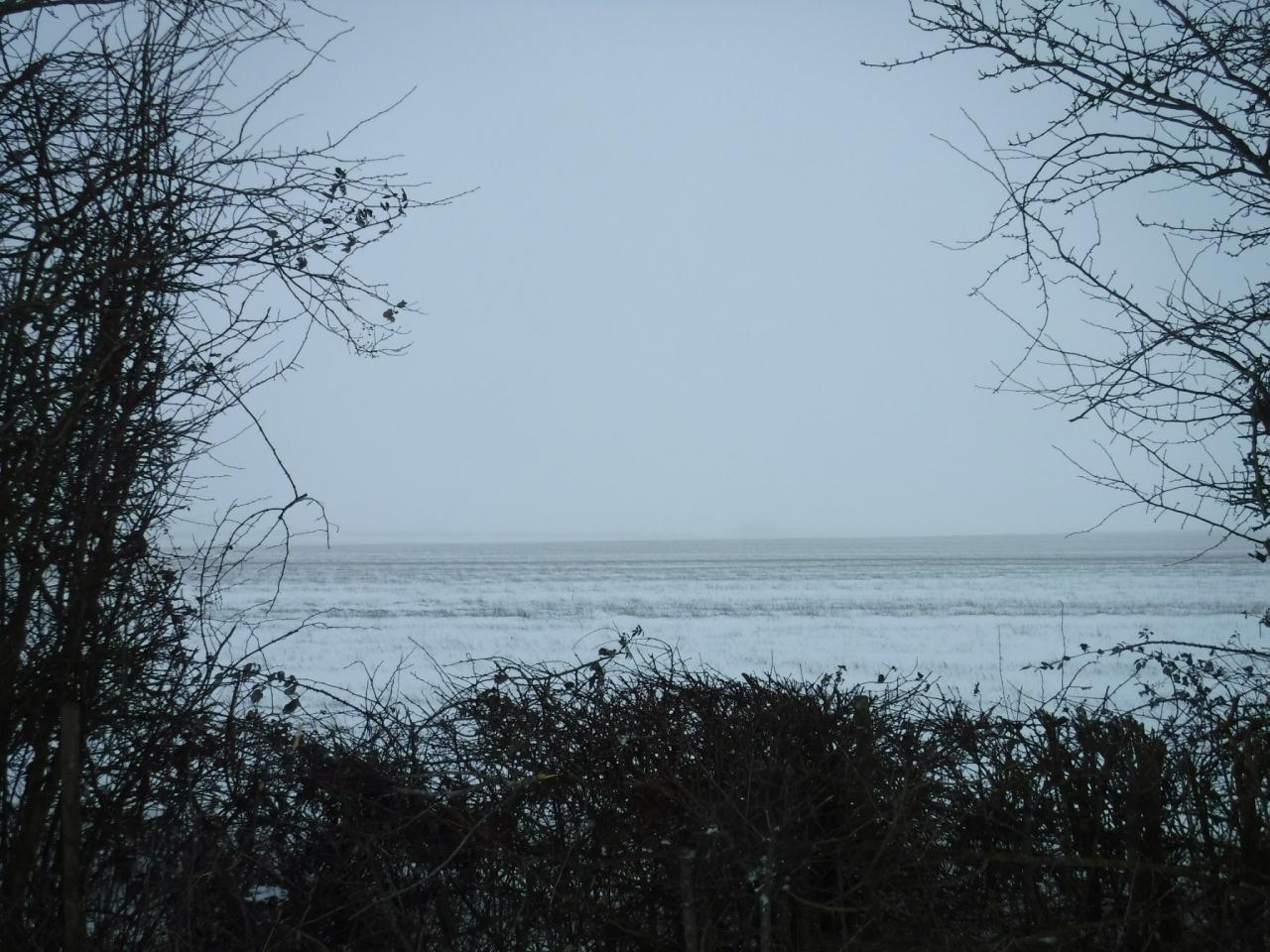
Along the eastern boundary hedgerow of the Jubilee Wood is a large gap in the hedge deliberately maintained so as to provide a “window” for the view beyond the hedge.


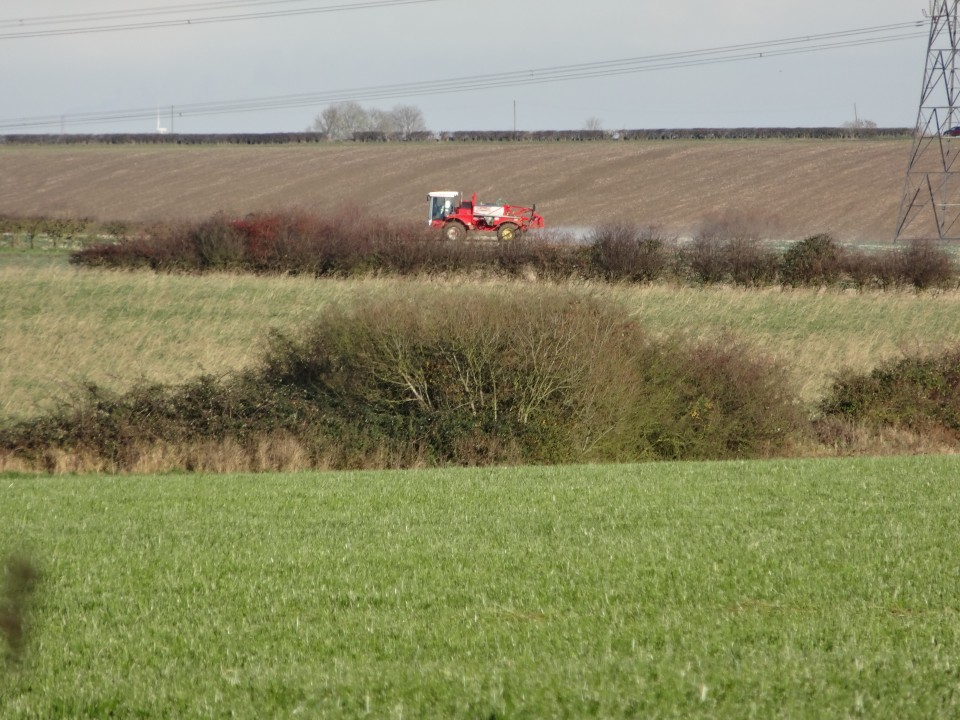
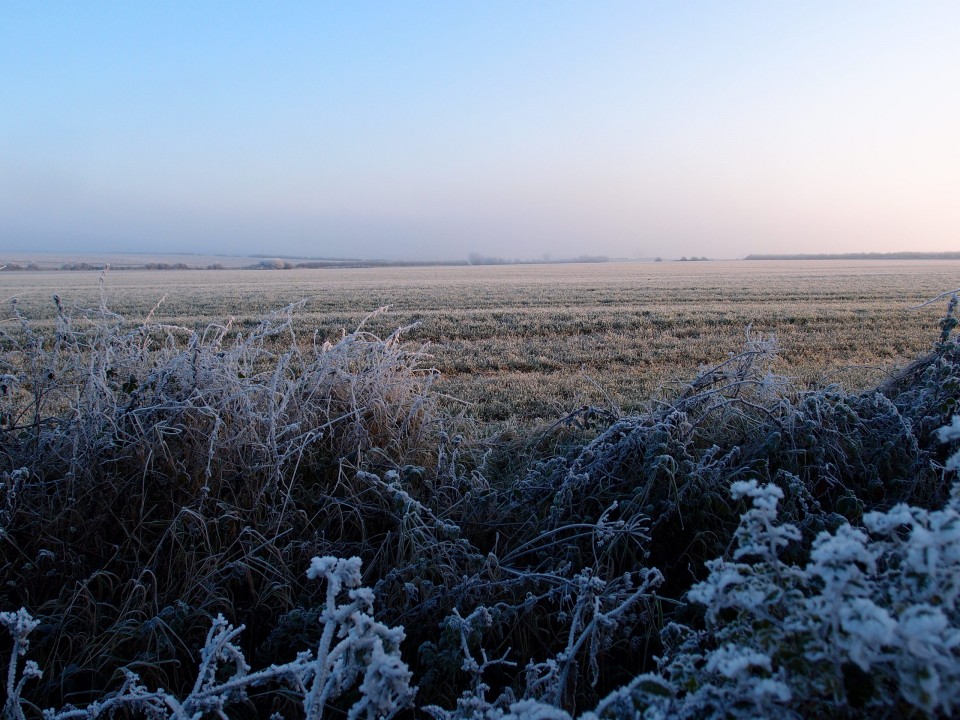
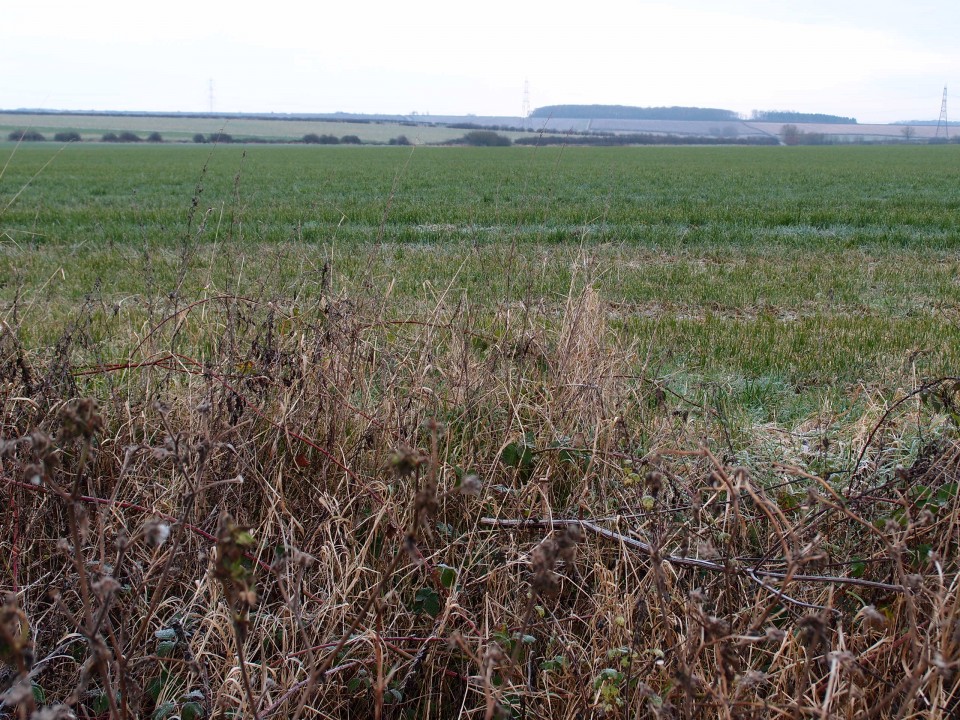
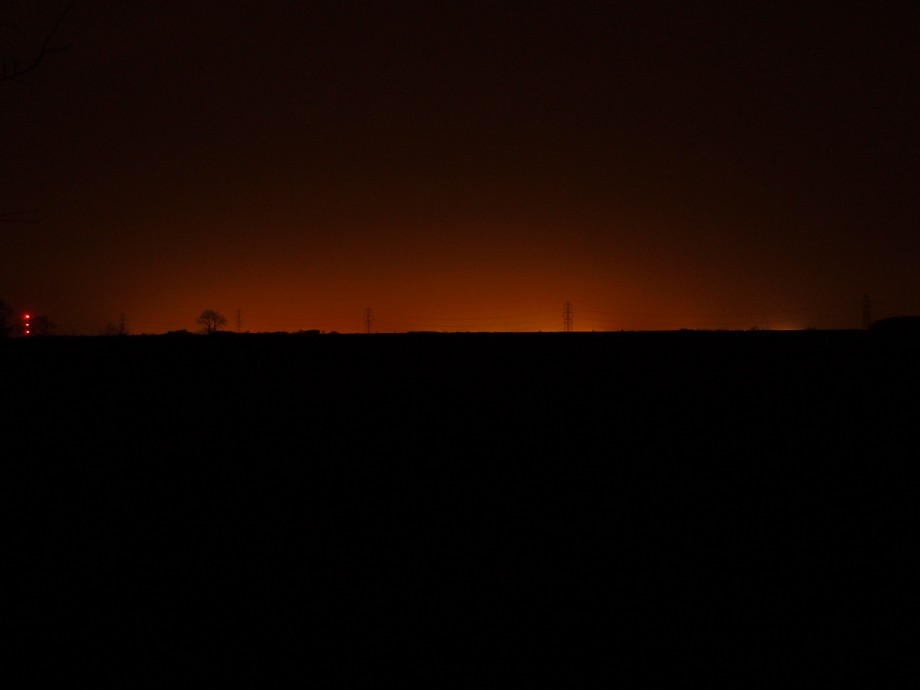
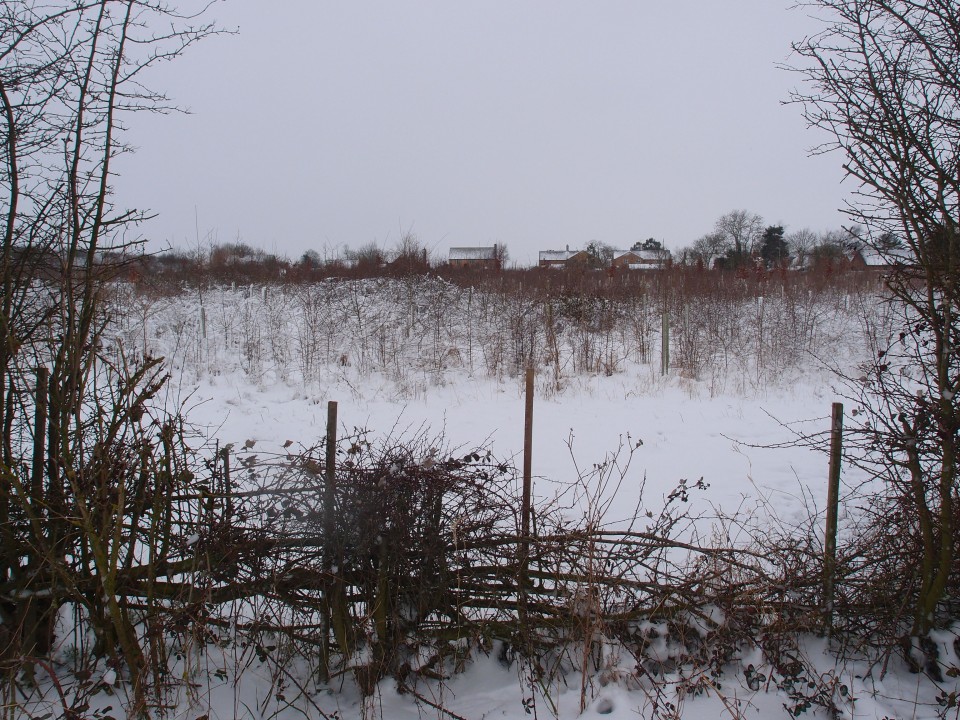
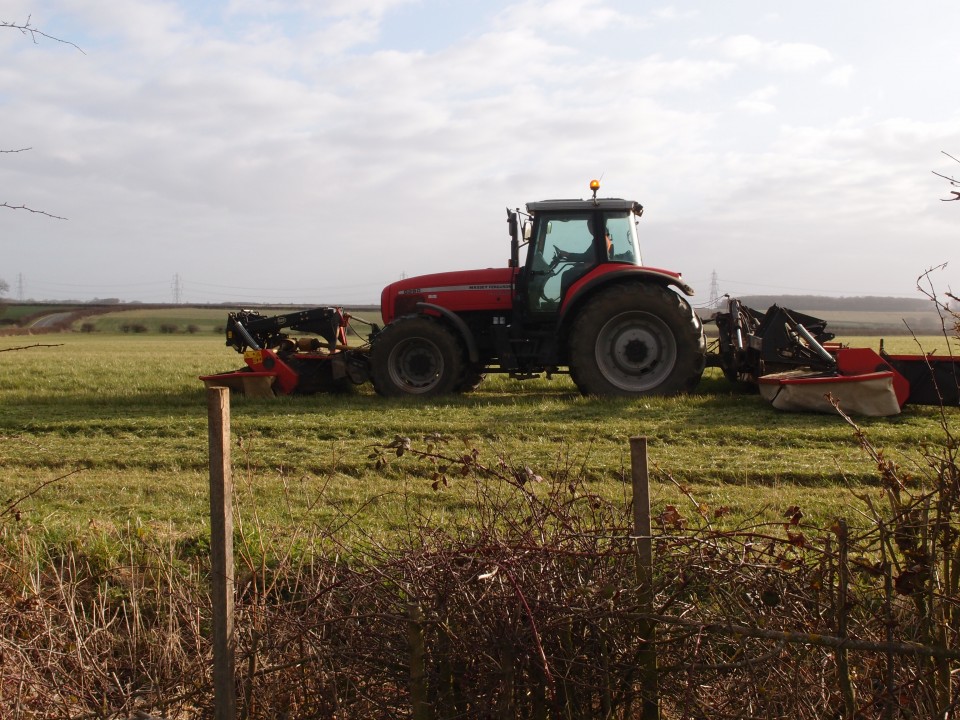
Jubilee WoodHere’s the gap, all you have to do is take your digital photograph(s) standing closer to the hedge (examples below) and then send it to  the  website editor and  if suitable it will be uploaded into the gallery that accompanies this page

We are looking for changing season’s, weather, field activity, the moon, the sun rising anything you see through this gap.  Zoom, standard or wide angle lens, it doesn’t matter.

A short description would help.

Submit your picture here