The days are rapidly getting shorter and the sun is moving lower in the sky as September comes to an end. As I write this on the twenty-third of September, I’m reminded that it is the Autumn equinox when day and night are of equal length. To make up for the gloom that some people can feel at this time of year, it is also thankfully a time of spectacular display in terms of nuts and berries, seeds and fungi, and the sight of flocks of migratory birds coming and going.
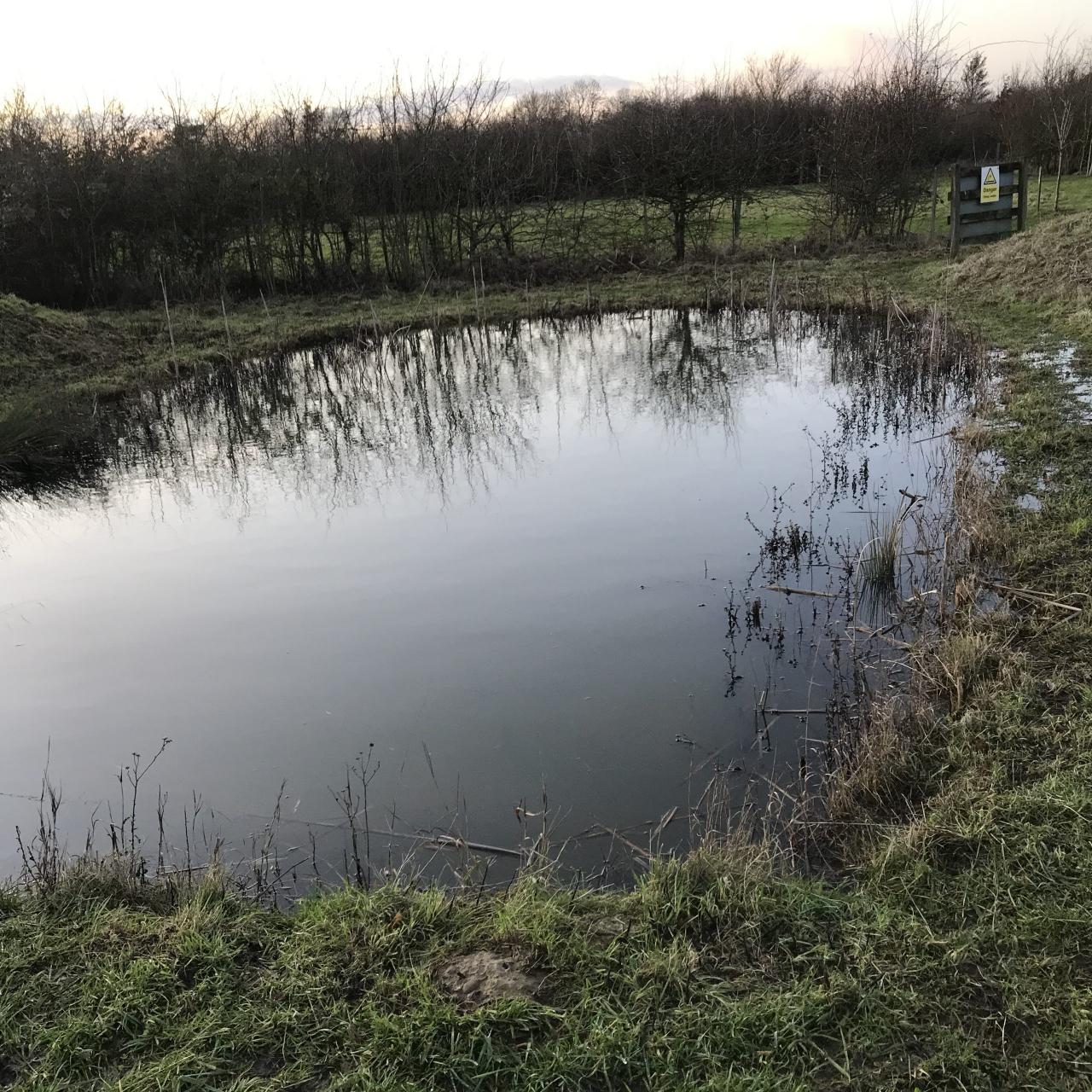
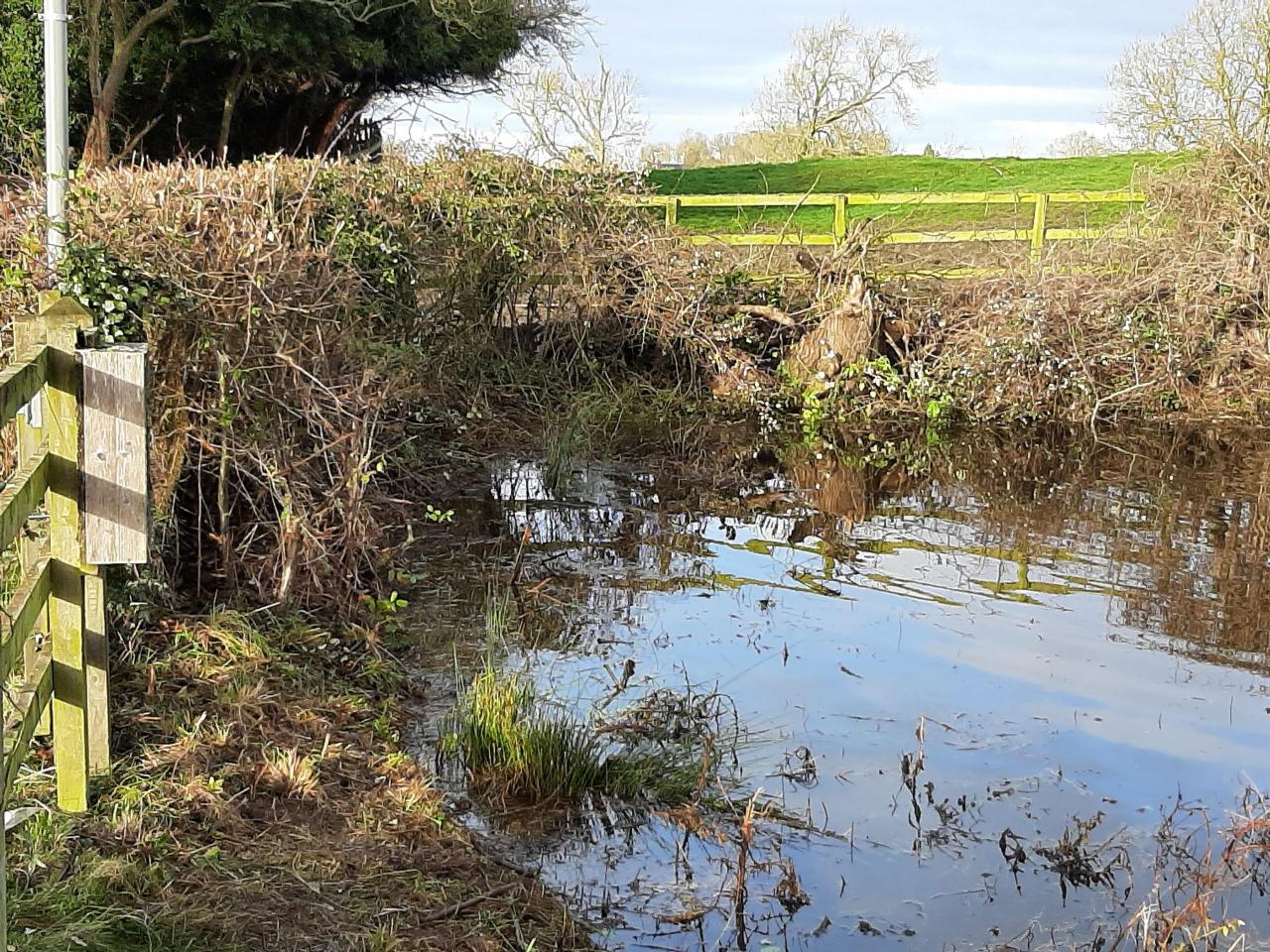
The hedgerows in the wood are full of blackberries and sloes, elderberries and haws, all ready for thrushes and blackberries to pick off their branches and for voles, hedgehogs and squirrels to harvest off the ground. The unusual episodes of hot weather we’ve had this summer seem to be abating and the sun is finally tolerable with a little more promise of rain in the air. The water level in the pond had become very low but, as always, regular observers will know that it will rise with the winter rain and will soon be back up to bank level.
Nature’s larder
As the days get shorter and the nights get colder, the wood is gradually transforming as green leaves become yellow with bursts of red or purple. Berries and hips of all colours are providing a shiny display and the hazel nuts in the far corner of the wood are no doubt tempting squirrels and all sorts of mice and voles. They are high protein energy sources and are just as attractive to humans once they are brown and ripened. As one of the first foods picked by humans, they still haven’t lost that appeal as sales of a certain nut spread and individually wrapped chocolates confirm. Thanks to thoughtful planting by organisers and volunteers, Jubilee Wood is a larder of free food for all of us as well as a feast for the eyes. Soon the autumn colours will be dispersed by the October gales that seem to be becoming a regular occurrence so why not take a wander round before the next stage of the seasonal circle is centre stage?
September sees us welcoming our new Associate Priest, the Revd Canon Fiona Brampton
The North Leightonstone Benefice (the group of parishes which includes the Giddings) has been enlarged. Revd Mandy Flaherty has been appointed Benefice Rector (i.e. senior priest), and has been joined by the Revd Canon Fiona Brampton as Associate Priest. Fiona has also been appointed Chaplain to Little Gidding. Fiona will have the care of the parishes of Hamerton, the Giddings and Winwick.
Sunday 15th September at 11am
We celebrate our Harvest Festival, and this will be the first service taken by Fiona. The service will be at 11am, and will be a service of readings and all the favourite hymns. After the service, there will be a buffet lunch at Churchside House, which will give everyone the chance of meeting Fiona and vice versa !
Everyone is very welcome to come to that lunch. However to help with the numbers for catering, it would be helpful if you could let Jane Edwards know if you are coming [tel: 293555]. There will be no charge for the lunch.
Sunday, 22nd September at 4pm
There will be a service of Evensong at St Michael’s. At this service, there will be the formal licensing of Fiona as Associate Priest and Chaplain to Little Gidding by the Archdeacon of Huntingdon & Wisbech. The service takes place at 4pm, and will be followed by tea at Ferrar House, Little Gidding.
Saturday 28th September at 4pm
There will be a Choral Evensong on the eve of St Michael’s Day; the day when we celebrate the dedication of our church.
The service starts at 4pm. As last year, the music will be led by the St Peter’s Singers, directed by Jeremy Jepson. We are delighted to be welcoming back the Revd Mary Jepp as our preacher for this service. After the service here will be refreshments.
August had been disappointingly cold and quite wet until the scorching bank holiday weekend, when butterflies fluttered around the edges of the wood and swallows flew high to find food… when swallows fly high, the weather will be dry.
Of course there is a practical reason for that rather than our avian friends having oracular powers, as on fine days insects are swept up high on warm thermal currents rising from the ground and that’s what the swallows feed on. No doubt we’ll all remember August as being hot and balmy which made it difficult to sleep at night but it was actually only a few days, followed by that spectacular thunder and rain which caught a few of us out as we forgot to close all the windows or was it only me?
Art from Nature event
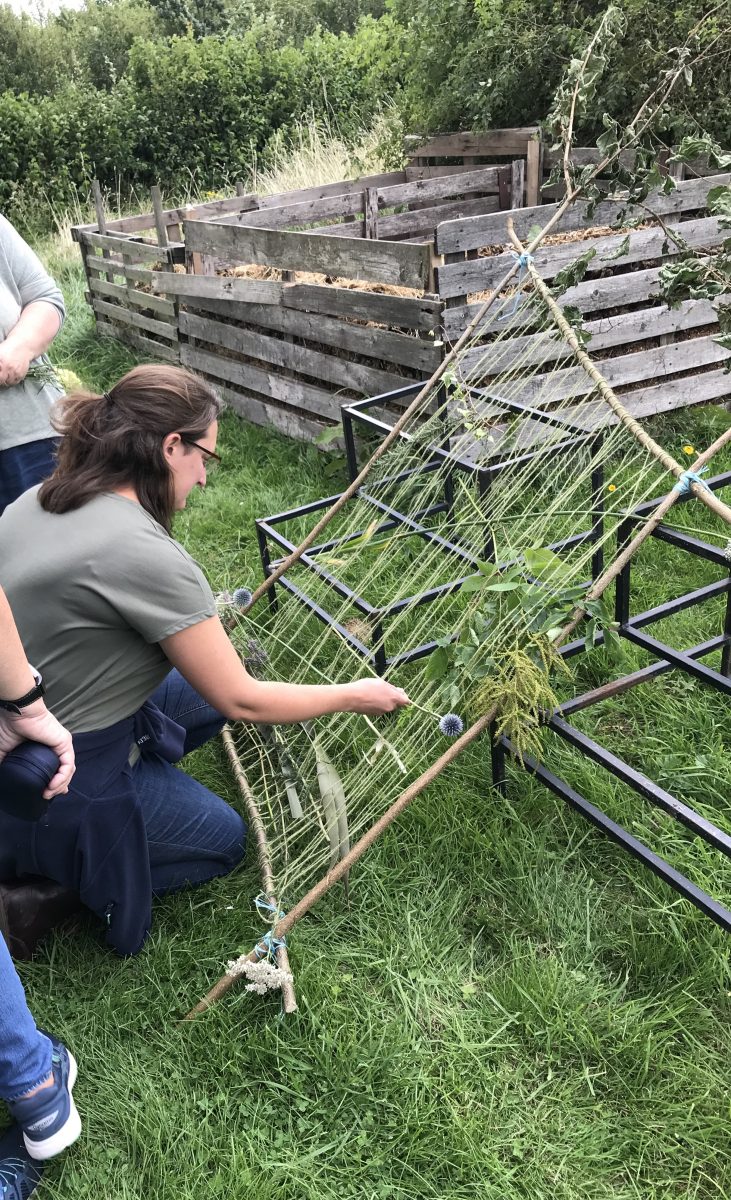
One Sunday early on in the month, several of us ventured down to the wood to try our hand at being artistic. Thanks go to Julie Trolove for providing us with greenery and grasses to get us started and for making a large weaving frame out of hazel and string. All started well with the sun shining and enthusiastic helpers having a go but as the building clouds darkened and the first spots of rain fell, we gatherers ended up searching for cover under the trees rather than material for weaving! Unfortunately it wasn’t going to be a short shower that day, but more of a prolonged and heavy downpour, so drenched but still smiling, we decided that this was an activity for another, drier day!
Bird talk
Many of us are still lucky enough to hear some birdsong in our gardens at this time of year but might be disappointed not to see and hear them in the wood. The reason for their lack of appearance is very likely due to their seasonal moult. They are keeping out of sight in dense vegetation because they are moulting their feathers and are more susceptible to predators. Moulting is costly in terms of energy for birds so usually takes place when conditions are favourable for them, such as after breeding when there is an abundance of food and cover. A little research revealed some interesting facts about the time different species take to moult: a Blue Tit takes about 6 weeks, a Herring Gull can take 6 months and a Buzzard may take several years for a complete change of flight feathers. Keratin needed to make feathers is less abundant in vegetation than in insects, so seed eating birds like Chaffinches usually take a couple of weeks longer to moult than insect eating birds like Robins and Dunnocks. It would be good to know how long it takes the Red Kites who constantly soar over the wood to moult, but even they seem to have been less noisy this month. The dawn chorus is also much quieter, if heard at all, as summer draws on and most birds have attracted their mates and raised their chicks so have less need to sing and protect their territory. Some families of birds such as blue or long tailed tits can occasionally be sighted as they forage for food in and out of the trees and long grasses but others such as the swifts and swallows are already gathering together to fly back to Africa.
Swifts are one of the first species to migrate and will moult back in Africa but the swallows can be seen lining up on the telephone lines chittering away to each other in preparation for their long flight back. You can see them dip down for water as they glide over the Jubilee Wood pond (which is now at quite a low level) if you are lucky enough. W.H.Davies’ poem, Leisure, often comes to mind when watching them, ‘…A poor life this, if full of care, We have no time to stand and stare.’ We don’t even have to stand thanks to the lovely arbour we have by the pond!
Jubilee Wood species catalogue – send us your sightings!
The start of colder temperatures and the passing of the months is a reminder that there will soon be different migrants arriving at our shores as others leave us. This ever changing landscape has encouraged some of us to think about keeping a record of what species of flora, fauna and fungi can be found in the Jubilee Wood throughout the year.
No experience is necessary to send in sightings, via specieslist@thegiddings.org.uk, of things you’ve found in the wood. There will be fliers coming around for those who don’t have access to or like using a computer to explain the details but all that’s needed is your name, the name of the species seen, the date and time, and what part of the wood it was seen in. Contact details would be helpful and if two of you can verify the sighting that’s even better. Please send a message if you want further information about this but it’s very much an amateur attempt at record keeping which will hopefully involve as many of the community as possible and provide an interesting snapshot of the wood for the future. We’ll attempt to respond to any messages as soon as possible, but please be patient if you have to wait a Wandererday or two.
Hoping the weather stays favourable for many a wander in the Jubilee Wood as we head into Autumn…
There will be two services on Sunday 22nd September 2019 to welcome The Revd Canon Fiona Brampton as Associate Priest & Chaplain to Little Gidding.
The first is at St. Bartholomew, Church Road, Great Stukeley PE28 4AL lead by the Bishop of Huntingdon The Rt. Revd. Dagmar Winter and will include Holy Communion.
The Licensing will take place during 4.00pm Evensong at St Michaels, Main Street, Great Gidding PE28 5NX by The Archdeacon of Huntingdon and Wisbech, the Venerable Hugh Kyle McCurdy.
It’s been a month of very varied weather from windy and wet days interspersed with blisteringly hot ones including the hottest temperature officially recorded in the UK at the Cambridge Botanic Garden of 38.7C. It looks like it’s going to be the second hottest year ever recorded on Earth although it’s still too early to be sure about that prediction, but experiencing a week of sweltering days and nights here in our part of the world makes me inclined to believe it.
Benefits of planting trees
At least we are lucky enough to have access to nature’s air conditioning system, a wood. There are multiple practical benefits to trees as well as the obvious ones of being able to appreciate their beauty and changing form throughout the year. People in cities have been really struggling to cope with the heat wave and city authorities throughout the world are realising the benefits of planting trees which shade the streets and cool the air as water evaporates from their leaves. This process, called transpiration, helps cool the tree and also pumps water and minerals up tiny capillaries from the roots to the leaves for photosynthesis to occur. Fortunately for us, we feel the cooling effect this produces as we walk under their canopy whether we’re in the city or the countryside. Jubilee Wood is a wonderful place to go when it’s hot and we need to cool down, the maturing trees providing cool shade and air along the winding pathways that lead to the central area.
July evening Jubilee Wood
A perfect space
Following the cutting of the grass along the rides and this central area early in the month by hard working volunteers, the wonderful smell of hay drifted round the wood before it was quickly baled up whilst this unpredictable weather held warm and sunny. The summer picnic could then be enjoyed on shorter grass, and the Pop up Knowledge Share which this month was ‘Nature and Well Being – a journey through the senses ‘, took place just before the picnic. It is a perfect space for encouraging us all to be aware of our surroundings and to enjoy the opportunity of socialising together.
Hay making in Jubilee Wood
Lady’s bedstraw
Plants such as Galium verum, or Lady’s bedstraw are growing in the wood, and it is much more evident generally in hedgerows and edges of fields this year so conditions must have been just right for it to spread. The yellow flowers have a sweet, honey like smell and are very attractive to pollinators, especially moths. It’s probably the reason why it was used as a stuffing for beds and as a floor covering, but it was also used as dyes for butter, cheese, hair and textiles. It’s also sometimes called Cheese Rennet because it can curdle milk and was used in cheese making, a convenient vegetarian replacement for rennet!. As well as all these attributes it has a long history of use as a herbal medicine so it is an extremely useful plant as well as a lovely one to look at.
Lady’s bedstraw
Cinnabar Moth
Finally, it’s been a fantastic year for Cinnabar Moth caterpillars which can be found on the tall yellow daisy known as Ragwort, Senecio jacobaea or on Groundsel, Senecio vulgaris, which are their two food sources. The toxins within Ragwort make it so bitter that it’s usually avoided but cinnabar caterpillars actually benefit from it as they become toxic themselves and their colourful yellow and black stripes warn predators that it wouldn’t be a good idea to eat them. When fully grown they then leave the plants and pupate just beneath the surface of the soil for the winter. Keep an eye out for them as you wander round the wood and look forward to seeing the flashes of red and black moths early next summer…..
June has
been a busy month in the wood, not only for wildlife and growing trees and
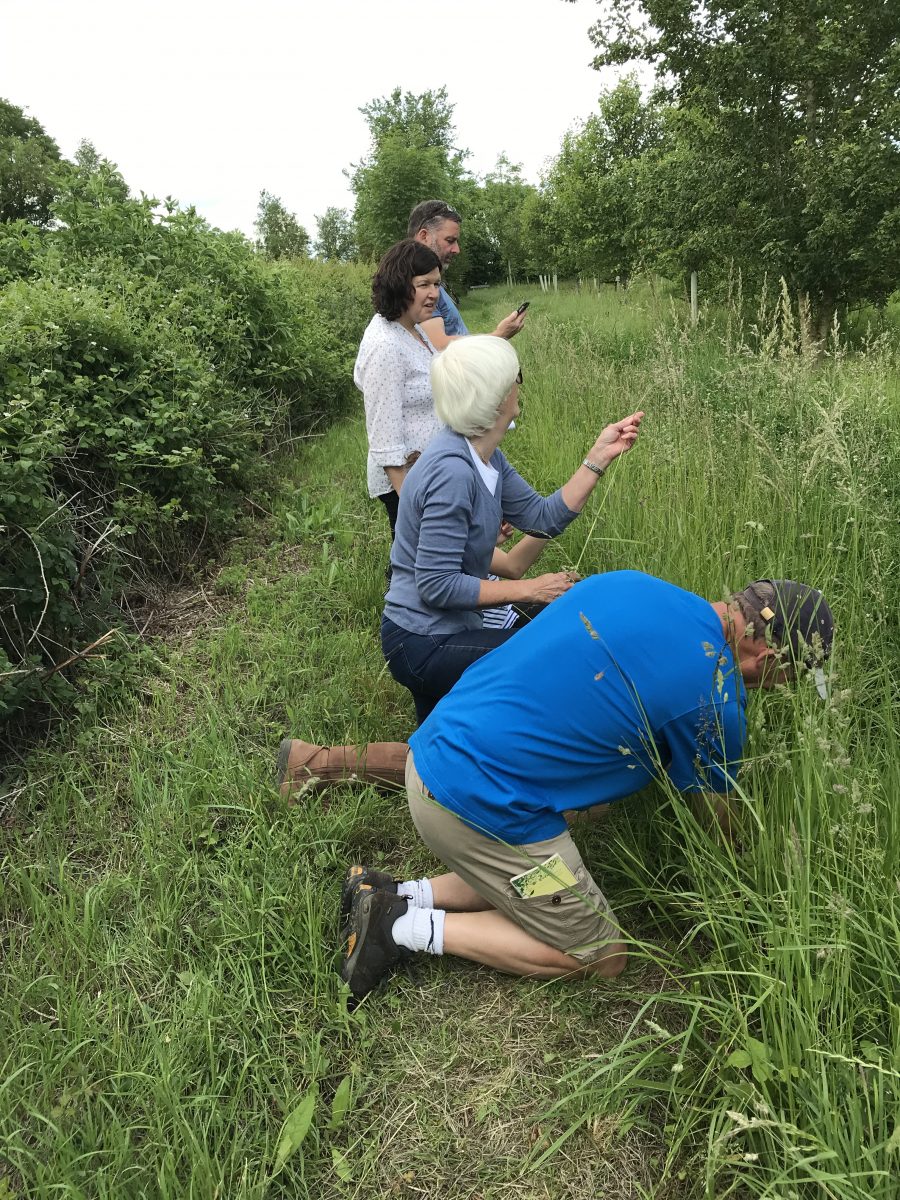
plants but also for humans. We had a visit from members of the Hunts. Flora and
Fauna society, who came to look around the wood and record their sightings of
all the diverse flora and fauna we now have in the wood. Once the results have
been collated they will be sending them onto us and they will be invaluable as
a benchmark to measure how the wood is doing in the future.
The summer
solstice was also celebrated in the wood. The evening was quiet and rain free
as several of us watched the sun go down on the longest day and joined in a
short meditation which left us all feeling peaceful and very appreciative of
the wood at the slightly magical time of twilight when the white daisies and
clover shone out in the dusk. The birds seemed to want to join in before they
finally took their rest with blackbirds booming out their strident but
melodious song and collared doves in the background lulling us with their
gentle call. Thanks to Janice for suggesting the idea and introducing many of
us to a very different experience of the wood at twilight, a peaceful and calm
space after the busyness of the day.
The
experience got me thinking about the word recreation, because most of us use
the wood in one way or another for exercise and leisure, or pastimes such as
bird watching. It’s a word which seems appropriate to describe our desire to re
create a sense of calmness and space in our lives but in a practical sense there’s
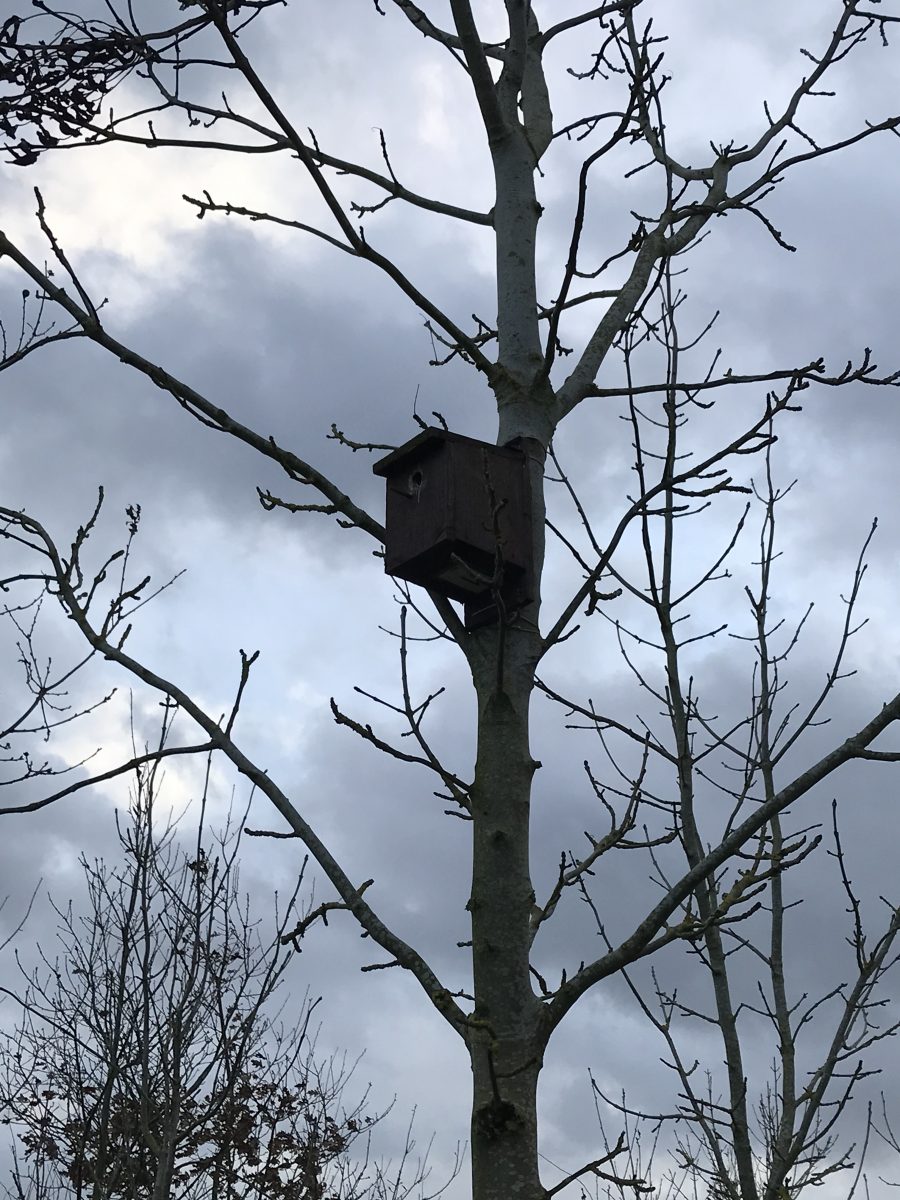
re-creation going on all the time in our wood. The bird boxes are hosting the
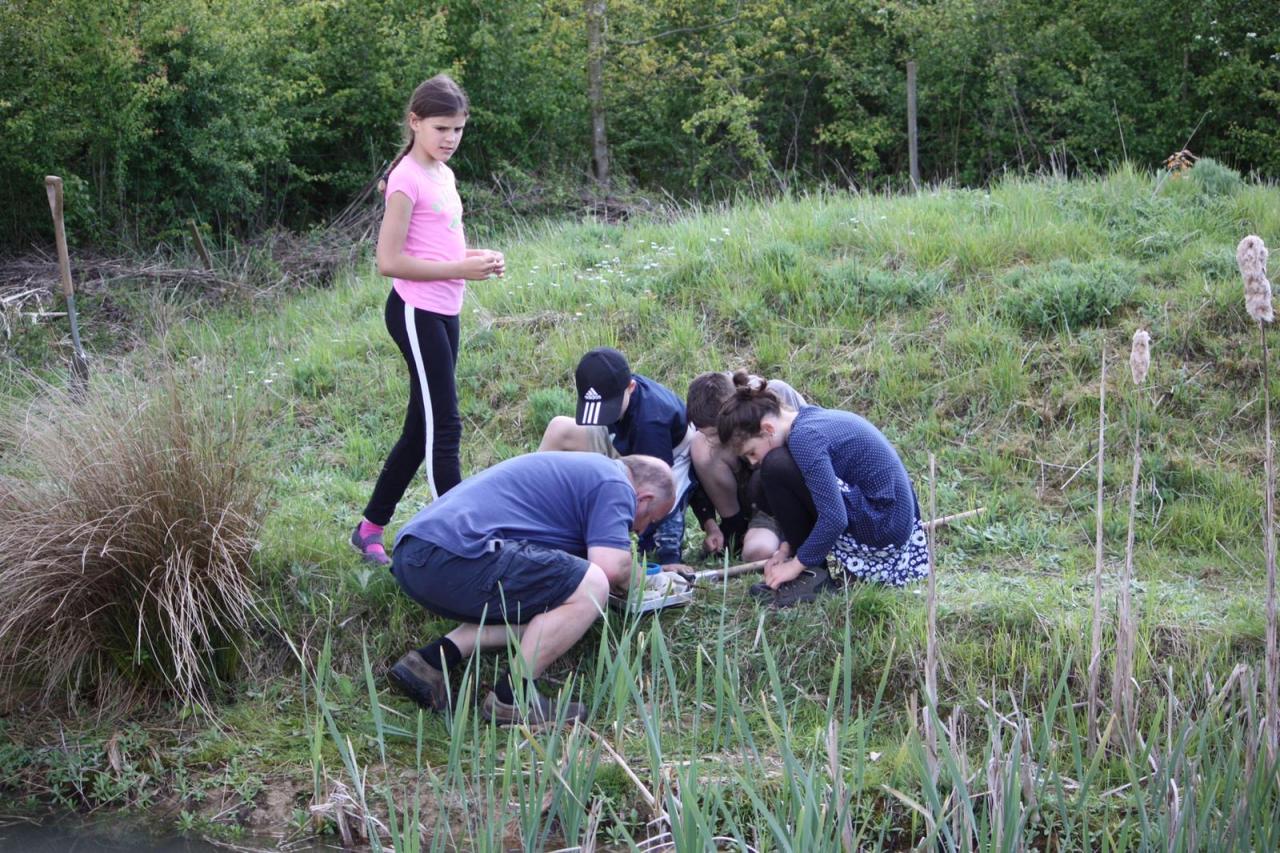
next generation of blackbirds, tits and robins, the pond is providing a safe
haven for the young of the great crested newts before they are big enough to go
on their way, and the dragonflies and damselflies are almost fighting each
other for places to lay their eggs. It’s certainly a place where creation can
be seen if you’re patient enough to sit and just listen and watch as nature
takes its course. Perhaps you’ll be lucky enough to see some fledglings as they
take their first tentative flight, but just walking through the clover filled grass
paths provides us with plenty of opportunity to test our wild bee
identification skills. The bumblebee conservation trust is asking for data
nationwide and their website provides lots of information on how you can help.
It only takes an hour or so every month and you can download identification
apps. from their site or Friends of the Earth, (website links below). Perhaps
we’ll bump into old friends and new acquaintances as we walk around recording
our findings!
Keep a look out on the website for the July Jubilee Wood knowledge share which is on Nature and Well Being and happy bee hunting.
NOTICE OF PUBLIC RIGHTS AND PUBLICATION OF UNAUDITED ANNUAL GOVERNANCE & ACCOUNTABILITY RETURN
ACCOUNTS FOR THE YEAR ENDED 31 MARCH 2019
Local Audit and Accountability Act 2014 Sections 26 and 27
The Accounts and Audit Regulations 2015 (SI 2015/234)
NOTICE
1. Date of announcement – Friday 21 June
2. Each year the smaller authority’s Annual Governance and Accountability Return (AGAR) needs to be reviewed by an external auditor appointed by Smaller Authorities’ Audit Appointments Ltd. The unaudited AGAR has been published with this notice. As it has yet to be reviewed by the appointed auditor, it is subject to change as a result of that review.
Any person interested has the right to inspect and make copies of the accounting records for the financial year to which the audit relates and all books, deeds, contracts, bills, vouchers, receipts and other documents relating to those records must be made available for inspection by any person interested. For the year ended 31 March 2019, these documents will be available on reasonable notice by application to:
The Parish Clerk,
Great & Little Gidding Parish Council,
The Parish Office at the Village Hall,
Main Street,
Great Gidding,
Huntingdon, PE28 5NU
TEL: 01832 293068
Email: ggparishcouncil@outlook.com
commencing on Friday 21 June 2019
and ending on Monday 5 August 2019
3. Local government electors and their representatives also have:
The opportunity to question the appointed auditor about the accounting records; and
The right to make an objection which concerns a matter in respect of which the appointed auditor could either make a public interest report or apply to the court for a declaration that an item of account is unlawful. Written notice of an objection must first be given to the auditor and a copy sent to the smaller authority.
The appointed auditor can be contacted at the address in paragraph 4 below for this purpose between the above dates only.
4. The smaller authority’s AGAR is subject to review by the appointed auditor under the provisions of the Local Audit and Accountability Act 2014, the Accounts and Audit Regulations 2015 and the NAO’s Code of Audit Practice 2015. The appointed auditor is:
How true
those words are! Everything is full of life, grass and plants are growing
almost visibly and the sound of bird song is everywhere. The cuckoo has arrived
back in the area and has been heard several times although there is definitely
a collared dove in the wood who is suspiciously good at imitating the sound of
the cuckoo…..we once had a starling in the garden who imitated the sound of
the telephone which was funny for a while…..
Hibernation
for many animals will have
finished and they will becoming active so it’s time to look out for hedgehogs,
queen bees, grass snakes ,frogs and toads to mention just a few. The
Huntingdonshire Fauna and Flora Society will be visiting the wood on the 16th
so there will an opportunity to share local knowledge as well as perhaps learn
something new about all of the above. There will also be a ‘knowledge share’ in
the wood on Sunday 9th when the theme will be Grass Identification.
These get-togethers are very informal, fun and for all the family so come along
at about 2.30 pm and join in if you can. All are welcome.
Identifying flora
and fauna is very satisfying in itself but it can also be extremely helpful to
record what you see for general conservation work. Everyday records help us to
keep in touch with how individual species and their habitats are doing and the
Biological Records Centre has some useful information on free Apps which you
can use if you want to help (http://www.brc.ac.uk/apps).
The Jubilee Wood is such a wonderful habitat in which to record wildlife and
plants and even if you find it difficult to keep records regularly, no
information is wasted even if it’s a one off observation.
As we move
on into summer the Wood seems to change every day, with the trees spreading out
their canopies, the birds nurturing their young in the many bird boxes which
have been generously placed around the wood, and sitings of Common Orchids, Common
Swift moths and the beautiful Cinnabar moth with its exotic rosy pink markings
on black wings. It’s a busy time and one which we can all enjoy, even if it’s
just for a few minutes. Ten minutes quietly walking, watching and listening in
Jubilee Wood might just be the medicine we all need, and if that might be a bit
too difficult for you these days, the benefits are just as great if you sit on
the welcoming bench at the entrance to the wood and take it all in. Might be
worth bringing a cushion though!