Jubilee Wood in January 2019

Jubilee Wood in January 2019

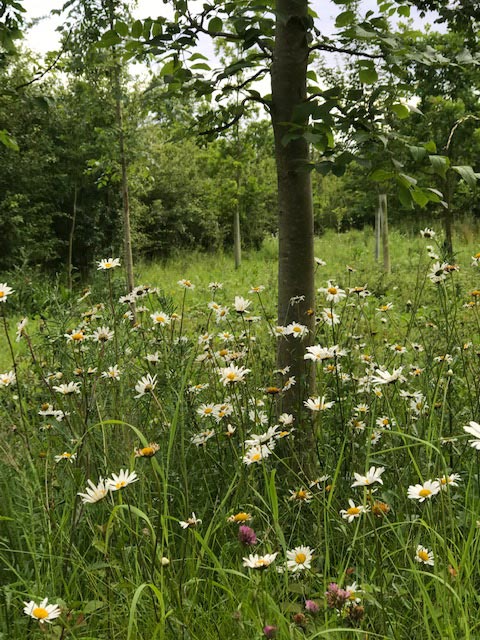
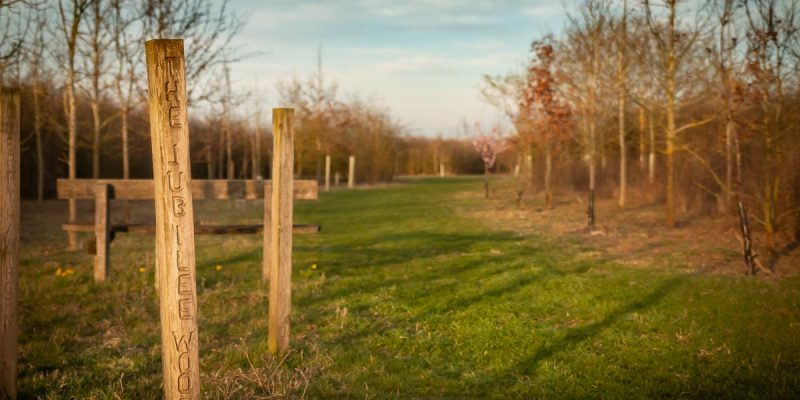
As January comes to a cold end with freezing nights and flurries of the white stuff, it’s difficult not to dream of warmer times and the promise of Spring. In some ways it’s a shame to let our thoughts wander forward too fast as the wood is looking quite spectacular in this cold weather. The hard work of volunteers who have cleared out the undergrowth in many areas means that you can now see the various forms of the young trees.

Nature always seems to be involved in a circle of birth, growth and death so perhaps it’s a good time to remember that January is named after the Roman god Janus, the god of beginnings and endings and the doorkeeper of the heavens. He’s often depicted as having two heads so could see backwards and forwards at the same time and perhaps we can apply that metaphor to the Jubilee Wood. Trees, plants and invertebrates may seem dormant at this time of year as we walk through its gateway, but we can already the signs of new growth as buds thicken on branches and new growth is forcing its way up from the ground.

The wood also played a part in the recent RSPB birdwatch, as volunteers sent in their sightings after a cold and windy weekend. It will be interesting to see how the bird population changes as the trees mature and the level of cover changes throughout the seasons. The Fieldfares are still to be seen as are chaffinchs, goldfinches, wrens and green woodpeckers along with the blackbirds, sparrows, jackdaws and bluetits to name just a few. It’s also easy to forget the red kites as we now see them so regularly over our gardens but what a wonderful sight they are. As they glide above , their calls fill the skies and we can watch their territorial acrobatics which have already started.

A big ‘thank you’ to the many volunteers who keep the  Jubilee Wood healthy and accessible for our enjoyment. Whatever the year has in store for us it will always be a place of quiet enjoyment as well as an environment which is packed with life and variety. Just look at the two reports on the website about dragonflies/damselflies and moths in Jubilee Wood in 2018 to remind yourself of what’s to come!


Not just ‘Great Gidding Spring Plant Sale and Social Evening’…

<em>Not just</em> ‘Great Gidding Spring Plant Sale and Social Evening’…


…so much more!

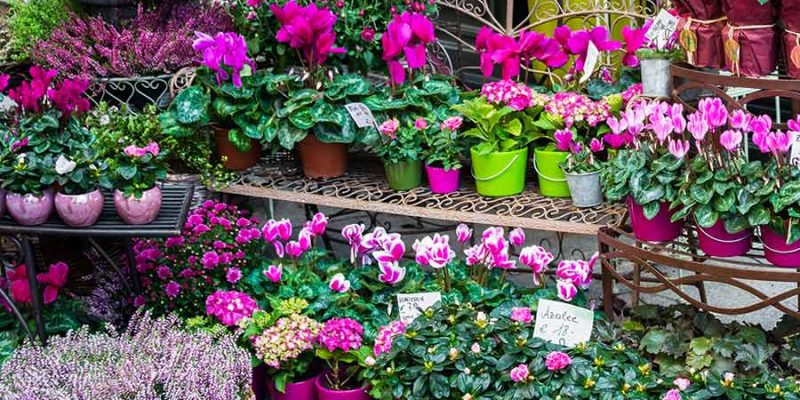
Be sure to save the date, Friday 10th May 2019, for an evening filled with a plethora of plants all for sale, barbeque and bar, planting demonstrations, our very own Gardeners’ Question Time with Radio Cambridgeshire regular Tony Arnold, bird quizzes featuring well-known artist Carry Ackroyd’s beautiful bird paintings, plus plenty of gardening and wildlife information, hints and tips….

It’s going to be fun for all the family!

When: Friday 10th May 2019, from 5pm onwards
Where: Gt Gidding Village Hall
What’s it all for: Jubilee Wood Projects to encourage us all to enjoy the wood – including a proposed bird hide, information centre, composting toilet…

Watch the Giddings website for more details and developments.

Spring Dragonflies & Damselflies at Jubilee Wood in 2018

Spring Dragonflies & Damselflies at Jubilee Wood in 2018

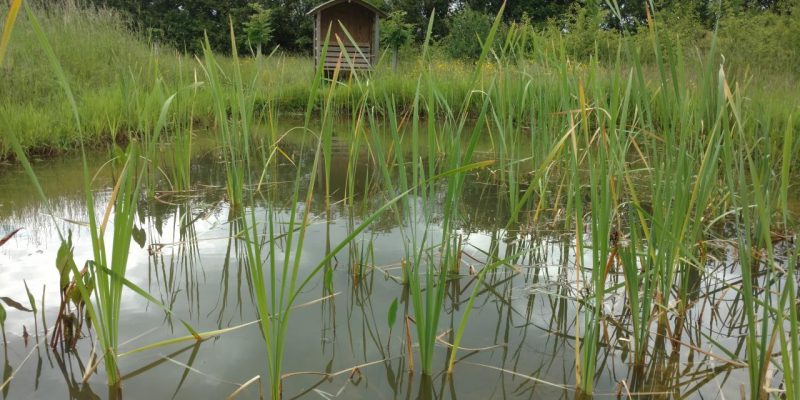
During a couple of visits to the Jubilee Wood pond in May 2018, five Odonata species were seen.

The first species normally to appear in the year is the Large Red Damselfly. The immature insects venture further afield but when they are mature they visit the pond to pair up and lay their eggs.

Another early species is the beautiful Broad-bodied Chaser.  May is a good time to see them on sunny days as the blue males aggressively patrol their territories around the pond .The brown and yellow females are no less spectacular but spend a lot of time feeding away from the pond only appearing  to mate and egg-lay. This species favour small ponds and do not seem to be in large numbers.

The Four-spotted Chaser however, can appear in large numbers and was very common at this pond in May. The males and females look the same as each other with four distinctive dark wing spots.  On vegetation around the pond exuvia could be found – this is the empty skin that is left behind when the adult dragonfly emerges after the larvae has climbed up a stem from the pond.

The other 2 species seen were the Azure Damselfly and the Blue-tailed Damselfly, both were very common here.

As the Spring turns into the Summer there could be up to 17 species seen around this pond and woodland so plenty to look forward to in 2019.

Andrew Frost


Jubilee Wood in December

Jubilee Wood in December

Jubilee Wood in December


December can be a difficult month for some people, with the nights at their longest it can seem a dark and challenging time, but if we look at the natural world we might learn a way of seeing things differently.Wandering around the wood, whether the late afternoon sunshine is sinking below the trees, or the bare branches are being blown around under cold grey skies, I wonder how all the plants, birds  and mammals cope at this time of year.


Hibernation and dormancy helps many of them to protect themselves against the elements, and if you look closely at deciduous trees you will see a scar where the leaves have been shed, providing protection from infection and severe weather. Most insects and other invertebrates hibernate during the winter as they can’t produce their own body heat like birds and mammals but something they can do is burrow down deeper into the soil to benefit from an increase in a few degrees of soil temperature. Apparently earthworms can avoid freezing by increasing the amount of sugars in their body fluids, reducing  the temperature at which they will freeze – in the same way putting antifreeze in your car washer fluid keeps it liquid!


Seed heads provide  food for birds over the winter months but they can also provide shelter for various insects, whilst long  grass and dead leaves can provide safe havens for several moth and butterfly life cycle stages, protecting them from winter weather and predators. Most species enter a dormant phase and this can be as an egg, larva, pupa or adult insect, dependent upon species. The majority of butterflies and moths overwinter in the larval stage, with pupae being the next most common choice, followed by eggs and adults.  Adult moths can hibernate under the bark of logs or deep in amongst dense ivy, perhaps sharing winter digs in the Jubilee Wood with our old friends the Great Crested Newts! Some like the Brimstone, Small Tortoiseshell, Peacock and Comma overwinter as dormant adults and we certainly need to help them as much as we can. The full results of this year’s Big Butterfly Count are out and can be viewed by following the link below and whilst many populations thrived in the good conditions, sadly the number of the Meadow Brown, which was so abundant in the Jubilee Wood this summer, is down by 56% since 2017 so there’s still a lot of conservation work to do.


Perhaps this ability of nature to adapt to conditions is something we could benefit from. Slowing down during these dark days may be useful for us too, giving ourselves time to recharge our batteries in whatever ways suit us. Reading those books we never got round to, planning wildlife friendly changes to the garden next year and  making New Year resolutions to find time to visit the Jubilee Wood more often if we can, whether it be a for quiet walk or a community event such as helping to clear undergrowth and a general tidy up. Whatever you decide, a Happy New Year to you and hopefully the Jubilee Wood will be part of a very healthy one for you too!


The Wood Wanderer


Interesting websites:

https://www.earthwormwatch.org

https://butterfly-conservation.org

St Michael’s Church at Christmas

St Michael's Church at Christmas

Church Restoration

The work at St Michael’s Church is now complete and the church has re-opened, the first service being the Primary School’s Christingle Service last Friday 14th December.

The north aisle window and plaster has been repaired and restored. The opportunity was taken, at the same time, to repair the north aspect of the chancel arch which had moved significantly, leading to a need to carry out stonework repair, employing a stonemason.

In view of all the plaster dust etc, it was decided to arrange for a thorough ‘spring clean’ (can you have one in December?), and this has included attention to high places in the church, not reachable by our normal cleaning.

Family Carol Service

Our Carol Service (aka ‘Carols and Blankets’) takes place next Saturday (December 22nd) at 6pm. This year, as the result of a suggestion, there is one addition. Mince pies and mulled wine will be available BEFORE the service, as well as after. Furthermore, John DeVal will be adding hot chocolate to the drinks. So come along from 5.30pm onwards to warm up your vocal chords.

The service will follow the usual format of favourite carols, interspersed with readings (biblical and secular). The biblical readings will remind us of the events of the birth of Jesus, whilst the secular readings include authors such as Dylan Thomas & Charles Dickens. Appropriately for this year when we mark the centenary of the end of World War 1, there is a reading sent from the trenches. Glen Page (who has been singing at St Michael’s for over thirty years) will sing a couple of solos, and we welcome back Stephen Barber as organist.

The collection will be given to the charity ‘Crisis at Christmas’.

Don’t forget to wrap up warm – there will be some blankets at church if you need one. However hearty singing always seems to banish the cold!

Midnight Communion

Our ‘Midnight Communion’ at St Michael’s takes place on Christmas Eve, starting at 11.30pm. The service will be led by the Vicar, the Revd Mandy Flaherty.

From Michael Keck

Anti social behaviour – fly tipping

19/12/18

Back Lane – Great Gidding

Fly tipping, one of the scourges of modern day rural living where the less gifted feel a need to off load their junk or somebody else’s building waste on public highways,

Fly tipping is becoming a big problem not just the cowboy builder chucking stuff out on the road but also lorry loads dumped in gateways, old articulated trailers stuffed full of rubbish and abandoned in laybys and country roads.

What to do

If you witness fly tipping or come across the result of…………. call it in. Huntingdon District Council have an online reporting system, its easy to use and takes a few minutes. You can have it as an app on your smart phone, be clever report it straight away. Don’t wait for  someone else to do it.
For the record this was reported by using the HDC app this morning.

http://www.huntingdonshire.gov.uk/environmental-issues/fly-tipping/

Crap of the day


Help us celebrate the end of WW1

Help us celebrate the end of WW1

Great Gidding Commemoration – All are welcome to help us remember, 100 years on, those who died and to celebrate when the guns fell silent at the end of World War 1.

On Sunday 11th November Starting at 6.00pm at Great Gidding Village Hall

To honour those who fought and lost their lives and to mark the day 100 years ago when the guns fell silent at the end of the First World War.

Lighting of our beacon 6.00pm

With poems, readings and songs from WW1 we remember those from the Parish who lost their lives at that terrible time.

‘Battles Over’ Celebration (approx) 6.45pm

There will be a bar serving wine, beer and soft drinks (at almost WW1 prices) and free hotdogs (including vegetarian option).

St Michael’s Church closure

St Michael’s Church will be closed for the foreseeable future. At the moment the church is full of scaffolding and therefore inaccessible.

St Michael's Church Great Gidding closed for repairsRestoration in the north aisle being carried out

This is to enable the appropriate work of restoration in the north aisle to be carried out, arising from damage to the plaster as a result of the lead theft. This involves the removal and re-plastering of the wall. This work will take up to six weeks.

At the same time, the opportunity has been taken to remove the cracked plaster from the north side of the chancel arch, so as to expose the stonework behind and determine what work needs to be carried out to rectify the situation with the movement here.

Health and safety

This work obviously creates a dusty atmosphere. Additionally, when the plastering begins, this introduces plaster dust etc into the atmosphere, which not good for anyone to inhale. Therefore health and safety decrees we shut the church until such time as everything has been resolved and building is safe to use..

Therefore, if for any reason, you require access to the church, please contact John DeVal first on 01832 293417.

This closure means:

Evensong on Sunday 21st October is cancelled
The 11am service of Holy Communion on Sunday 4th November is moved from St Michael’s to St John’s Church, Little Gidding.

St Michael's Church Great Gidding closed for repairsRemoval of the cracked plaster from the north side of the chancel arch

A busy apple pressing day September 2018

A busy apple pressing day September 2018

A lovely sunny morning welcomed the various pressers and extractors of apple juice to Manor Site Farm laden with apples from gardens, allotments and a paltry amount from the Jubilee Wood apple trees.

Using the community apple press and apple pulper the crew soon got to grips with the process. Some apples were juicy some were a little dry, some were a bit tart some were sweet. The blending of cooking apples, dessert apples and wild crab apples will have created some unique tasting apple juice and for the brave, cider!  About 20 litres of  juice was pressed some destined for the Demijohn and fermentation and possibly cider or rank apple juice. The result will be a tasting at the 2019 Wassail (date tbc)

A great mornings entertainment with refreshments thrown in. Still plenty of time for parishoners to use the equipment in their own backyard  for this autumn.

Jubilee Wood September 2018

Jubilee Wood September 2018

Autumn approaches but the wood is still full of leaf even if there are some early signs of yellowing in some of the trees.

John Keats’ poem To Autumn with its famous first line:

Season of mists and mellow fruitfulness

always makes me think of cooler mornings and watery sunshine on the fluttering patches of reds and yellow as the trees lose their leaf chlorophyll.

As daylight hours shorten and the temperature cools, chlorophyll begins to decrease and the orange and yellows (carotenoids) that have always been there start to show through. However, the reds and purples,(anthocyanins) aren’t present in the leaf through through the growing season but develop in late summer. When the autumn days are bright and cool and nights are chilly then the leaf colours are at their best.Now is the time to start walking through the wood on a regular basis to watch the colours of the shrubs and trees changing.

It’s also the time to pick the last of the blackberries, although many are already passed their best. Folklore has much to say about the humble bramble but one story I particularly like warns against the picking of its berries after the 29th September, also known as Michaelmas. On that date, so the legend goes,Lucifer was cast out of heaven and landing on the prickly bush cursed the shrub and its fruit, so anyone picking the fruit after that date risked stirring up the devil’s anger. Of course, it’s also a good way of remembering that most blackberries are past their best by the end of September so if you want some fruit for free, and to avoid the devil’s anger, get picking!

Which brings me nicely to the Apple juicing  event on 29th  September at Manor Site Farm where the wonderful crop of apples enjoyed by most of us this year can be pressed to make  apple juice which also freezes well. Come and enjoy some time together with fellow growers and/or tasters. All the details regarding on the village website, www.thegiddings.org.uk.

I think  Keats would approve of such things:

by a cider press, with patient look, Thou watches the last oozing, hours by hours.

Hopefully the Gidding pressing won’t take quite that long!

The Wood Wanderer