Ash Dieback Disease

Ash Dieback Disease

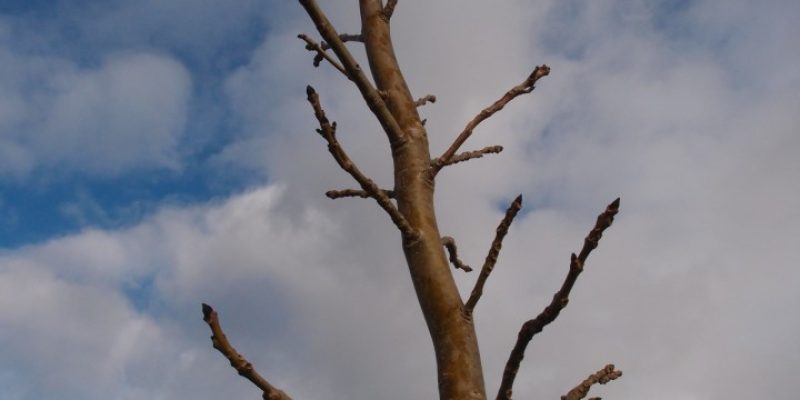
Ash trees are under serious threat from a fungal disease that has spread to the UK from Continental Europe.

Chalara  Fraxinea or Ash Die-back Disease has been noted in East Anglia and Scotland. If the disease takes hold  as expert’s predict it will then it will be particularly devastating  for our area as every third tree is an Ash.

It is important however to identify the disease accurately as many Ash trees are suffering the effect of last years drought and signs of dead branches can sometimes be attributed to natural die back or age.

Ash tree disease


To help you identify the disease correctly here is a direct link to the Forestry Commission 

An  interactive app called Ashtag is available free for both Android and iphone users to help you identify and report suspected Ash Dieback disease.

These are available for download at Google Play and the app store.

Update 1

Further information can be found at the Ash Tag website  which includes an interactive map to show current  geo photo reports.

Update 2

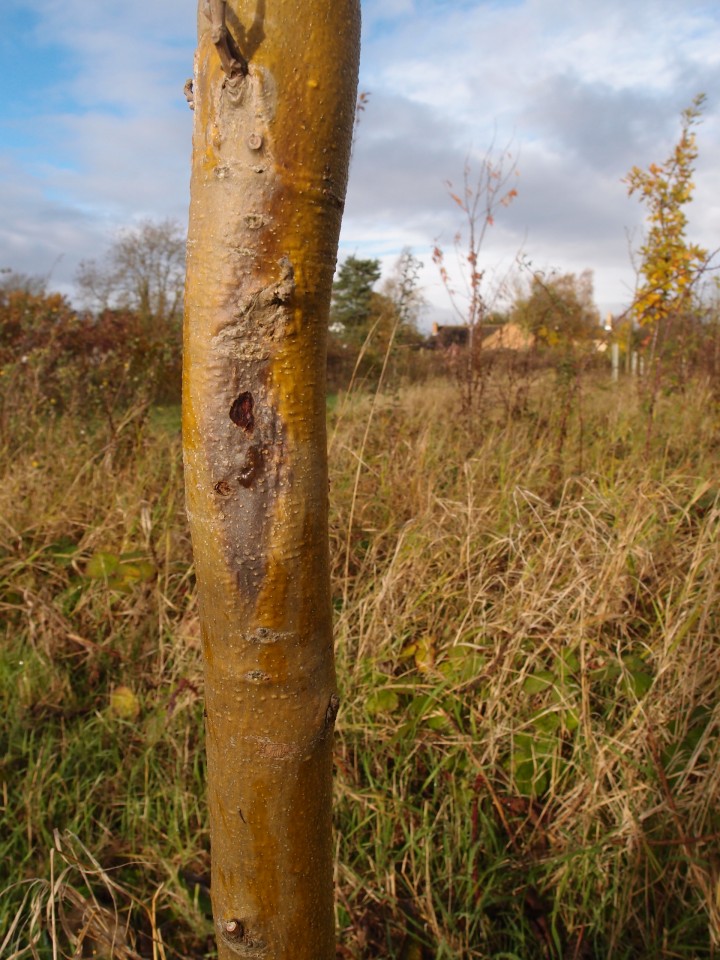
A picture of this diseased tree has been sent to the Forestry Commission via the University of East Anglia Ashtag app.

We are awaiting official confirmation that this tree has Chalara Fraxinea.

Update 3

Part of the trunk of this tree has been sent for analysis

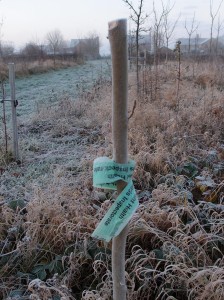
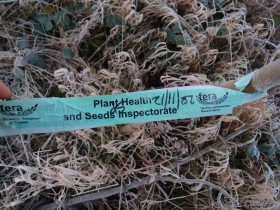
Early December 2012 and a visit from fera (The Food and Environment  Research Agency)to gain samples of potentially infected Ash trees.


 Sticky tape left on an Ash tree to show which ones might be infected or sampled

Great reasons to support the GREAT Great Gidding shop

Great reasons to support the GREAT Great Gidding shop


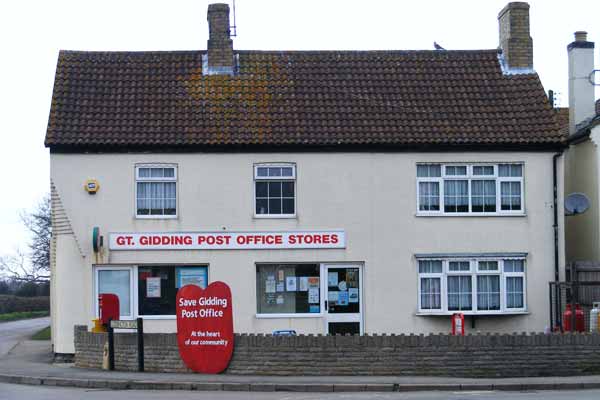
Great Gidding Stores

We’re lucky in Gidding to have the only village shop in the area. The range of services offered by Aruna and Jed is terrific. Did you know, for example, that all the following are available from, or through, the Great Gidding village shop?

● Daily papers, of course, but also magazines. If you regularly buy a magazine in the supermarket, why not order it through Aruna instead?

● A range of groceries and general household goods for those
annoying times when you run out of something essential
and you need it now!

● Dry cleaning service. Just drop in your cleaning and collect
from the shop.

● Prescription service.  Wellside Surgery will deliver your medication to the shop for you to collect

● Nets of logs and kindling

● New! 12.5kg sacks of potatoes

● New! A winning Lotto ticket!

The shop is the hub of the village – you can advertise goods for sale, local events or other attractions; and tickets for village events can usually be bought from Aruna.

By supporting the shop, you are helping to maintain a great village facility. And it helps you, too. By shopping in the village, we save time and precious fuel.

With new, longer, opening hours, our shop offers convenience, great service and helpful and personal attention from Aruna and Jed.

We’re so lucky to have a shop at the heart of our village – it’s up to us to ensure we keep it that way!

If we all committed to buying at least our milk, papers and magazines there, we’ll be helping ourselves, helping the shop and helping our village community!


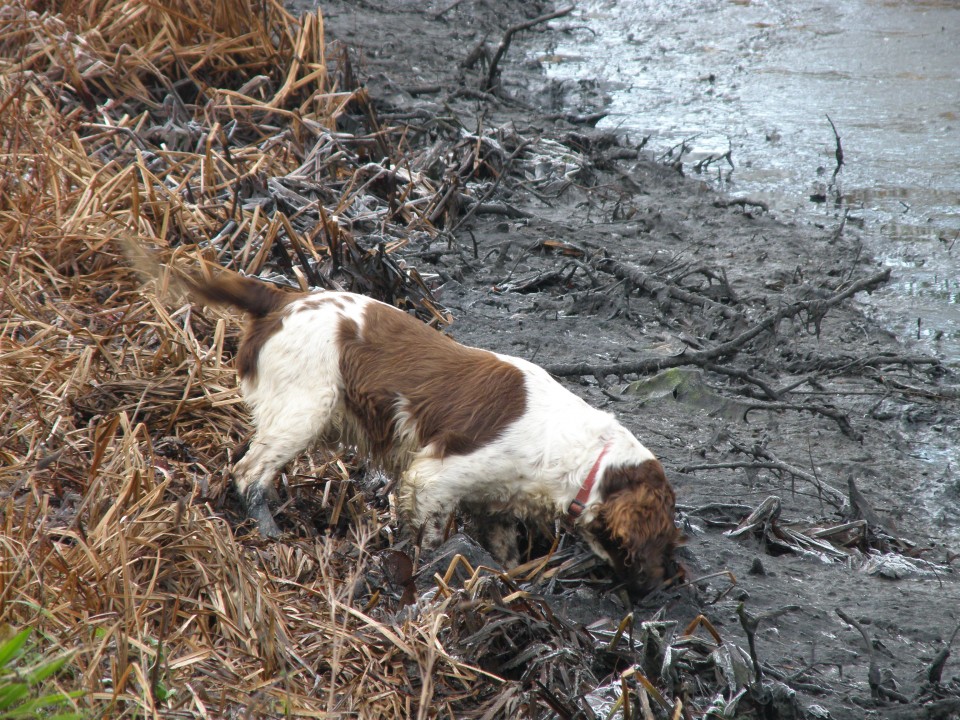
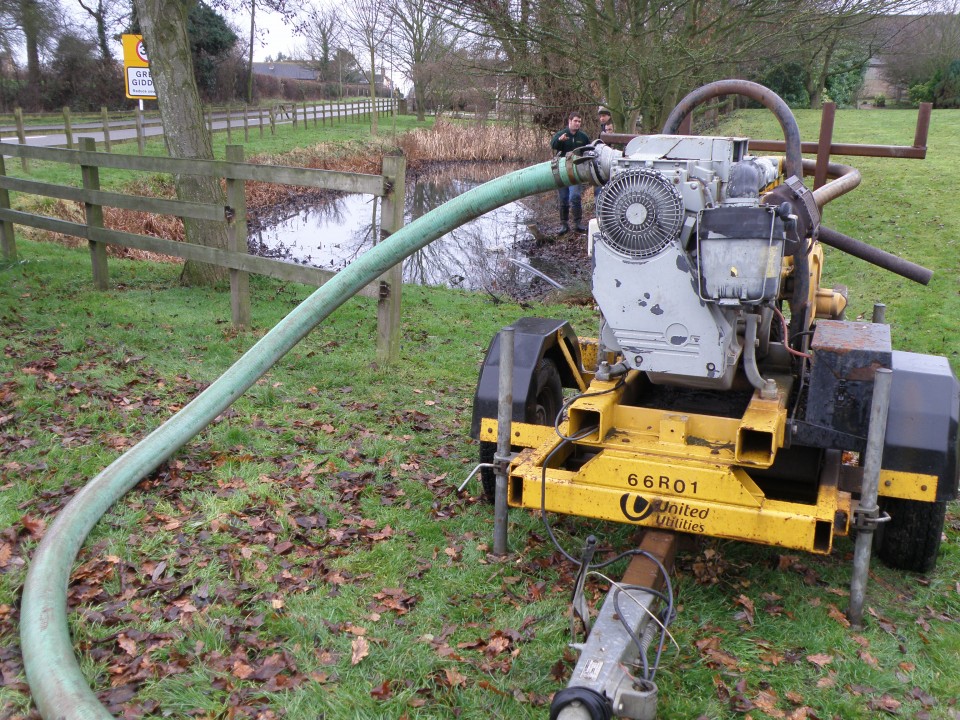
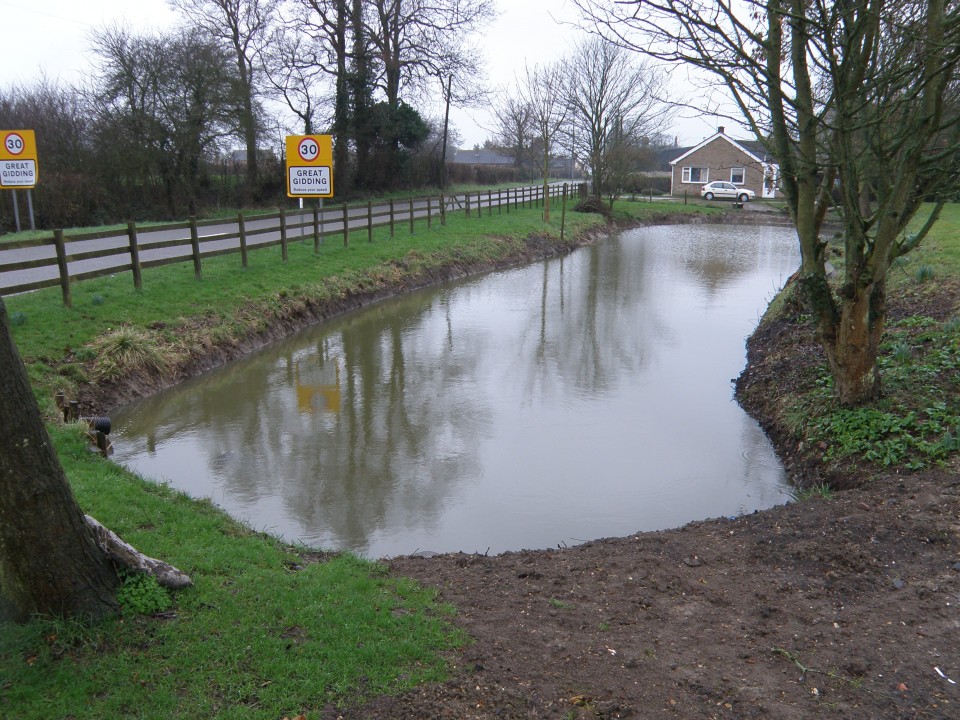
Recent flooding events around Great Gidding

Rainfall problems around the village


The weather in 2012 will probably be recorded  as a record rainfall year and low sunshine levels. In reality since the last week of March its been nothing short of  “bloody miserable”  Everyone has felt the impact, events have been cancelled, harvest’s  ruined, autumn seeding at a standstill and still the weather will not relent. November rainfall has been heavy, that in its self is not unusual, the problem has been rain on already saturated ground and this past seven days has been a good example

Two weather events in the 4th week of November caused local difficulties within the Parish but probably much greater problems further afield

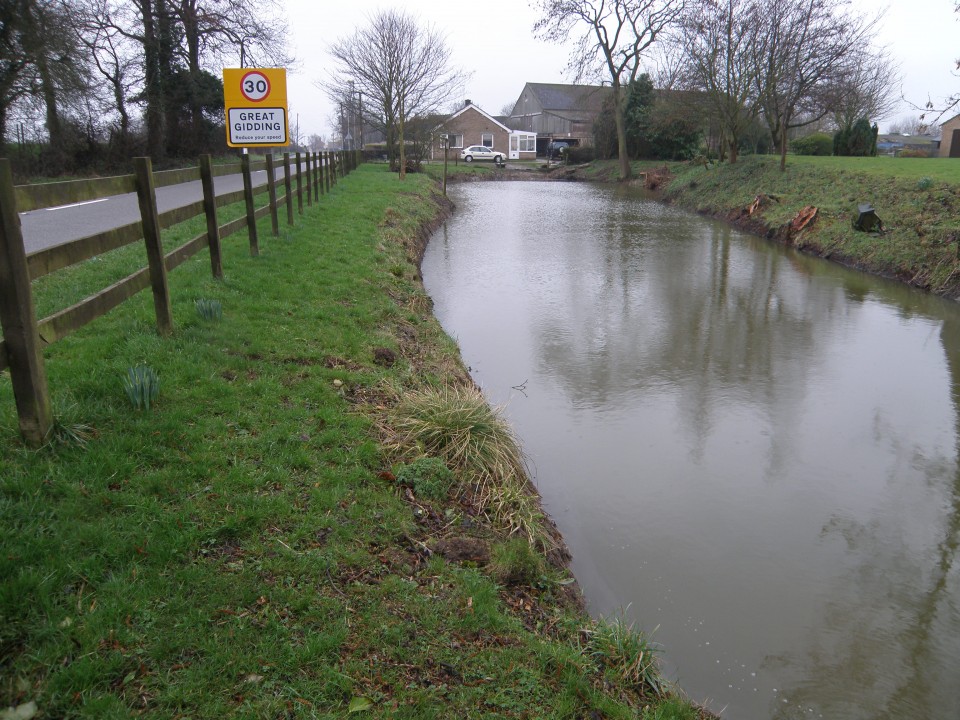
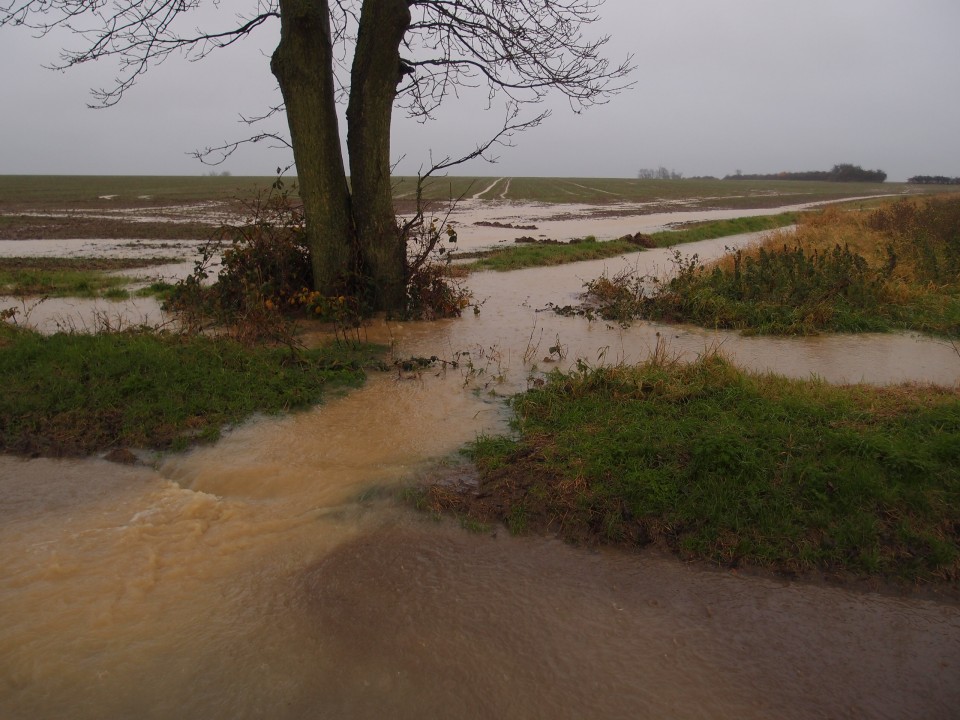
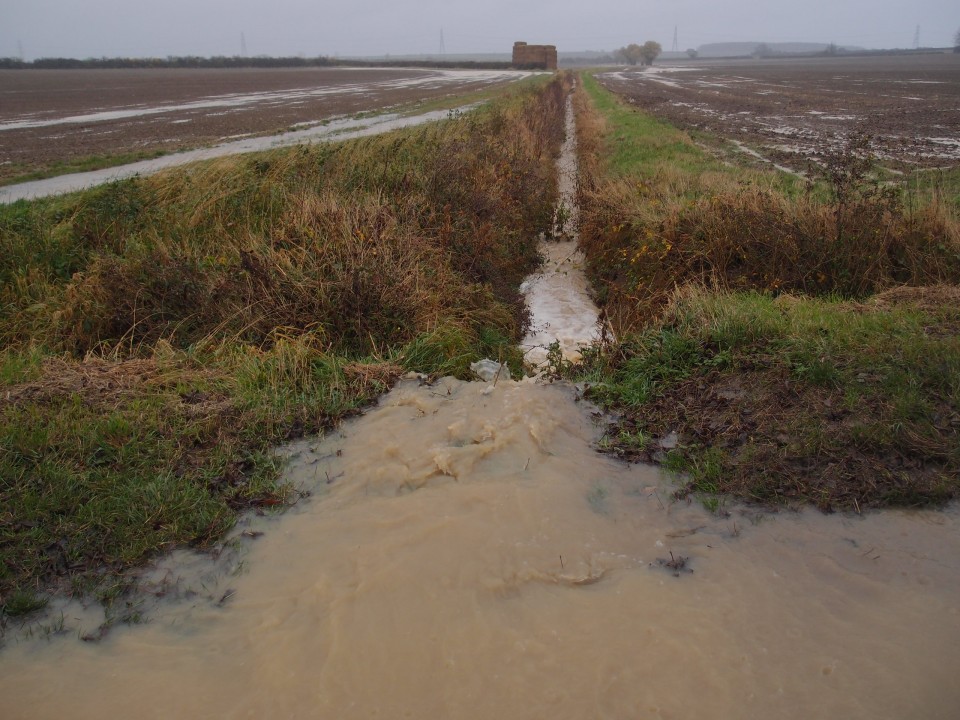
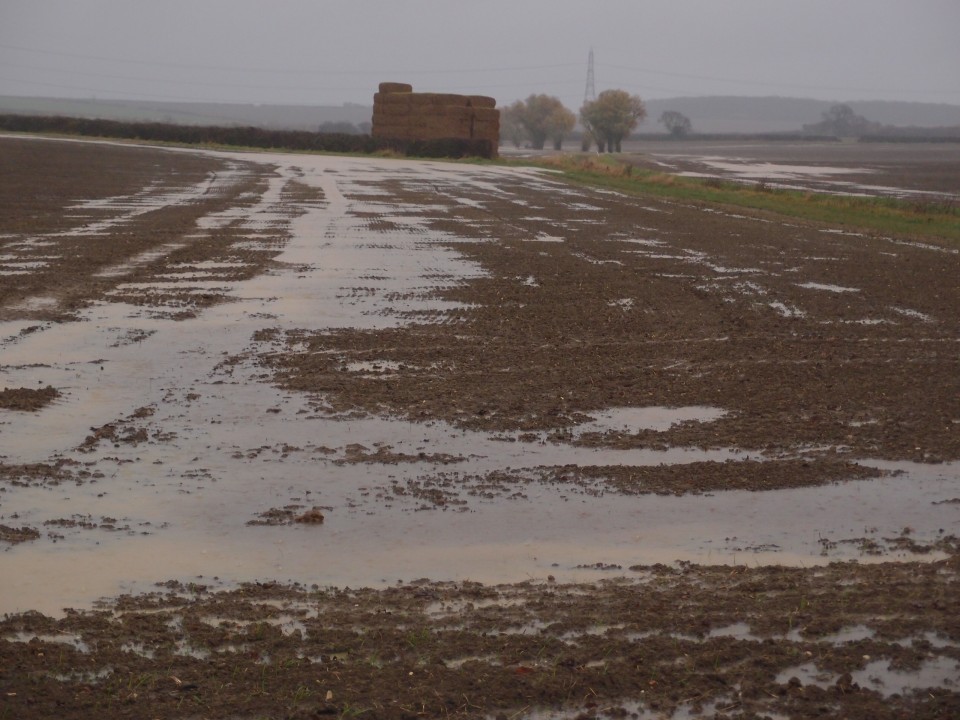
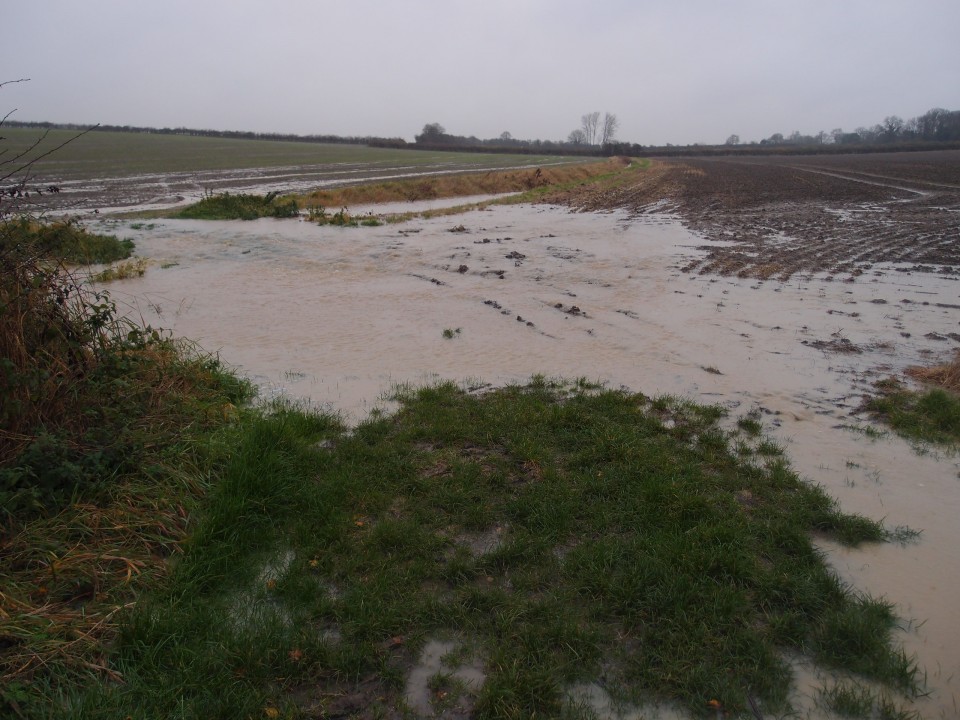
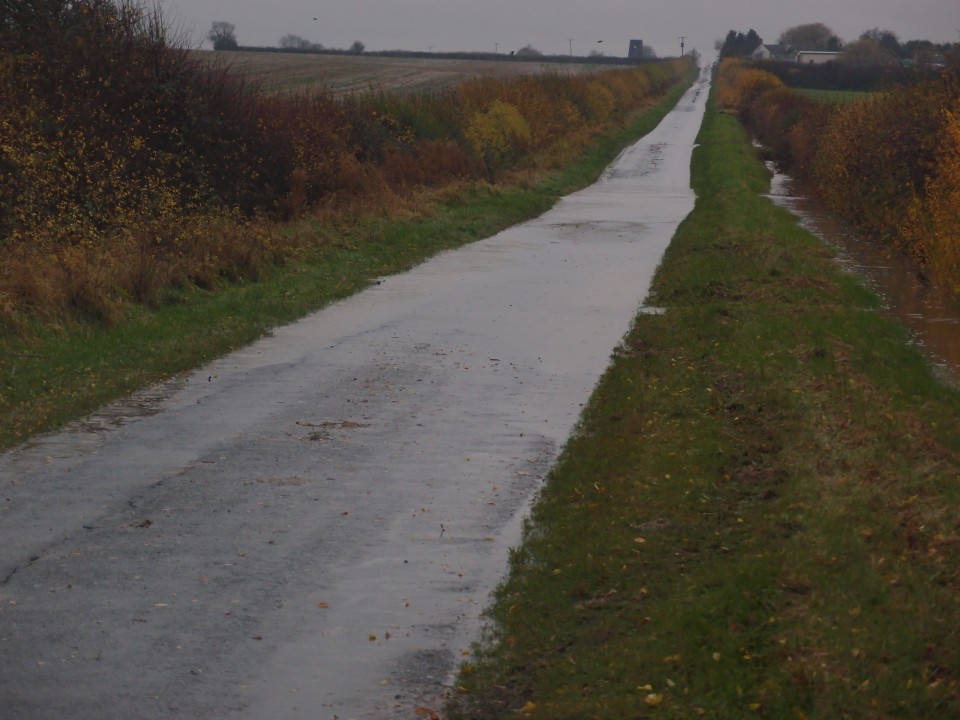
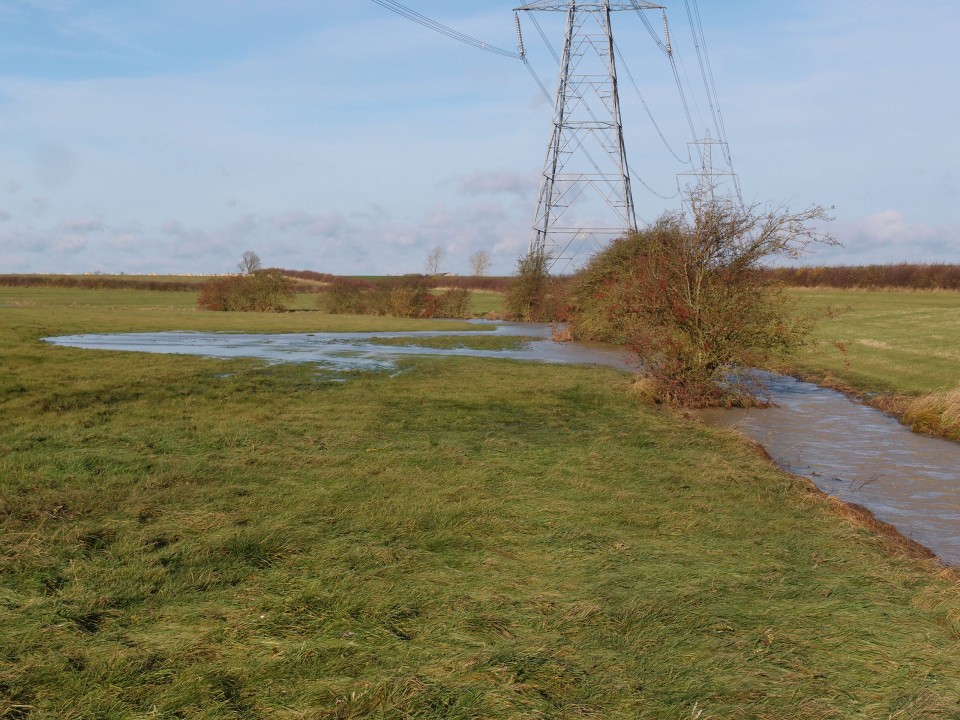
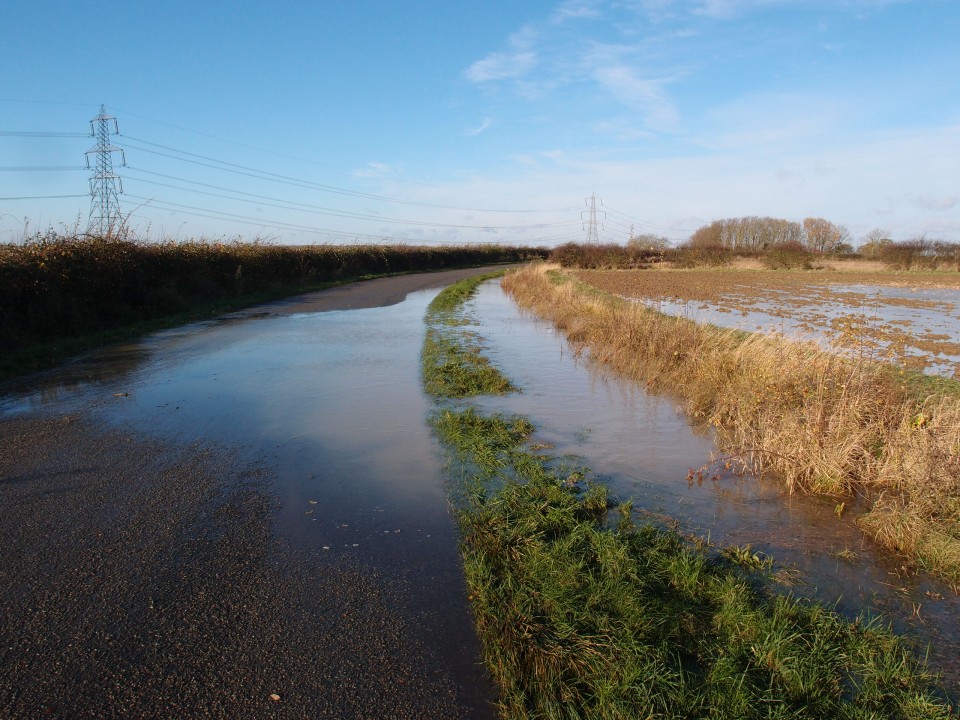
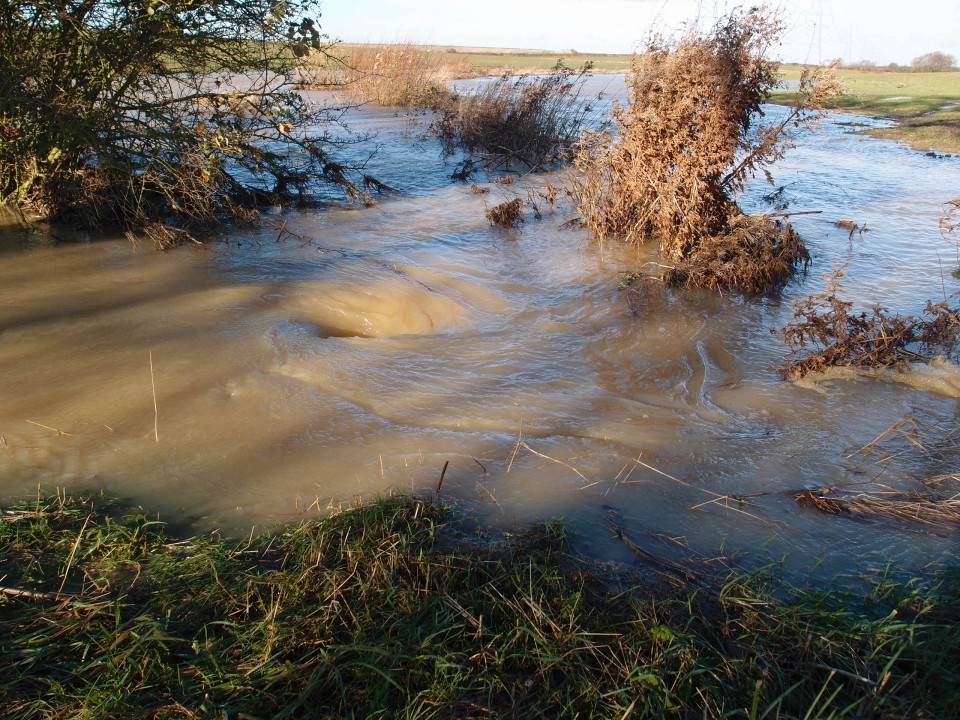
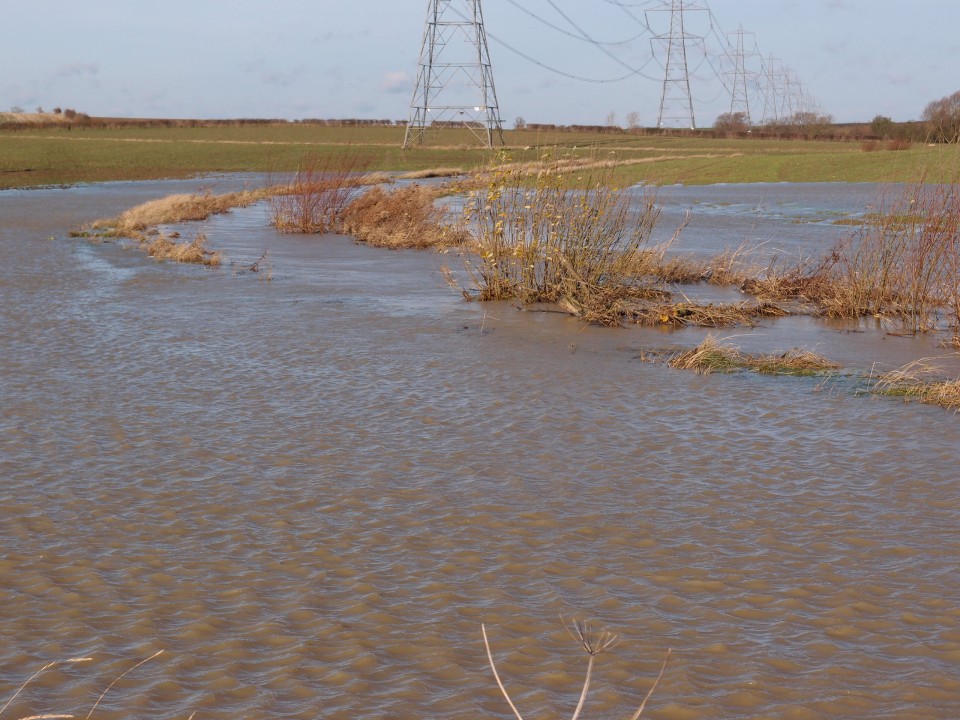
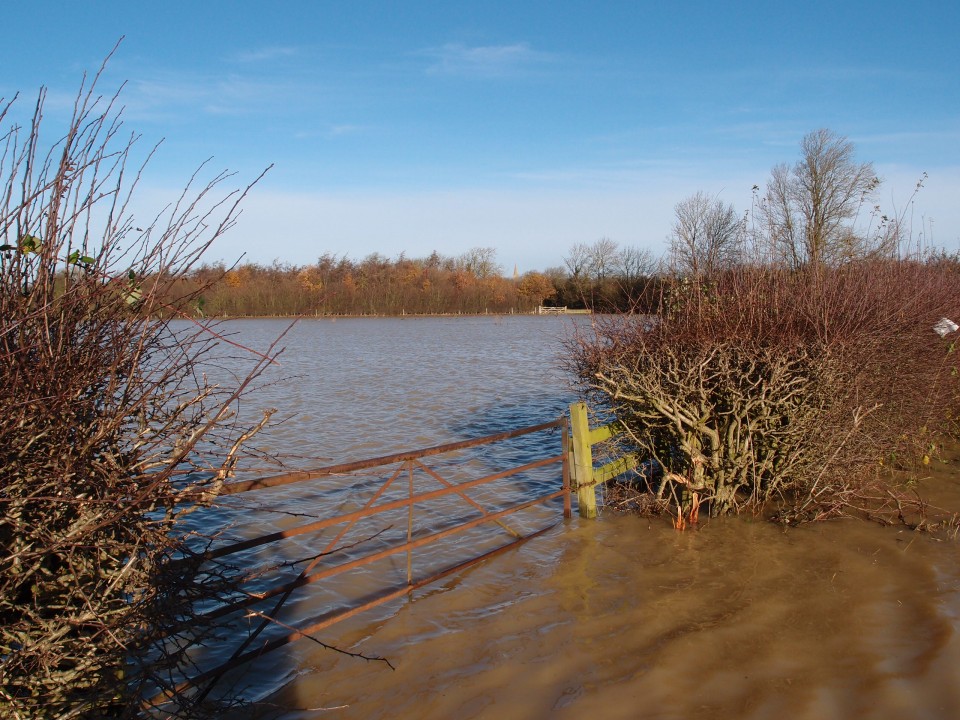
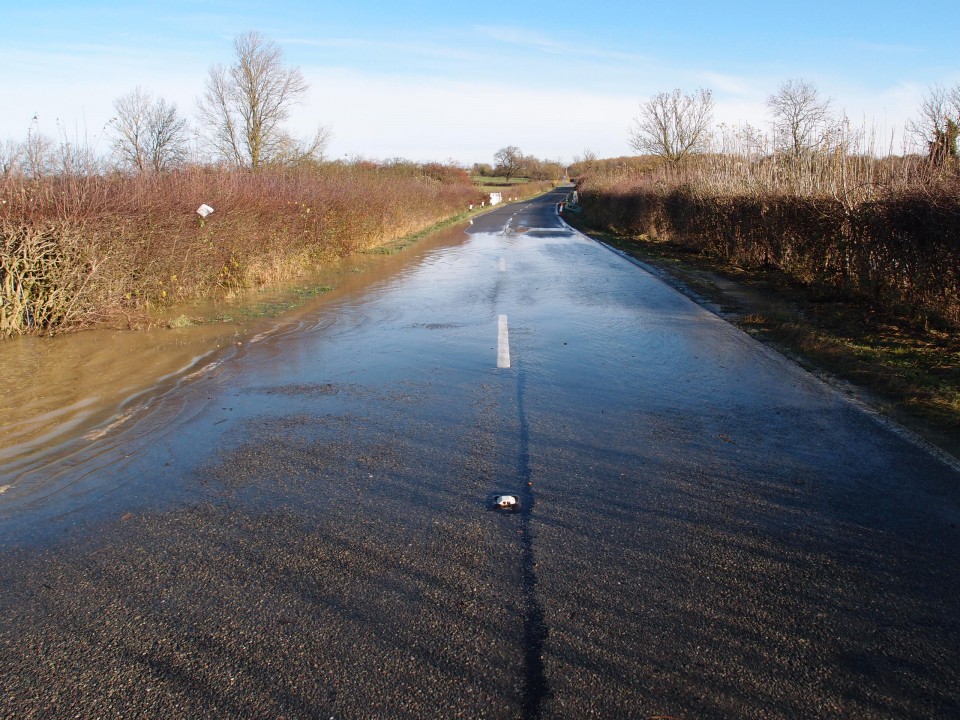
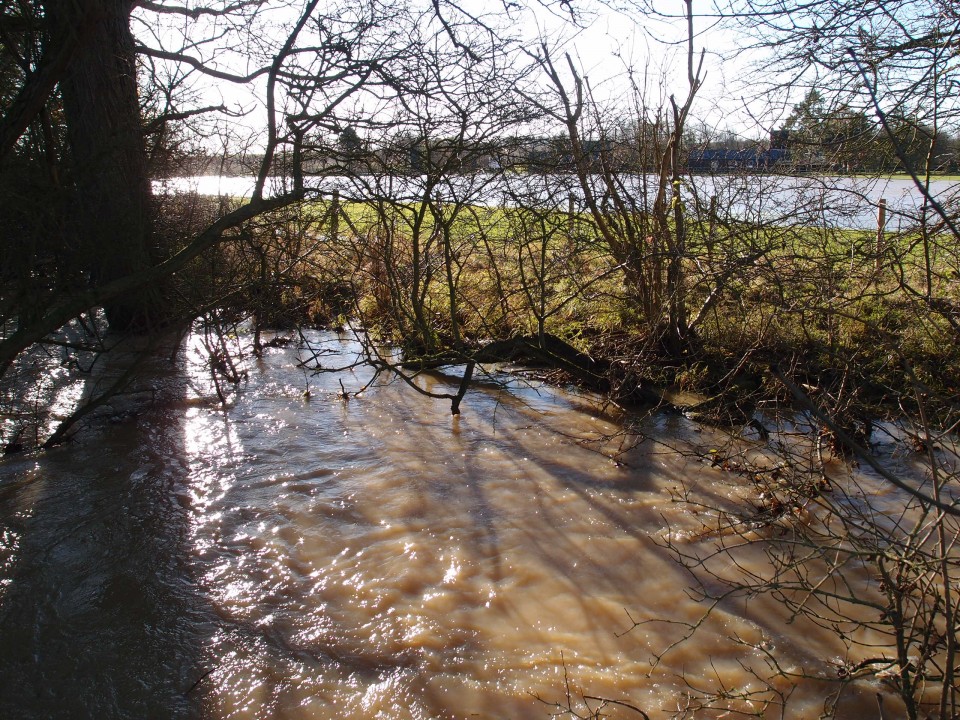
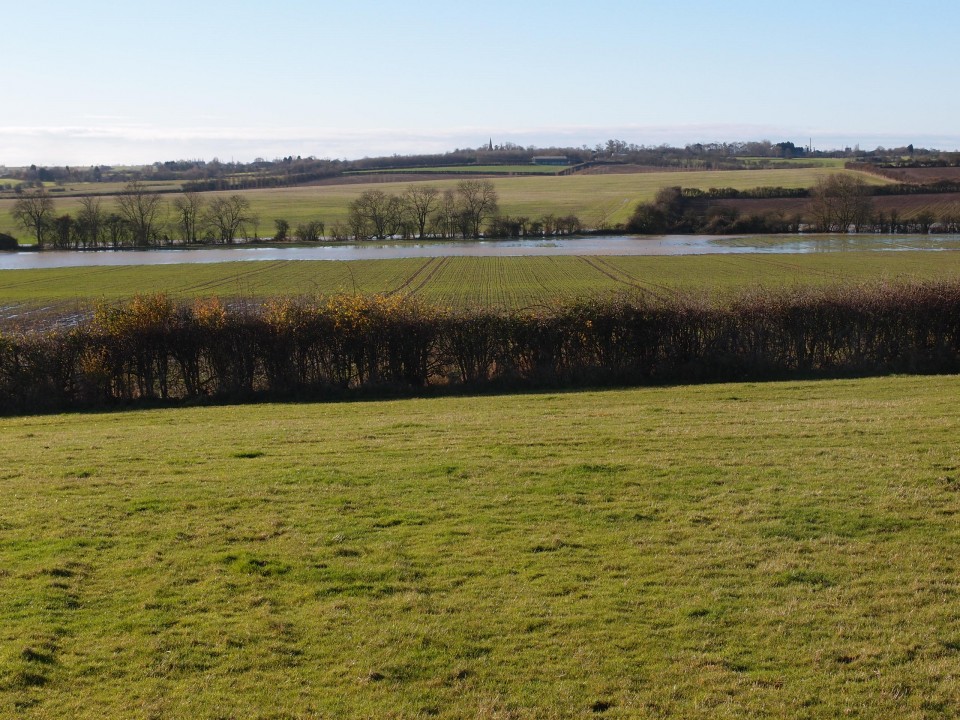
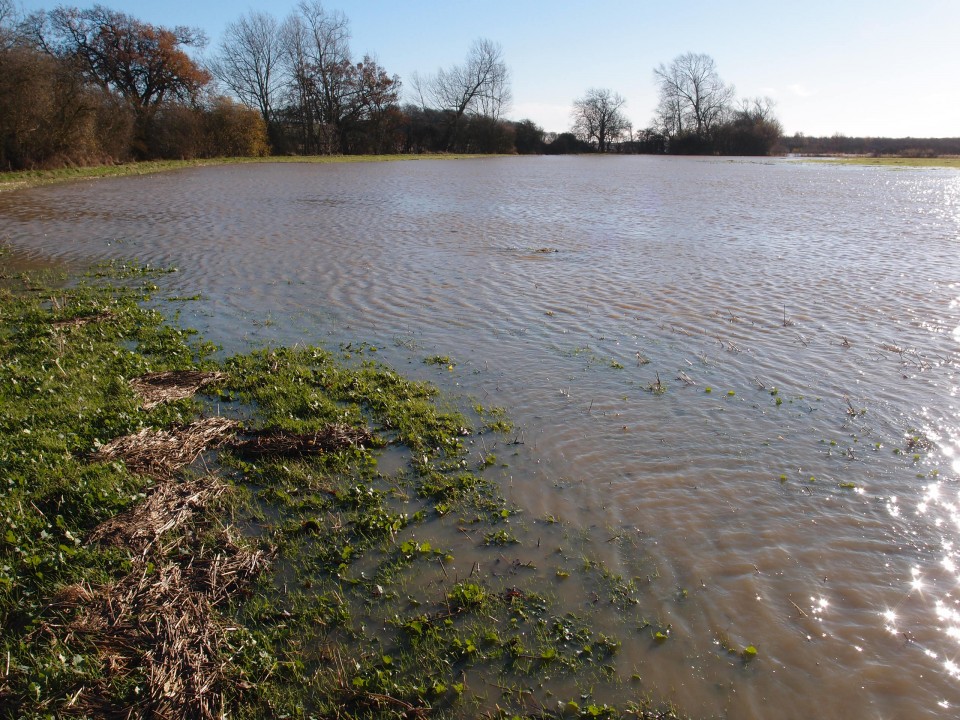
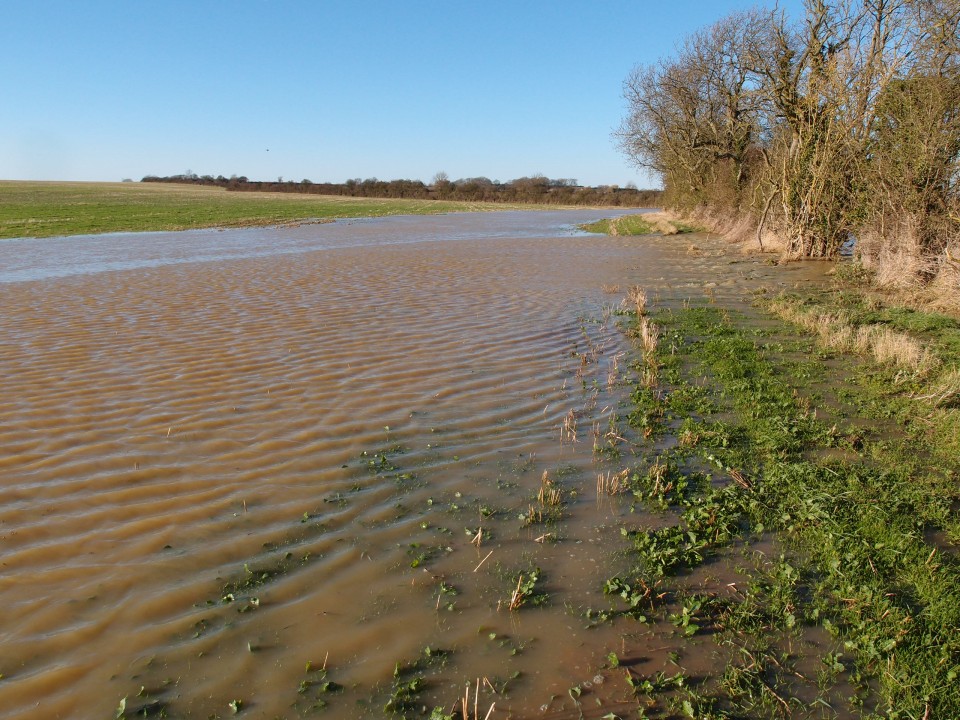
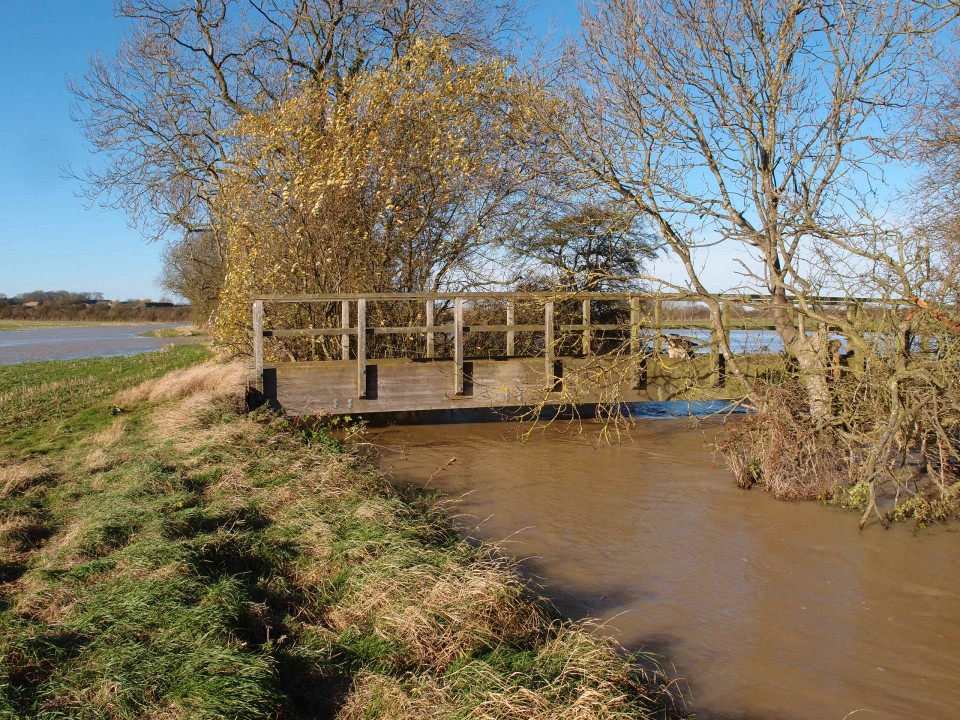
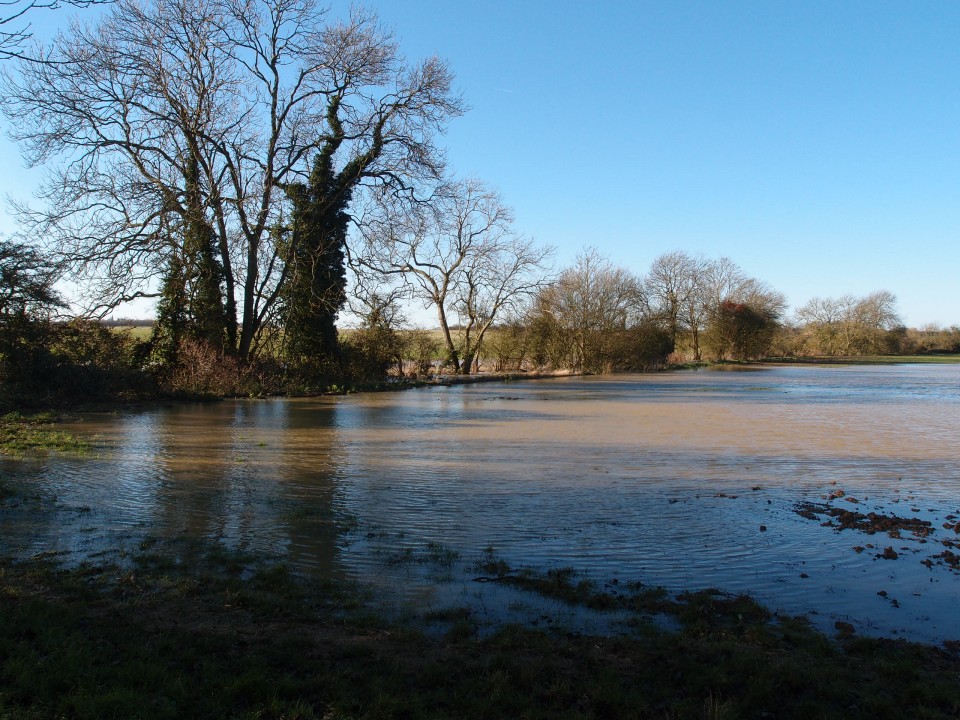
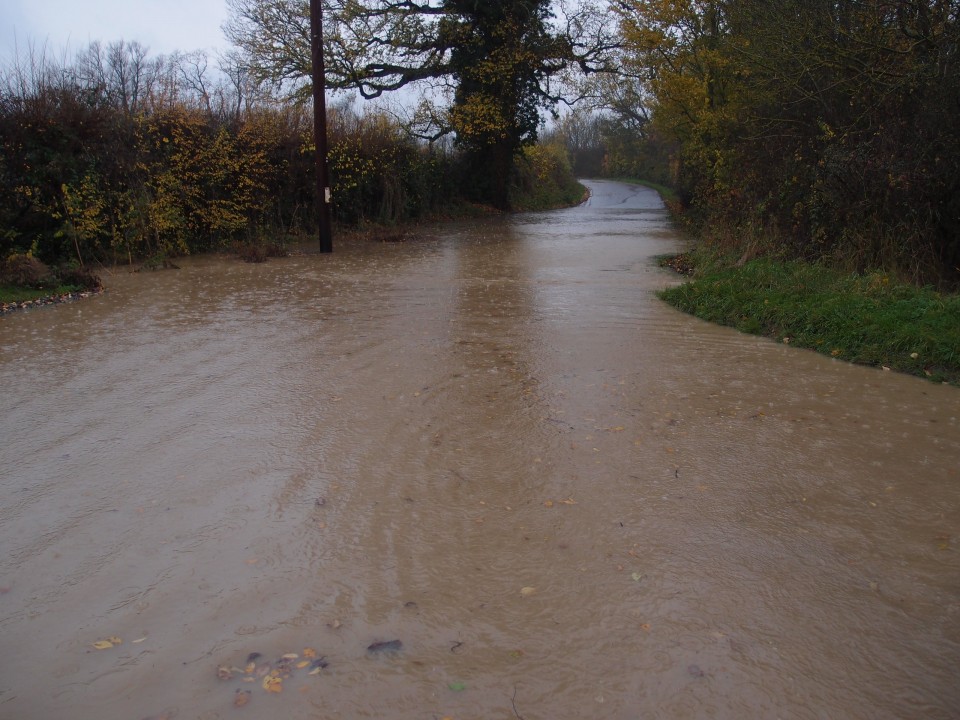
The ground is at field capacity in terms of water, the ditches are flowing, the field drains are running hard. The local brooks are running well. On Wednesday the 21st,  25mm of rain fell quickly the resulting flash  floods in and around the Parish of Great Gidding are seen below.

On Saturday 24th  in the afternnon more rain set in and lasted well into Sunday morning and although steadier just added to the flooding problems around the Parish.


Most of the houses escaped any flooding issues, most damage was caused to farmland and growing crops althought the impact of this wont be seen until the spring.

There are some interesting links that  will help you monitor flooding situations locally the first being two links to the flood level monitoring stations on the Alconbury Brook at Hamerton and Alconbury Weston

For Environment Agency Flood Warnings

Penguins win at Beer and Skittles

Penguins win at Beer and Skittles

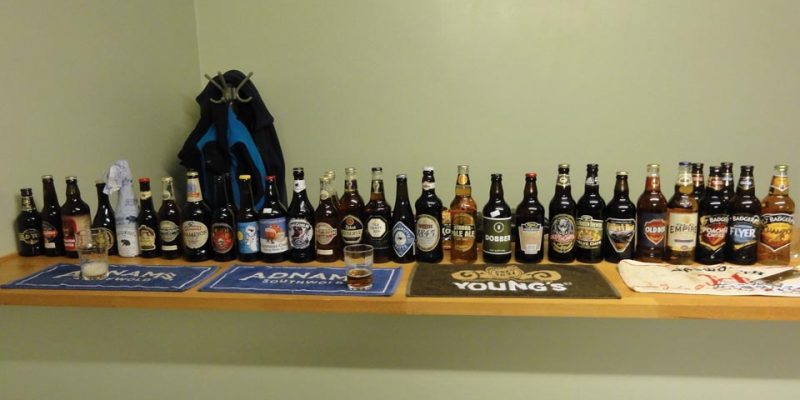
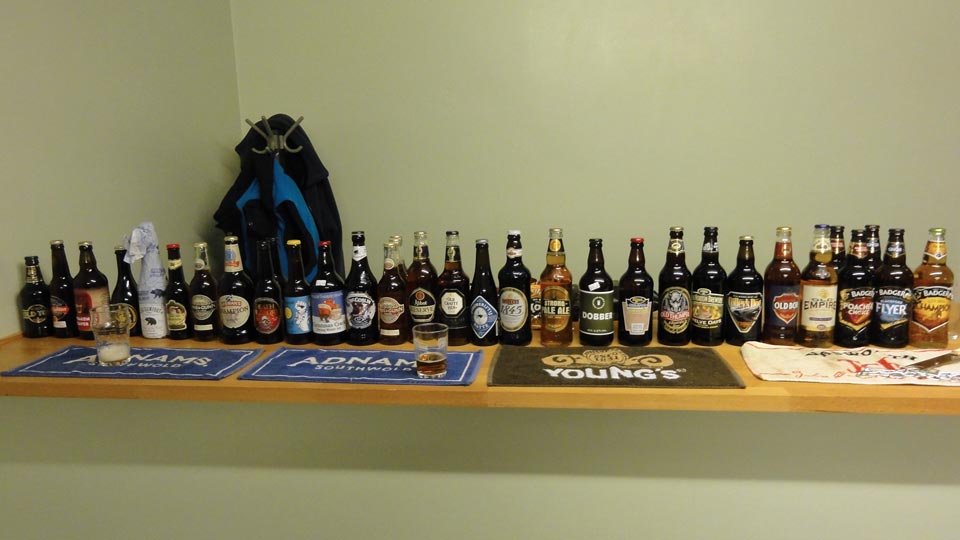
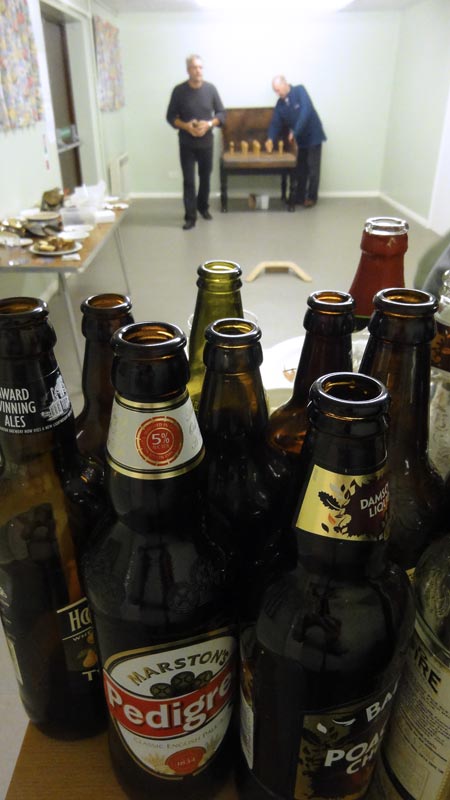
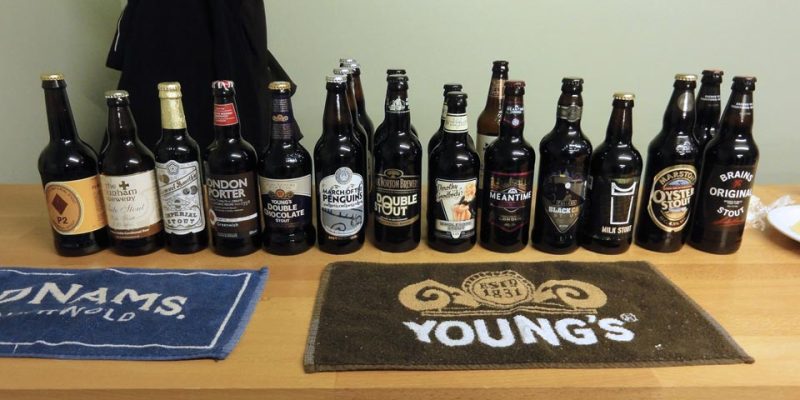
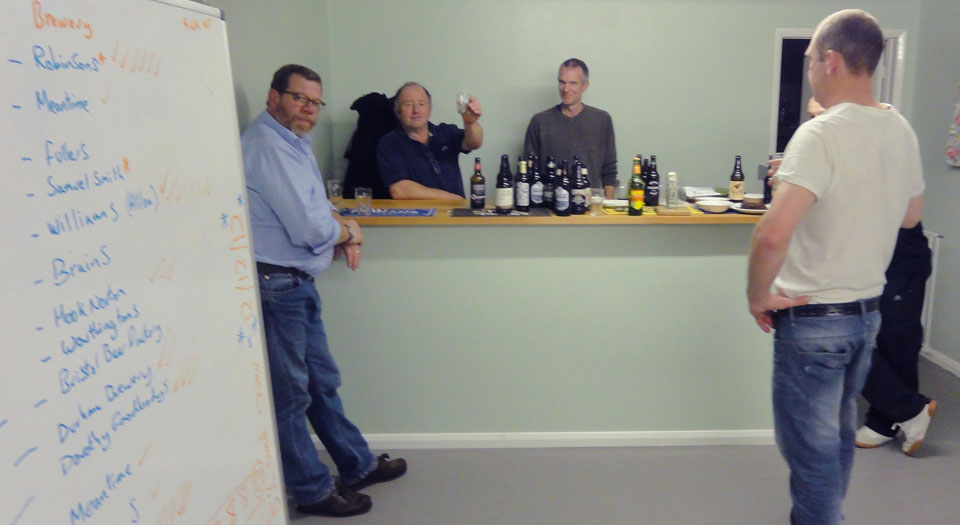
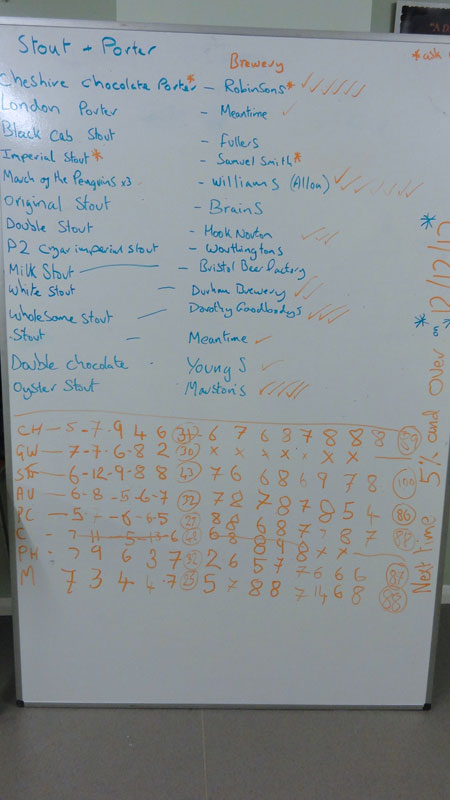
The theme that Michael Trolove had organised for the 14th November was Stouts and Porters and as the bottles arrived it soon became clear that this was going to be a ‘hardcore’ evening. 13 different brews were on offer (plus a couple of already emptied bottles – no names) including some more obscure (read expensive) stouts, one kindly supplied by Andrew Underwood and one by Michael.

Strong beers, weak skittles

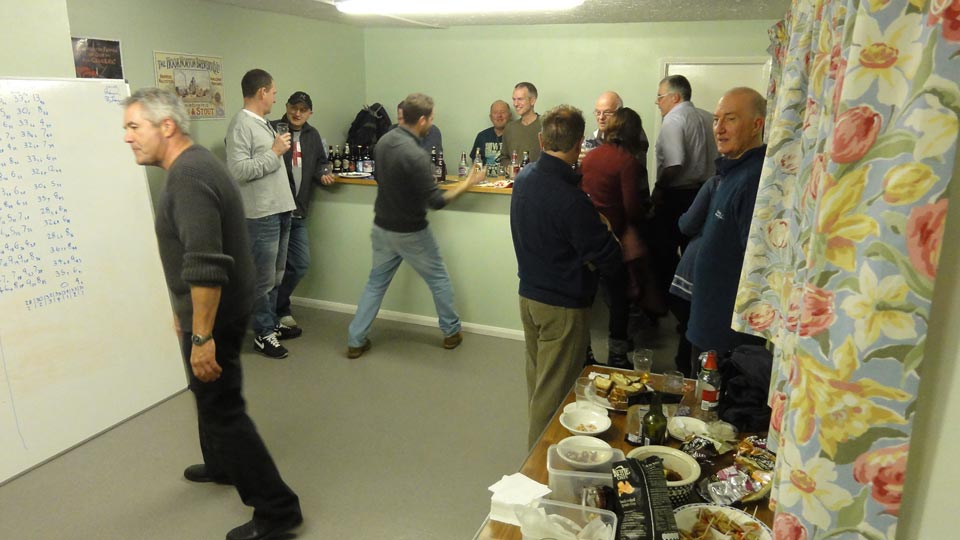
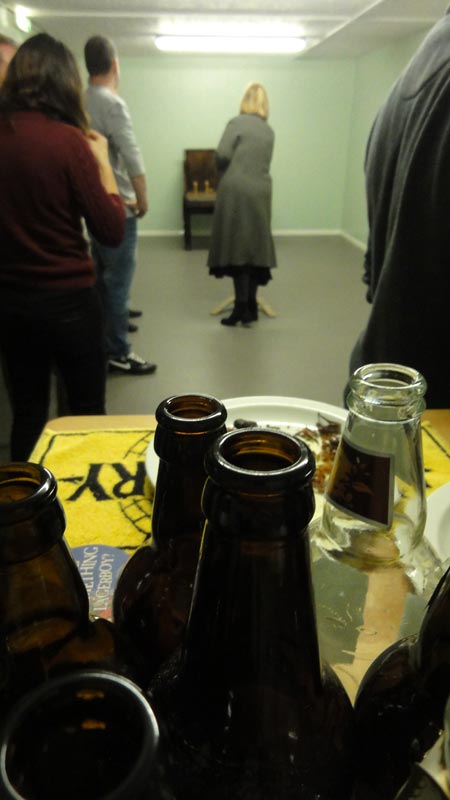
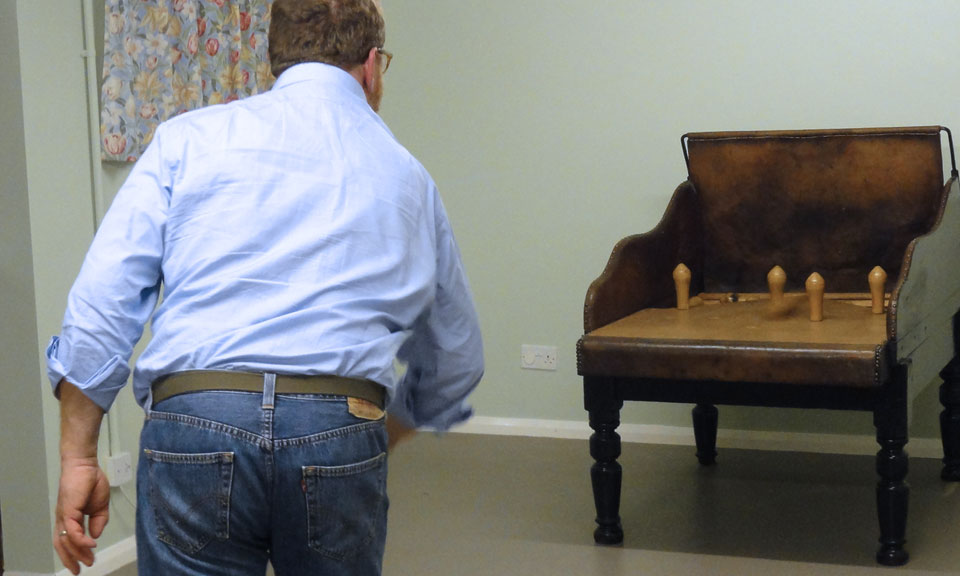
As the skittles got under way the beers were cracked open in strength order and each was carefully tasted and savoured. As the night drew on the beers got stronger, the skittles got weaker – eventually won by the person that could hold his beer the best!

For the record: Steve Garner won the skittles (and the trophy) and ‘March of the Penguins’ by Williams Bros. Brewing Co won the taste contest (a 5% creamy dark stout, deep chocolate in colour has a nose of roast malts, coffee, licourice & orange peel).

Cake and cheese

Special thanks to Julie Trolove for baking a beautifully rich fruit cake to accompany the beers and also to Andrew for supplying a tasty Lincolnshire Poacher cheese. And to Michael, as always, for organising the event.

Why is the road closed ?

Why is the road closed ?

For Cable Laying

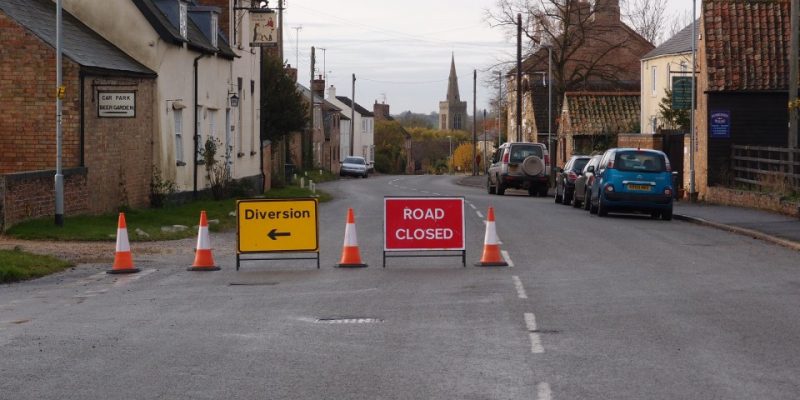
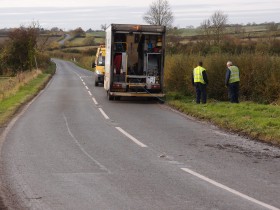
The main road (B660) has been temporarily closed so that BT engineers can work safely by the roadside at the long blind bend near the Recreation Field and the blind hump near Oak Tree Corner. This closure is for daylight working hours only and full access to properties and emergency vehicles is still possible.


Cable Laying

Remembrance: why poppies?

Remembrance: why poppies?

The poppy has a long association with Remembrance Day. But how did the distinctive red flower become such a potent symbol of our remembrance of the sacrifices made in past wars?

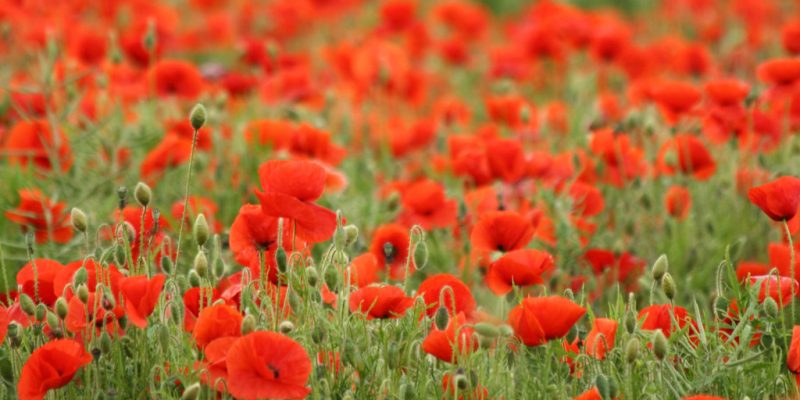
Scarlet corn poppies (popaver rhoeas) grow naturally in conditions of disturbed earth throughout Western Europe. The destruction brought by the Napoleonic wars of the early 19th Century transformed bare land into fields of blood red poppies, growing around the bodies of the fallen soldiers.

A lasting memorial symbol

In late 1914, the fields of Northern France and Flanders were once again ripped open as World War One raged through Europe’s heart. Once the conflict was over the poppy was one of the only plants to grow on the otherwise barren battlefields.

The significance of the poppy as a lasting memorial symbol to the fallen was realised by the Canadian surgeon John McCrae in his poem ‘In Flanders Fields’. The poppy came to represent the immeasurable sacrifice made by his comrades and quickly became a lasting memorial to those who died in the First World War and later conflicts.

In Flanders Fields
By Lieutenant Colonel John McCrae, MD (1872-1918)
Canadian Army

In Flanders Fields the poppies blow
Between the crosses row on row,
That mark our place; and in the sky
The larks, still bravely singing, fly
Scarce heard amid the guns below.

We are the Dead. Short days ago
We lived, felt dawn, saw sunset glow,
Loved and were loved, and now we lie
In Flanders fields.

Take up our quarrel with the foe:
To you from failing hands we throw
The torch; be yours to hold it high.
If ye break faith with us who die
We shall not sleep, though poppies grow
In Flanders fields.

McCrae’s “In Flanders Fields” remains to this day one of the most memorable war poems ever written. It is a lasting legacy of the terrible battle in the Ypres salient in the spring of 1915. Here is the story of the making of that poem:

Unimaginable hell

Although he had been a doctor for years and had served in the South African War, it was impossible to get used to the suffering, the screams, and the blood here, and Major John McCrae had seen and heard enough in his dressing station to last him a lifetime.

As a surgeon attached to the 1st Field Artillery Brigade, Major McCrae, who had joined the McGill faculty in 1900 after graduating from the University of Toronto, had spent seventeen days treating injured men — Canadians, British, Indians, French, and Germans — in the Ypres salient.

It had been an ordeal that he had hardly thought possible. McCrae later wrote of it:

“I wish I could embody on paper some of the varied sensations of that seventeen days… Seventeen days of Hades! At the end of the first day if anyone had told us we had to spend seventeen days there, we would have folded our hands and said it could not have been done.”

Outpouring of anguish

One death particularly affected McCrae. A young friend and former student, Lieut. Alexis Helmer of Ottawa, had been killed by a shell burst on 2 May 1915. Lieutenant Helmer was buried later that day in the little cemetery outside McCrae’s dressing station, and McCrae had performed the funeral ceremony in the absence of the chaplain.

The next day, sitting on the back of an ambulance parked near the dressing station beside the Canal de l’Yser, just a few hundred yards north of Ypres, McCrae vented his anguish by composing a poem. The major was no stranger to writing, having authored several medical texts besides dabbling in poetry.

In the nearby cemetery, McCrae could see the wild poppies that sprang up in the ditches in that part of Europe, and he spent twenty minutes of precious rest time scribbling fifteen lines of verse in a notebook.

A young soldier watched him write it. Cyril Allinson, a twenty-two year old sergeant-major, was delivering mail that day when he spotted McCrae. The major looked up as Allinson approached, then went on writing while the sergeant-major stood there quietly. “His face was very tired but calm as we wrote,” Allinson recalled. “He looked around from time to time, his eyes straying to Helmer’s grave.”

When McCrae finished five minutes later, he took his mail from Allinson and, without saying a word, handed his pad to the young NCO. Allinson was moved by what he read:

“The poem was exactly an exact description of the scene in front of us both. He used the word blow in that line because the poppies actually were being blown that morning by a gentle east wind. It never occurred to me at that time that it would ever be published. It seemed to me just an exact description of the scene.”

A chance publication

In fact, it was very nearly not published. Dissatisfied with it, McCrae tossed the poem away, but a fellow officer retrieved it and sent it to newspapers in England. The Spectator, in London, rejected it, but Punch published it on 8 December 1915.

Three years later on 9th November 1918, two days before the Armistice was declared at 11 o’clock on 11thNovember, a lady called Moina Belle Michael was on duty at the YMCA Overseas War Secretaries’ headquarters in New York. She was working in a reading room, a place where U.S. servicemen would often gather with friends and family to say their goodbyes before they went on overseas service.

During the morning as a young soldier passed by Moina’s desk he left a copy of the latest November edition of the “Ladies Home Journal” on the desk. Later in the morning, Moina found a few moments to   herself and browsed through the magazine. In it she came across a page which   carried a vivid colour illustration with the poem entitled “We Shall Not Sleep”. (This was an alternative name sometimes used for John McCrae’s poem, which was also called “In Flanders Fields”.)

Moina had come across the poem before, but reading it on this occasion she found herself transfixed by the last verse:

Take up our quarrel with the foe:
To you from failing hands we throw
The torch; be yours to hold it high.
If ye break faith with us who die
We shall not sleep, though poppies grow
In Flanders fields.

A personal pledge

In her autobiography, entitled The Miracle Flower, Moina describes this experience as deeply spiritual. She felt as though she was actually being called in person by the voices which had been silenced by death. At that moment Moina made a personal pledge to “keep the faith”. She vowed always to wear a red poppy of Flanders Fields as a sign of remembrance. It would become an emblem for “keeping the faith with all who died”.

Compelled to make a note of this pledge she scribbled down a response on the back of a used envelope. She titled her poem “We Shall Keep the Faith”. The first verse read like this:

Oh! you who sleep in Flanders Fields,
Sleep sweet – to rise anew!
We caught the torch you threw
And holding high, we keep the Faith
With All who died.

Three men attending  a conference in the  building then arrived at Moina’s desk. On behalf of the delegates they asked her to accept a cheque for ten dollars, in appreciation of the effort she had made to brighten up the place with flowers at her own expense.

She was touched by the gesture and replied that she would buy 25 red poppies with the money.

After searching the shops for some time that day Moina found one large and twenty-four small artificial red silk poppies in Wanamaker’s department store. When she returned to duty at the YMCA Headquarters later that evening the delegates from the Conference crowded round her asking for poppies to wear. Keeping one poppy for her coat collar she gave out the rest of the poppies to the enthusiastic delegates.

Churchwarden John DeVal gave this address at the Remembrance Day service, 11th November 2012.

How’s the Giddings website performing?

How's the Giddings website performing?

In March 2012 the Giddings website was given a complete overhaul and brought into the 21st century with new technology that allows anyone in the village to update the site (with a little training and a password).
Google Analytics

Part of the update included the installation of Google Analytics coding on every page of the site. So how’s the website performing?

In the past 7 months (since the new look website was launched) the site has had almost 3,500 visitors with nearly 14,000 page views. The average duration of a visit is 3 minutes 55 seconds (average would be under 2 minuites) and the ‘bounce rate’ (the number of visitors that come to the site and immediately go away without clicking through to another page) is 41% – an average would be 50% – 60%. Pretty good stats for a village website.

Why not become an editor?

To keep the website performing well it needs plenty of new content added on a regular basis. If anyone would like to become an editor for the website or would like to set up their own village-related section (we have a section on the environment and newts for example) then please contact Paul or Krystyna and we’ll be happy to give you a short training session and set up a page/section for you.

Not just oldies!

In particular are there any younger members of the village who would like to contribute? We can set up your very own section and help you get started with your very own blog (village-related in some way!). Once again, contact Paul or Krystyna and we’ll be happy to give you a short training session and get you started.

So keep checking the website for news and event updates, and keep spreading the word.

Show your local playground some love!

Fields in Trust are giving you the chance to show how much you value your favourite outdoor recreational space, playground or park with Love Your Field. If it’s somewhere you enjoy spending time with family and friends then why not help it be a winner?

LOve Your Field logo
The Queen Elizabeth II Field which has the most people showing it some love, will win the ‘Most Loved Field’ award in the first year of the Fields in Trust Awards.

Find your favourite local site by putting your postcode into www.qe2fields.com and then clicking on the Love Your Field icon.

And if you want it to win, spread the word! #loveyourfield on twitter

Great Gidding welcomes guests from Denmark for Laura and Mads beautiful wedding

On a gloriously hot and sunny day, the wedding took place in St Michael’s Church on Saturday 18th August of Laura Burgess to Mads Jørgensen.

Photo: Charles Gervais cg-bh@bothhemispheres.com

Laura is currently the Rector of St Botolph without Aldgate in London, whilst Mads is a freelance Media Producer.

The service was conducted by the Reverend Lucy Winkett, a friend and colleague of Laura’s during her five year post at St Paul’s Cathedral.

Music played an important part in the service. The organist was James O’ Donnell (Master of the Music, Westminster Abbey), and the small group of singers were directed by Andrew Carwood (Director of Music, St Paul’s Cathedral).

As the bridegroom hails from Denmark, before the service began the congregation were taught a Danish hymn which was sung during the Signing of the Registers. During the course of the service, anthems by Britten, Walton and Purcell were sung. The bible readings were read by Claire Burnill-Maier and Jørgen Jensen: whilst the prayers were led by Reverend Erik Berggren, Reverend Margarithe Veen and Reverend Suzanne Webb.

As the happy couple left the church, they were greeted by the sound of the bells, a fitting climax to a wonderful and joyous occasion.