Why is the road closed ?

Why is the road closed ?

For Cable Laying

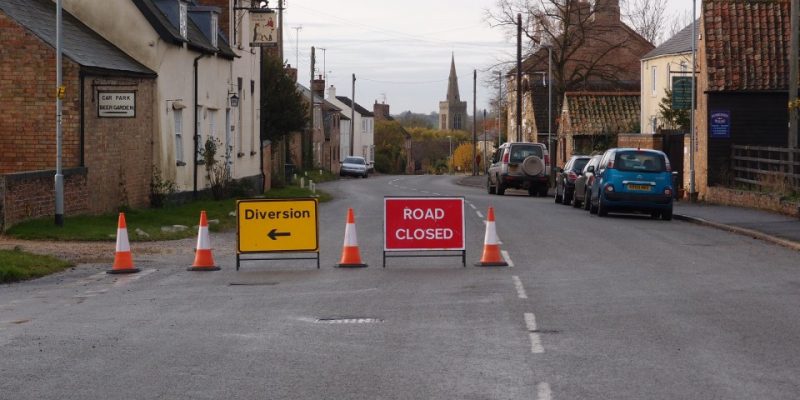
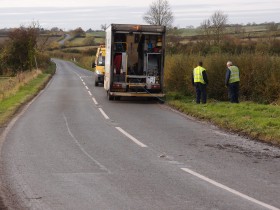
The main road (B660) has been temporarily closed so that BT engineers can work safely by the roadside at the long blind bend near the Recreation Field and the blind hump near Oak Tree Corner. This closure is for daylight working hours only and full access to properties and emergency vehicles is still possible.


Cable Laying

Remembrance: why poppies?

Remembrance: why poppies?

The poppy has a long association with Remembrance Day. But how did the distinctive red flower become such a potent symbol of our remembrance of the sacrifices made in past wars?

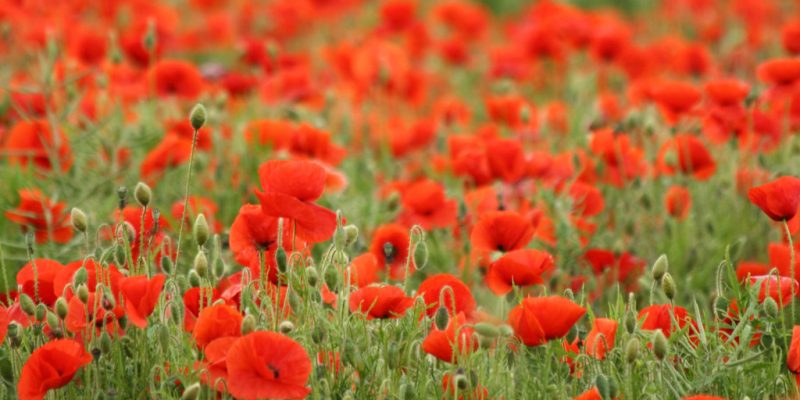
Scarlet corn poppies (popaver rhoeas) grow naturally in conditions of disturbed earth throughout Western Europe. The destruction brought by the Napoleonic wars of the early 19th Century transformed bare land into fields of blood red poppies, growing around the bodies of the fallen soldiers.

A lasting memorial symbol

In late 1914, the fields of Northern France and Flanders were once again ripped open as World War One raged through Europe’s heart. Once the conflict was over the poppy was one of the only plants to grow on the otherwise barren battlefields.

The significance of the poppy as a lasting memorial symbol to the fallen was realised by the Canadian surgeon John McCrae in his poem ‘In Flanders Fields’. The poppy came to represent the immeasurable sacrifice made by his comrades and quickly became a lasting memorial to those who died in the First World War and later conflicts.

In Flanders Fields
By Lieutenant Colonel John McCrae, MD (1872-1918)
Canadian Army

In Flanders Fields the poppies blow
Between the crosses row on row,
That mark our place; and in the sky
The larks, still bravely singing, fly
Scarce heard amid the guns below.

We are the Dead. Short days ago
We lived, felt dawn, saw sunset glow,
Loved and were loved, and now we lie
In Flanders fields.

Take up our quarrel with the foe:
To you from failing hands we throw
The torch; be yours to hold it high.
If ye break faith with us who die
We shall not sleep, though poppies grow
In Flanders fields.

McCrae’s “In Flanders Fields” remains to this day one of the most memorable war poems ever written. It is a lasting legacy of the terrible battle in the Ypres salient in the spring of 1915. Here is the story of the making of that poem:

Unimaginable hell

Although he had been a doctor for years and had served in the South African War, it was impossible to get used to the suffering, the screams, and the blood here, and Major John McCrae had seen and heard enough in his dressing station to last him a lifetime.

As a surgeon attached to the 1st Field Artillery Brigade, Major McCrae, who had joined the McGill faculty in 1900 after graduating from the University of Toronto, had spent seventeen days treating injured men — Canadians, British, Indians, French, and Germans — in the Ypres salient.

It had been an ordeal that he had hardly thought possible. McCrae later wrote of it:

“I wish I could embody on paper some of the varied sensations of that seventeen days… Seventeen days of Hades! At the end of the first day if anyone had told us we had to spend seventeen days there, we would have folded our hands and said it could not have been done.”

Outpouring of anguish

One death particularly affected McCrae. A young friend and former student, Lieut. Alexis Helmer of Ottawa, had been killed by a shell burst on 2 May 1915. Lieutenant Helmer was buried later that day in the little cemetery outside McCrae’s dressing station, and McCrae had performed the funeral ceremony in the absence of the chaplain.

The next day, sitting on the back of an ambulance parked near the dressing station beside the Canal de l’Yser, just a few hundred yards north of Ypres, McCrae vented his anguish by composing a poem. The major was no stranger to writing, having authored several medical texts besides dabbling in poetry.

In the nearby cemetery, McCrae could see the wild poppies that sprang up in the ditches in that part of Europe, and he spent twenty minutes of precious rest time scribbling fifteen lines of verse in a notebook.

A young soldier watched him write it. Cyril Allinson, a twenty-two year old sergeant-major, was delivering mail that day when he spotted McCrae. The major looked up as Allinson approached, then went on writing while the sergeant-major stood there quietly. “His face was very tired but calm as we wrote,” Allinson recalled. “He looked around from time to time, his eyes straying to Helmer’s grave.”

When McCrae finished five minutes later, he took his mail from Allinson and, without saying a word, handed his pad to the young NCO. Allinson was moved by what he read:

“The poem was exactly an exact description of the scene in front of us both. He used the word blow in that line because the poppies actually were being blown that morning by a gentle east wind. It never occurred to me at that time that it would ever be published. It seemed to me just an exact description of the scene.”

A chance publication

In fact, it was very nearly not published. Dissatisfied with it, McCrae tossed the poem away, but a fellow officer retrieved it and sent it to newspapers in England. The Spectator, in London, rejected it, but Punch published it on 8 December 1915.

Three years later on 9th November 1918, two days before the Armistice was declared at 11 o’clock on 11thNovember, a lady called Moina Belle Michael was on duty at the YMCA Overseas War Secretaries’ headquarters in New York. She was working in a reading room, a place where U.S. servicemen would often gather with friends and family to say their goodbyes before they went on overseas service.

During the morning as a young soldier passed by Moina’s desk he left a copy of the latest November edition of the “Ladies Home Journal” on the desk. Later in the morning, Moina found a few moments to   herself and browsed through the magazine. In it she came across a page which   carried a vivid colour illustration with the poem entitled “We Shall Not Sleep”. (This was an alternative name sometimes used for John McCrae’s poem, which was also called “In Flanders Fields”.)

Moina had come across the poem before, but reading it on this occasion she found herself transfixed by the last verse:

Take up our quarrel with the foe:
To you from failing hands we throw
The torch; be yours to hold it high.
If ye break faith with us who die
We shall not sleep, though poppies grow
In Flanders fields.

A personal pledge

In her autobiography, entitled The Miracle Flower, Moina describes this experience as deeply spiritual. She felt as though she was actually being called in person by the voices which had been silenced by death. At that moment Moina made a personal pledge to “keep the faith”. She vowed always to wear a red poppy of Flanders Fields as a sign of remembrance. It would become an emblem for “keeping the faith with all who died”.

Compelled to make a note of this pledge she scribbled down a response on the back of a used envelope. She titled her poem “We Shall Keep the Faith”. The first verse read like this:

Oh! you who sleep in Flanders Fields,
Sleep sweet – to rise anew!
We caught the torch you threw
And holding high, we keep the Faith
With All who died.

Three men attending  a conference in the  building then arrived at Moina’s desk. On behalf of the delegates they asked her to accept a cheque for ten dollars, in appreciation of the effort she had made to brighten up the place with flowers at her own expense.

She was touched by the gesture and replied that she would buy 25 red poppies with the money.

After searching the shops for some time that day Moina found one large and twenty-four small artificial red silk poppies in Wanamaker’s department store. When she returned to duty at the YMCA Headquarters later that evening the delegates from the Conference crowded round her asking for poppies to wear. Keeping one poppy for her coat collar she gave out the rest of the poppies to the enthusiastic delegates.

Churchwarden John DeVal gave this address at the Remembrance Day service, 11th November 2012.

How’s the Giddings website performing?

How's the Giddings website performing?

In March 2012 the Giddings website was given a complete overhaul and brought into the 21st century with new technology that allows anyone in the village to update the site (with a little training and a password).

Google Analytics

Part of the update included the installation of Google Analytics coding on every page of the site. So how’s the website performing?

In the past 7 months (since the new look website was launched) the site has had almost 3,500 visitors with nearly 14,000 page views. The average duration of a visit is 3 minutes 55 seconds (average would be under 2 minuites) and the ‘bounce rate’ (the number of visitors that come to the site and immediately go away without clicking through to another page) is 41% – an average would be 50% – 60%. Pretty good stats for a village website.

Why not become an editor?

To keep the website performing well it needs plenty of new content added on a regular basis. If anyone would like to become an editor for the website or would like to set up their own village-related section (we have a section on the environment and newts for example) then please contact Paul or Krystyna and we’ll be happy to give you a short training session and set up a page/section for you.

Not just oldies!

In particular are there any younger members of the village who would like to contribute? We can set up your very own section and help you get started with your very own blog (village-related in some way!). Once again, contact Paul or Krystyna and we’ll be happy to give you a short training session and get you started.

So keep checking the website for news and event updates, and keep spreading the word.

Clarion Summer 2012

Great & Little Gidding Parish Council

Clarion – Summer 2012


Parish Council uncontested election results (2012- 2016)                                                  

Andrew Alexander (Chairman)    62 Main Street                                            293315

Robin Hayden                                  Warren House, Main Street                      293360

Paul Hodson                                     17 Chapel End                                              293782

Chris Howden                                   9 Main Street                                               293679

Rachel Giddens                                47 Main Street                                             293277

Michael Trolove                              87 Main Street                                              293591

Lydia James (co-opted)                  Manorfarm House, Main Street              07962099922

We welcome Lydia to the Parish Council and thank Henry Hill, who did not stand for re-election, for the many years of service he has given as a Parish Councillor.

Huntingdonshire District Councillors                                                                                        

Darren Tysoe                                    Grove Cottage, Ellington                     01480 388310

Dick Tuplin                                        St Andrew’s House, Sawtry                 01487 834156

Cambridgeshire County Councillor                                                                                                  

Viv McGuire                               viv.mcguire@cambridgeshire.gov.uk       01733 248788

How to Contact the Police – Emergency incident requiring immediate assistance dial  999   If it is a non-emergency dial 101. If you wish to discuss an issue or pass on information by email with your local team email HuntsCops@cambs.pnn.police.uk.   Expect a reply within 48 hours.  Senior contact for the Huntingdon/Yaxley area – Sgt Ed McNeill

Telephone Box –The kiosk in Main Street has recently been involved in a road traffic accident which damaged it beyond repair.   It transpires that the payphone has only received 10 minutes of usage during the last 12 months and BT is proposing not to replace it.   If you have any comments about this please contact the planning department at Huntingdonshire District Council by 1st October quoting 01832 293292

Recycling – You can now recycle your plastic post, tubs and trays – everything from yogurt pots and margarine tubs to shampoo and milk bottles can now be recycled as part  of your kerbside collection. Please rinse your containers out to prevent food contaminating other products. Visit www.huntingdosnhsire.gov.uk/whatgoesinwhichbin for more details. Recycling Open Day Saturday 22nd Sept AmeyCespa, Waterbeach www.ameycespa.co/east

Remember the Countryside Code – Respect Protect Enjoy – Gates should be left as you find them, dogs under effective control and paths followed, leaving no trace of your visit (take your litter home)  visit www.naturalengland.org.uk for more information.


CONNECTING CAMBRIDGESHIRE – How can you support the broadband campaign?

You can help to bring better broadband connectivity to your area by joining the campaign.   It only takes a few minutes to register and will make a big difference – visitwww.connectingcambridgeshire.co.uk

Superfast broadband is essential to helping our local economy to thrive so that everyone benefits.

You can become a digital champion to help communities and businesses to find out about the benefits of broadband services.   You don’t need to be an expert and you can choose how much support you give, if you are interested email contact@cambridgeshire.gov.uk.

Getting Better Broadband in our area

Broadband internet is becoming an essential part of our national infrastructure but for those of us who live in rural Cambridgeshire, we are still experiencing very low connection speeds.


Great & Little Gidding Parish Council recently held an open meeting for local residents on broadband and the developments that can be expected in the next two or three years.   The meeting was addressed by Ms Annette Thorpe, BT’s Regional Partnership Director and she outlined broadband proposals for the Giddings and surrounding areas.


She explained that the Government has pledged £6.75 million to help rural communities’ access broadband in Cambridgeshire and that the County council has pledged a further £20 million to the cause via its ‘Connecting Cambridgeshire’ project.   Additionally, whichever broadband supplier is chosen to provide the scheme will also have to match fund the money already contributed by the County Council and the Government.


However superfast broadband will be put in place on a first come first serve bases and the local MP, Shailesh Vara, who helped to arrange the meeting and was also present, had these words to say:


“The development of a superfast broadband network is vital for rural communities and will act as a driver for local economic growth.   As well as many households, there are a number of small businesses and farms that increasingly need access to fast internet connections to go about their daily business.


It is good news that money is available to provide a superfast broadband service, but I want to emphasise that the money will be spent in areas on a first come first serve basis.   That is why I am urging as many people as possible to visit the Connecting Cambridgeshire website at: www.connectingcambridgeshire.co.uk in order to register their interest in this service.   If enough local people register then we will get priority, so please, get onto the website and register today”.

Great Gidding welcomes guests from Denmark for Laura and Mads beautiful wedding

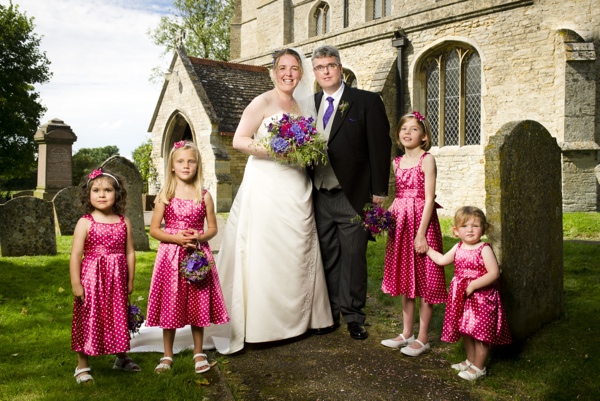
On a gloriously hot and sunny day, the wedding took place in St Michael’s Church on Saturday 18th August of Laura Burgess to Mads Jørgensen.

Photo: Charles Gervais cg-bh@bothhemispheres.com

Laura is currently the Rector of St Botolph without Aldgate in London, whilst Mads is a freelance Media Producer.

The service was conducted by the Reverend Lucy Winkett, a friend and colleague of Laura’s during her five year post at St Paul’s Cathedral.

Music played an important part in the service. The organist was James O’ Donnell (Master of the Music, Westminster Abbey), and the small group of singers were directed by Andrew Carwood (Director of Music, St Paul’s Cathedral).

As the bridegroom hails from Denmark, before the service began the congregation were taught a Danish hymn which was sung during the Signing of the Registers. During the course of the service, anthems by Britten, Walton and Purcell were sung. The bible readings were read by Claire Burnill-Maier and Jørgen Jensen: whilst the prayers were led by Reverend Erik Berggren, Reverend Margarithe Veen and Reverend Suzanne Webb.

As the happy couple left the church, they were greeted by the sound of the bells, a fitting climax to a wonderful and joyous occasion.

Summer baptisms in Great Gidding

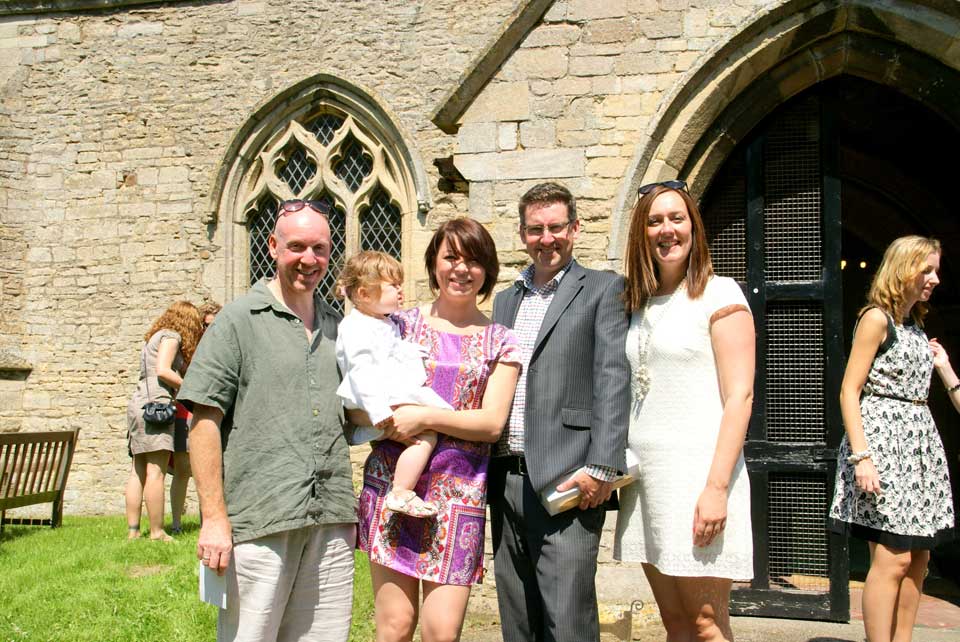
There were two Baptisms in St Michael’s Church in July, welcoming two young people into the Christian community in Great Gidding.

Firstly on Sunday 8th July, the baptism of Alice Helen Nunns took place. Mum and Dad, Charlotte and Michael Nunns, moved into Ludington Road last August. The godparents were Laura and Chris Tate of Molesworth.

The baptism of Alice Helen Nunns at Great Gidding

A fortnight later on Sunday 22nd July, the baptism offered the opportunity of welcoming back someone who had grown up in the village. Nicolas Tebbutt, (son of Vivian & Bill Tebutt of Main Street) and his partner Mel, brought daughter Amelie Una to St Michael’s Church to be christened.

The baptism of Amelie Una Tebutt in St Michael's Church, Great Gidding

The Reverend Mary Jepp officiated on both occasions.

Get Cambridgeshire Connected – Join the broadband campaign!

Get Cambridgeshire Connected – Join the broadband campaign!

You can help to bring fast, reliable broadband to Peterborough and Fenland, which is vital for our businesses and communities to thrive.

The plan is to provide access to superfast broadband to at least 90% of homes and businesses across Cambridgeshire and Peterborough and better broadband access to all other areas by 2015. A countywide broadband campaign to Get Cambridgeshire Connected has been launched through the Connecting Cambridgeshire website. We need residents, businesses (you can register in both categories), parishes and community groups to show suppliers where there is demand for broadband to attract investment.

Please register your support using the online form at www.connectingcambridgeshire.co.uk it will only take a few minutes to register and doesn’t commit you to anything.

Please encourage your friends, family, neighbours, colleagues, customers and suppliers to also join the campaign!

Back Lane and the Sewage farm

Back Lane and the Sewage farm

Back Lane between Chapel End and the B660 at Oak Tree corner has taken a bit of a battering recently. Improvement works at Great Gidding sewage farm coupled with the wettest summer and autumn of  recent times has meant that the minor road has been subject to some heavy erosion and surface degradation. The contractors have assured the Parish Council  that the road will be reinstated on completion of the works. As to the improvements at the sewage farm, new filter beds are being constructed to deal with phosphates in the foul water.

Update

Work has moved on, new structure have appeared in the Sewage Farm compound. The access road has been widened at the entrance after all the tipper lorries and plant equipment had finished the heavy work !

Update 2

Partial repairs to  Back Lane have been carried out, that would be the big hole by the junction with the B660. There is still a an area of poor road surface against the entrance to the Sewage Farm.

Back lane repairs, Great Gidding

Mary’s ringing has ap’peal’

Mary Read of Great Gidding rings her first Quarter PealMany congratulations to Mary Read on ringing her first Quarter Peal ‘inside’ of Plain Bob and Grandsire Doubles. A Quarter Peal is about 45 minutes continuous bell ringing requiring a high level of concentration and ringing skill.

Mary was one of six ringers who rang at Holywell Church as part of the Huntingdon District Bellringers Quarter Peal Day on Saturday 16th June this year.